
Midhowe is a Neolithic 'stalled' chambered cairn of the Orkney-Cromarty type, on the south shore of Rousay, Orkney. The cairn appears to have been deliberately filled with debris after hundreds of…
Midhowe Chambered Cairn is a tomb or burial place near Rousay, Orkney, Scotland.
What follows is drawn from published sources, with each claim labelled by how firmly it is established.
The name
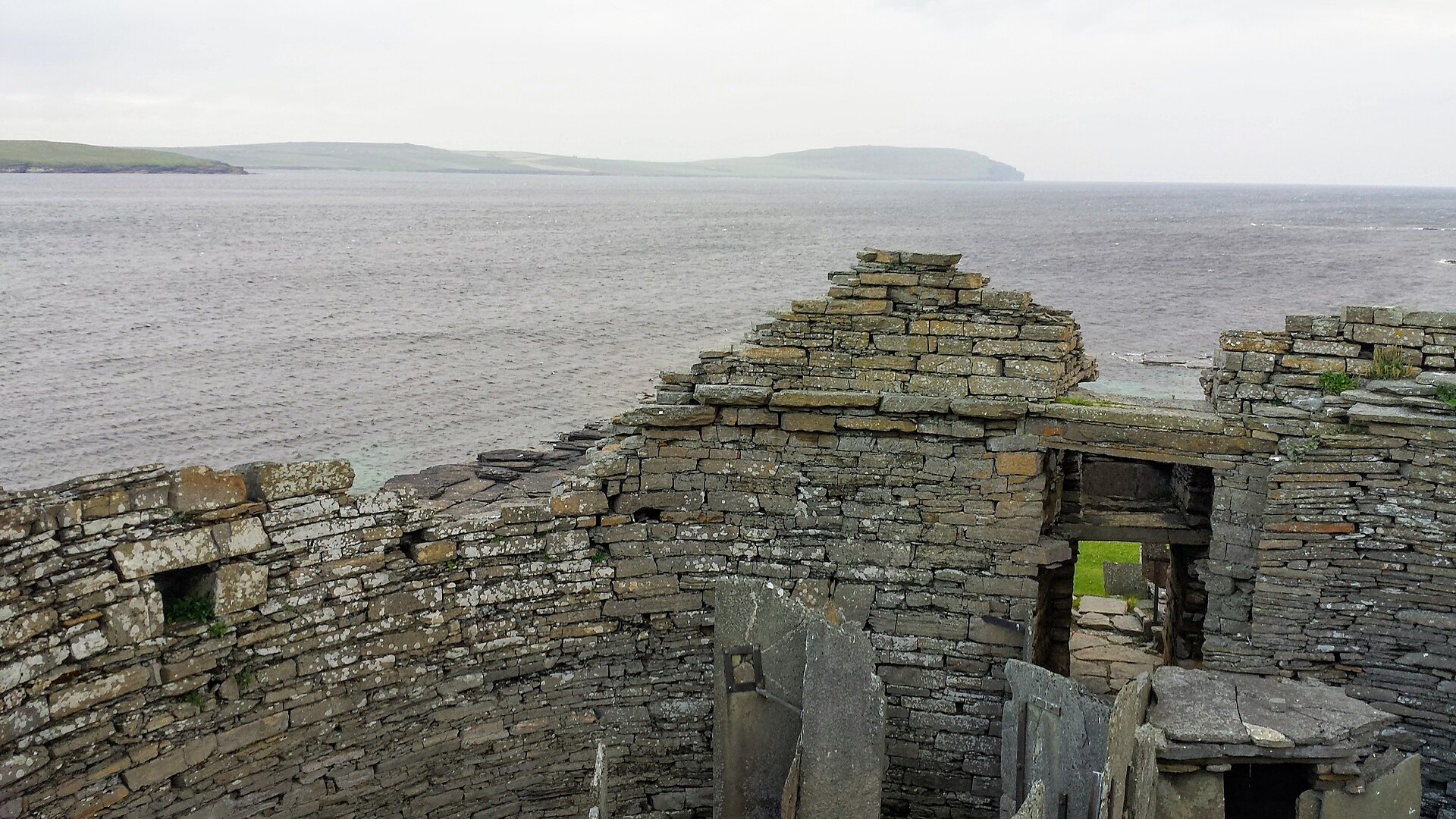
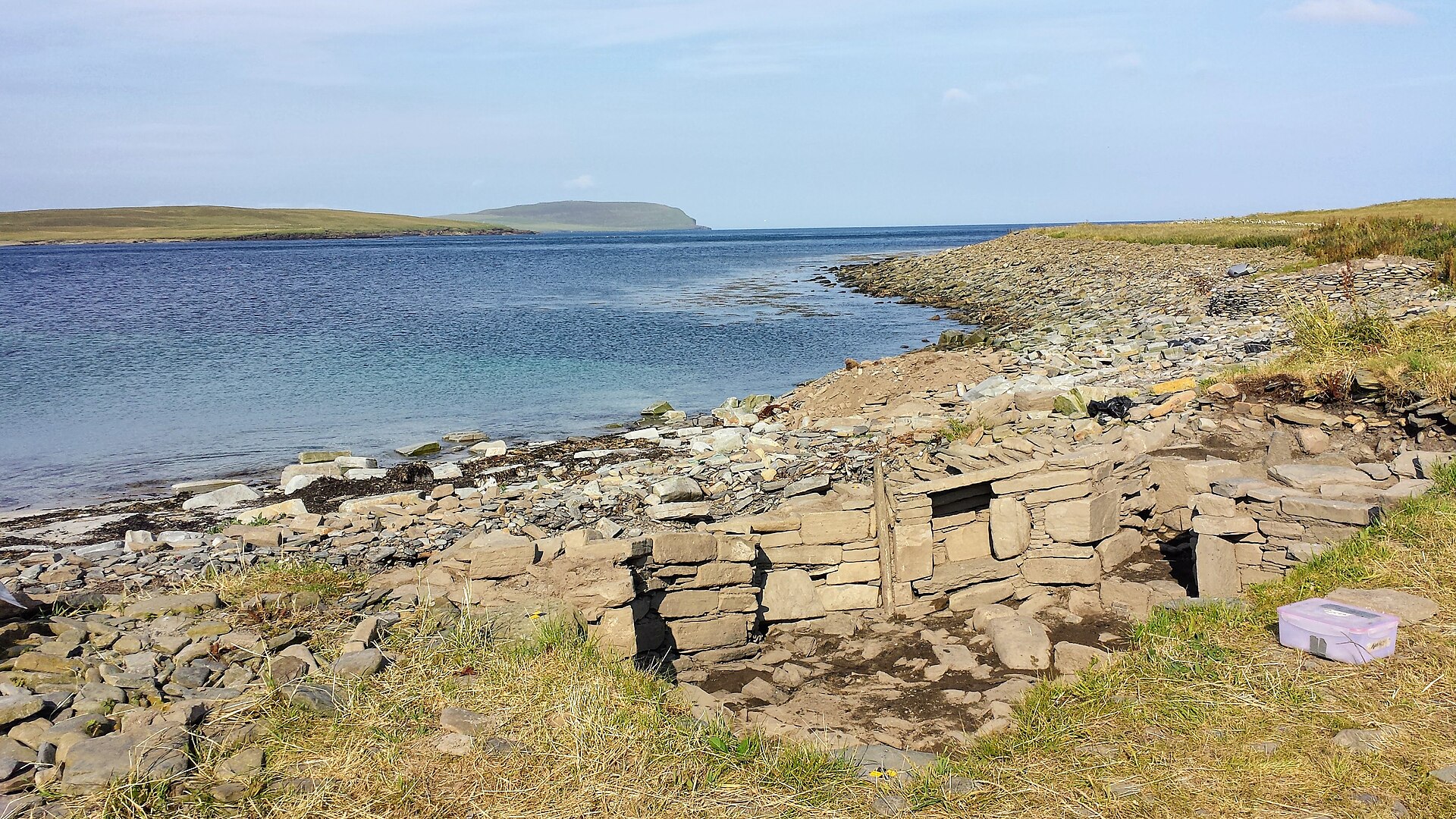
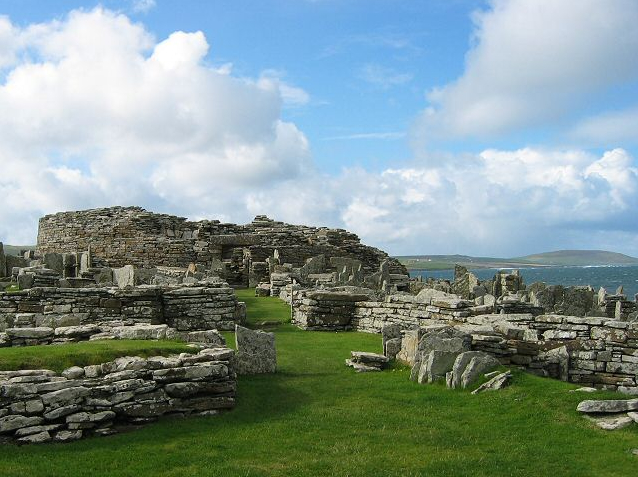
The name 'Midhowe' comes from the neighbouring Iron Age broch: it is the middle of three such structures grouped within 500 m of each other, and 'howe' derives from the Old Norse 'haugr', meaning mound or barrow.
History
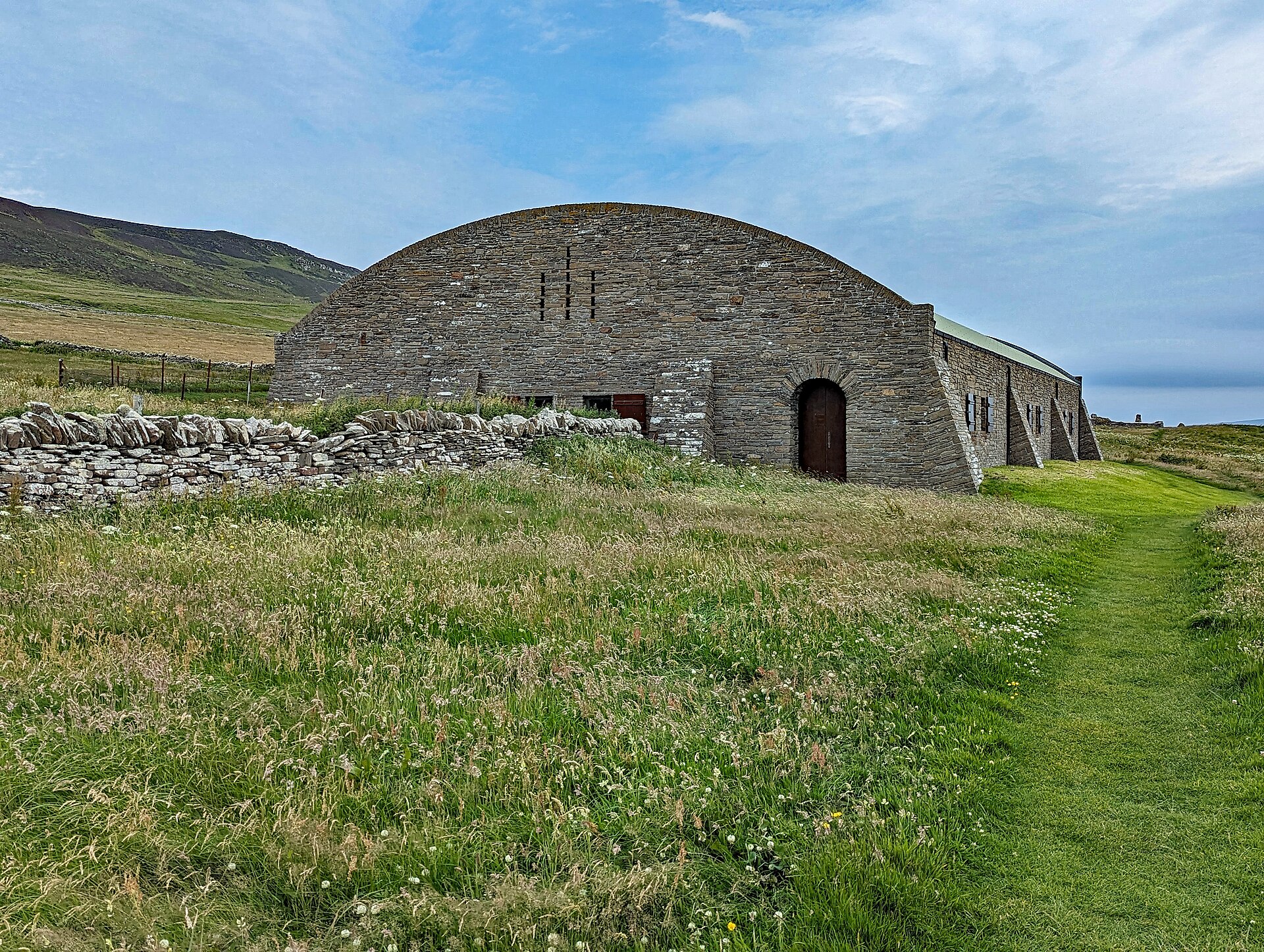
Midhowe is a Neolithic 'stalled' chambered cairn of the Orkney-Cromarty type, on the south shore of Rousay, Orkney. The cairn appears to have been deliberately filled with debris after hundreds of years of use, beginning early in the third millennium BC.
It is an extreme example of the stalled form, with twelve compartments flanking a central passage 23.6 m long, set within an oval barrow 33 m long and 13 m wide built up from three concentric stone casing walls.
Cultural influences
-
Orkney-Cromarty 'stalled' cairn tradition — a central passage flanked by paired transverse slabs dividing the side spaces into compartments, which reminded early investigators of horse stalls. The earliest, simpler versions (no more than four stalls) are found in Caithness; the form became more elaborate in Orkney.
-
Unstan ware pottery — Unstan-ware bowls were found in the tomb, and the decorative patterns formed by stones laid at angles in the casing walls echo the incised rims of such bowls; this pottery is named after the Unstan Chambered Cairn on the Orkney Mainland.
Connections
-
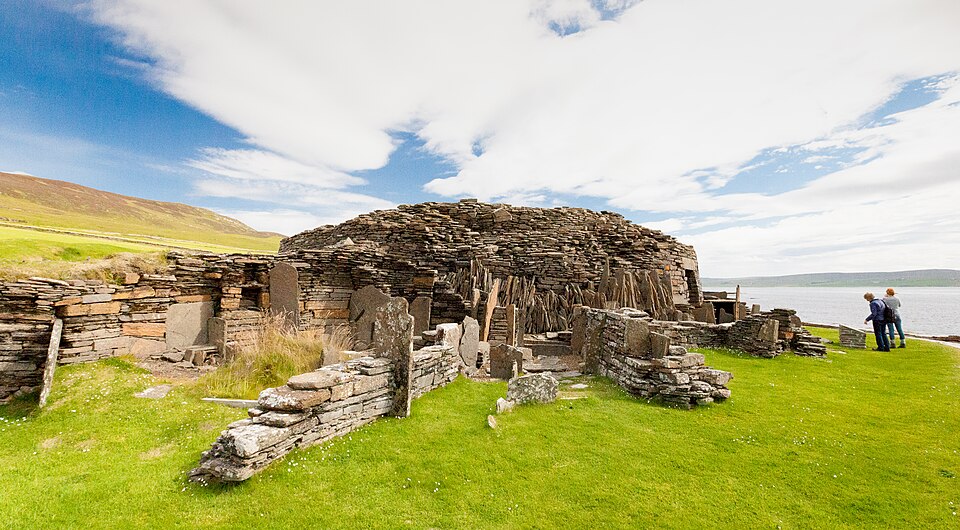
Photo: MichaelMaggs / Wikimedia Commons / CC BY-SA 4.0 Midhowe Broch
Adjacent Iron Age broch just west of the tomb; gives the cairn its name and forms part of the same shore complex on Eynhallow Sound
-
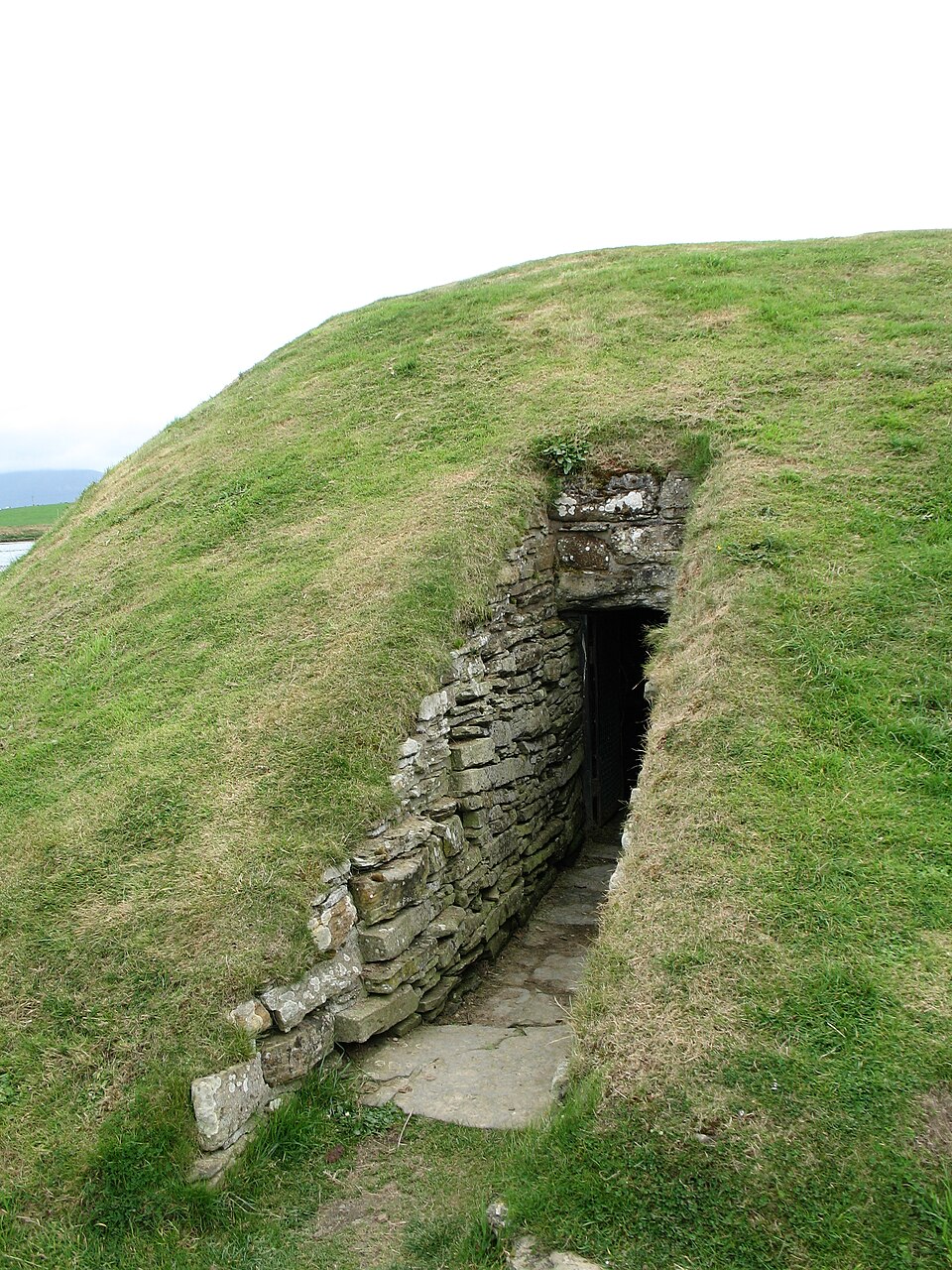
Photo: Bruce McAdam from Reykjavik, Iceland / Wikimedia Commons / CC BY-SA 2.0 Unstan Chambered Cairn
Type-site of Unstan ware, also a stalled cairn encased in a circular barrow; directly comparable in form
-
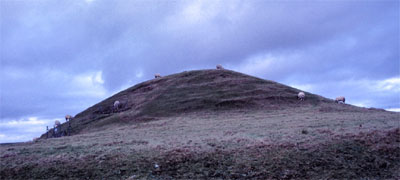
Photo: Otter at Dutch Wikipedia (Original text: Hopmans) / Wikimedia Commons / CC BY-SA 3.0 Maeshowe
Cited as a possible model for the cairn's original (perhaps vaulted) roof
-
Taversoe Tuick and Knowe of Yarso (Rousay)
Other Orkney-Cromarty tombs on the same island
-
Tomb of the Eagles, Isbister (South Ronaldsay)
Another Orkney-Cromarty stalled tomb yielding Unstan ware
Discovery & excavation
The remains of at least 25 individuals were found in the tomb, several in a crouched position on low stone shelves in seven of the twelve chambers, backs to the wall and heads against the supporting pillars; some earlier burials appear to have been swept aside or reduced to skulls to make room for later ones. Bones of ox, sheep, skua, cormorant, buzzard, eagle, gannet and carrion-crow were recovered, along with fish bones of bream and wrasse — bream not being found this far north today, which suggests Neolithic seas around Orkney were several degrees warmer.
In culture
-
The antiquarian Rodney Castleden likened entering the monument to walking into a miniature church — a straight central aisle flanked by pillar-like slabs, culminating in a shrine-like end compartment at the western end.
What to look for
-
The 23.6 m central passage with twelve stalled compartments; transverse slabs rise to about 2 m and the walls to about 2.5 m.
-
Low stone benches or shelves in the north-side stalls, on which the bones of ancestors were laid out.
-
The three concentric casing walls of the oval barrow, with stones set at angles to form decorative patterns echoing Unstan-ware rims — clearly meant to be seen.
-
The horned forecourt on the north side, a ceremonial space whose surviving 'horns' imply an original diameter of up to 70 m.
-
The modern hangar-like protective structure that now roofs the roofless tomb; visitors view it from raised walkways.
Plan your visit
- Location
- 59.1566°N · 3.0992°W
- Nearest settlement
- Rousay
- Access
- Open access
- Terrain
- Easy going
- Start point
- On the island of Rousay on the B9064, 5m from pier. Reached by Orkney Ferries from Tingwall Terminal. · Access to the site is across steep agricultural ground.
- Best time
- Access restrictions remain in place for much of the ground level of the cairn.** Opening times Visitors can view the tomb via the raised walkways.
- Start point
- Roadside parking on the B9064, Rousay (near Westside Church / Midhowe Broch path) — Rousay is reached by Orkney Ferries from Tingwall Terminal; the cairn is ~5 miles from the pier on the B9064. From the roadside parking the descent to the shore is across steep agricultural ground. The cairn itself is viewed from raised walkways inside its modern hangar shelter.
Opening & admission
Ticketed — check the official site for current prices
- Access restrictions remain in place for much of the ground level of the cairn.** Opening times Visitors can view the tomb via the raised walkways.
Nearby places
Settlement · Prehistoric
Broch of Gurness
Orkney Islands
Settlement on the site began sometime between 500 and 200 BC, when an Iron Age community raised a stone broch tower — once probably around 10 metre…
- Near Evie
- 141 metres from car park
- Some walking
Sources
- Canmore site record 2274 (accessed 2026-06-13)
- Trove (HES) record (accessed 2026-06-13)
- Wikipedia: Midhowe Chambered Cairn (accessed 2026-06-13)
- Wikidata Q568592 (accessed 2026-06-13)
Explore more: Tomb or burial places · Prehistoric · Orkney Islands
The Ancient Codex, in your pocket
Get the Pocket Codex app
Carry the directory with you — Midhowe Chambered Cairn and thousands of ancient places across Britain and Ireland, offline, wherever you roam.