
Archaeology is sliding out of the boulder beach at Swandro, where sea erosion exposes and destroys a long-lived settlement. Knowe of Swandro is a multi-period coastal site on Rousay, with a possible Neolithic tomb, Iron Age roundhouses, Pictish buildings, and Viking-age houses.
The project is rescue archaeology in motion. Since 2010, excavators have worked against tides, storms, sea-level rise, and an aquifer under the site, recording metalworking, agriculture, Roman contacts, fish processing, Viking reuse, and erosion damage before the sea removes the evidence.
What follows is drawn from published sources, with each claim labelled by how firmly it is established.
History
Knowe of Swandro lies on the Bay of Swandro on Rousay in Orkney. The site includes a possible five-thousand-year-old chambered tomb, Iron Age roundhouses, Pictish buildings, and Viking-age buildings.
The visible mound was initially thought to be a broch until Dr Julie Bond spotted partially buried prehistoric uprights in 2010. Work began in 2010 to record the site before coastal erosion destroys it.
The excavation focuses on the seaward side because it is at highest risk from the sea. Rising sea levels, stormier weather, and an aquifer beneath the site all accelerate erosion.
Evidence suggests a high-status settlement with complex metalworking, copper, lead, iron, Roman glass, Roman coins, feasting evidence, cereals, kilns, and grain processing. Survey methods include earth resistance, electromagnetic survey, ground penetrating radar, electrical resistivity tomography, photography, 3D scanning, and aerial imaging.
A possible chambered cairn was investigated in 2012, though later work suggests some walls belonged to an Iron Age structure with a possible Neolithic core. Structure 3 is interpreted as a purpose-built smithy with mould fragments, slag, hammer scale, crucibles, copper-alloy evidence, and a tuyere.
Viking-age houses were built over earlier Iron Age structures, and a nearby Viking sword was found in the nineteenth century. In February 2024 the Knowe of Swandro project won Current Archaeology Rescue Project of the Year.
People
-
Dr Julie Bond
identified partially buried prehistoric structures at the site in 2010.
-
University of Bradford
carried out surveys and excavation work at Swandro.
What to look for
-
Eroding beach site
The archaeology sits partly below the high-tide mark under a boulder beach.
-
Layered buildings
Later buildings were repeatedly built over and into earlier structures.
Plan your visit
- Location
- 59.1491°N · 3.0938°W
- Access
- Open access
- Terrain
- Rough ground — reasonable boots advised
Opening & admission
The source pack does not provide reliable current admission details; verify before travelling.
- The site is directly on a boulder beach, partly below the high-tide mark, and under active rescue excavation.
Nearby places
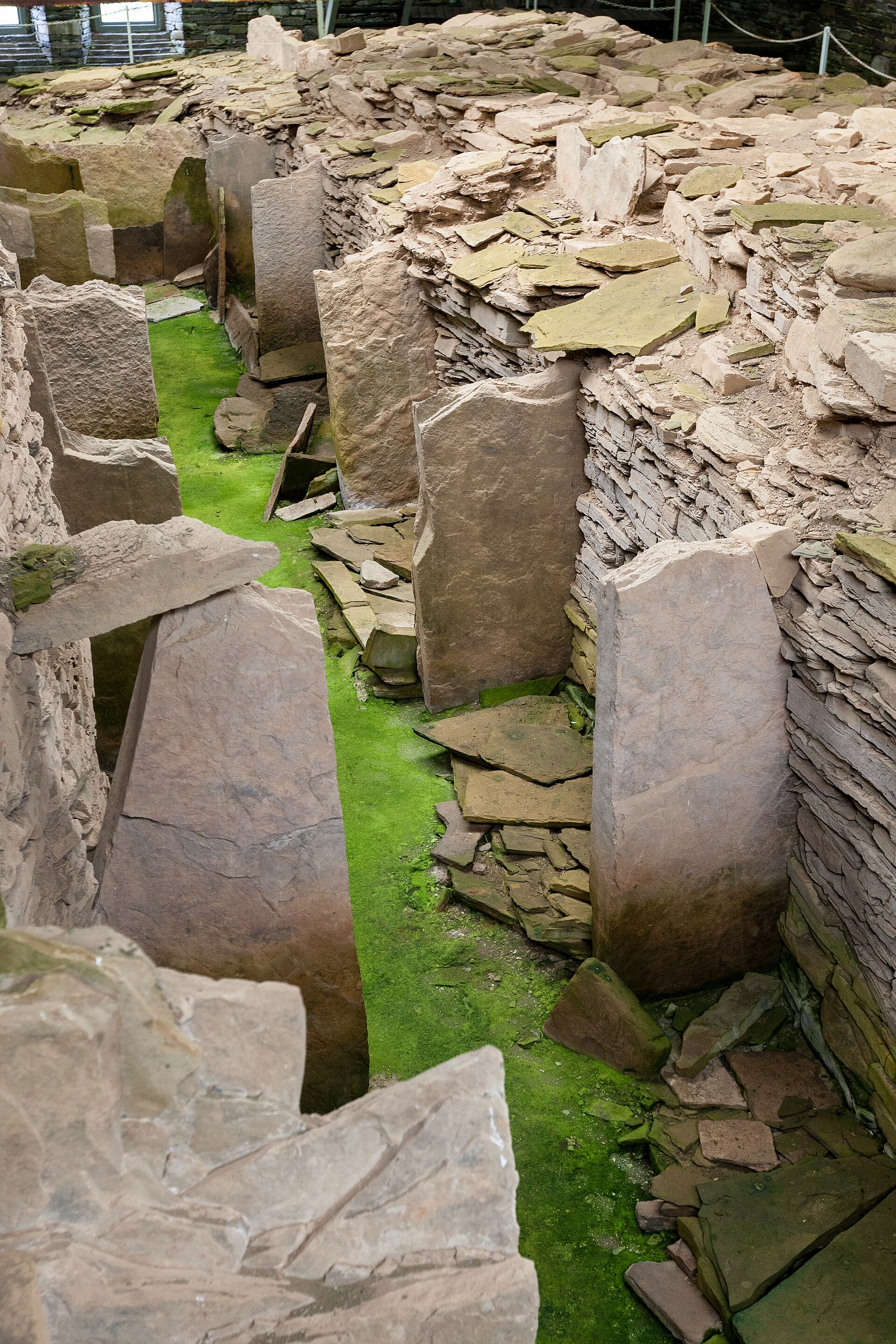
Tomb or burial place · Prehistoric
Midhowe Chambered Cairn
Orkney Islands
Midhowe is a Neolithic 'stalled' chambered cairn of the Orkney-Cromarty type, on the south shore of Rousay, Orkney. The cairn appears to have been…
- Near Rousay
- 10 min walk from car park
- Easy path
Settlement · Prehistoric
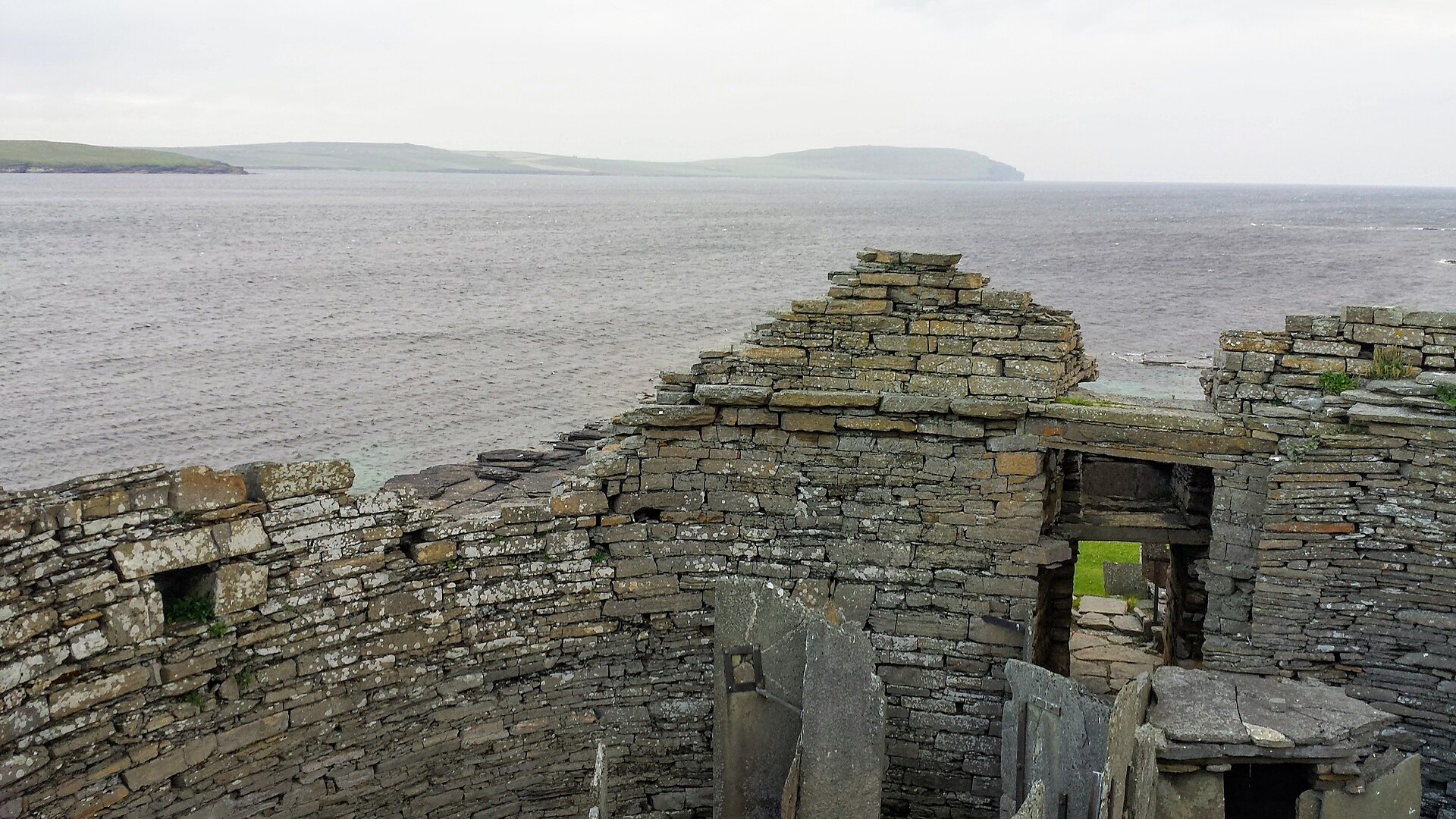
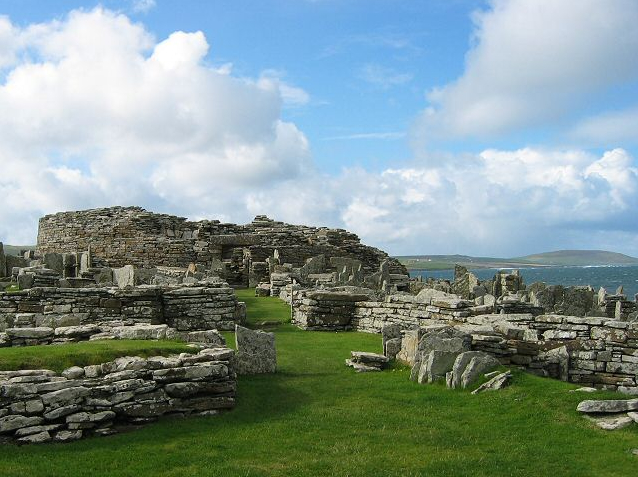
Broch of Gurness
Orkney Islands
Settlement on the site began sometime between 500 and 200 BC, when an Iron Age community raised a stone broch tower — once probably around 10 metre…
- Near Evie
- 141 metres from car park
- Some walking
Questions people ask
- What is Knowe of Swandro?
- It is a multi-period archaeological site on Rousay with Neolithic, Iron Age, Pictish, and Viking-age remains.
- Why is it urgent?
- The site lies directly on a boulder beach and is being rapidly destroyed by coastal erosion.
- What makes the settlement high-status?
- The pack records complex metalworking, Roman glass and coins, abundant cereals, feasting evidence, and access to trade routes.
- What award did it win?
- In February 2024 the project won Current Archaeology Rescue Project of the Year.
Sources
- Wikipedia article
- Source pack: Knowe of Swandro
Explore more: Tomb or burial places · Prehistoric · Orkney Islands
The Ancient Codex, in your pocket
Get the Pocket Codex app
Carry the directory with you — Knowe of Swandro and thousands of ancient places across Britain and Ireland, offline, wherever you roam.