
On a rocky peninsula at the north-eastern end of Loch Awe, the ruined shell of Kilchurn Castle rises around a five-storey tower house first raised in the mid-15th century. When it was built the site was a small island scarcely larger than the castle itself, reached across a low-lying or submerged causeway; only after the loch’s water level was altered in 1817 did it come to stand on the long peninsula seen today.
Kilchurn was the base of the Campbells of Glenorchy, the most powerful cadet branch of Clan Campbell, who extended both the castle and their territory over roughly 150 years. After the family became Earls of Breadalbane and moved to Taymouth Castle, the castle fell out of use; badly damaged by lightning in 1760, it was unroofed by 1770 and left in ruins.
The site is now in the care of Historic Environment Scotland and is a scheduled monument. It has more recently been closed for conservation works owing to danger from falling masonry, though visitors can still walk around the exterior.
What follows is drawn from published sources, with each claim labelled by how firmly it is established.
History
Around 1440 Kilchurn, originally belonging to Clan Gregor, passed to Colin Campbell, and Sir Colin Campbell, 1st of Glenorchy, established the castle around 1450 as a five-storey tower house with a walled courtyard.
In 1513 Sir Duncan Campbell of Glenorchy, who had added the single-storey 'laich hall' along the inside of the south curtain, was among the many Scottish nobles killed at the Battle of Flodden.
During the second half of the 16th century Sir Colin Campbell, 6th Laird (1499–1583), added chambers north of the tower house and remodelled the parapet, introducing circular corner turrets carried on corbels.
In 1614 Sir Duncan Campbell, 1st Baronet ('Black Duncan'), had the south range rebuilt and enlarged and constructed a new range incorporating a chapel in the south-east of the courtyard.
From 1693 Sir John Campbell, 1st Earl of Breadalbane, began converting Kilchurn into a modern barracks capable of housing 200 troops, adding a three-storey L-shaped block along the north side.
In 1714 Breadalbane held a conference of Jacobites at Kilchurn and afterwards joined the Earl of Mar's rising of 1715; following its failure he was obliged to surrender the castle to Alexander Campbell of Fonab in February 1716.
In 1760 the castle was badly damaged by lightning and completely abandoned; a turret from a tower, still resting upside-down in the centre of the courtyard, attests to the violence of the storm. It was unroofed by 1770.
People
-
Sir Colin Campbell, 1st of Glenorchy
Younger son of Duncan Campbell, 1st Lord Campbell; granted Glen Orchy in 1432 and established Kilchurn around 1450.
-
Sir Duncan Campbell of Glenorchy
Built the single-storey 'laich hall'; killed at the Battle of Flodden in 1513.
-
Sir Colin Campbell, 6th Laird (1499–1583)
Improved the accommodation, remodelled the parapet with corner turrets, and built Balloch (Taymouth) Castle.
-
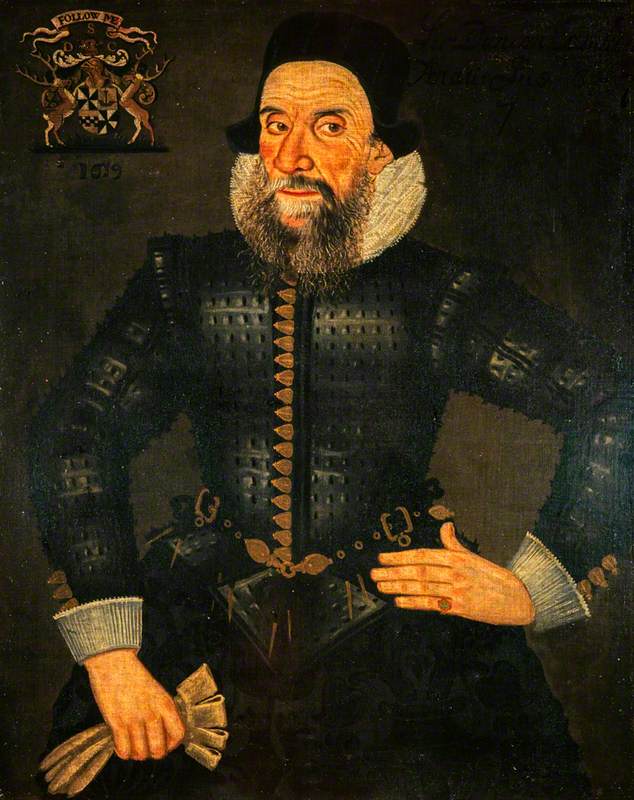
Portrait: anonymous / Wikimedia Commons / Public domain Sir Duncan Campbell, 1st Baronet ('Black Duncan', c.1550–1631)
Represented Argyll in the Scottish Parliament, created a baronet in 1625, and rebuilt the south range in 1614.
-
Sir John Campbell, 1st Earl of Breadalbane
Converted the castle into a barracks from 1693 and hosted a Jacobite conference there in 1714.
-
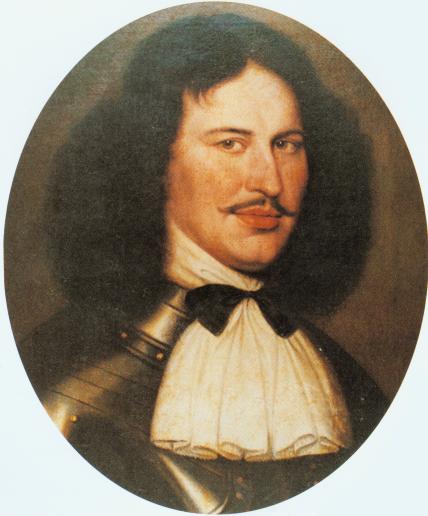
Portrait: Contemporary portrait / Wikimedia Commons / Public domain Sir Ewen Cameron of Lochiel
Born at the castle in 1629; son of Margaret Campbell, daughter of the 3rd Baronet.
Cultural influences
-
Campbell territorial expansion
Kilchurn was the first of several castles the Campbells of Glenorchy built as they extended their power across the central Highlands over two centuries from the 1430s.
-
From stronghold to barracks
The late-17th-century conversion into a barracks for 200 troops reflects the shift of the site from clan seat to a military installation during the pacification of the Highlands.
Connections
-
Clan Gregor (MacGregor)
Original holders of Kilchurn before it was lost to the Campbells around 1440.
-
Taymouth Castle (formerly Balloch Castle)
Built by the Campbells at Loch Tay; their move there led to Kilchurn falling out of use.
-
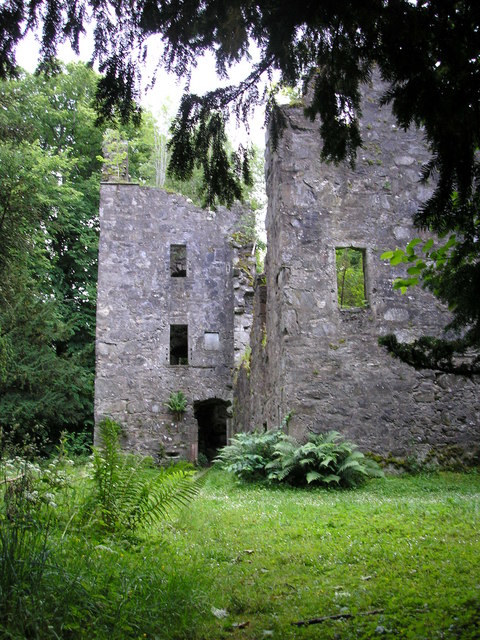
Photo: Iain Lees / Wikimedia Commons / CC BY-SA 2.0 Finlarig Castle
Begun by 'Black Duncan' at the west end of Loch Tay as part of the family's expansion.
In culture
-
Painted by J. M. W. Turner
J. M. W. Turner painted the castle on one of his tours of Scotland in the early 19th century.
What to look for
-
The upended turret
The remains of a tower turret still rest upside-down in the centre of the courtyard, thrown there by the lightning strike of 1760.
-
Five-storey tower house
The original mid-15th-century tower house, the earliest part of the castle, forms the core of the surviving ruin.
-
Circular corner turrets
The 16th-century parapet carries circular corner turrets on corbels, added by the 6th Laird.
-
L-shaped barracks block
The three-storey L-shaped block along the north side is the barracks range added by the 1st Earl of Breadalbane.
Plan your visit
- Location
- 56.4036°N · 5.0289°W
Nearby places
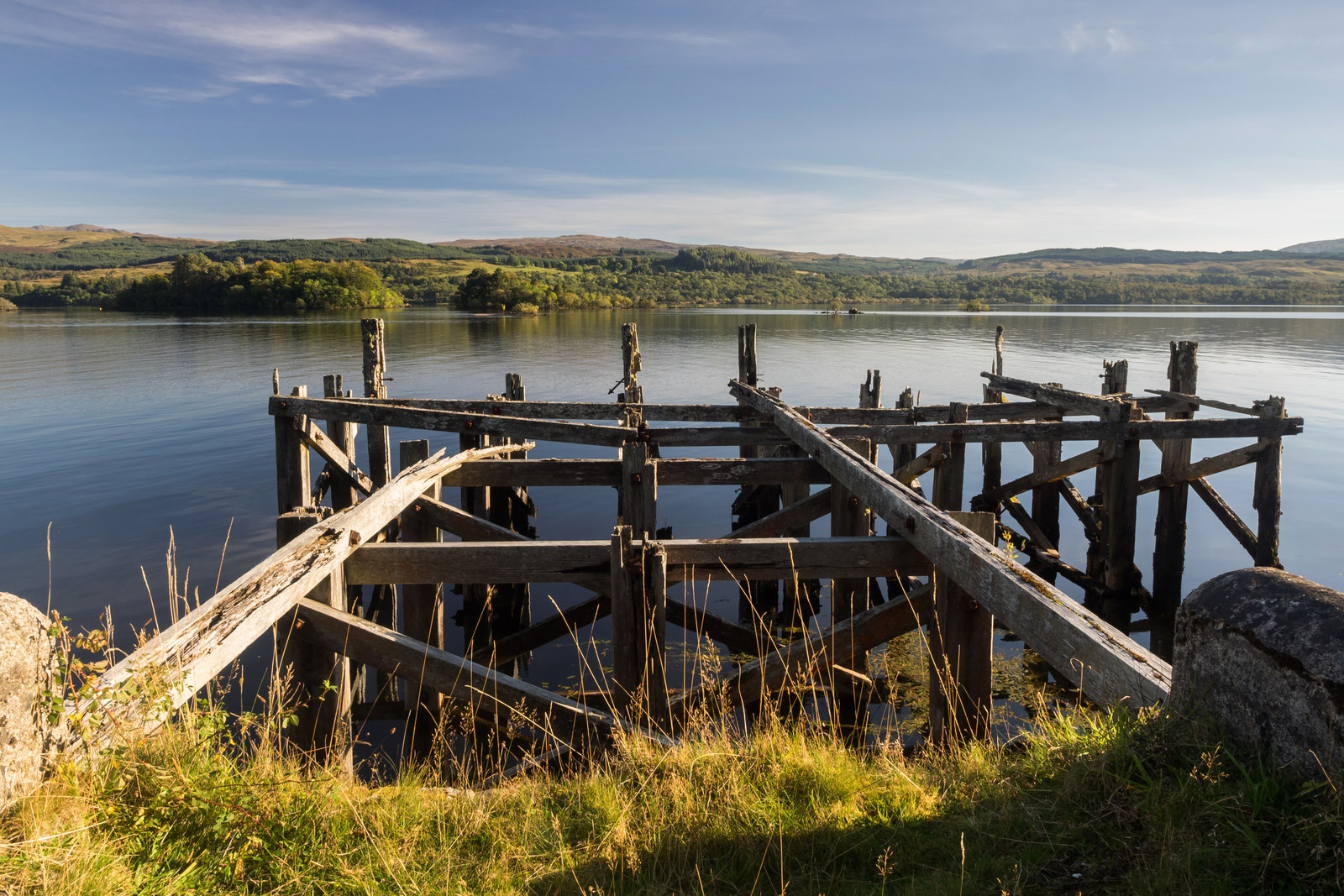
Minor monument · Medieval
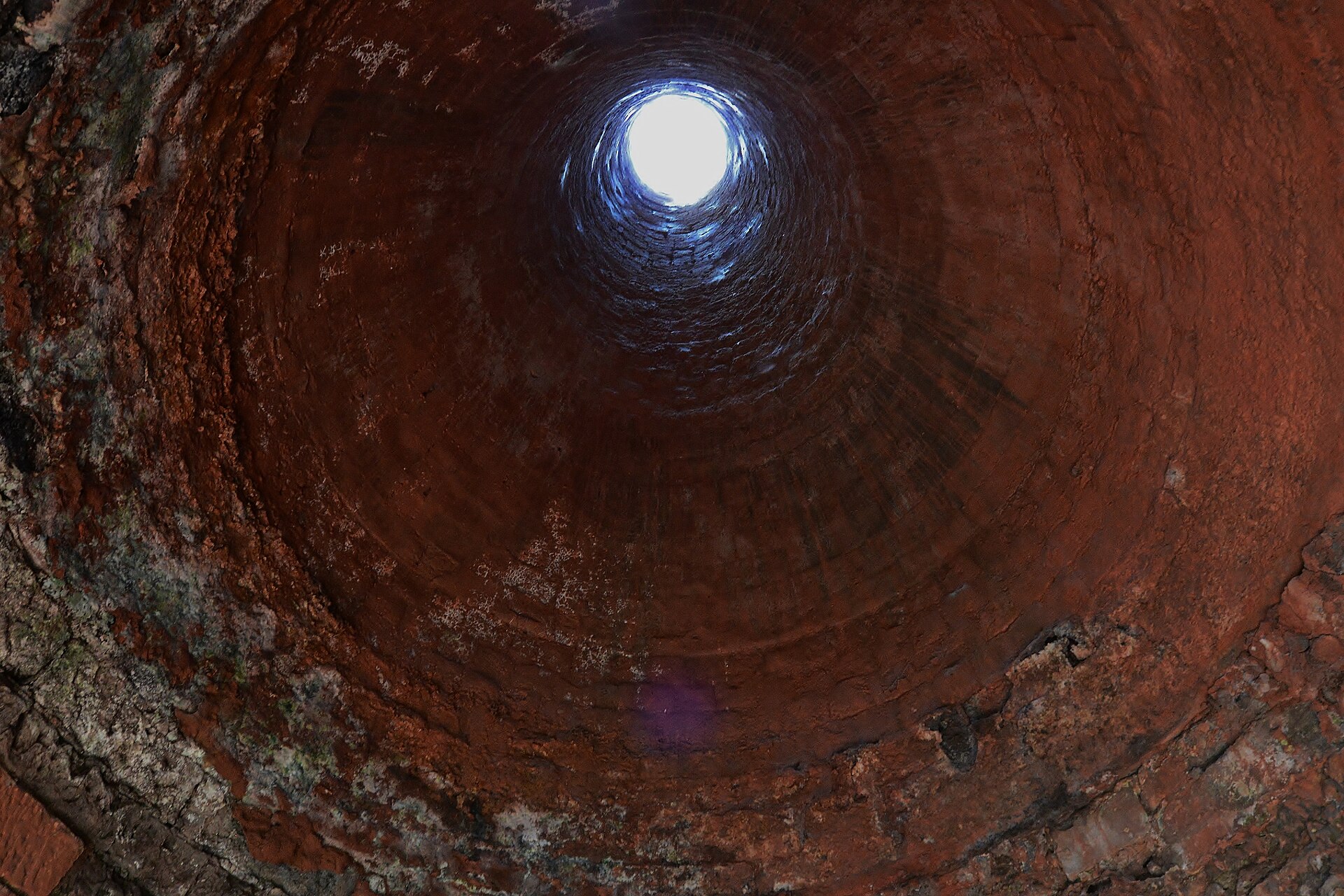
Dovecot, Carloonan, Inveraray Castle Estate
Argyll and Bute
Dovecote with HES-listed pre-1800 evidence (1747).
Questions people ask
- Who built Kilchurn Castle?
- It was established around 1450 by Sir Colin Campbell, 1st of Glenorchy, and served as the base of the Campbells of Glenorchy, who extended it over the following 150 years.
- Why is Kilchurn Castle a ruin?
- The castle fell out of use after the Campbells moved to Taymouth Castle, and it was badly damaged by lightning in 1760 and unroofed by 1770.
- Can Kilchurn Castle be visited?
- It is in the care of Historic Environment Scotland and reached on foot from the A85 near Dalmally or by boat from Lochawe pier, but it is currently closed for conservation works due to danger from falling masonry, though visitors can still walk around the exterior.
- Why does the castle sometimes become an island?
- It stands on a peninsula at the north-eastern end of Loch Awe, and higher-than-usual water levels can cut off the access route, temporarily turning the site into an island.
Sources
- Wikipedia: Kilchurn Castle (accessed 2026-07-18)
- Historic Environment Scotland: Kilchurn Castle, Dalmally (SM90179) (accessed 2026-07-18)
Explore more: Building or ruins · Medieval · Argyll and Bute
The Ancient Codex, in your pocket
Get the Pocket Codex app
Carry the directory with you — Kilchurn Castle and thousands of ancient places across Britain and Ireland, offline, wherever you roam.