
The ruined church, cloister and domestic ranges of the Iona Nunnery stand in a walled precinct beside Baile Mor, the only village on the island of Iona in the Inner Hebrides. They form the most complete remains of a medieval nunnery surviving in Scotland.
The house was an Augustinian convent, established after the founding of the nearby Benedictine monastery in 1203 by Ranald, son of Somerled. Ranald’s sister Bethoc became its first prioress. After the Reformation the priory was dissolved and the buildings fell into ruin.
What follows is drawn from published sources, with each claim labelled by how firmly it is established.
History
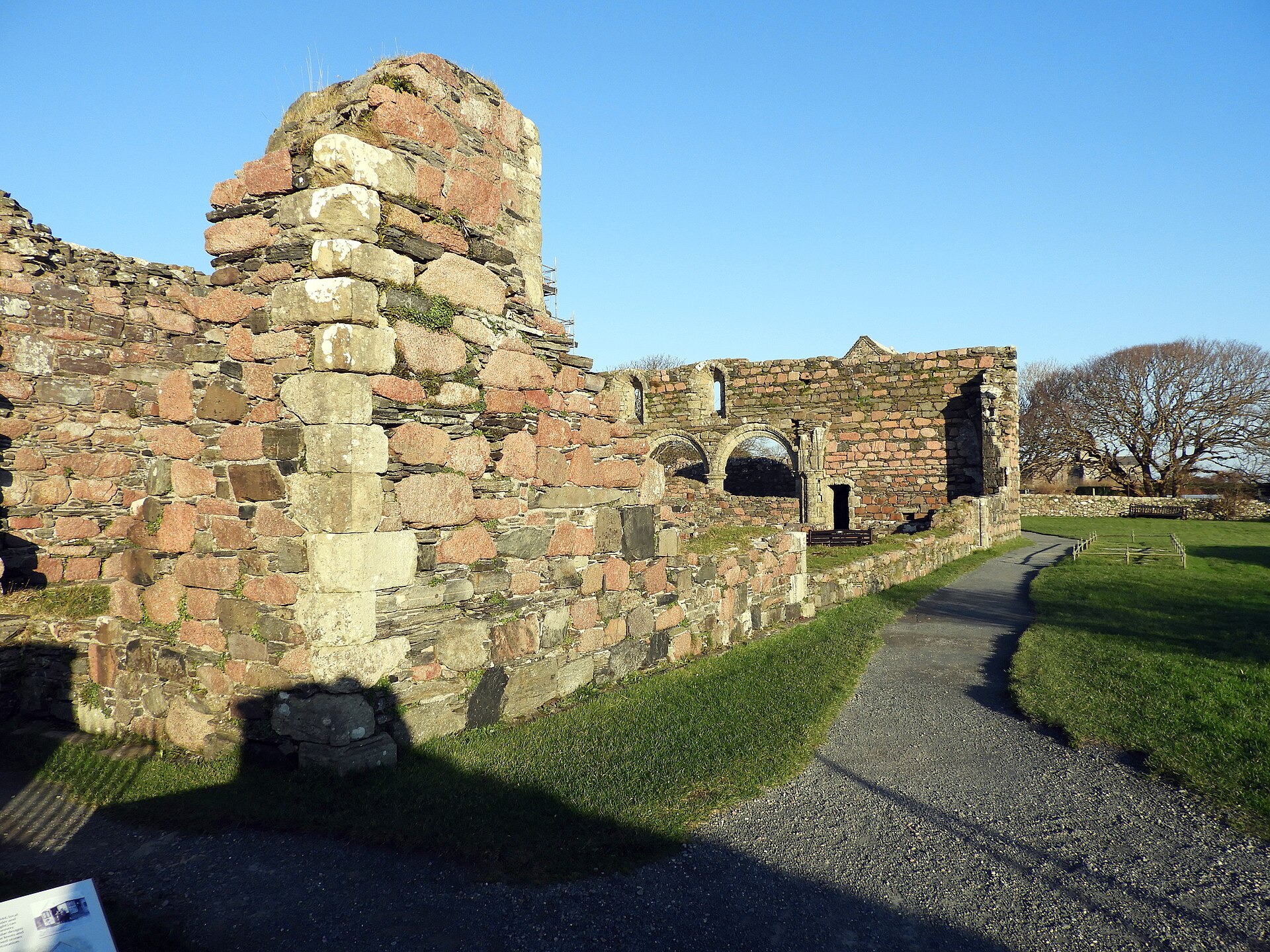
The nunnery was founded after 1203, following the establishment of the nearby Benedictine monastery by Raghnall mac Somhairle (Ranald, son of Somerled).
Anna MacLean, a prioress of the house, died in 1543; the top half of her headstone survives in the Abbey museum at Iona Abbey.
The priory was dissolved after the Reformation and reduced to a ruin.
Restoration work on the nunnery was carried out in 1923 and again in 1993.
People
-
Ranald, son of Somerled (Raghnall mac Somhairle)
Founder of the nearby Benedictine monastery in 1203, after which the nunnery was established
-
Bethoc
Daughter of Somerled and sister of Ranald; first prioress of the nunnery
-
Anna MacLean
Prioress of the nunnery who died in 1543; the upper part of her headstone is preserved in the Iona Abbey museum
Cultural influences
-
Irish architectural style
The construction follows the typical Irish style, with a church of three bays, a passage on the north side and a small chapel to the east of that passage.
Connections
-
Iona Abbey
The Benedictine monastery, founded 1203, whose establishment preceded and prompted the nunnery; its museum holds Anna MacLean's headstone
-
St Leonard's Nunnery, Perth
One of the other two Augustinian houses of women in Scotland
-
Teampull na Trionaid, Carinish, North Uist
The third of Scotland's three Augustinian houses of women
What to look for
-
The cloister
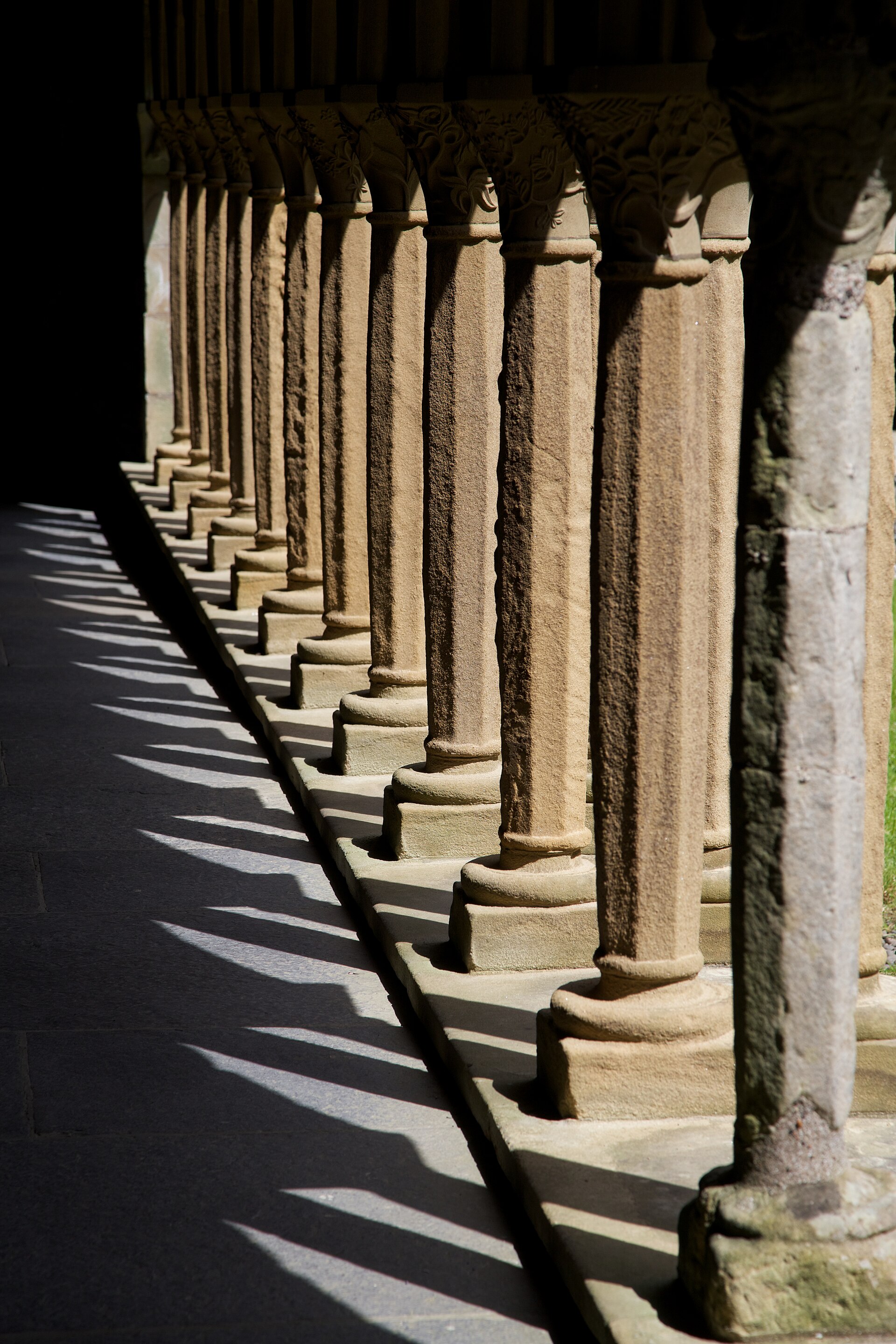
The monastic cloister measures 14 metres square, though it was originally smaller.
-
The three-bay church
The church is a building of three bays with a passage to the north side and a small chapel on the east side of the passage.
-
East and south ranges
The east wing had three rooms at ground level with the dormitory above, while the south wing held the refectory; a floor was inserted in the sixteenth century.
-
Anna MacLean's headstone
The top half of the headstone of prioress Anna MacLean, who died in 1543, is displayed in the Abbey museum at the nearby Iona Abbey.
Plan your visit
- Location
- 56.3313°N · 6.3940°W
Nearby places
Building or ruin · Pictish & early medieval
Iona Abbey
Argyll and Bute
Saint Columba came to Iona from Ireland with twelve companions in 563, founding a monastery when Iona was part of the Kingdom of Dál Riata. It beca…
- Near Baile Mor, Iona
- 1.8 km from car park
Questions people ask
- What kind of religious house was Iona Nunnery?
- It was an Augustinian convent of nuns, one of only three Augustinian houses of women in medieval Scotland, alongside St Leonard's Nunnery at Perth and Teampull na Trionaid at Carinish in North Uist.
- Who founded the nunnery and who was its first prioress?
- It was established after 1203, following the founding of the nearby Benedictine monastery by Ranald, son of Somerled. Ranald's sister Bethoc became the first prioress.
- Why are the ruins significant?
- They form the most complete remains of a medieval nunnery surviving in Scotland.
- Who manages the site today?
- The Iona Nunnery is managed by Historic Environment Scotland and is a scheduled monument.
Sources
- Wikipedia: Iona Nunnery (accessed 2026-07-18)
- Wikidata: Iona Nunnery (Q82249) (accessed 2026-07-18)
- Historic Environment Scotland - Iona Nunnery (scheduled monument) (accessed 2026-07-18)
Explore more: Building or ruins · Medieval · Argyll and Bute
The Ancient Codex, in your pocket
Get the Pocket Codex app
Carry the directory with you — Iona Nunnery and thousands of ancient places across Britain and Ireland, offline, wherever you roam.