
Roofless dwellings, kilns and field traces remain at Shiaba on the Ross of Mull, where a cleared township still reads in the ground. Shiaba is a ruined township, a former rural settlement, scheduled for what it can reveal about 18th- and 19th-century life.
Its history moves from run-rig farming to crofting, then through eviction, hardship and final abandonment. The site is also linked to Gaelic poet Mary MacLucas, whose hymn later supplied the melody known from Morning Has Broken.
What follows is drawn from published sources, with each claim labelled by how firmly it is established.
History
Shiaba is a ruined township on the south-western peninsula of the Isle of Mull. It was awarded scheduled monument status in 1993 for its significance as evidence of 18th- and 19th-century rural life.
The name derives from Gaelic Sia Ba, meaning six cows, reflecting the area's relative fertility. Shiaba first appears by that name in written records in 1779, though it may be older.
A possible earlier settlement called Shaback appears in Blaeu's Atlas of Scotland in 1654. The community first used the run-rig agricultural system, then changed around 1804 into a crofting community with fixed land attached to each croft.
At its height Shiaba included a school, corn-drying kilns, one or two horizontal watermills, about 12 dwellings, byres, peat-drying stacks and possibly a small chapel. The mid-19th-century population was around 130.
The Duke of Argyll issued an eviction notice in 1845. In 1847 almost all inhabitants were removed, some relocating within the Ross of Mull and others encouraged to go overseas.
Potato crop failure in 1846 contributed to hardship and to the landlord's argument for removal. By the 1871 census only a single shepherd and his family remained.
The final dwelling was vacated in 1937 after severe storm damage, leaving the township entirely abandoned. Historic Scotland scheduled the site on 5 March 1993 because it is a well-preserved and documented settlement showing the move from pre-crofting to crofting economy.
People
-
Duke of Argyll
Landowner who issued the 1845 eviction notice.
-
Mary MacLucas
Gaelic poet from Shiaba, author of Leanabh an àigh.
Connections
-
Isle of Mull
Island setting of the township.
-
Bunessan
Village west of the township.
-
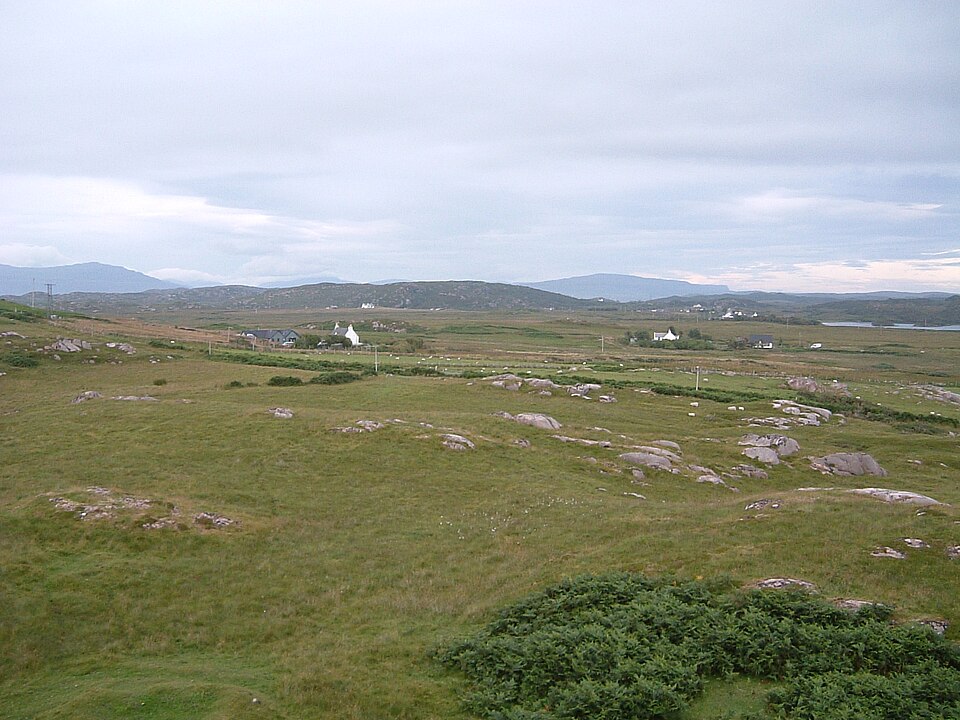
Photo: Hopgrove james / Wikimedia Commons / Public domain Ross of Mull
Regional setting of the settlement and relocation after clearance.
-
Leanabh an àigh
Gaelic hymn by Mary MacLucas.
-
Morning Has Broken
Later hymn using the melody associated with Mary MacLucas's hymn.
What to look for
-
Township ruins
Dwellings, kilns, mills, byres and other agricultural structures remain visible.
-
Rounded-corner houses
The dwellings were built in typical local fashion with rounded corners.
-
Crofting landscape
The scheduled remains show the shift from run-rig farming to fixed crofts.
-
Clearance history
The visible ruins are tied to eviction and abandonment in the 19th and 20th centuries.
Plan your visit
- Location
- 56.2965°N · 6.1421°W
- Terrain
- Rough ground — reasonable boots advised
Opening & admission
Check local route and conditions before travelling
- The ruined township lies beyond Loch Assapol and Scoor House on the Ross of Mull.
- The source gives no formal access details.
Nearby places
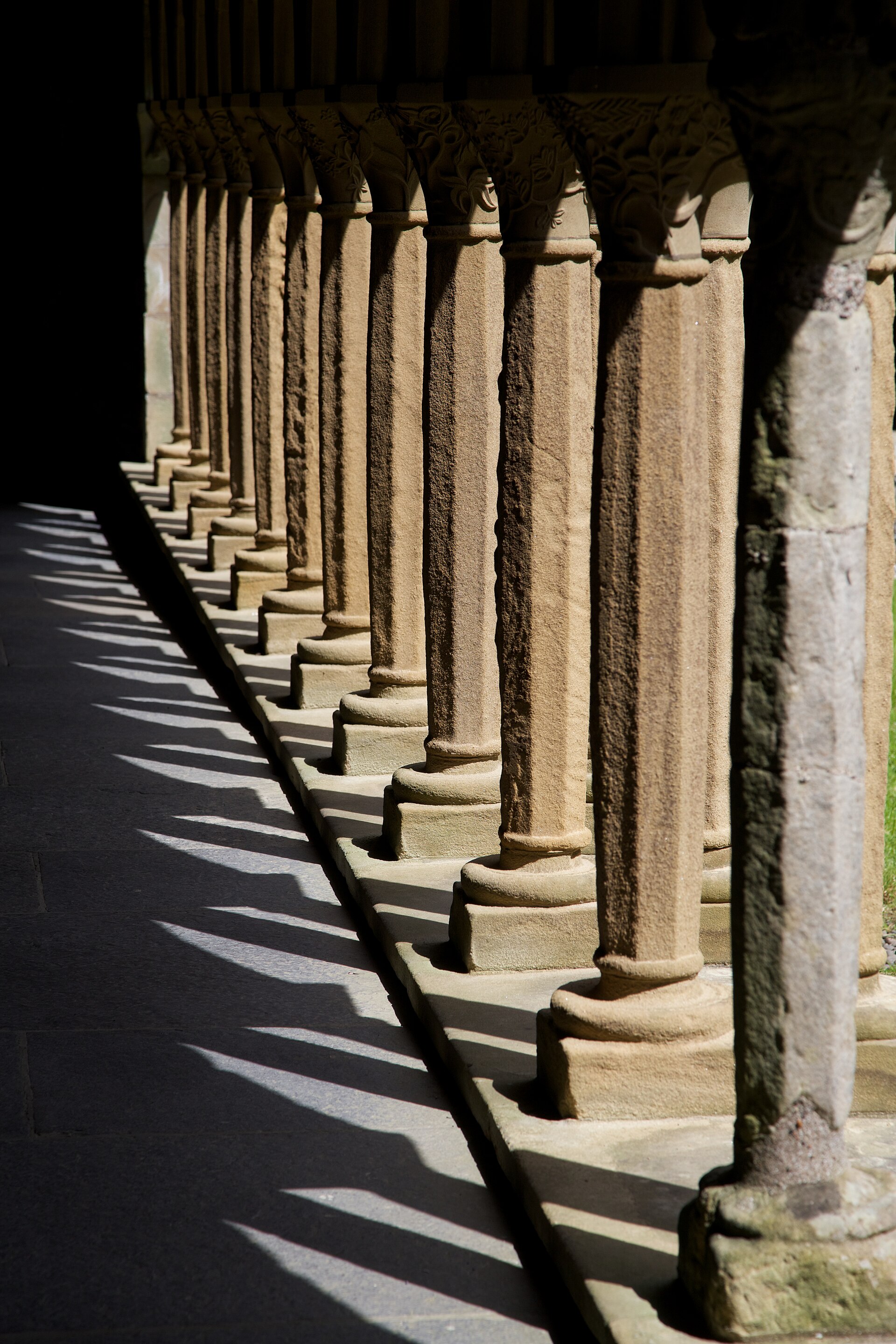
Building or ruin · Pictish & early medieval
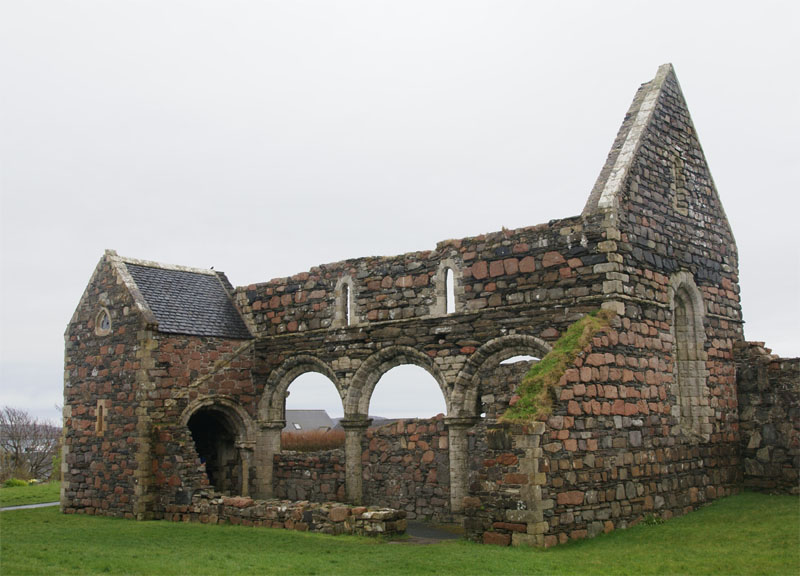
Iona Abbey
Argyll and Bute
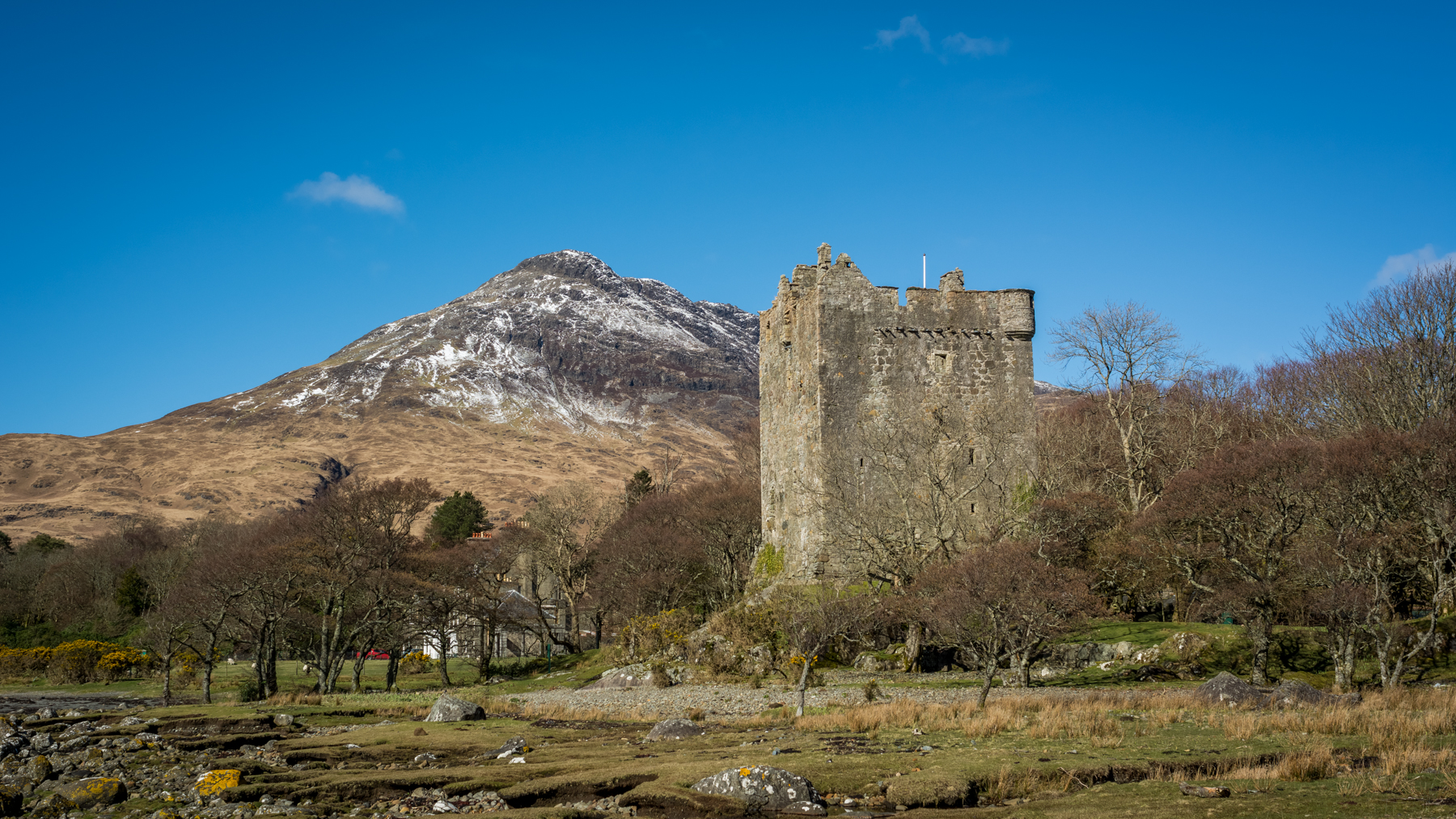
Saint Columba came to Iona from Ireland with twelve companions in 563, founding a monastery when Iona was part of the Kingdom of Dál Riata. It beca…
- Near Baile Mor, Iona
- 1.8 km from car park
Questions people ask
- What is Shiaba?
- It is a ruined township on Mull, scheduled for its evidence of 18th- and 19th-century rural life.
- What does Shiaba mean?
- The name derives from Gaelic Sia Ba, meaning six cows.
- Why was Shiaba cleared?
- The Duke of Argyll issued an eviction notice in 1845, and most inhabitants were removed in 1847 amid wider hardship after potato crop failure.
- Who was Mary MacLucas?
- She was a Gaelic poet from Shiaba whose hymn Leanabh an àigh later became associated with the melody known from Morning Has Broken.
Sources
Explore more: Building or ruins · Medieval · Argyll and Bute
The Ancient Codex, in your pocket
Get the Pocket Codex app
Carry the directory with you — Shiaba and thousands of ancient places across Britain and Ireland, offline, wherever you roam.