
Saint Columba came to Iona from Ireland with twelve companions in 563, founding a monastery when Iona was part of the Kingdom of Dál Riata. It became one of the oldest Christian centres in Western…
Something has stood and been used on this shoreline for close to fifteen hundred years — burned, rebuilt, abandoned and restored more than once, and still in use today. Columba’s monks raised the first buildings here in 563; what stands now carries the plan of a church rebuilt on the site of an older church, itself raised on the ruins of a monastery older still. Layer under layer, the ground has rarely gone quiet.
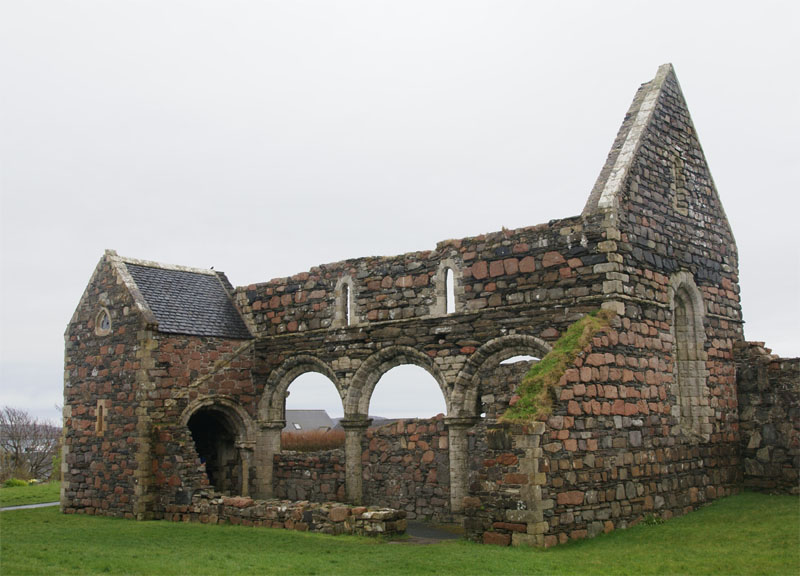
The abbey stands today as a working church and pilgrimage site on the small island of Iona, off the west coast of Mull, cared for by Historic Environment Scotland and used by the ecumenical Iona Community.
What we know
Saint Columba came from Ireland with twelve companions in 563 and founded a monastery here, then part of the Kingdom of Dál Riata. It became one of the oldest Christian centres in Western Europe and a driving force behind the conversion of the Picts and Scots. Its monks kept annals later folded into the Chronicle of Ireland, and the scriptorium is thought to have begun the illuminated Book of Kells before 800.
Viking raiders first struck in 795, with further attacks in 802, 806 and 825. Sixty-eight monks were killed at Martyrs’ Bay in the 806 raid; in 825 Blathmac and the monks who remained were martyred and the abbey burned. Columba’s relics moved to the new abbey of Kells in 878, yet Iona was not deserted — the death here in 980 of Amlaíb Cuarán, a retired King of Dublin, shows the site kept its standing.
In 1203 Ranald, son of Somerled and Lord of the Isles, invited the Benedictine order to refound the monastery on the old Columban ground, alongside an Augustinian nunnery established by his sister Bethóc. The Macdonald Lords of the Isles later made Iona their ecclesiastical capital, expanding the church between 1207 and 1493 and using it as their burial ground and, in effect, their cathedral.
The abbey was dismantled and left roofless after the Scottish Reformation. Restoration began only in 1899, when the Duke of Argyll transferred the ruins to the Iona Cathedral Trust; in 1938 the Reverend George MacLeod founded the Iona Community, which rebuilt the abbey by hand over the following decades. Care passed to Historic Scotland in 2000, and the building reopened in June 2021 after a further £3.75 million renovation — the latest turn in a history of repeated ruin and repair.
What is said
Tradition holds that dozens of early kings are buried in the abbey graveyard — a commonly repeated figure is 48 Scottish kings, alongside rulers of Ireland, Norway and France. Modern scholars are sceptical of the claim; it is thought to have been raised, or invented outright, to boost Iona’s prestige as a royal burial ground. The graveyard is nonetheless believed to hold real medieval dead, among them the Lords of the Isles and their household.
What to see now
St Martin’s Cross, an 8th-century high cross, still stands by the roadside near the abbey. A replica of St John’s Cross stands at the abbey doorway; the restored original is in the Infirmary Museum behind the abbey. St Oran’s Chapel holds the burial place of the Lords of the Isles, marked by their carved grave slabs, and the Augustinian nunnery to the south, rebuilt in the 15th century, still shows the graves of its nuns, including prioress Anna Maclean, who died in 1543. Traces of the earliest monastic ditch and earth bank — part of it possibly older than Columba’s own foundation — remain visible north-west of the current buildings. The cloister capitals, carved over many years by sculptor Christopher Hall with birds and plants native to the island, sit alongside far older stonework; John Smith, the 20th-century Labour Party leader, is buried in the same ground as, by tradition, kings a thousand years his senior.
How to visit
Historic Environment Scotland manages Iona Abbey and Nunnery, with free entry. The island is reached only by passenger ferry — a roughly ten-minute CalMac crossing from Fionnphort on the Isle of Mull, with cars left behind at Fionnphort; the abbey is about 700 metres on foot from the Iona slipway. The address is Isle of Iona, Argyll, PA76 6SQ (National Grid reference NM 286 245; telephone 01681 700 512). Current opening times and any closures are listed on the Historic Environment Scotland website, which should be checked before travelling. Traveline Scotland’s journey planner and the Sustrans cycle-route finder are the public-transport routes Historic Environment Scotland lists for reaching the ferry.
What follows is drawn from published sources, with each claim labelled by how firmly it is established.
The name
The island and abbey were originally called 'Hy' or 'Hii'; the name 'Iona' appears only from the 14th century, arising as a mis-transcription of a Latinised 'Ioua' for 'Hy'.
History
Saint Columba came to Iona from Ireland with twelve companions in 563, founding a monastery within the Kingdom of Dál Riata — one of the oldest Christian centres in Western Europe, and a driving force behind the spread of Christianity among the Picts and Scots.
Viking raiders first attacked Iona in 795, with further raids in 802, 806 and 825. Sixty-eight monks were massacred at Martyrs' Bay in the 806 raid, prompting many to relocate to the new abbey of Kells; in 825 Blathmac and the monks who remained were martyred and the abbey burned.
Columba's relics, including his reliquary shrine, moved to Kells in 878, which became the new principal Columban house. Iona was not deserted, however — its continuing importance is shown by the death there in 980 of Amlaíb Cuarán, a retired King of Dublin.
In 1203 Ranald, son of Somerled and Lord of the Isles, invited the Benedictine order to refound the monastery on the Columban foundations, alongside an Augustinian nunnery established by Somerled's daughter Bethóc. The following year Irish bishops led a raid on the site, a response to Ireland's Columban clergy losing influence over Columba's own foundation.
The abbey was dismantled and abandoned after the Scottish Reformation. The Duke of Argyll transferred the ruins to the Iona Cathedral Trust in 1899, and restoration began; in 1938 Reverend George MacLeod founded the Iona Community, which rebuilt the abbey. Care passed to Historic Scotland in 2000, and the abbey reopened in 2021 after a £3.75 million renovation.
People
-
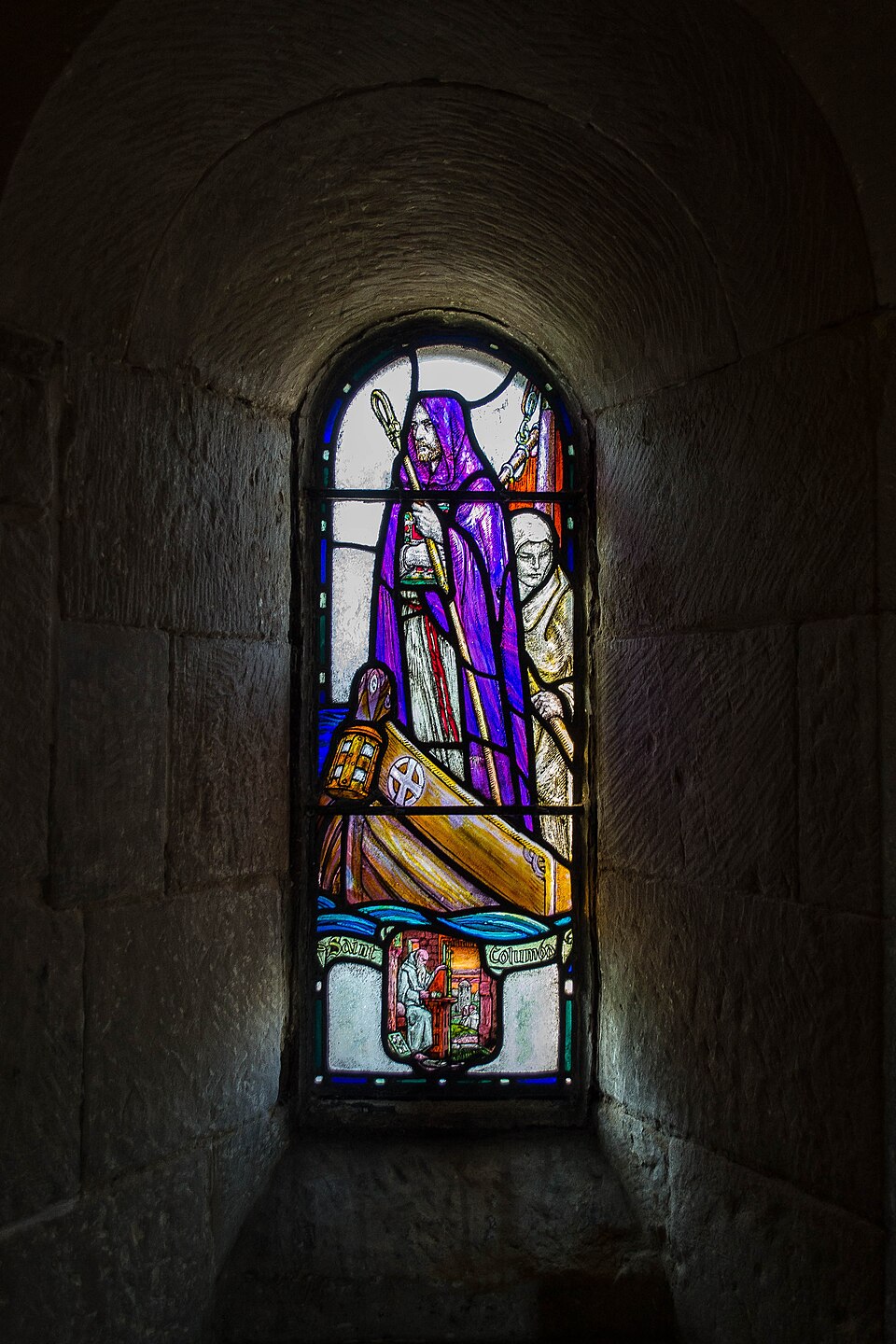
Portrait: MrsEllacott / Wikimedia Commons / CC BY-SA 3.0 Saint Columba
Founder of the monastery in 563; worked and wrote at Torr an Aba
-
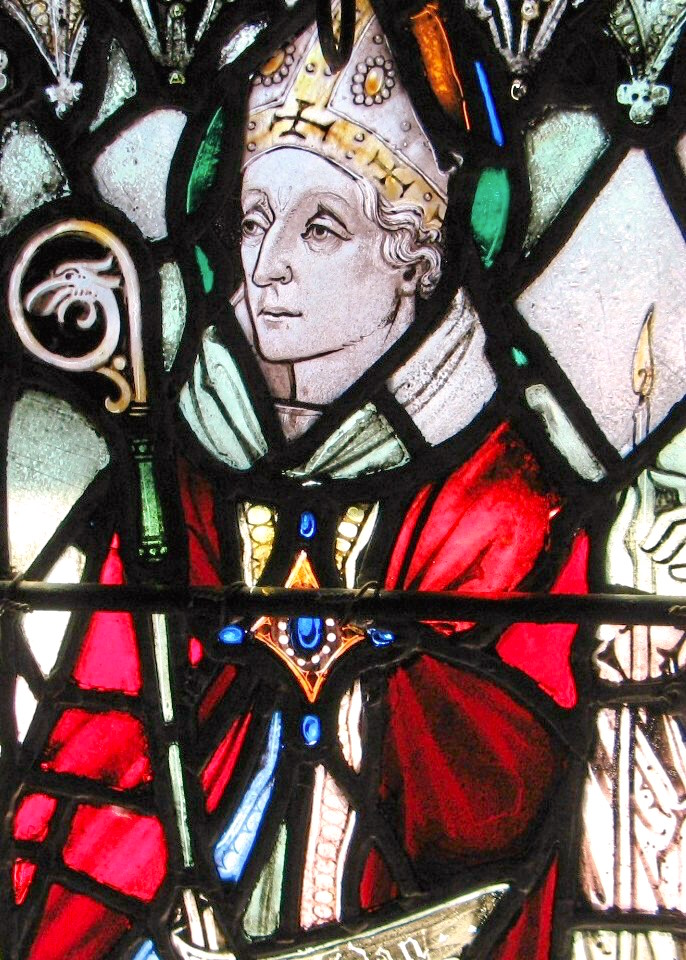
Portrait: Randy OHC / Wikimedia Commons / CC BY 2.0 Saint Aidan
7th-century monk at Iona who helped re-establish Christianity in Northumbria from Lindisfarne
-
The Macdonald Lords of the Isles
Patrons from 1207–1493 who made Iona their ecclesiastical capital and greatly expanded the abbey church
-
Somerled and his son Ranald
Recaptured Iona and invited the Benedictine order to refound the monastery in 1203
-
Anna Maclean
Prioress of the nunnery who died in 1543; her grave slab shows the rochet of the Augustinian Order
-
Reverend George MacLeod
Founder of the Iona Community in 1938, which rebuilt the abbey
-
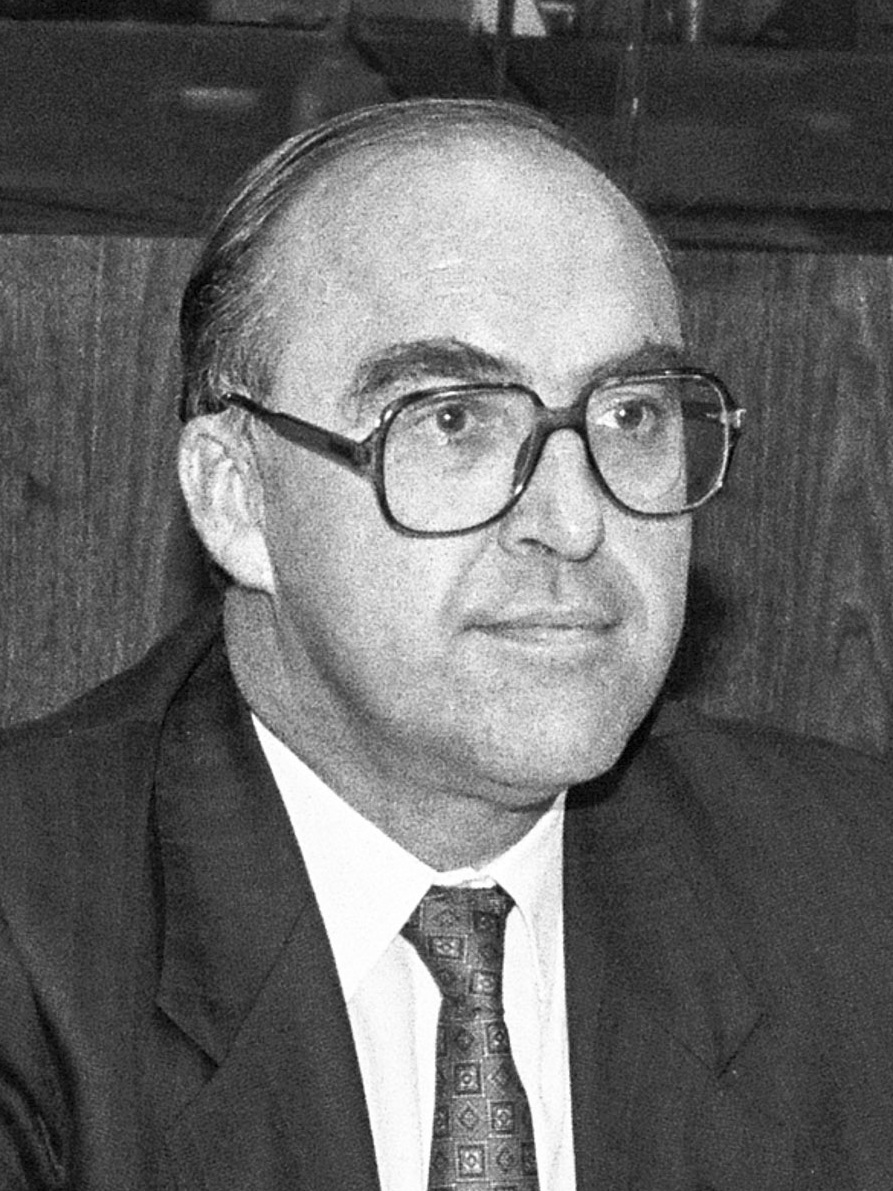
Portrait: © Communautés Européennes 1989 / Wikimedia Commons / Attribution John Smith
20th-century Labour Party leader, buried on Iona in 1994
Cultural influences
-
Celtic Christianity — the monks followed Celtic Christian practices and disciplines, aiming to create 'a perfect monastery as an image of the heavenly city of Jerusalem' rather than acting primarily as missionaries.
-
A major centre of manuscript production: the Chronicle of Ireland incorporated annals compiled on Iona to about 740, and the illuminated Book of Kells is thought to have been made by Iona's monks before 800.
-
Its position on a busy seaway opened trade and contact across the Insular and Continental world — pigments from southern France reached Iona, and Iona monks went on to found monasteries in Belgium, France and Switzerland.
Connections
-
Lindisfarne
Re-Christianised by Saint Aidan, who had been a monk at Iona
-
Abbey of Kells, Ireland
New principal Columban house from 878 after monks relocated under Viking pressure; likely later home of the Book of Kells
-
Clan Donald / Lords of the Isles
Treated the abbey church as their 'Cathedral of the Isles'; St Oran's Chapel was their burial place
-
The Iona Community
Ecumenical Christian order, headquartered in Glasgow, that rebuilt and still uses the abbey
Discovery & excavation
Adomnán describes a building on the small mound Torr an Aba where Columba worked and wrote; charred wood from the believed site has been dated, and a cross socket is visible there. Archaeologist Elizabeth Fowler excavated Torr an Aba in 1956–7. Remains of wood-turning, metal-working and glass (windows and beads) possibly dating from the 7th century have been found on Iona.
In culture
-
Closely associated with the production of the Book of Kells, one of the most celebrated illuminated manuscripts of the early medieval world, believed to have been begun by Iona's monks around 800.
-
Jedburgh-based sculptor Christopher Hall carved the abbey cloister capitals — depicting birds, flora and fauna native to the island — over many years, and also carved John Smith's gravestone.
What to look for
-
St Martin's Cross, an 8th-century high cross, still stands by the roadside near the abbey.
-
A replica of St John's Cross stands at the abbey doorway; the restored original is in the Infirmary Museum behind the abbey.
-
St Oran's Chapel, the burial place of the Lords of the Isles, evidenced by their grave slabs.
-
The Augustinian nunnery to the south, rebuilt in the 15th century, with nuns' graves including that of prioress Anna Maclean (d. 1543).
-
Part of the early monastic ditch and earth bank — partly pre-dating Columba — can still be seen to the north-west of the current abbey buildings.
What is said
Folklore and tradition, recorded as what is said — not as established fact.
-
Many early Scottish kings — a tradition puts the number at 48 — along with kings of Ireland, Norway and France, are said to be buried in the abbey graveyard; the claims are thought to have been raised to boost Iona's prestige. (modern scholars are sceptical; the claims were likely mythic, raised to increase Iona's prestige)
Standing there
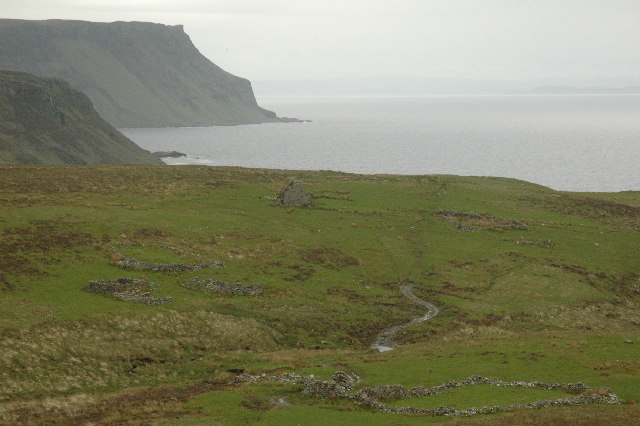
- The abbey stands on the small island of Iona off Mull's west coast: white shell-sand shores, Hebridean light, sea and seabirds, and a ferry crossing that still frames arrival as passage to an island apart.
- The restored medieval stone buildings — abbey church, cloister and St Oran's Chapel — are mostly the legacy of the 15th-century Lords of the Isles. Weathered grave-slabs and high crosses stand in the burial ground, traditionally the resting place of lords and, it is said, early kings.
- In Columba's time after 563 the monastery looked utterly different: wattle-and-timber buildings — church, refectory, scriptorium, cells and guest house — ringed by a ditch and bank still traceable north-west of the present abbey.
- Daily life on early Iona ran to the rhythm of Celtic Christian observance: chanted prayer, farming and craft, and, in the scriptorium, the work behind Iona's illuminated manuscript tradition.
- On the mound called Torr an Aba, tradition and excavated charred wood place the hut where Columba worked and wrote, with a socket that later held a cross — a high spot over the monastery and sea.
Plan your visit
- Location
- 56.3350°N · 6.3914°W
- Nearest settlement
- Baile Mor, Iona
- Access
- Paid entry — managed visitor site
- Start point
- Iona Abbey and Nunnery · Isle of Iona · Argyll · PA76 6SQ · National Grid reference: NM 286 245 · Telephone: 01681 700 512
- Start point
- Fionnphort ferry car park (Iona passenger ferry) — Iona is a roughly 10-minute CalMac passenger ferry from Fionnphort on the Isle of Mull; cars are left at Fionnphort. From the Iona slipway it is about a 700 m walk to the abbey. The listed distance spans the sound crossing plus island walk, not a continuous walk.
Opening & admission
Free entry
Nearby places
Questions people ask
- When was Iona Abbey founded?
- Saint Columba founded a monastery here in 563 with twelve companions from Ireland, within the Kingdom of Dál Riata — among the oldest Christian centres in Western Europe.
- Can Iona Abbey be visited?
- Yes. Historic Environment Scotland manages the site with free entry; the island is reached only by passenger ferry from Fionnphort on Mull, then a short walk.
- What survives of the medieval abbey?
- A restored 15th-century abbey church and cloister, St Oran's Chapel, the Augustinian nunnery, and the 8th-century St Martin's Cross, still standing near the roadside.
- Are kings buried at Iona Abbey?
- Tradition holds that dozens of early Scottish, Irish, Norwegian and French kings were buried in the abbey graveyard, though modern scholars are sceptical of the claim.
- Who rebuilt Iona Abbey after the Reformation?
- Restoration began in 1899 after the Duke of Argyll transferred the ruins to the Iona Cathedral Trust; the Iona Community, founded in 1938, completed the rebuilding.
Sources
- Canmore site record 21664 (accessed 2026-07-09)
- Wikipedia: Iona Abbey (accessed 2026-07-09)
- Wikidata Q198409 (accessed 2026-07-09)
- Historic Environment Scotland: Iona Abbey and Nunnery — prices and times (accessed 2026-07-09)
- Historic Environment Scotland: Iona Abbey and Nunnery — getting here (accessed 2026-07-09)
Explore more: Building or ruins · Pictish & early medieval · Argyll and Bute
The Ancient Codex, in your pocket
Get the Pocket Codex app
Carry the directory with you — Iona Abbey and thousands of ancient places across Britain and Ireland, offline, wherever you roam.