
Sea-battered islands at the edge of the Treshnish Isles carry the divided remains of Cairnburgh Castle. Its defences span Cairn na Burgh Mor and Cairn na Burgh Beag, creating one of Scotland’s most remote-looking island fortifications.
The castle may have begun as the Viking fortress Kiarnaborg, but its recorded history runs through MacDougall, Crown, MacDonald and MacLean power. Later it housed garrisons and, according to one account, lost Iona manuscripts in a Cromwellian fire.
What follows is drawn from published sources, with each claim labelled by how firmly it is established.
History
Cairnburgh Castle's defences straddle Cairn na Burgh Mor and Cairn na Burgh Beag. The fortress may have begun as the Viking Kiarnaborg.
It is first recorded in 1249. The 13th-century Hakonar saga Hakonarsonar mentions the castle as property of Somerled's island-king family.
The castle was associated with Clan MacDougall in the 13th century. After MacDougall support for John Balliol against Robert Bruce, the Crown seized the castle.
Hector Maclean received a 1409 charter from Donald of Islay, Lord of the Isles, describing him as constable of Cairnburgh. James IV besieged the castle in 1504 during MacLean rebellion over Domhnall Dubh.
General David Leslie briefly took the castle in 1647. Cromwell's New Model Army torched the castle in the following decade.
Government forces used Cairnburgh to house troops during the Jacobite risings of 1715 and 1745. Author Isabella Kelly was born at Cairnburgh in 1759.
People
-
Somerled
Ancestor of the island-king family connected with the castle in saga tradition.
-
Alexander III
Demanded the castle in the 13th-century saga account.
-
Hector Maclean
Named in a 1409 charter as constable of Cairnburgh.
-
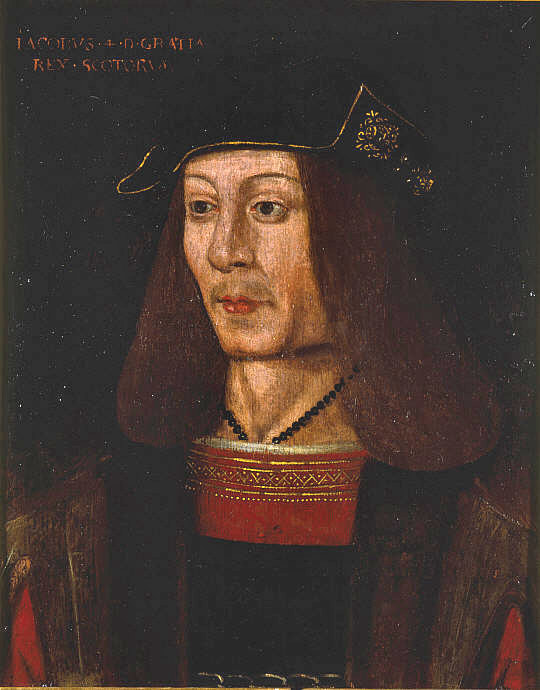
Portrait: Unknown authorUnknown author / Wikimedia Commons / Public domain James IV
Besieged the castle in 1504.
-
General David Leslie
Briefly took Cairnburgh in 1647.
-
Isabella Kelly
Author born at Cairnburgh in 1759.
Connections
-
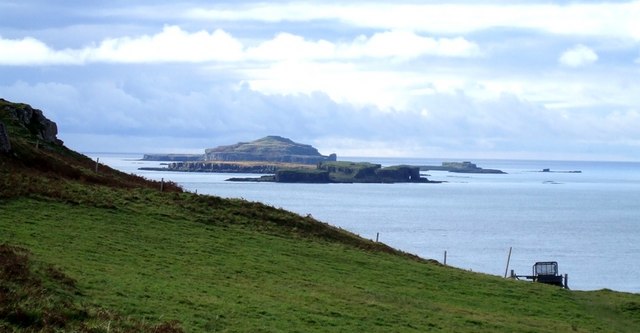
Photo: Rob Farrow / Wikimedia Commons / CC BY-SA 2.0 Treshnish Isles
Cairnburgh stands at the northern extremity of this island group.
-
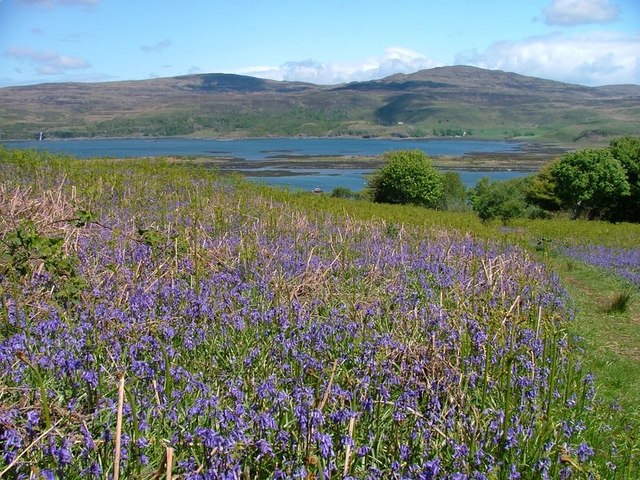
Photo: Mick Garratt / Wikimedia Commons / CC BY-SA 2.0 Loch Tuath
The castle lies at the mouth of the loch.
-
Iona
Manuscripts moved from Iona may have been destroyed in a later fire at Cairnburgh.
-
Clan MacLean
Held and defended the castle in several late-medieval and early-modern episodes.
What to look for
-
Two-island defence
The castle works occupy both Cairn na Burgh Mor and Cairn na Burgh Beag.
-
Barrack block and chapel
The larger island has a barrack block, chapel, courtyard and guard-house.
-
Well on the smaller island
Cairn na Burgh Beag contains another guard-house and a well.
Plan your visit
- Location
- 56.5183°N · 6.3811°W
- Terrain
- Rough ground — reasonable boots advised
Opening & admission
Check specialist local access before travelling
- The castle occupies remote islands in the Treshnish Isles.
- The source gives no public landing or access arrangements.
Nearby places
Questions people ask
- What is Cairnburgh Castle?
- It is a ruined castle whose defences occupy two islands in the Treshnish Isles, north of Mull.
- Was Cairnburgh a Viking fortress?
- The source says it may have begun as the Viking fortress Kiarnaborg, but the first firm record is in 1249.
- Who controlled Cairnburgh Castle?
- Its history includes MacDougall, Crown, MacDonald and MacLean control, with later government military use.
- What survives there?
- Surviving elements include a barrack block, chapel, courtyard, guard-houses and a well across the two islands.
Sources
Explore more: Building or ruins · Medieval · Argyll and Bute
The Ancient Codex, in your pocket
Get the Pocket Codex app
Carry the directory with you — Cairnburgh Castle and thousands of ancient places across Britain and Ireland, offline, wherever you roam.