
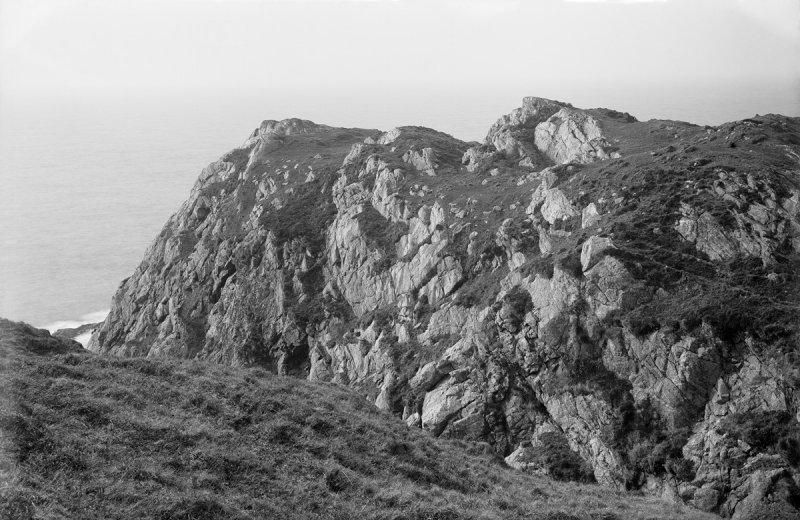
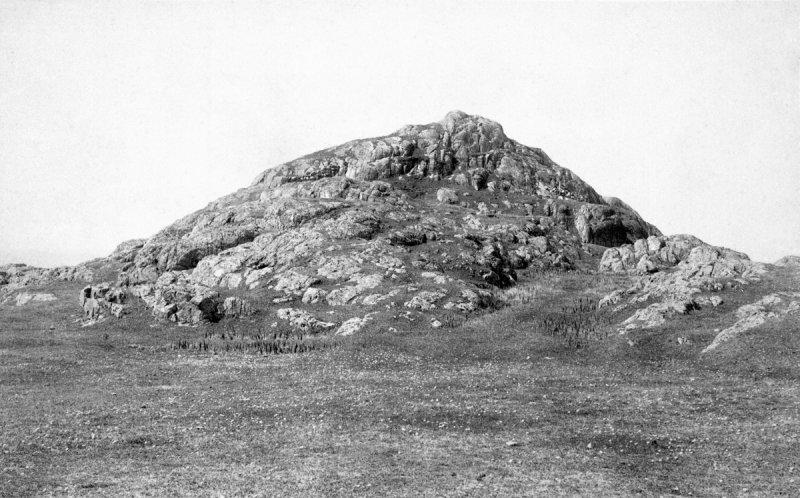
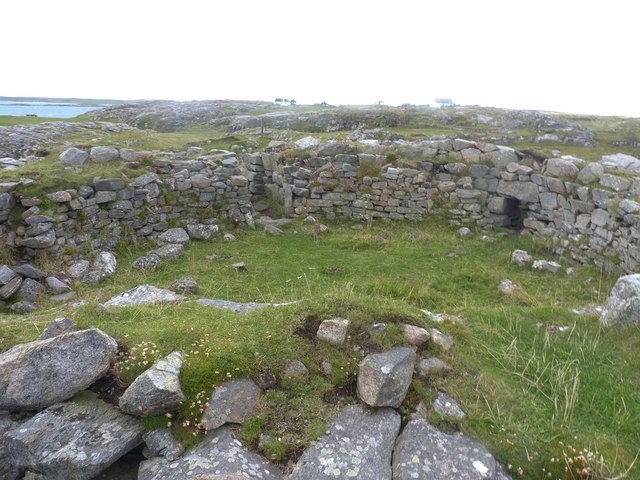
A rocky ridge above Acha on Coll carries the well-preserved walling of Dùn an Achaidh. The monument is a dùn, a small defended stone fort, and is considered the best preserved example on the island.
Local tradition gives the fort a Norse story, naming it for the son of a king called Anlaimh or Olaf. Fire traces noticed by Erskine Beveridge seemed to him to echo the tradition that islanders burned the stronghold during a revolt.
What follows is drawn from published sources, with each claim labelled by how firmly it is established.
History
Dùn an Achaidh is a dùn near the village of Acha on Coll. It is considered the best preserved dùn on the island.
Erskine Beveridge regarded it as one of the four most interesting fortifications on Coll. The Gaelic An t-Achadh translates as the field.
The fort sits on a rocky ridge above land drained by Allt a' Mhuilinn, the stream of the mill. Archaeological finds from the site include decorated pottery, a slate whorl and a stone pounder.
Those finds are now in the National Museum of Antiquities of Scotland. Beveridge suggested that some Coll and Tiree dùns may have been occupied during the Viking Age.
A 1587 list connected Coll with broken men, a term for men without a chief who were often outlaws, and Beveridge argued old dùns could have offered such people defensive shelter.
People
-
Erskine Beveridge
Antiquary who described the site, discussed its traditions and interpreted its defensive history.
-
Rev. Dugald MacEchern
Recorded local traditions and name explanations for Dùn an Achaidh.
-
Hector Maclean of Coll
The laird of Coll listed in the 1587 roll of Highland and island landlords.
-
Samuel Johnson
Local tradition said he visited the dùn, though Beveridge noted Johnson and Boswell did not mention such a visit.
Connections
-
Coll
The fort is one of the island's notable dùns.
-
Acha
The fort stands near this village.
-
Dùn Anlaimh
A nearby Coll crannog or dùn traditionally linked to an Olaf figure.
-
National Museum of Antiquities of Scotland
Holds finds recovered from the site.
What to look for
-
Rocky ridge
The fort occupies a natural ridge, which helped shape its defensive form.
-
Entrance position
The entrance lies at the north-east end of the fort.
-
Outer protective wall
A lower wall protects the approach to the entrance.
-
Fire traces
Beveridge reported visible fire evidence in the foundations, which he connected with local tradition.
What is said
Folklore and tradition, recorded as what is said — not as established fact.
-
The son of Olaf
Local tradition says the fort belonged to the son of a Norse king named Anlaimh or Olaf and was burned when islanders revolted against him. (tradition)
-
Samuel Johnson's visit
Beveridge recorded a local claim that Samuel Johnson visited the fort, but noted that Johnson and Boswell did not mention such a visit. (local claim)
Plan your visit
- Location
- 56.5981°N · 6.5907°W
- Terrain
- Rough ground — reasonable boots advised
Opening & admission
Check locally before travelling
- The dùn stands on a rocky ridge near Acha on Coll.
- The source gives no public access arrangements.
Nearby places
Questions people ask
- What is Dùn an Achaidh?
- It is a dùn, or small defended stone fort, near Acha on the island of Coll.
- What does the name mean?
- Dùn an Achaidh takes its name from An t-Achadh, meaning the field in Gaelic.
- What finds came from the site?
- Decorated pottery, a slate whorl and a stone pounder were found and are now in the National Museum of Antiquities of Scotland.
- What is the Norse tradition?
- Local tradition says it was the stronghold of the son of a Norse king called Anlaimh or Olaf and was burned during a revolt.
Sources
Explore more: Building or ruins · Medieval · Argyll and Bute
The Ancient Codex, in your pocket
Get the Pocket Codex app
Carry the directory with you — Dùn an Achaidh and thousands of ancient places across Britain and Ireland, offline, wherever you roam.