
The Irish annals name Dun Ollaigh three times over — attacked or burned in 686, 698 and 701 — and then record it rebuilt in 714 by Selbach mac Ferchair, the very King of Dál Riata said to have destroyed it. Few early strongholds in Argyll carry so clear a written thread. In that period the site was the royal centre of the Cenél Loairn, and excavation has since traced its abandonment around the 10th century and a later refortification under the MacDougall lords.
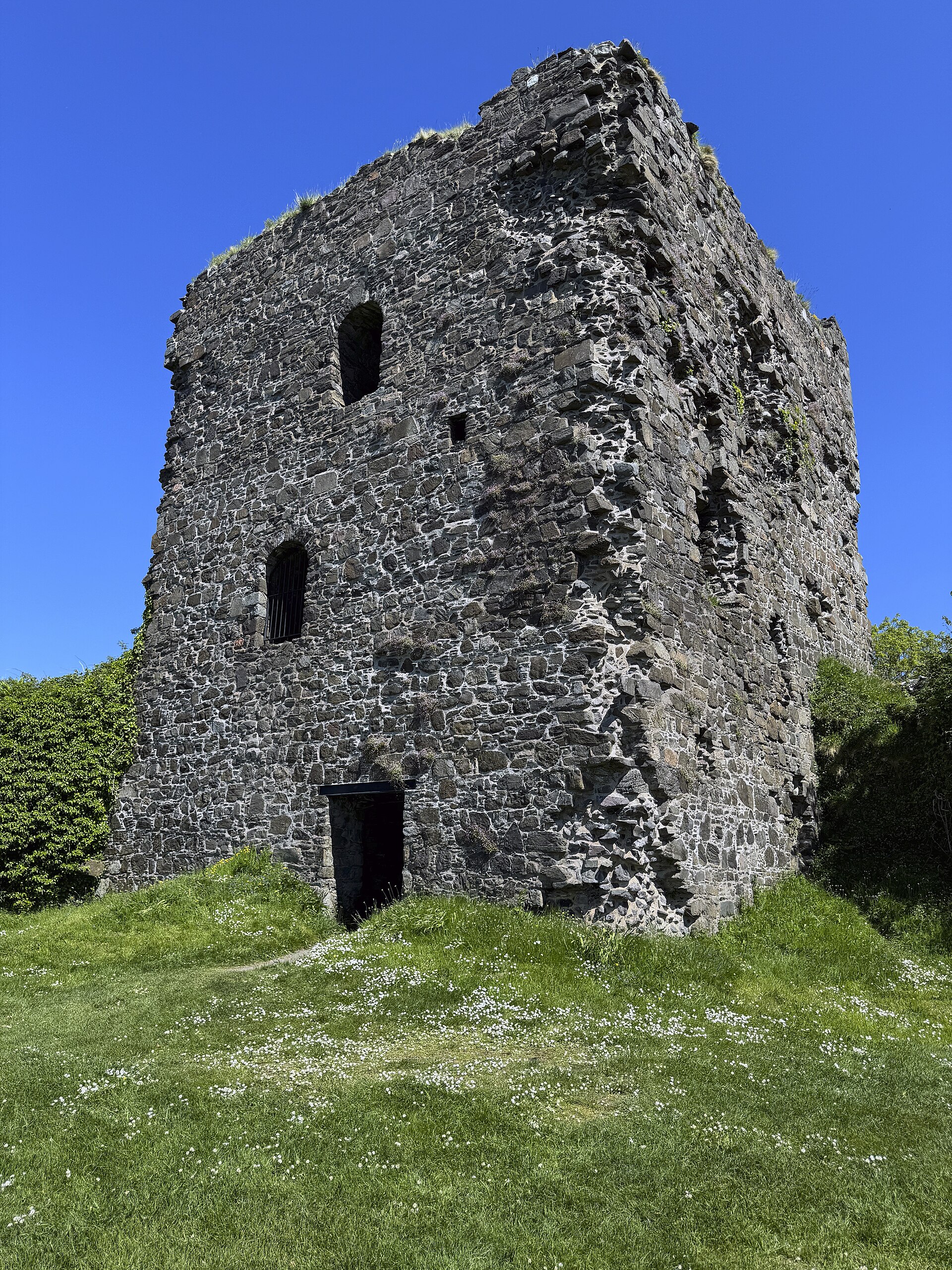
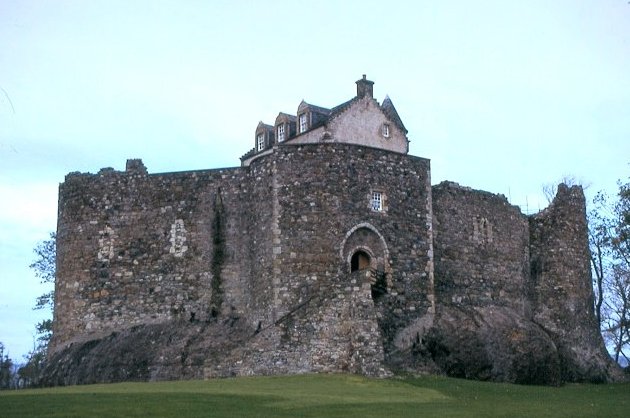
The stone ruins that survive belong largely to the 15th century, when the promontory north of Oban was the seat of the MacDougall Lords of Lorne. It remains an ancestral MacDougall site, open to the public as Dunollie Museum, Castle and Grounds under a charitable preservation trust.
What follows is drawn from published sources, with each claim labelled by how firmly it is established.
The name
The name derives from the Scottish Gaelic Caisteal Dhùn Ollaigh, the castle carrying forward the dun (fort) of Ollaigh named in the Irish annals as "Dun Ollaigh".
History
As the royal centre of the Cenél Loairn kindred within Dál Riata, the fort at Dun Ollaigh was attacked or burned three times — in 686, 698 and 701 — according to the Irish annals.
Selbach mac Ferchair (died 730), King of Dál Riata, rebuilt the site in 714 despite being credited with its destruction in 701. Excavation evidence suggests this early fortification was abandoned some time in the 10th century.
After the region passed to the Kingdom of the Isles under Somerled and then to the MacDougall Lords of Lorne, excavation shows Dunollie was refortified with an earthwork castle in the 13th century, or possibly the late 12th.
John MacDougall's army defeated Robert the Bruce at the Battle of Dalrigh in 1306, but Bruce returned in 1308 and crushed the MacDougalls at the Battle of the Pass of Brander; the lands of Lorne were forfeited to the Campbells before Dunollie was regained later in the 14th century.
The Marquis of Argyll captured the castle in 1644, and it was returned to the MacDougalls in 1661.
In 1746 the MacDougalls abandoned the castle and built Dunollie House on the slope just below the ruins.
People
-
Selbach mac Ferchair
King of Dál Riata who destroyed the site in 701 and rebuilt it in 714
-
Somerled
12th-century ruler of the Kingdom of the Isles whose descendants, the MacDougalls, became Lords of Lorne
-
Dougall
Son of Somerled who held most of Argyll and many islands, and a possible builder of the 13th-century castle
-
Ewan MacDougall
Great-grandson of Somerled and third chief of the MacDougalls, who shifted allegiance from Haakon IV of Norway to the kings of Scotland from the 1250s
-
John MacDougall
Chief who sided with the Balliols and Comyns against Robert the Bruce, defeating Bruce at Dalrigh in 1306
Cultural influences
-
Seat of the MacDougall lordship
As the MacDougall stronghold, Dunollie anchored a family whose 12th-century reach under Dougall spanned most of Argyll along with Mull, Lismore, Jura, Tiree, Coll and other islands.
Connections
-
Kingdom of Dál Riata
Dunollie served as the royal centre of the Cenél Loairn kindred within this early medieval kingdom
-
Kingdom of the Isles
The area came under this semi-independent realm ruled by Somerled in the 12th century before passing to the MacDougalls
-
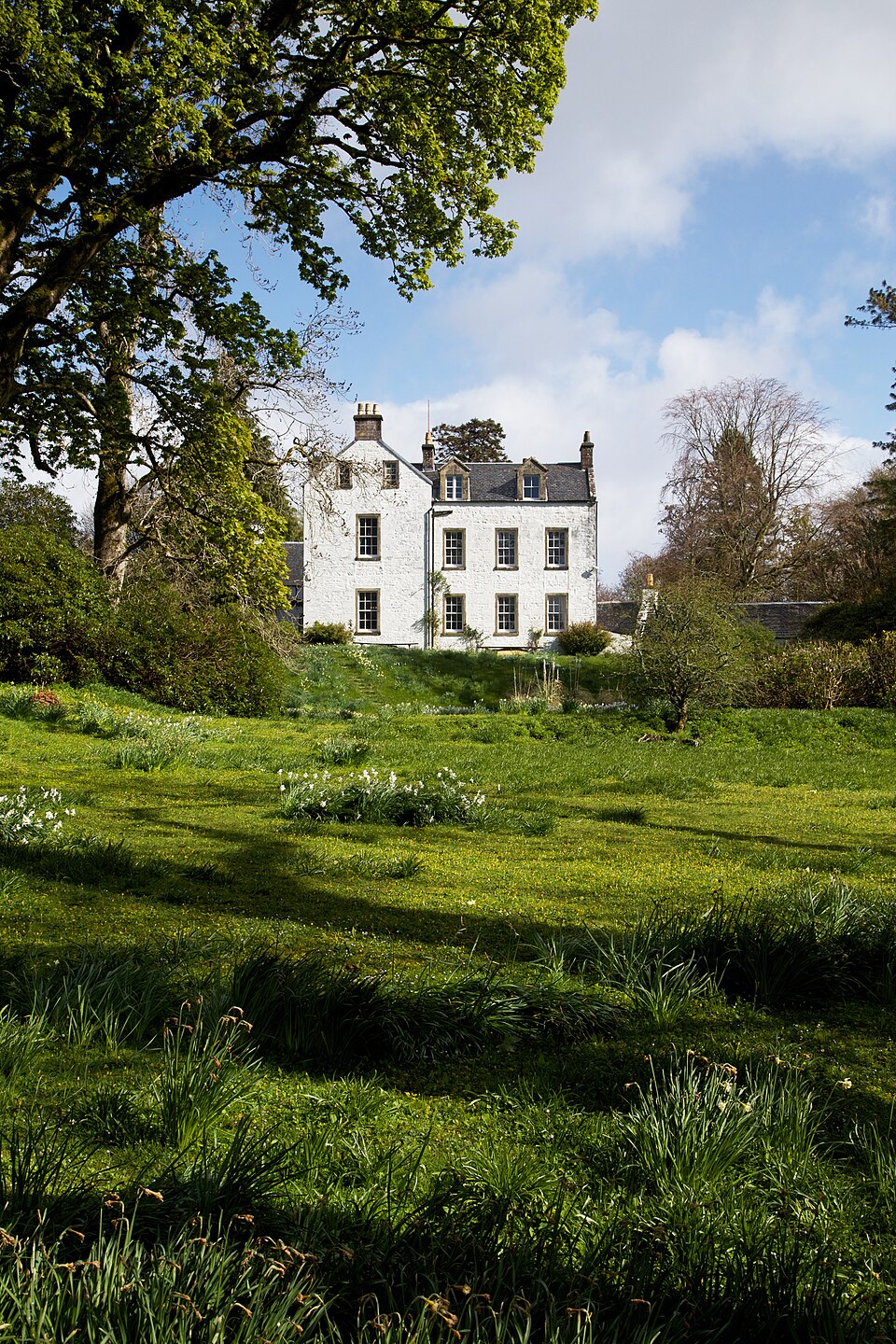
Photo: Tom Parnell / Wikimedia Commons / CC BY-SA 4.0 Dunollie House
Built downhill from the ruins in 1746 when the MacDougalls abandoned the castle for a more modern residence
Discovery & excavation
Reconnaissance excavations were carried out at Dunollie in 1978 by Leslie and Elizabeth Alcock, part of a wider 1974-84 programme investigating early historic fortifications and royal sites in Scotland and published in the Proceedings of the Society of Antiquaries of Scotland (vol. 117). The work indicated an early fortification abandoned around the 10th century and refortification with an earthwork castle in the 13th, or possibly late 12th, century. Remains of a historical herb garden have more recently come to light in the grounds.
In culture
-
Museum, Castle and Grounds
The site operates as Dunollie Museum, Castle & Grounds, run by the MacDougall of Dunollie Preservation Trust as a visitor attraction and social enterprise whose income supports conservation, education and learning at the ancestral site.
What to look for
-
The 15th-century ruins
The surviving stonework dates largely from the 15th century, raised on the long-fortified promontory that guards the harbour approach north of Oban.
-
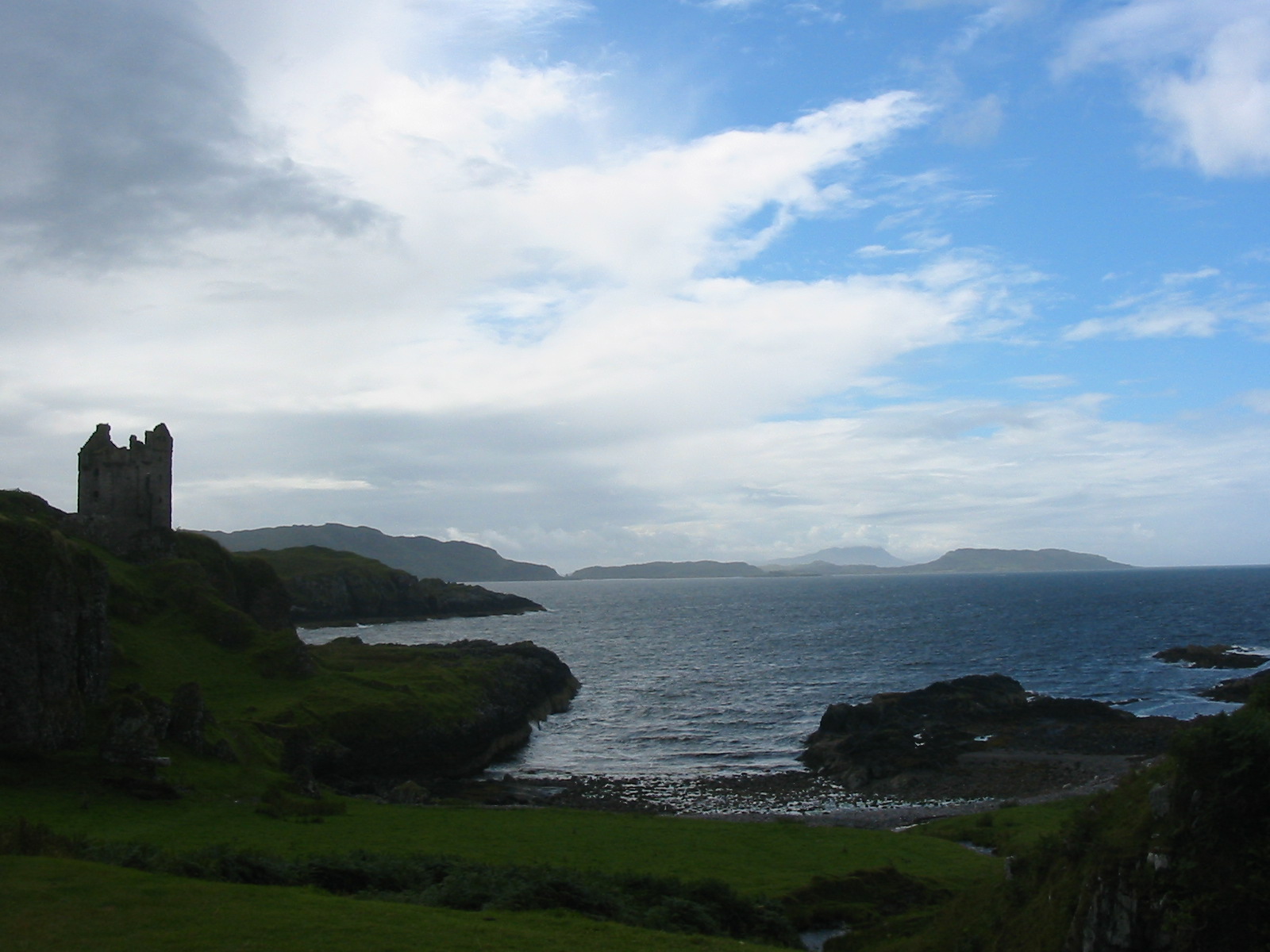
Outlook to Kerrera
The site looks across the water towards the island of Kerrera and over the town, harbour and outlying isles.
-
The rediscovered herb garden
Remains of a historical herb garden have recently been discovered within the castle grounds.
-
Dunollie House
The 18th-century house built downhill from the ruins after the castle was abandoned in 1746, now part of the museum and grounds.
What is said
Folklore and tradition, recorded as what is said — not as established fact.
-
The thrice-burned dun
The Irish annals record the early stronghold attacked or burned three times within a generation — in 686, 698 and 701 — before its rebuilding in 714 by the same king said to have destroyed it. (recorded in the annals; not independently verified)
Plan your visit
- Location
- 56.4264°N · 5.4847°W
Nearby places
Questions people ask
- Can you visit Dunollie Castle?
- Yes. The castle is open to the public as part of Dunollie Museum, Castle and Grounds, operated by the MacDougall of Dunollie Preservation Trust as a visitor attraction and social enterprise.
- How old is Dunollie Castle?
- The visible ruins date largely from the 15th century, but the promontory was fortified far earlier: it was a royal centre of Dál Riata attacked and rebuilt between 686 and 714, and refortified as an earthwork castle in the 13th century.
- Who owned Dunollie Castle?
- It was the seat of the MacDougall Lords of Lorne, descendants of Somerled, and remains an ancestral MacDougall site cared for by the Dunollie Preservation Trust.
- What happened at Dunollie during the wars of Robert the Bruce?
- The MacDougalls of Dunollie defeated Bruce at the Battle of Dalrigh in 1306 but were crushed by him at the Battle of the Pass of Brander in 1308, forfeiting their lands of Lorne to the Campbells before regaining Dunollie later in the 14th century.
Sources
- Wikipedia: Dunollie Castle (accessed 2026-07-18)
- Dunollie Museum, Castle & Grounds — Official Website (accessed 2026-07-18)
- Alcock & Alcock, Excavations at Dunollie Castle, Oban, Argyll, 1978 (Proc. Soc. Antiq. Scot. 117: 119-147) (accessed 2026-07-18)
Explore more: Building or ruins · Medieval · Argyll and Bute
The Ancient Codex, in your pocket
Get the Pocket Codex app
Carry the directory with you — Dunollie Castle and thousands of ancient places across Britain and Ireland, offline, wherever you roam.