
Carved warriors, beasts, crosses and grave monuments fill the old schoolhouse at Meigle. Meigle Sculptured Stone Museum is a museum of Pictish carved stones, early-medieval monuments with crosses, symbols, animals and memorial imagery, in the centre of the village.
The museum matters because the collection points to a major early church or monastic centre nearby. The stones were found around Meigle, many in or near the churchyard, and William Galloway rescued them after the old church burned in 1869.
What follows is drawn from published sources, with each claim labelled by how firmly it is established.
The name
A cross-slab is a carved stone slab with a Christian cross, often combined with Pictish symbols or figural scenes.
History
The museum displays 27 carved Pictish stones in the former parish school built in 1844. An early record places Thana, son of Dudabrach, at Meigle in the mid-9th century during the reign of King Pherath. The stones imply that an important church or monastery may have stood nearby.
The old church burned on 28 March 1869, after which William Galloway rescued the stones. Sir George Kinloch bought the schoolhouse toward the end of the 19th century to protect the symbol stones. The museum passed into state ownership in 1936 and reopened to the public in 1949 after post-war renovation.
People
-
Thana son of Dudabrach
Recorded at Meigle in the mid-9th century and likely a monk or scribe.
-
King Pherath
Pictish king in whose reign Thana is recorded at Meigle.
-
William Galloway
Rescued the stones after the church fire of 1869.
-
Sir George Kinloch
Bought the former schoolhouse to protect the stones.
What to look for
-
Class II stones
Class II Pictish stones usually show symbols carved in relief and often include a Christian cross.
-
Aggressive beasts
The Meigle local style includes biting animals and crowded carved scenes.
-
Meigle 1
This cross-slab may be the oldest Meigle stone and was originally a standing stone before Pictish carving.
-
Meigle 2
This major cross-slab includes a Daniel in the lions' den scene and is linked to Vanora folklore.
-
Recumbent tombstones
A recumbent tombstone is a carved grave marker designed to lie flat rather than stand upright.
-
Old Red Sandstone
The local sandstone allowed fine carving but is vulnerable to erosion.
What is said
Folklore and tradition, recorded as what is said — not as established fact.
-
Local folklore identifies the mound called Vanora's Grave with Guinevere, King Arthur's wife, and connects Meigle 2 with her punishment by wild beasts.
Plan your visit
- Location
- 56.5879°N · 3.1625°W
- Access
- Open access
- Terrain
- Easy going
Opening & admission
- Museum in the former parish schoolhouse at Meigle.
- Opening is museum-managed; check current Historic Environment Scotland arrangements.
Nearby places
Carved stone · Pictish & early medieval
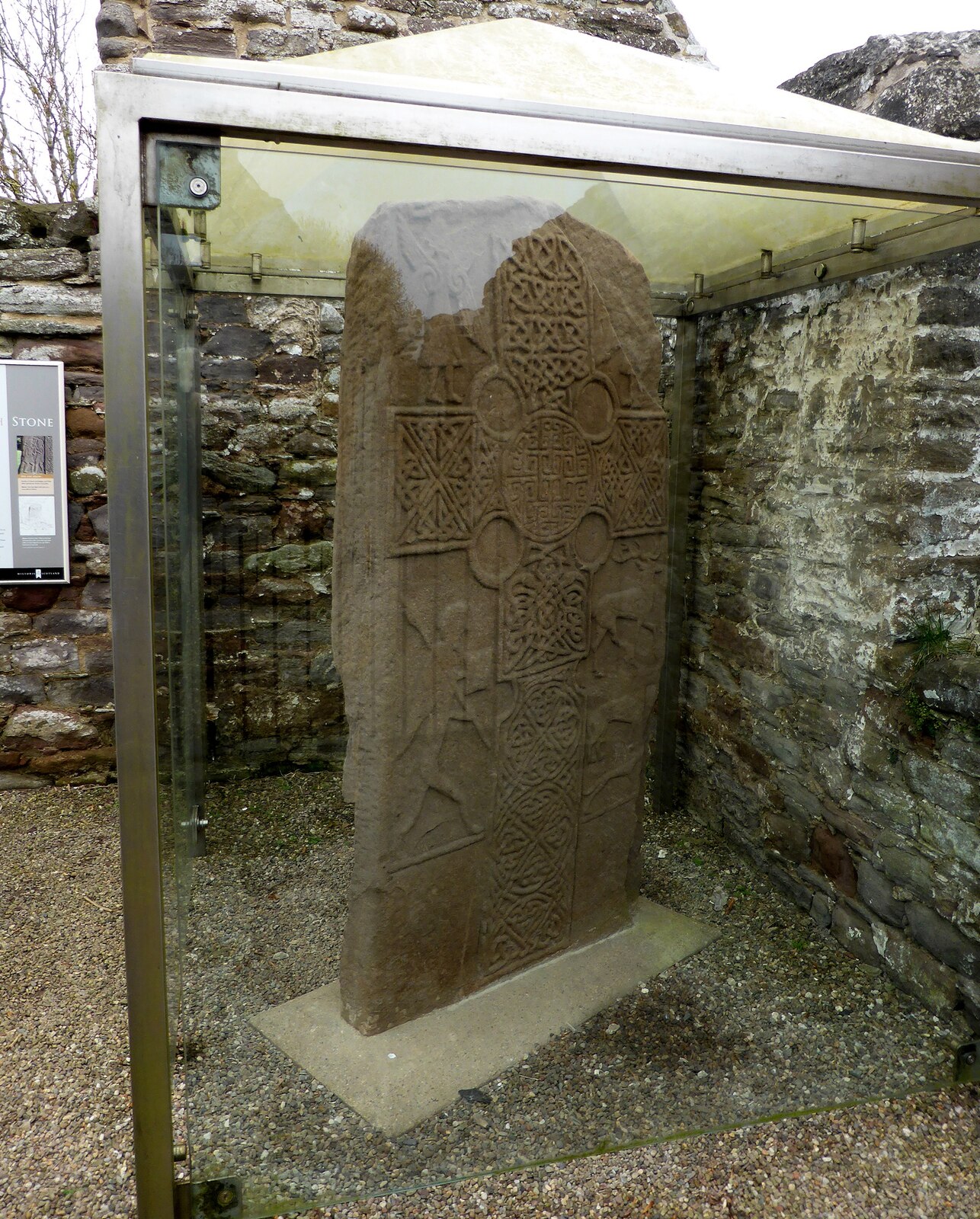
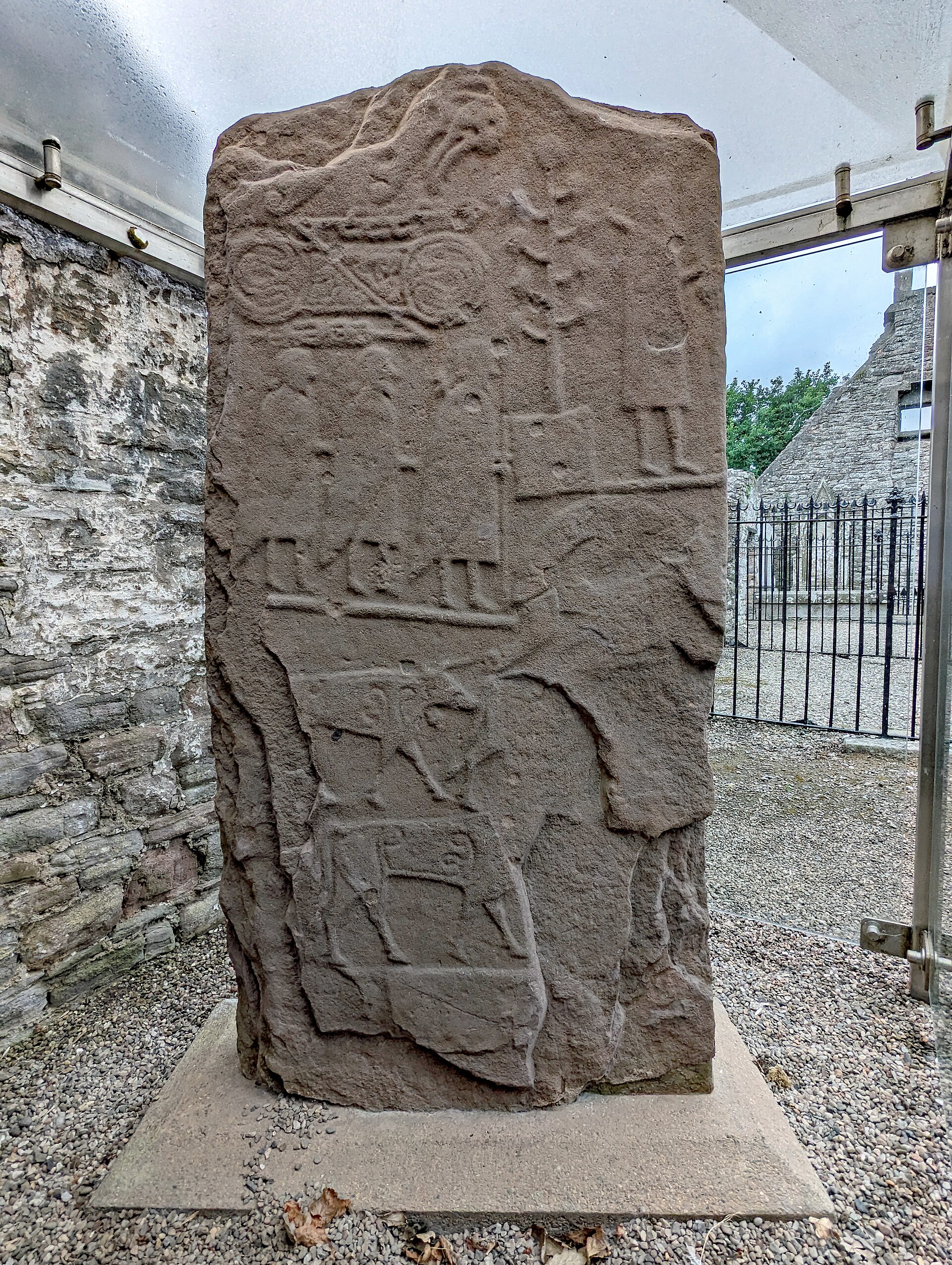
Eassie Sculptured Stone
Angus
The cross-slab was carved about the mid-8th century AD. It was found in the bed of the Eassie Burn near Eassie Church by Rev. Cordiner around 1786.
- Near Glamis
- 117 metres from car park
- Easy path
Minor monument · Medieval
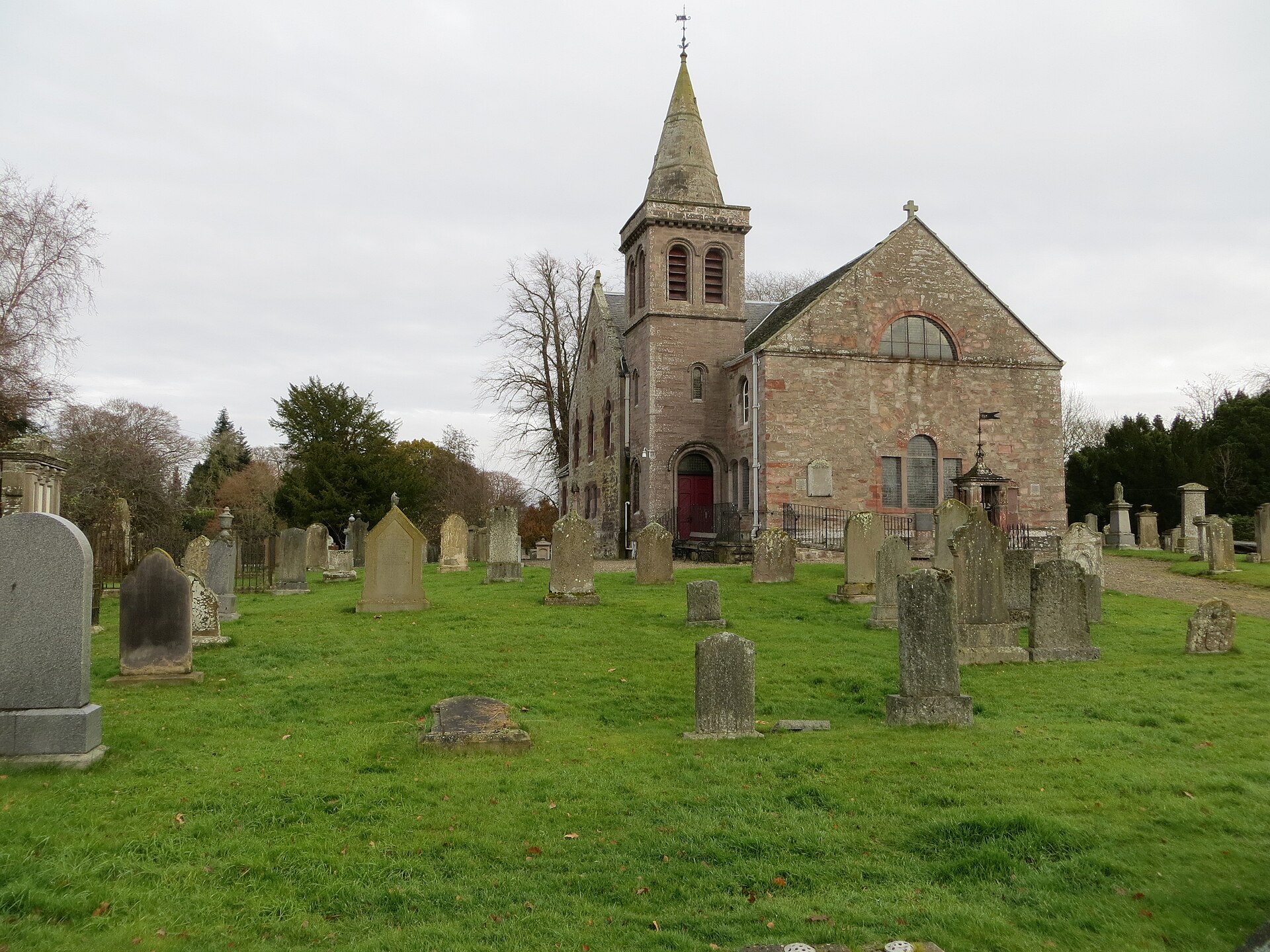
Mercat Cross, Kettins
Perth and Kinross
Mercat cross with HES-listed pre-1800 evidence (pre-Reformation).
- Easy path
Questions people ask
- What is Meigle Sculptured Stone Museum?
- It is a museum in Meigle displaying 27 carved Pictish stones.
- What is a Pictish carved stone?
- It is an early-medieval stone carved with symbols, crosses, animals, people or memorial imagery associated with Pictish culture.
- Why are the stones at Meigle important?
- The collection suggests that an important early church or monastery stood nearby.
- Who rescued the stones?
- William Galloway rescued them after the old church burned in 1869.
- What is Vanora's Grave?
- It is a local folklore name for a mound near where Meigle 1 and Meigle 2 once stood, linked in tradition with Guinevere.
Sources
Explore more: Carved stones · Pictish & early medieval · Perth and Kinross
The Ancient Codex, in your pocket
Get the Pocket Codex app
Carry the directory with you — Meigle Sculptured Stone Museum and thousands of ancient places across Britain and Ireland, offline, wherever you roam.