
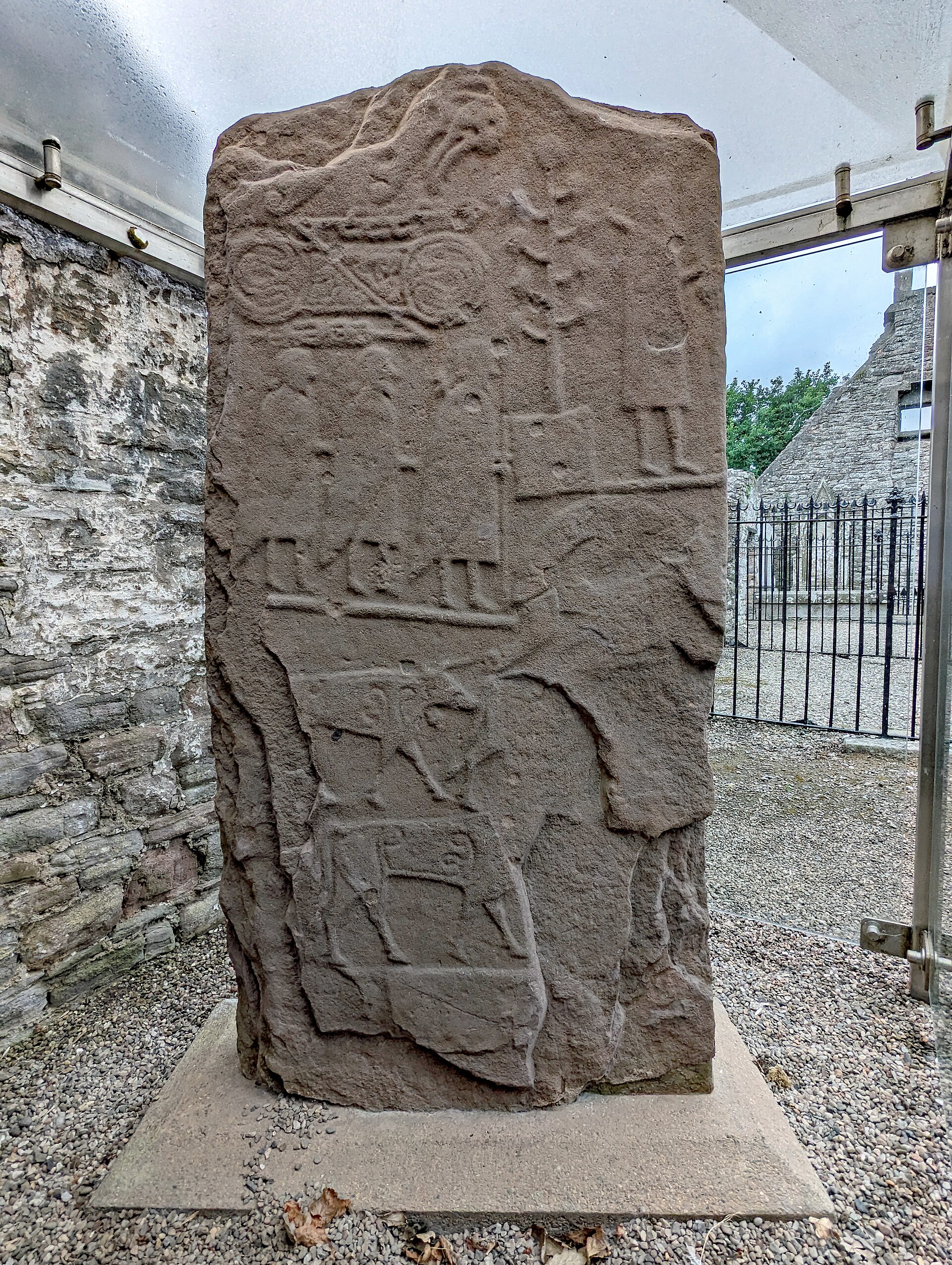
A tall carved slab stands inside a clear shelter within the ruined church at Eassie. The Eassie Stone is a Pictish cross-slab, a carved early-medieval slab that pairs a cross face with Pictish symbols, found in the nearby burn in the late eighteenth century.
Eassie matters because both faces are crowded with imagery. Angels, interlace, a warrior, stag and hounds, cattle, cloaked figures, a Pictish beast, and a double disc and Z-rod make the slab one of the most visually detailed Angus stones.
What follows is drawn from published sources, with each claim labelled by how firmly it is established.
History
The Eassie Stone dates to about the mid eighth century AD.
It was found in the Eassie Burn near Eassie Church by Rev. Cordiner around 1786.
The stone stood in the churchyard for over a century.
In the 1960s it was placed in a purpose-built building with viewing windows inside the ruined church.
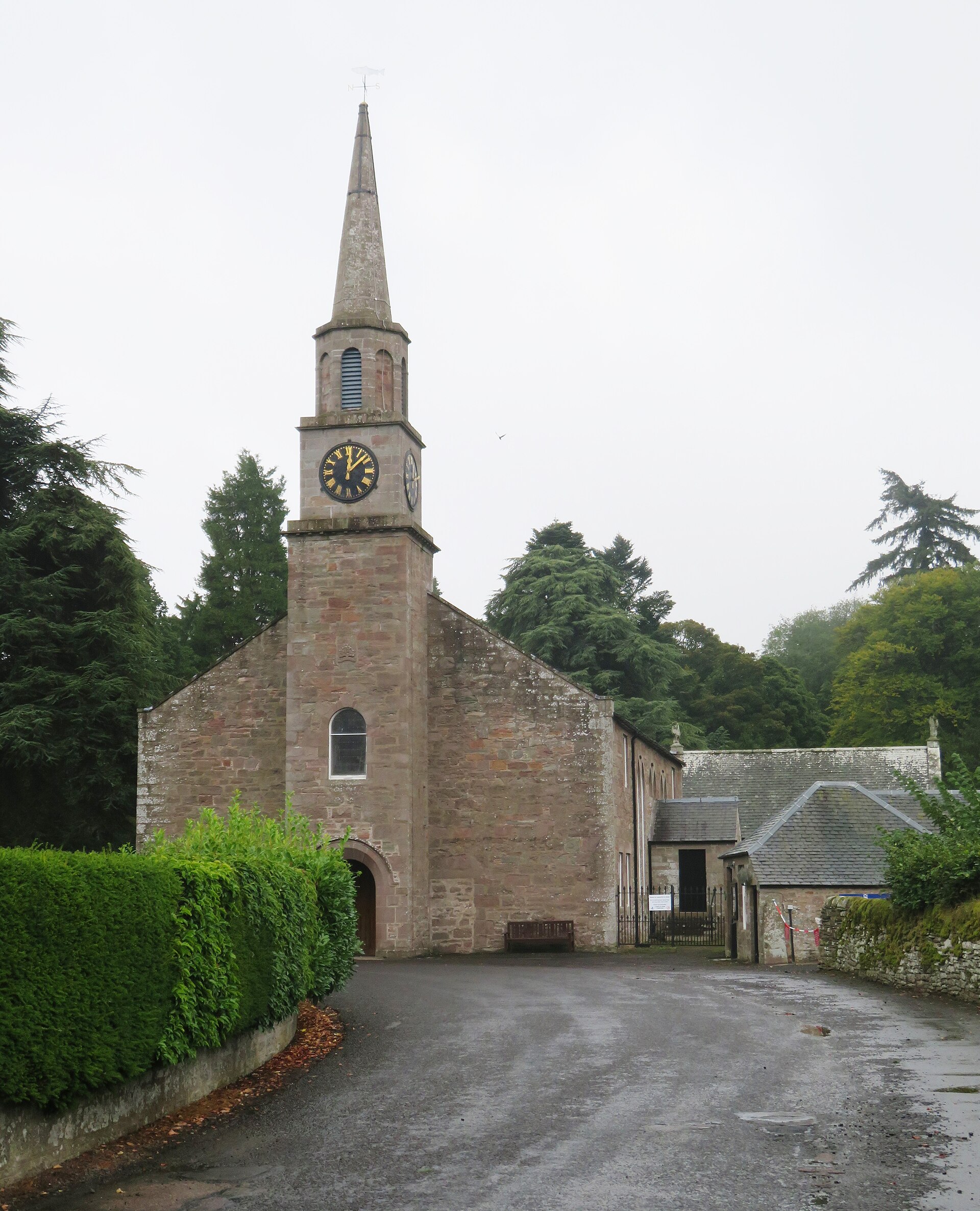
The church was probably built in the sixteenth century on the site of an earlier building.
Lloyd Laing placed Eassie in the Aberlemno School of Pictish sculpture.
People
-
Rev. Cordiner
Found the stone in the Eassie Burn around 1786.
-
Lloyd Laing
Linked the stone to the Aberlemno School of Pictish sculpture.
-
John Romilly Allen and Joseph Anderson
Created the classification system under which Eassie is Class II.
Connections
-
Glamis stones
Nearby stones in the same broad Aberlemno School grouping.
-
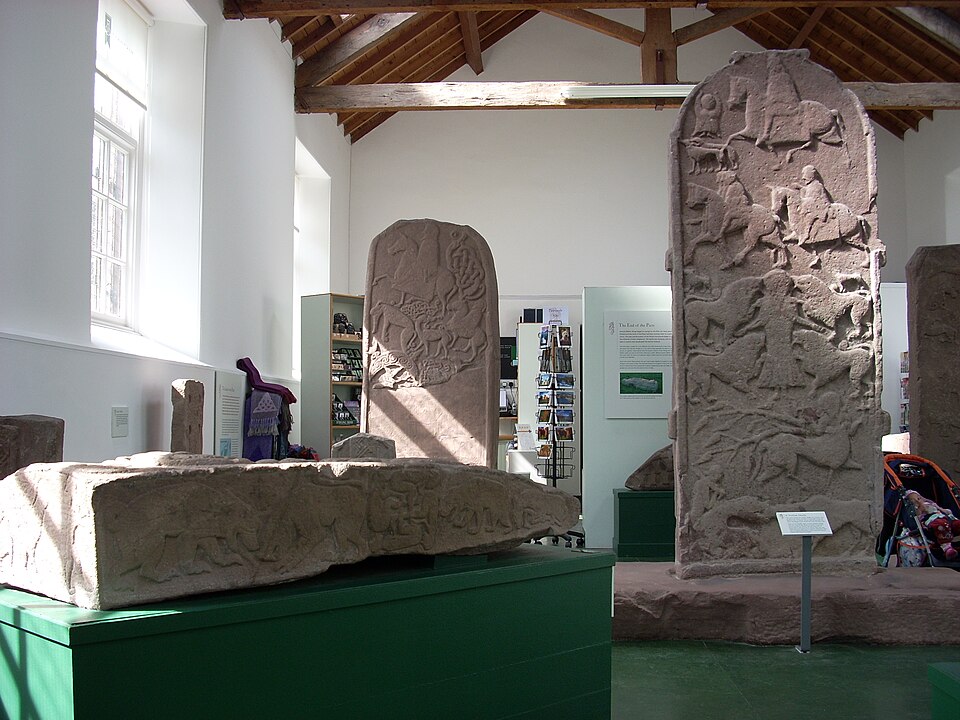
Photo: Simon Burchell / Wikimedia Commons / CC BY-SA 3.0 Meigle Sculptured Stone Museum
Another regional carved-stone collection.
-
Eassie Church
Ruined church that now shelters the stone.
What to look for
-
Cross face
The cross face has ringed angles, keywork, and interlaced knotwork.
-
Figural panels
A warrior, stag, hounds, angels, and cattle appear among the carved scenes.
-
Symbol face
The rear face carries Pictish symbols including beasts and a double disc and Z-rod.
-
Church shelter
The slab is protected in a viewing shelter within the roofless old church.
-
Aberlemno link
Its style belongs to a wider Angus and east-Scotland carving group.
Plan your visit
- Location
- 56.6144°N · 3.0566°W
- Access
- Open access
- Terrain
- Easy going
Opening & admission
- Displayed in a shelter within the ruined Eassie church; check local access and respect the site.
Nearby places
Carved stone · Pictish & early medieval
Eassie Sculptured Stone
Angus
The cross-slab was carved about the mid-8th century AD. It was found in the bed of the Eassie Burn near Eassie Church by Rev. Cordiner around 1786.
- Near Glamis
- 117 metres from car park
- Easy path
Fortified place · Medieval
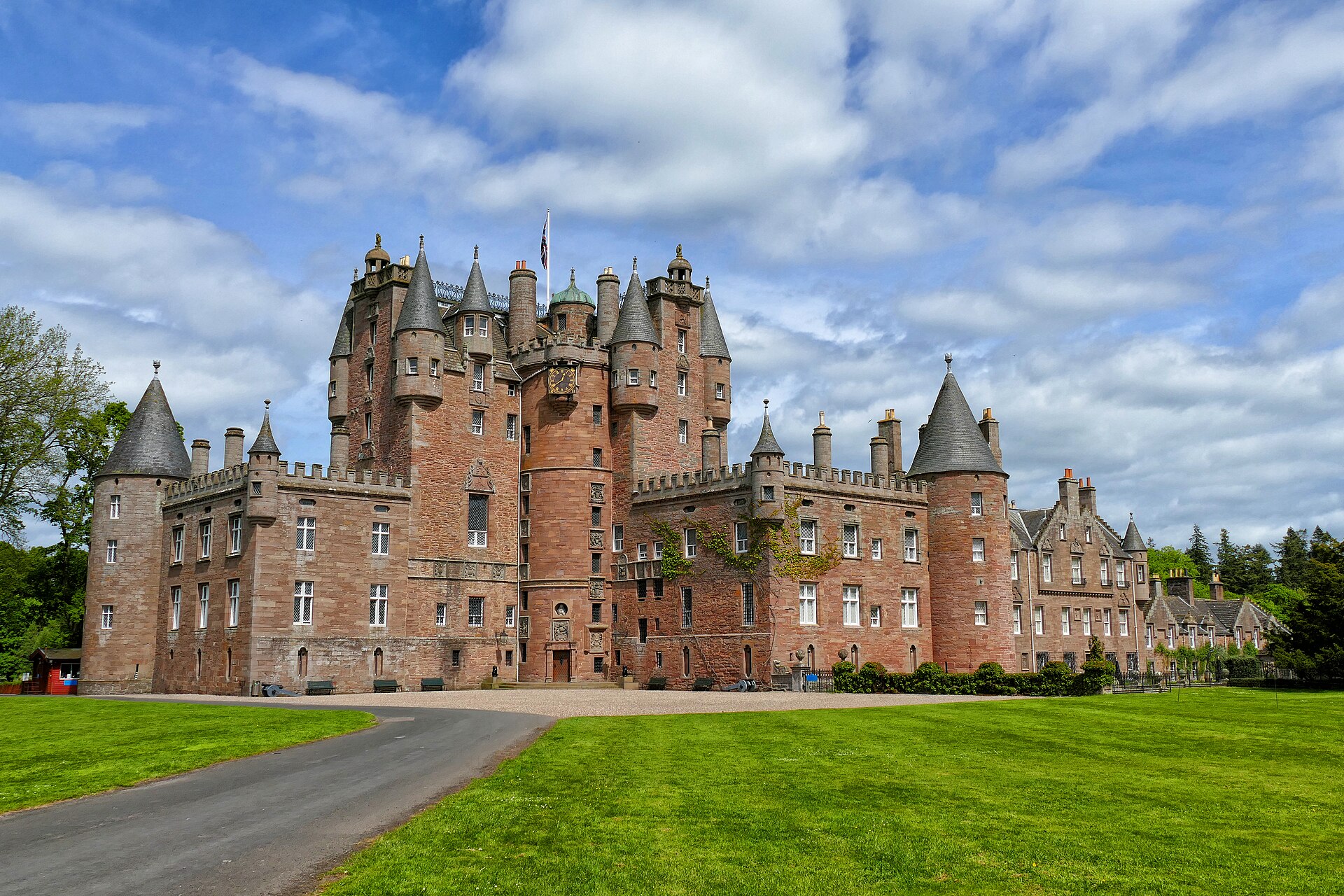
Glamis Castle
Angus
Home of the Lyon family since the fourteenth century, Glamis binds a medieval tower house to royal births, a notorious witchcraft trial and some of…
- Easy path
Questions people ask
- What is the Eassie Stone?
- It is a mid eighth-century carved Pictish slab housed in the ruined church at Eassie.
- Where was it found?
- It was found in the Eassie Burn near Eassie Church around 1786.
- What is carved on it?
- The slab has a decorated cross, figures, animals, Pictish symbols, and interlaced designs.
- How is it protected?
- It stands in a purpose-built shelter with viewing windows inside the ruined church.
Sources
Explore more: Carved stones · Pictish & early medieval · Angus
The Ancient Codex, in your pocket
Get the Pocket Codex app
Carry the directory with you — Eassie Stone and thousands of ancient places across Britain and Ireland, offline, wherever you roam.