
The earliest settlement on the tidal island is thought to date to the 6th century, perhaps by Christian missionaries.
Brough of Birsay is a settlement near Birsay, Orkney, Scotland.
What follows is drawn from published sources, with each claim labelled by how firmly it is established.
The name
The Old Norse name for the island was 'Byrgisey', meaning 'fort island', which gives the parish of Birsay its name. 'Brough' itself means fort (the same root as 'broch').
History
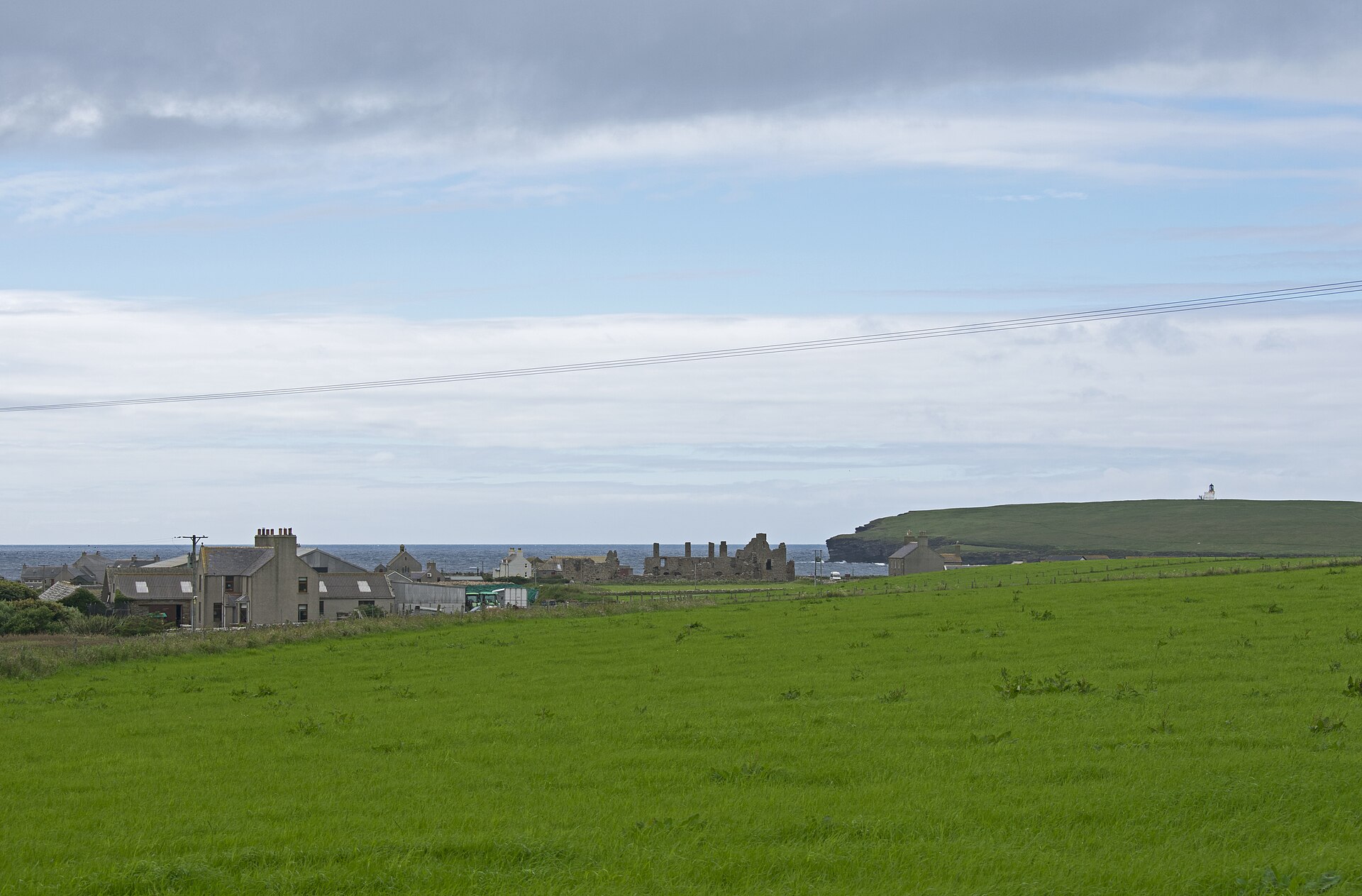
The earliest settlement on the tidal island is thought to date to the 6th century, perhaps by Christian missionaries.
In the 7th and 8th centuries it was a significant Pictish fortress; bronze brooches and other ornaments were being manufactured on site in the 8th century, attested by a group of metalworking moulds.
By the 9th century the Picts had been displaced by Norsemen, and an extensive Norse settlement and church came to overlie the earlier Pictish remains.
Before Kirkwall became the centre of power in the 12th century, Birsay was the seat of the rulers of Orkney; according to the Orkneyinga Saga the main residence of Earl Thorfinn the Mighty (1014–1065) was at Birsay, though his hall is today thought to have stood nearby on the Mainland rather than on the brough itself.
A fine, small Romanesque church dedicated to St Peter was built on the brough in the 12th century, with some evidence of an earlier, possibly Pictish, church on the same site; it remained a place of pilgrimage until the Middle Ages.
Excavations were first undertaken by Cecil Curle in 1936–1937.
People
-
Cecil Curle
Archaeologist who first excavated the site in 1936–1937
-
Thorfinn the Mighty
Earl of Orkney (1014–1065) whose main residence the Orkneyinga Saga places at Birsay
-
The Picts
Culture that held the island as a fortress in the 7th–8th centuries and produced fine metalwork and carved stones here
-
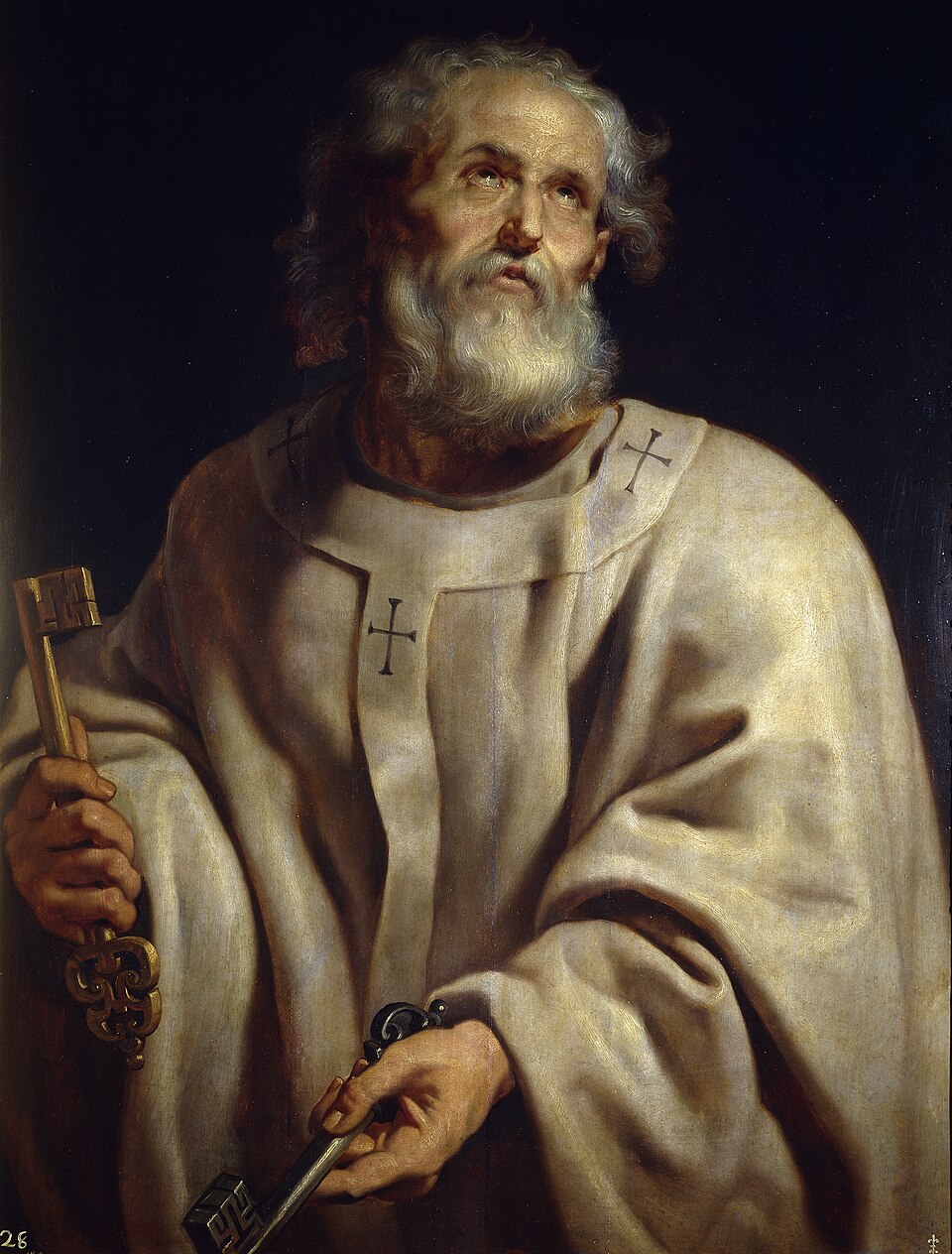
Portrait: Peter Paul Rubens / Wikimedia Commons / Public domain St Peter
Dedicatee of the 12th-century Romanesque church on the brough
Cultural influences
-
Pictish fine metalworking and sculpture — the site has yielded moulds for casting bronze brooches and ornaments, and an important carved symbol stone, marking it as a high-status Pictish centre.
-
Norse settlement architecture — substantial longhouses with heating and drainage systems and possible saunas, some large enough to indicate considerable wealth, overlie the Pictish settlement.
-
Romanesque church-building — the 12th-century St Peter's church, with its semi-circular apse, congregation benches and reconstructed red sandstone altar, set within an enclosure that separated graveyard from houses, perhaps part of a small monastery.
Connections
-
The Orkney Museum, Kirkwall
Holds part of the collection of Pictish artefacts excavated from the brough
-
National Museum of Scotland, Edinburgh
Holds important Birsay finds, including the carved Pictish symbol stone (a replica stands on site)
-
St Magnus / Christchurch, Birsay
The first Bishop of Orkney's cathedral, 'Christchurch' — which later housed the remains of St Magnus — is associated with this period of Birsay's pre-eminence
-
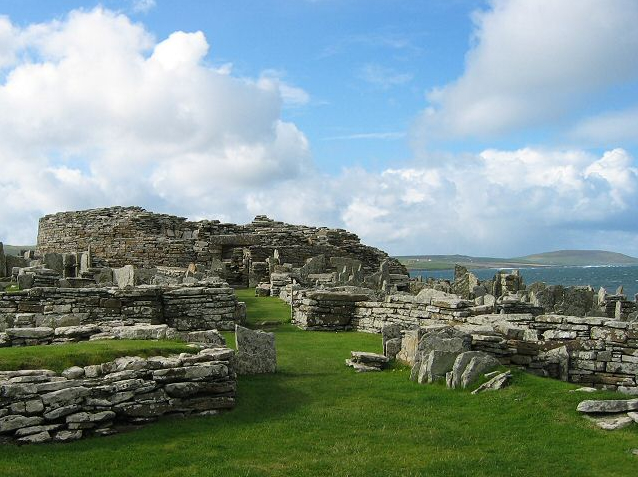
Photo: Rob Burke / Wikimedia Commons / CC BY-SA 2.0 Broch of Gurness
Nearby Orkney monument cross-referenced in the same accounts
Discovery & excavation
First excavated by Cecil Curle in 1936–1937. The Pictish phase is attested by a small well and an important artefact collection, notably a group of moulds for fine metalworking that show bronze brooches and ornaments were made here in the 8th century. An important early-8th-century carved stone, found in pieces during clearance of the church enclosure (which overlies a Pictish graveyard), shows a procession of three robed Picts bearing spears, swords and square shields beneath parts of four Pictish symbols. Two simple cross-incised slabs, probably Pictish or early-medieval grave-markers, were also found.
Finds now held at: The Orkney Museum, Kirkwall; National Museum of Scotland, Edinburgh.
In culture
-
The site, and especially its finds, have been central to scholarly debate about the nature of Pictish–Norse relations in northern Scotland.
What to look for
-
The remains of the small 12th-century Romanesque St Peter's church, with its semi-circular apse, stone congregation benches lining the walls, and a red sandstone altar reconstructed in the 1930s.
-
The enclosure wall around the kirk that separated the graveyard from the houses beyond, and the remains of adjoining buildings round three sides of an open court (possibly a small monastery).
-
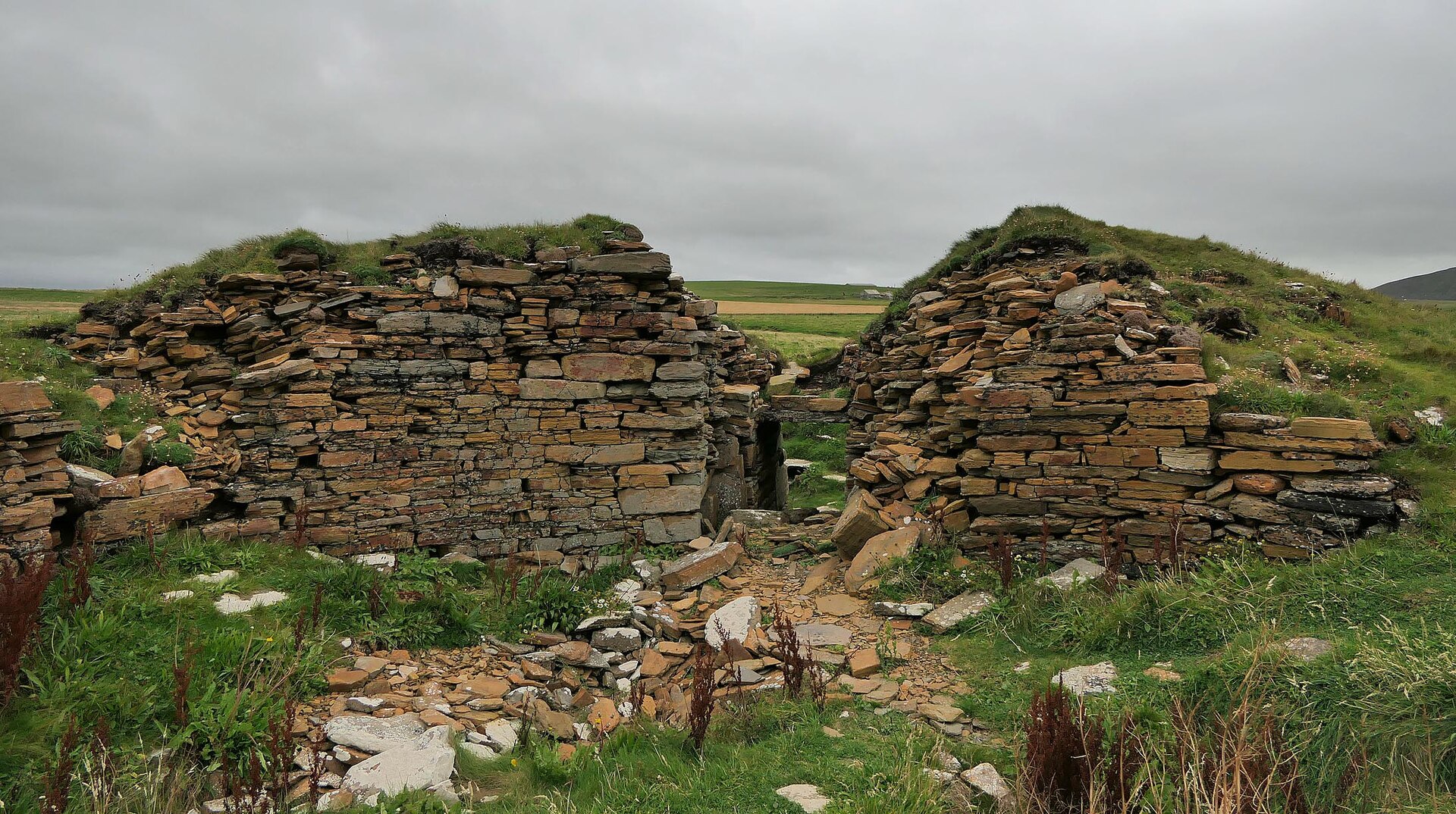
The footprints of substantial Norse longhouses with evidence of heating and drainage systems.
-
An on-site replica of the carved Pictish symbol stone (the original is in Edinburgh) and two simple cross-incised grave-marker slabs displayed on site.
-
The largely natural causeway giving access on foot only at low tide across the 240 m Sound of Birsay.
Plan your visit
- Location
- 59.1369°N · 3.3353°W
- Nearest settlement
- Birsay
- Access
- Permission required
- Start point
- Birsay · Orkney · KW17 2LX · National Grid reference: HY 239 285 · Telephone: 01856 841 815 (Skara Brae)
- Best time
- **Please note, the visitor centre is closed.** Explore more with Orkney Digital Guide Discover nearly 5,000 years of Orkney’s history and prehistory, including Brough of Birsay, with our Orkney Digital Guide. Current unexpected and short term closures Opening times The Brough of Birsay is free to visit and open all year, but only accessible at low tide. Please note, the visitor centre is closed.
- Start point
- Point of Buckquoy car park (Brough of Birsay) — Car park on the Mainland at the Point of Buckquoy, beside the HES interpretation sign. The island is cut off at high tide — check tide tables before crossing; the on-site visitor centre is currently closed. Postcode KW17 2LX from the HES getting-here page.
- Sat-nav
- KW17 2LX
Opening & admission
Free entry
- **Please note, the visitor centre is closed.** Explore more with Orkney Digital Guide Discover nearly 5,000 years of Orkney’s history and prehistory, including Brough of Birsay, with our Orkney Digital Guide.
- Current unexpected and short term closures Opening times The Brough of Birsay is free to visit and open all year, but only accessible at low tide.
- Please note, the visitor centre is closed.
Nearby places
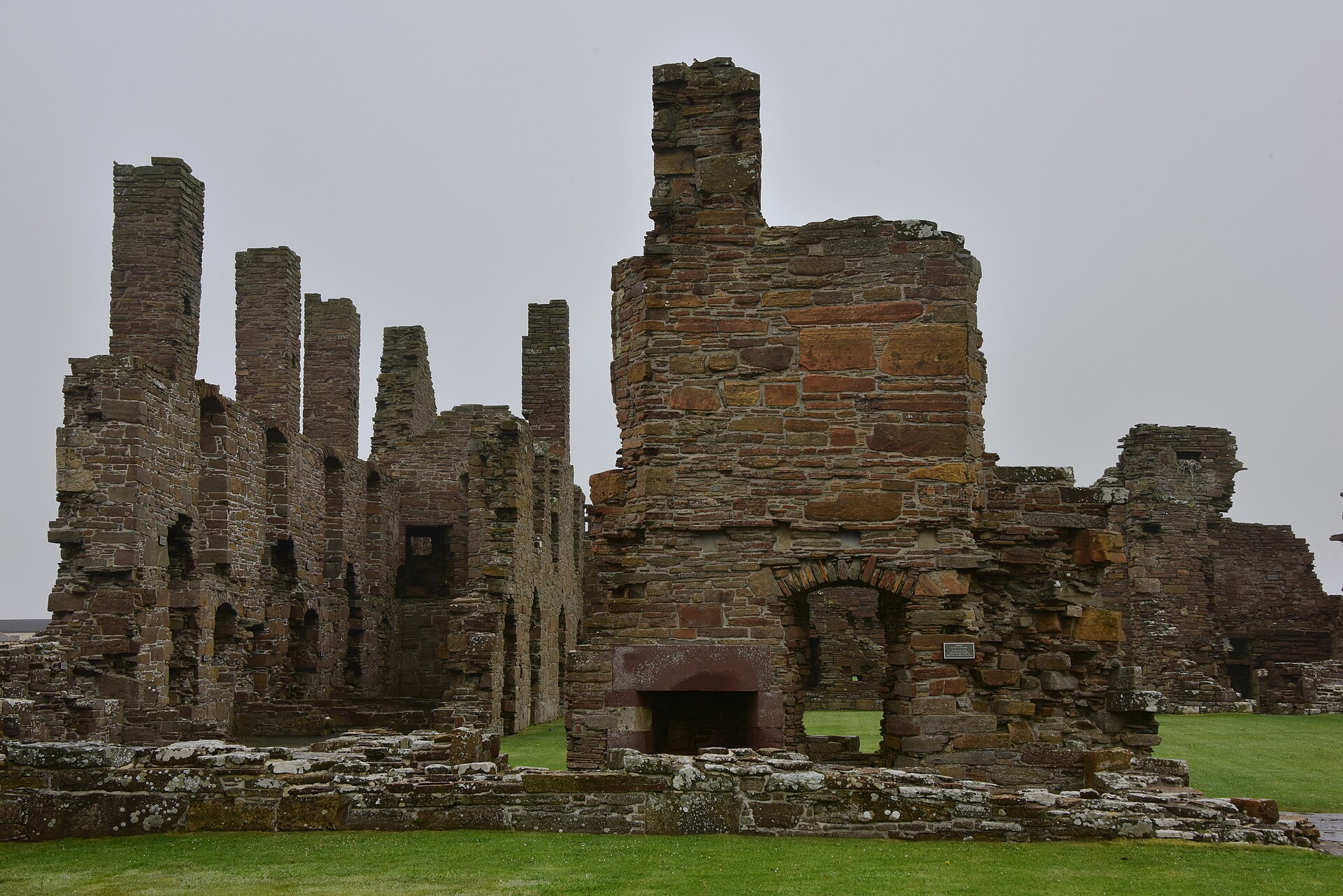
Fortified place · Medieval
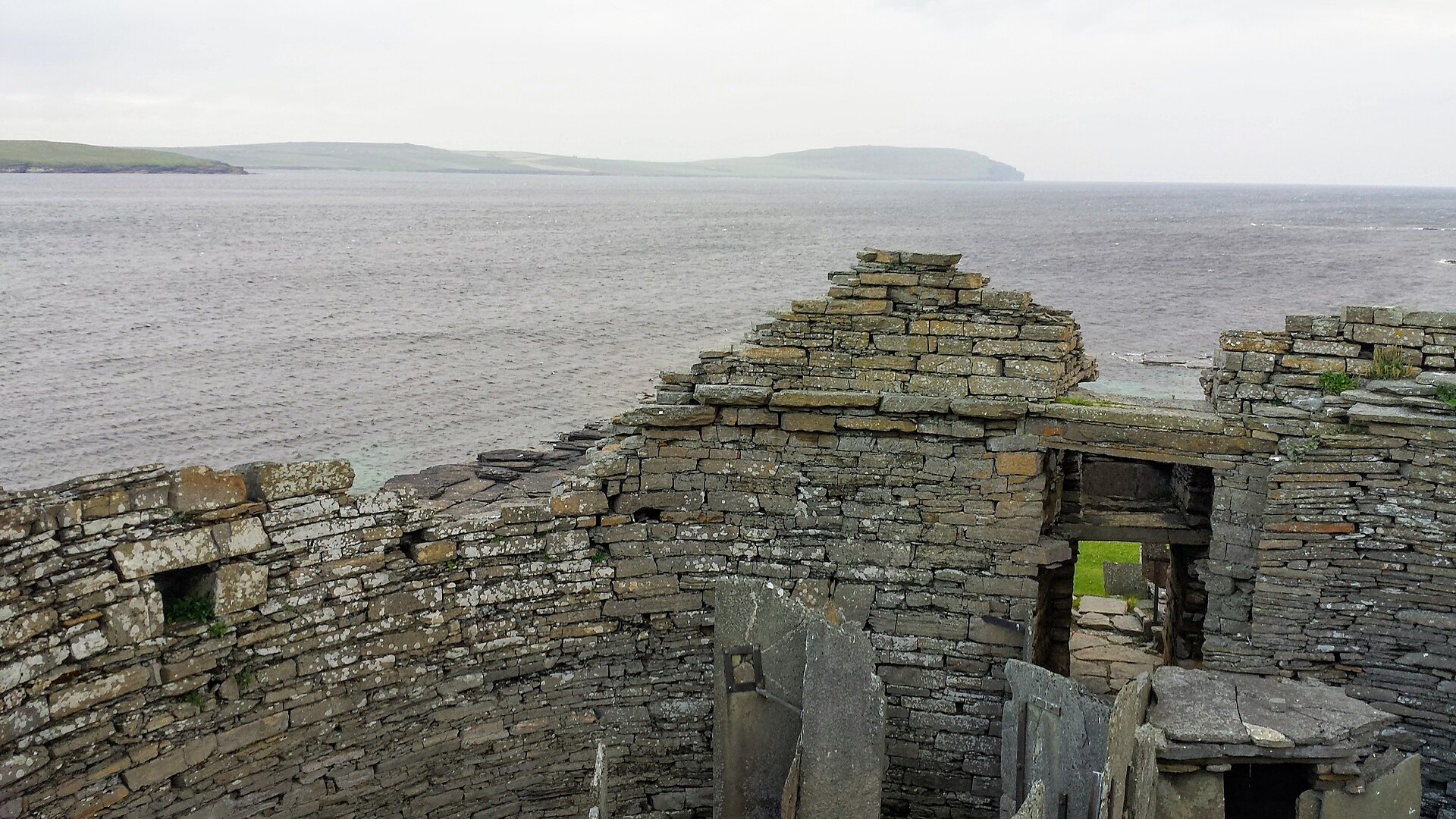
Earl's Palace, Birsay
Orkney Islands
It is the ruined seat of Robert Stewart, 1st Earl of Orkney, an illegitimate son of James V, and a rare surviving example of a fortified sixteenth-…
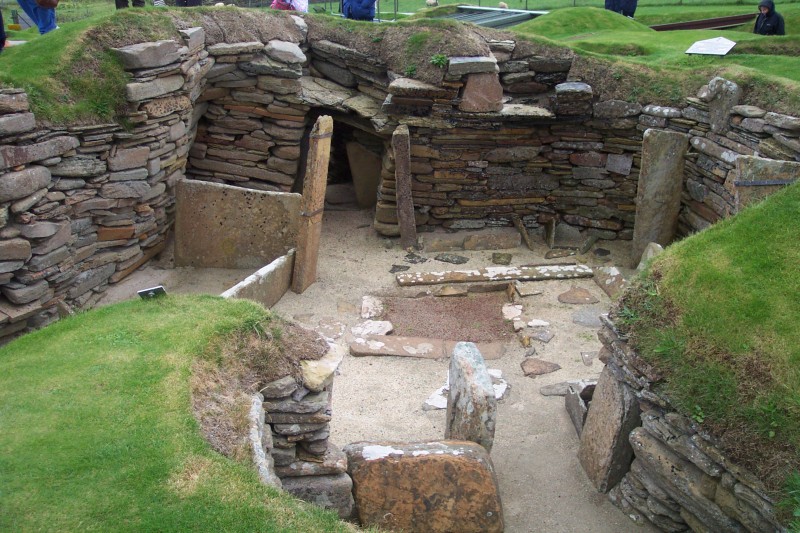
Settlement · Prehistoric
Skara Brae
Orkney Islands
Ten roofless stone houses survive with their built-in furniture still in place — hearths, dressers, box-beds — occupied for roughly six hundred yea…
- Near Stromness
- 5 min walk from car park
- Some walking
Sources
- Canmore site record 1796 (accessed 2026-06-13)
- Trove (HES) record (accessed 2026-06-13)
- Wikipedia: Brough of Birsay (accessed 2026-06-13)
- Wikidata Q594381 (accessed 2026-06-13)
Explore more: Settlements · Pictish & early medieval · Orkney Islands
The Ancient Codex, in your pocket
Get the Pocket Codex app
Carry the directory with you — Brough of Birsay and thousands of ancient places across Britain and Ireland, offline, wherever you roam.