
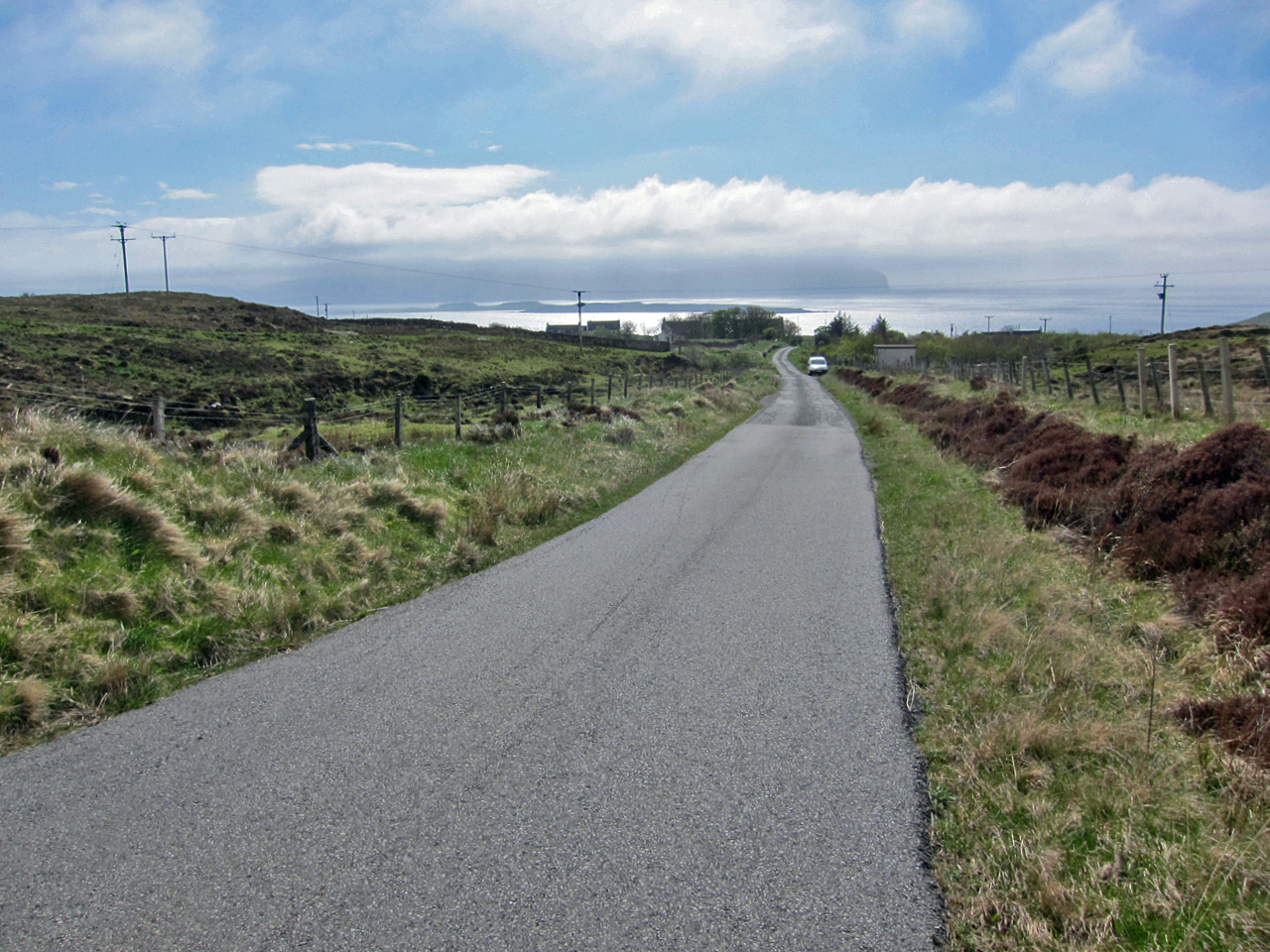
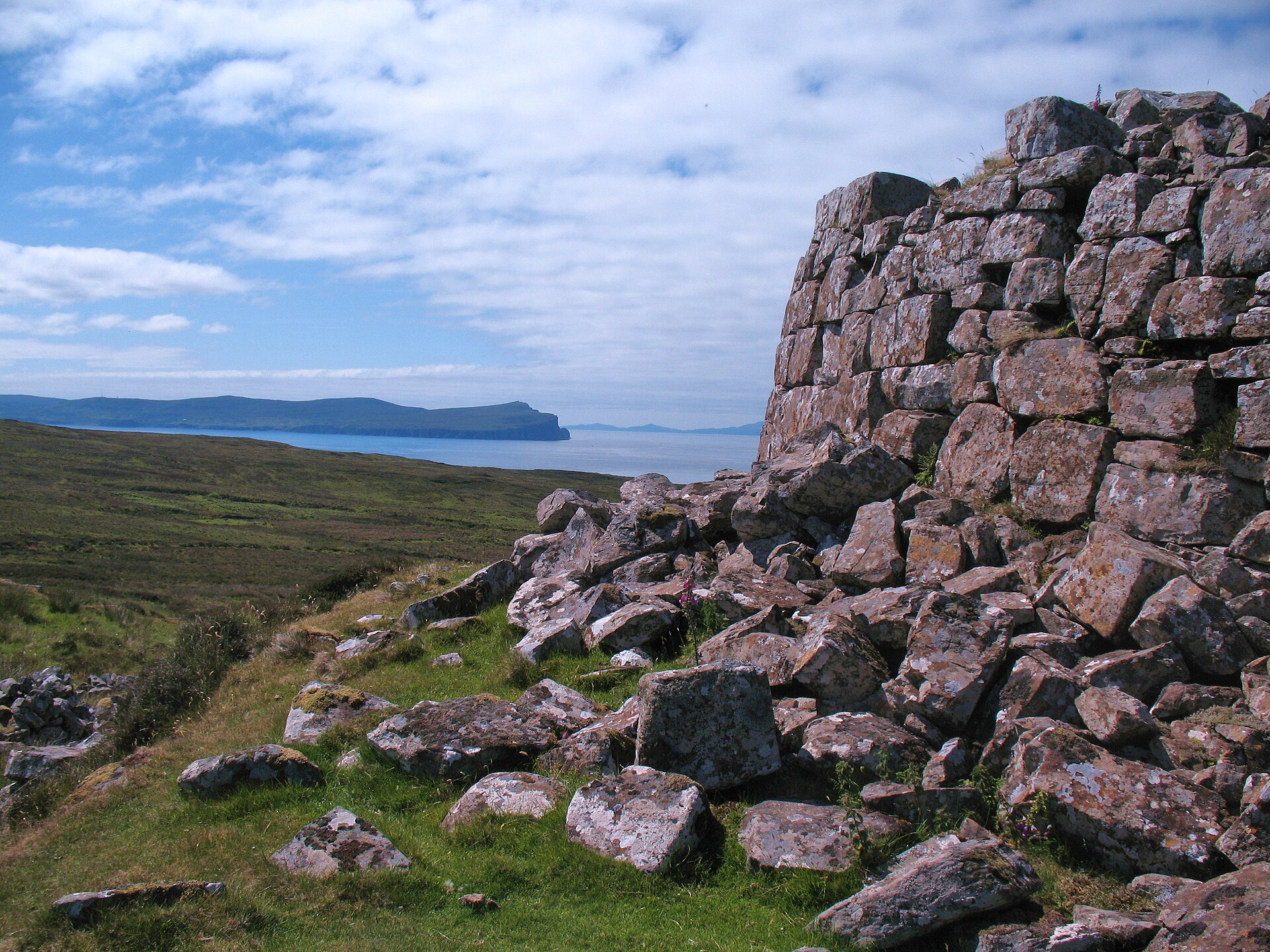
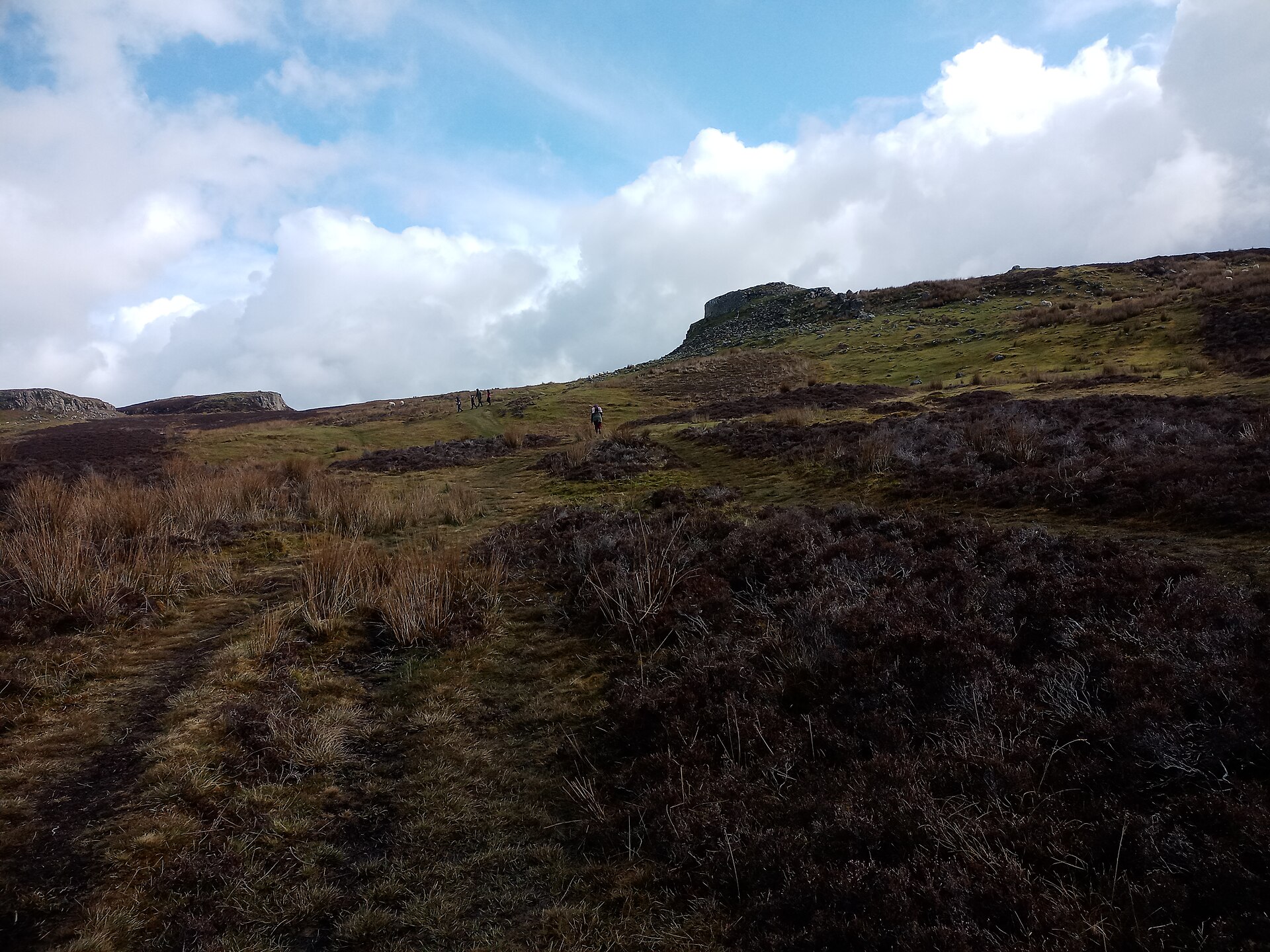
A low rocky knoll in the moorland beside Loch Dunvegan holds the remains of Dun Fiadhairt. Dun Fiadhairt is an Iron Age broch (an Iron Age drystone round tower), a circular drystone tower, on the north coast of Skye.
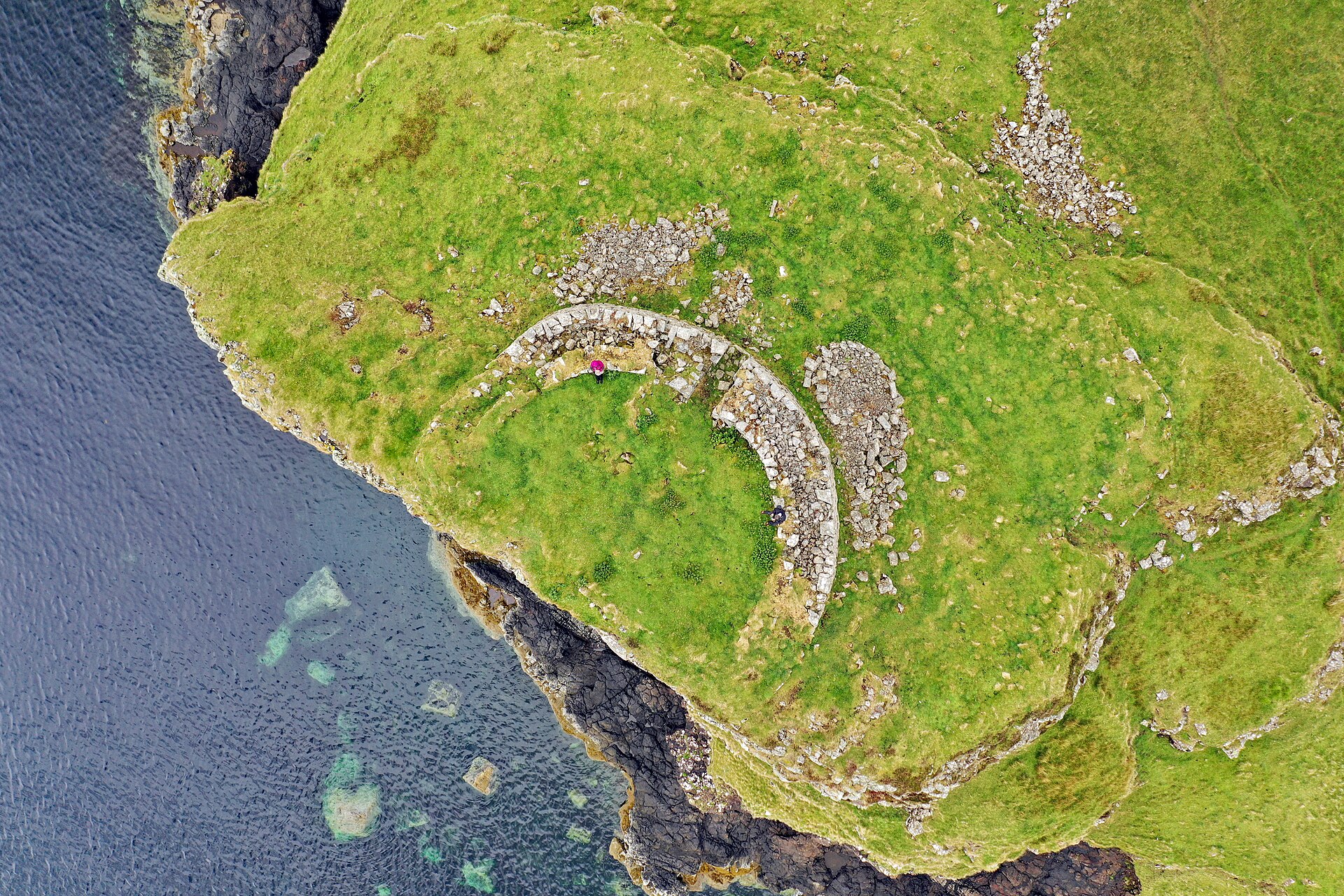
The west entrance still frames the plan, with opposing guard cells, small side chambers beside the passage, and a wall gallery that runs through the thickness of the broch. Finds from the 1890s excavation ranged from pottery and ironworking waste to amber beads that may once have formed a necklace.
What follows is drawn from published sources, with each claim labelled by how firmly it is established.
History
Dun Fiadhairt was built in the Iron Age on a peninsula beside Loch Dunvegan.
The broch was arranged around a west-facing entrance passage with two opposing guard cells.
A ground-level mural gallery, a passage within the wall, occupied much of the inner circuit.
The Countess Vincent Baillet de Latour excavated the broch around 1892.
Finds included pottery, iron refuse, tools, glass beads and amber beads.
A baked-clay object from the site has been interpreted as a possible Roman votive model.
Connections
-
Loch Dunvegan
Sea loch beside the broch peninsula.
-
Countess Vincent Baillet de Latour
Excavator of the site around 1892.
-
Dunvegan
Nearby Skye settlement south-east of the broch.
What to look for
-
West entrance
Main approach with opposing guard cells.
-
Mural gallery
Wall passage visible in the broch plan.
-
Finds story
Amber beads and ironworking debris point to varied activity.
Plan your visit
- Location
- 57.4593°N · 6.6186°W
- Access
- Open access
- Terrain
- Rough ground — reasonable boots advised
Opening & admission
- Moorland broch on a low knoll beside Loch Dunvegan; source gives location but not formal access.
Nearby places
Questions people ask
- What is Dun Fiadhairt?
- It is an Iron Age broch on Skye.
- Where does it stand?
- It stands on a low rocky knoll on a peninsula beside Loch Dunvegan.
- Who excavated it?
- The Countess Vincent Baillet de Latour excavated it around 1892.
- What was found there?
- Finds included pottery, iron refuse, stone tools, glass beads and amber beads.
Sources
Explore more: Fortified places · Iron Age · Highland
The Ancient Codex, in your pocket
Get the Pocket Codex app
Carry the directory with you — Dun Fiadhairt and thousands of ancient places across Britain and Ireland, offline, wherever you roam.