
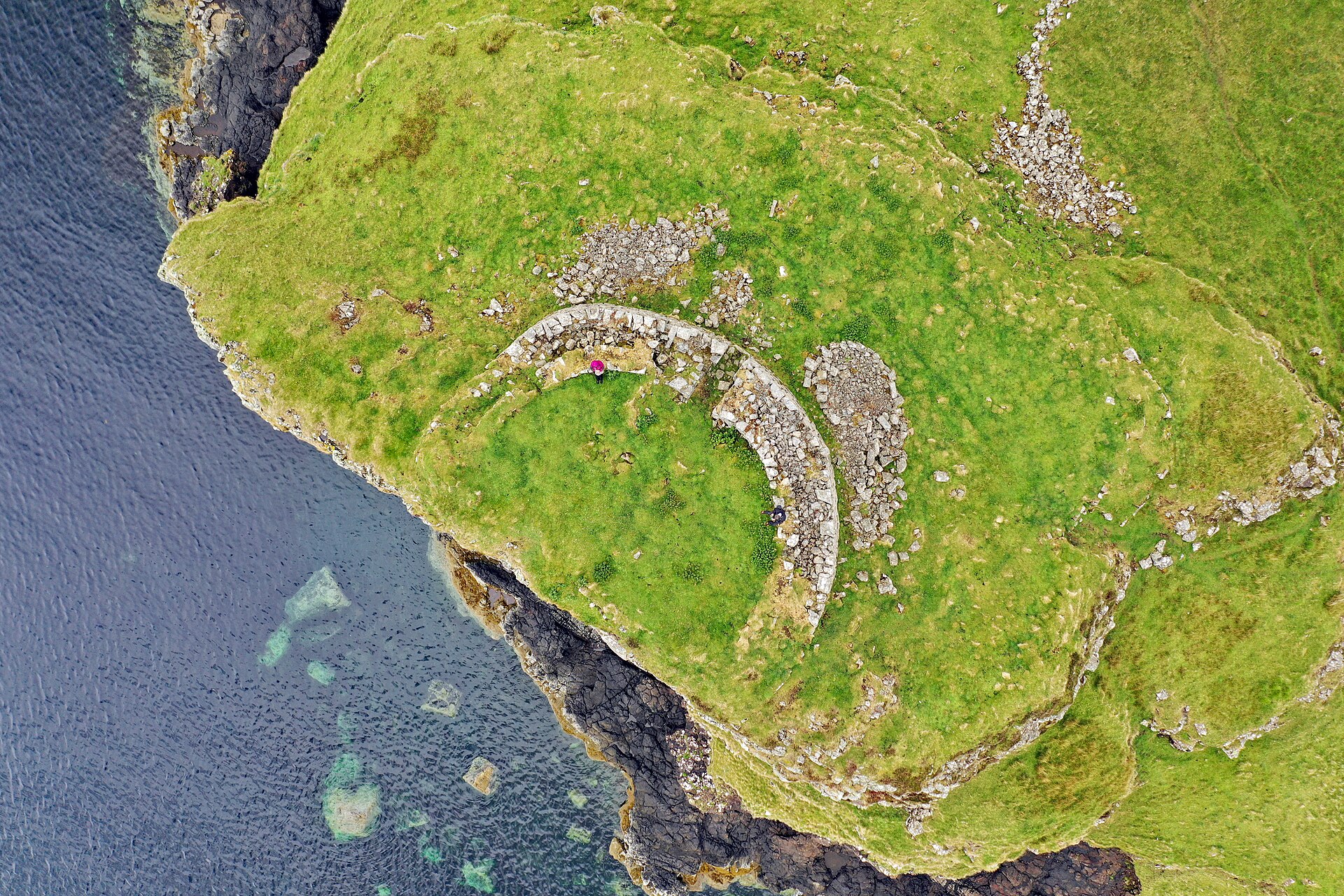
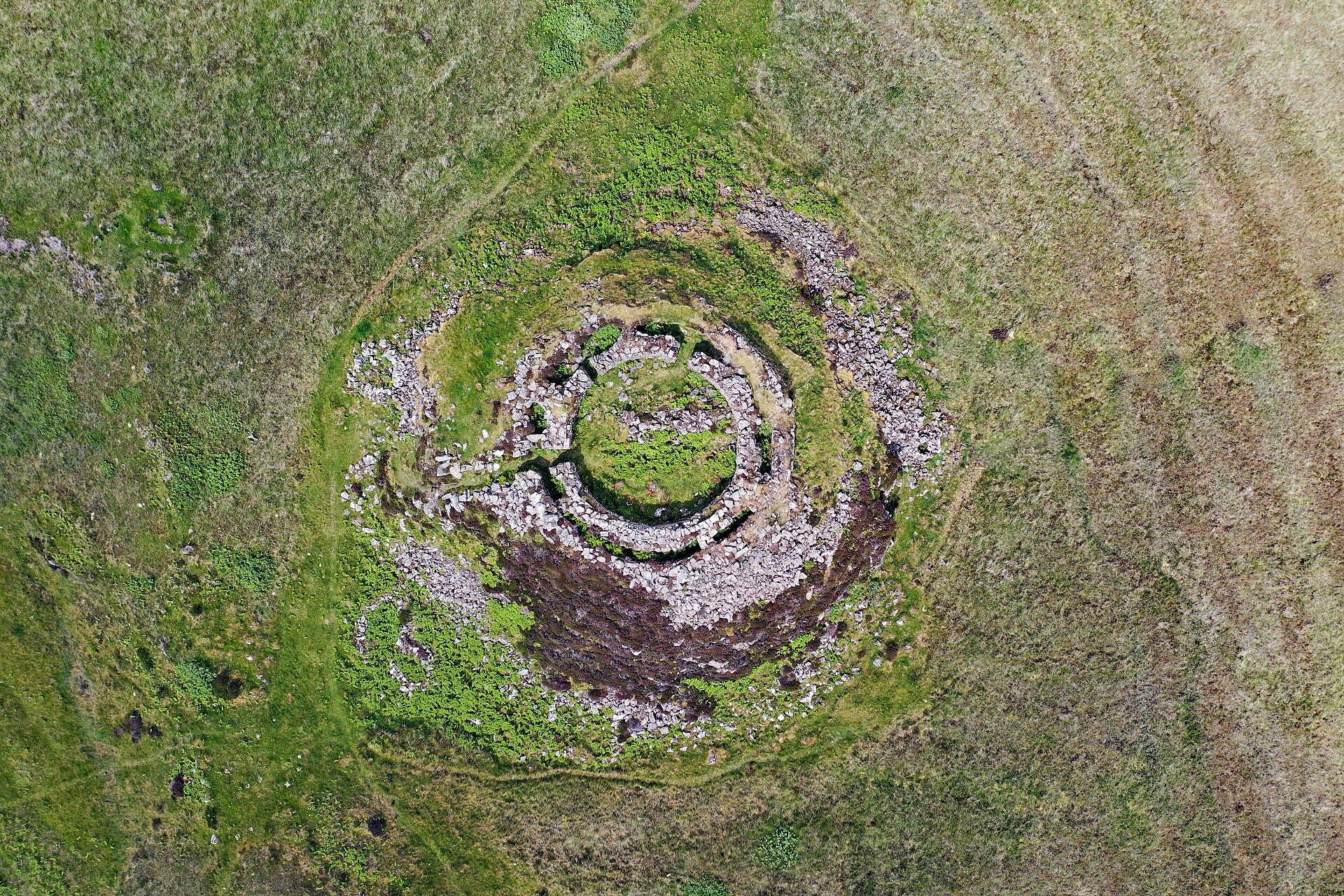
A drystone broch (an Iron Age drystone round tower) wall rises from a rocky knoll above Skye’s west coast. Dun Beag is an Iron Age broch, a circular drystone tower, near Struan on the island of Skye.
Eighteenth-century visitors saw a much taller structure than survives today. Thomas Pennant visited in 1772, and Samuel Johnson and James Boswell probably saw the broch the following year during their Hebridean tour. Excavation between 1914 and 1920 removed huge quantities of soil and stone, finding objects from stone tools and beads to later coins that suggest long or repeated use.
What follows is drawn from published sources, with each claim labelled by how firmly it is established.
History
Dun Beag was built in the Iron Age as a broch on Skye.
Thomas Pennant visited the broch in 1772, when it may still have stood about four metres high.
Samuel Johnson and James Boswell probably visited Dun Beag in 1773 during their Tour to the Hebrides.
Around half of the wall height has been lost since the eighteenth century.
The Countess Vincent Baillet de Latour excavated the broch between 1914 and 1920.
The excavation removed about 200 tons of earth and stones, but recording and publication were poor.
Finds included stone implements, a gold ring, bronze objects, iron and glass objects, pottery, a stone cup, many glass beads, and coins from several later reigns.
People
-
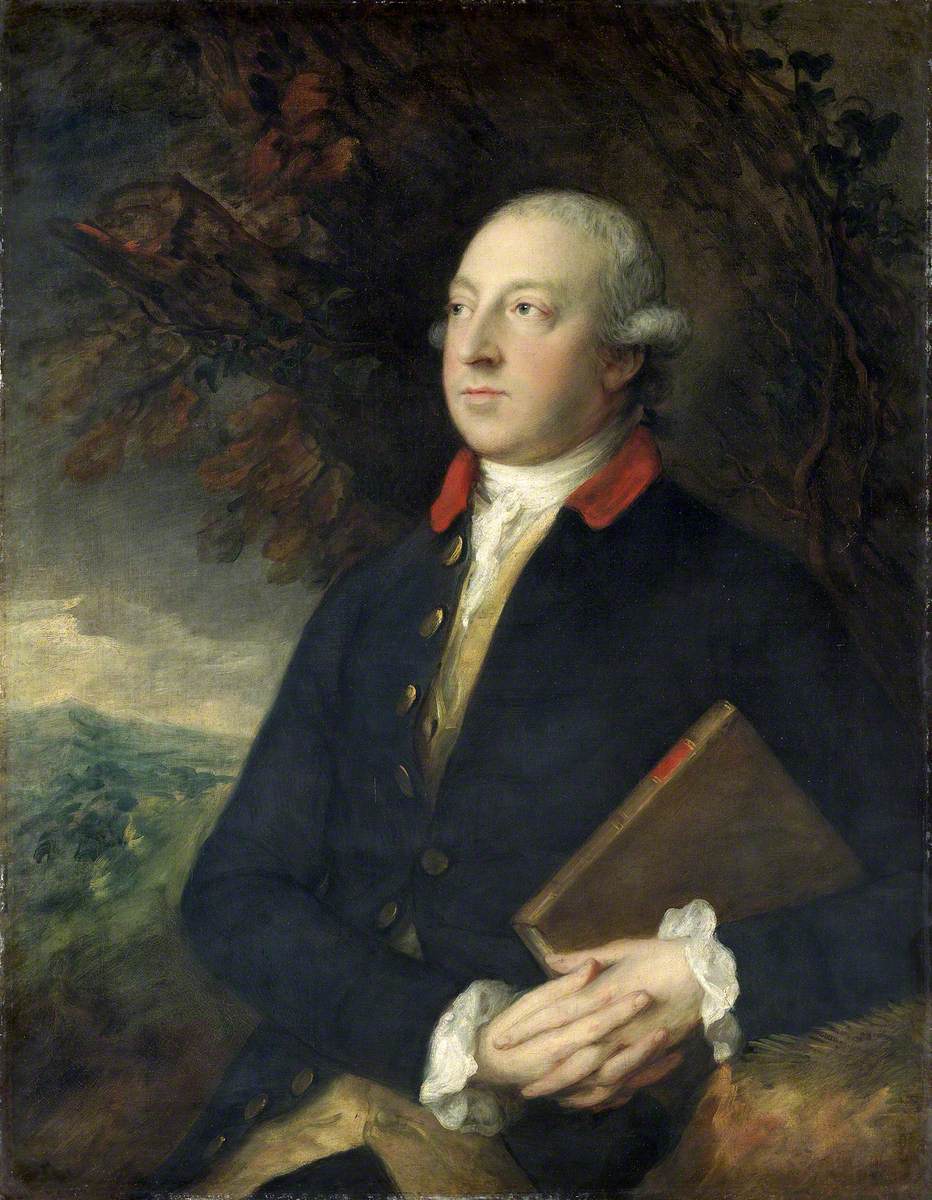
Portrait: Thomas Gainsborough / Wikimedia Commons / Public domain Thomas Pennant
Visited Dun Beag in 1772.
-
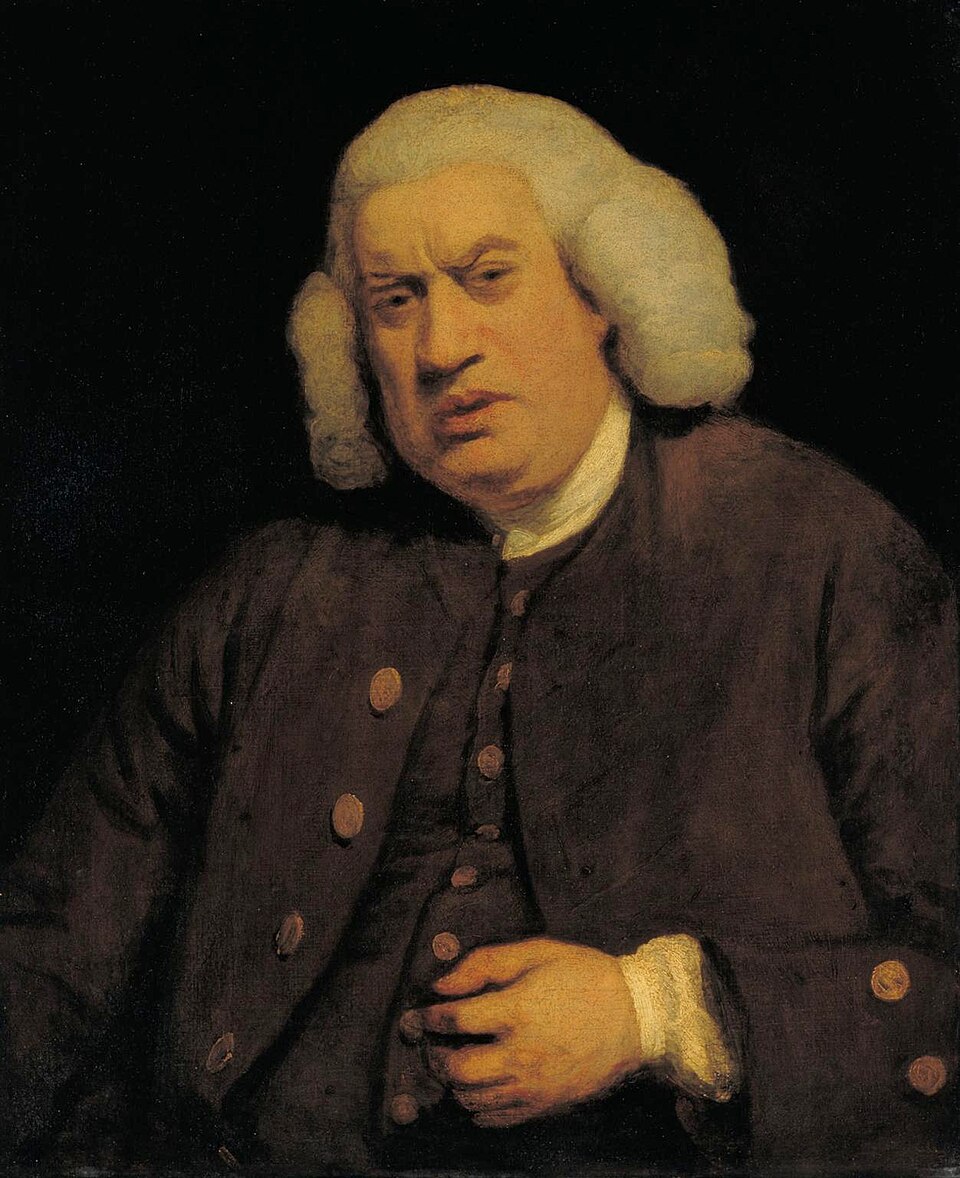
Portrait: Joshua Reynolds / Wikimedia Commons / Public domain Samuel Johnson
Probably visited the broch in 1773.
-
James Boswell
Probably visited the broch with Johnson.
-
Countess Vincent Baillet de Latour
Excavated the broch between 1914 and 1920.
Connections
-
Struan
Village south-east of the broch.
-
Skye
Island setting of Dun Beag.
-
Tour to the Hebrides
Journey during which Johnson and Boswell probably saw the broch.
What to look for
-
Drystone tower wall
Broch wall standing to about two metres today.
-
Interior openings
Openings lead to a chamber, gallery, and stair.
-
Stone stair
Around twenty steps survive in the broch wall.
Plan your visit
- Location
- 57.3604°N · 6.4258°W
- Access
- Open access
- Terrain
- Moderate walking
Opening & admission
- Historic Environment Scotland external link named; broch on rocky knoll.
Nearby places

Questions people ask
- What is Dun Beag?
- It is an Iron Age broch near Struan on Skye.
- Who visited it in the eighteenth century?
- Thomas Pennant visited in 1772, and Samuel Johnson and James Boswell probably visited in 1773.
- What did excavation find?
- Finds included tools, ornaments, pottery, glass beads, and coins from later periods.
- What can be seen today?
- The broch wall, interior openings, a gallery, a chamber, and surviving stair steps are described in the source pack.
Sources
Explore more: Fortified places · Iron Age · Highland
The Ancient Codex, in your pocket
Get the Pocket Codex app
Carry the directory with you — Dun Beag and thousands of ancient places across Britain and Ireland, offline, wherever you roam.