
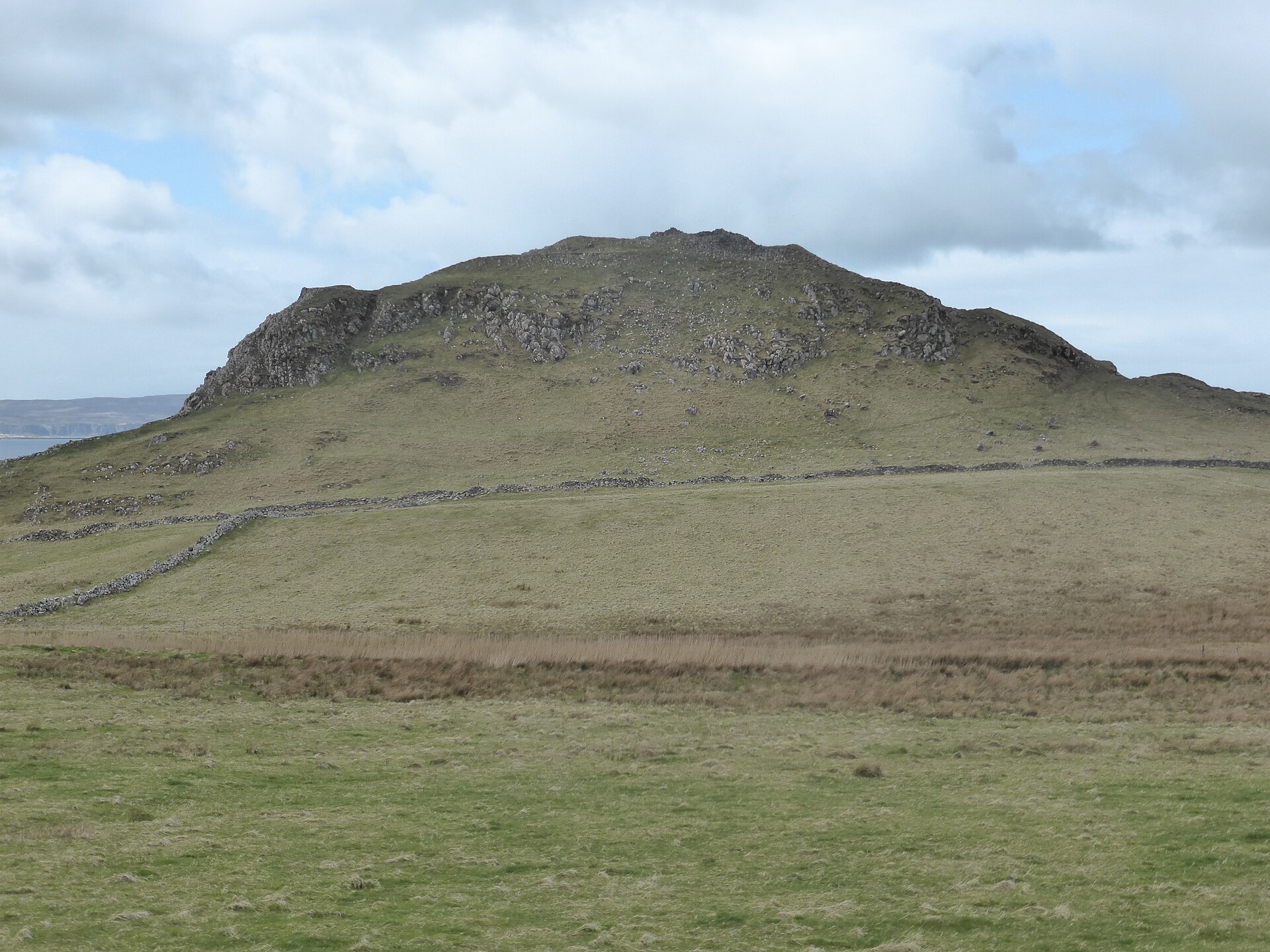
Dun Hallin sits on a steep rocky plateau where the sea and a fertile Skye valley come into view. Dun Hallin is an Iron Age broch (an Iron Age drystone round tower), one of Atlantic Scotland’s round drystone towers, on the Waternish peninsula.
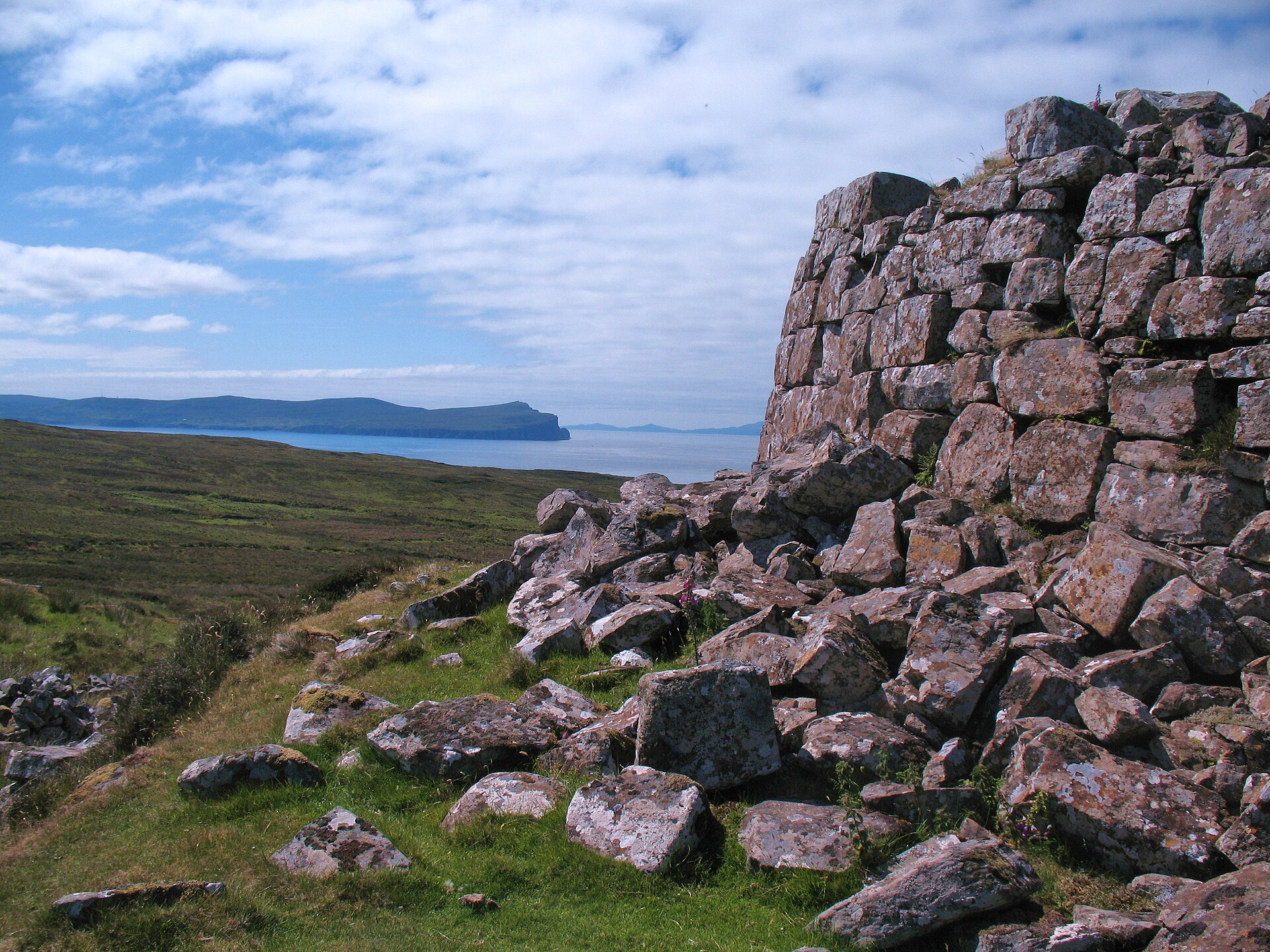
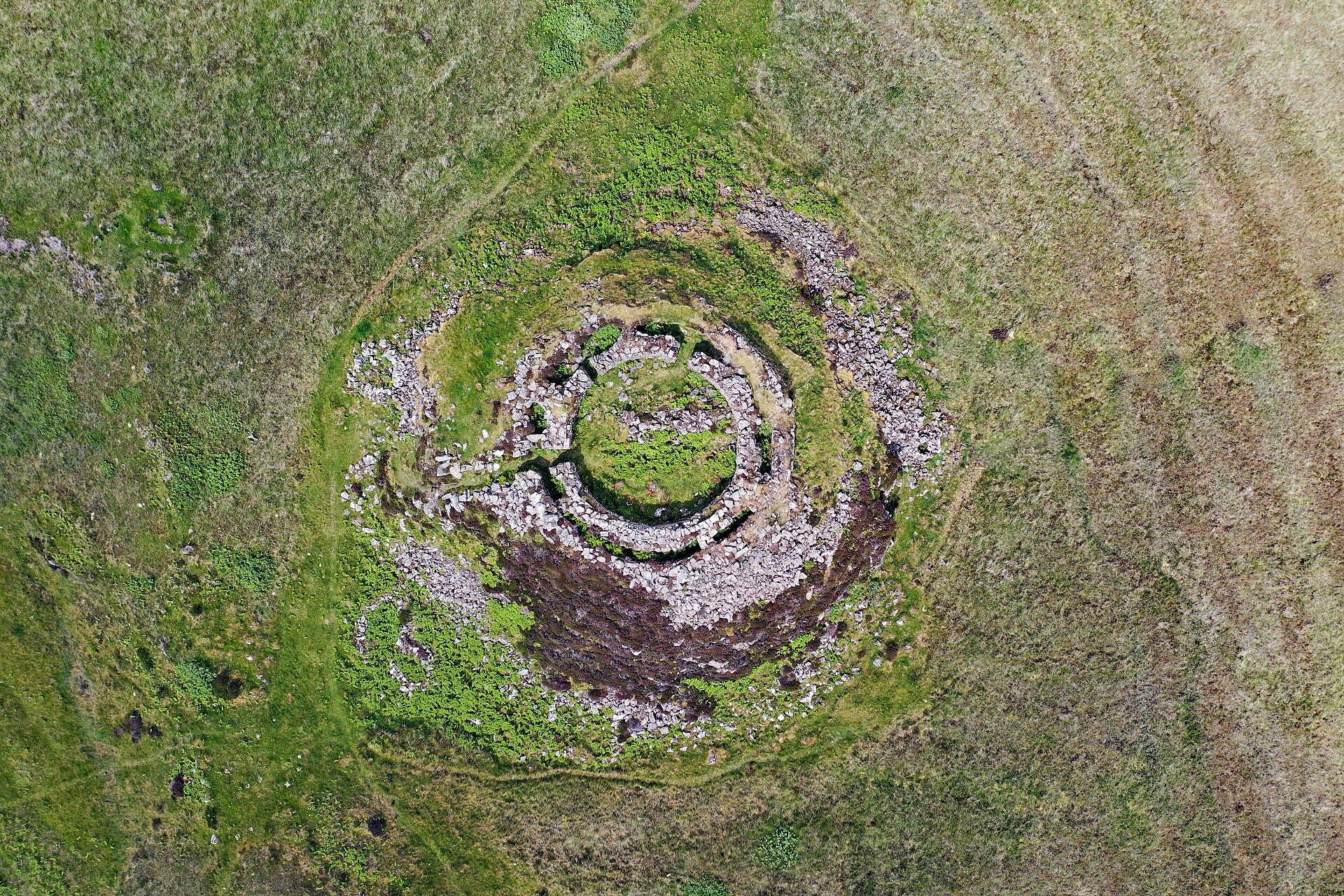
The broch is rubble-filled, but its north and west walls still stand high enough to show the strength of the tower. A ruined entrance, oval guard cells and a visible mural gallery, a passage within the wall, preserve the grammar of the building.
What follows is drawn from published sources, with each claim labelled by how firmly it is established.
History
Dun Hallin was built as an Iron Age broch on the Waternish peninsula.
The tower occupied the south-east end of a steep-sided rocky plateau.
Its entrance lay on the south-east side and is now ruined.
Oval guard cells flanked the entrance passage.
An outer stone wall also defended the edge of the rocky knoll.
The broch was examined in 1921 but has not been excavated.
Connections
-
Waternish peninsula
Skye peninsula where the broch stands.
-
Hallin
Nearby settlement west of the site.
-
Skye
Island setting for the broch.
What to look for
-
High surviving walling
North and west sides preserve the tallest visible masonry.
-
Ruined entrance
South-east entrance with guard-cell remains.
-
Outer wall
Additional defence runs around the knoll edge.
Plan your visit
- Location
- 57.5401°N · 6.5862°W
- Access
- Open access
- Terrain
- Moderate walking
Opening & admission
- Steep-sided rocky plateau near Hallin; source does not state managed access.
Nearby places
Questions people ask
- What is Dun Hallin?
- It is an Iron Age broch on Skye.
- Has it been excavated?
- No. The source pack says the broch has not been excavated.
- What survives?
- High walling, a ruined entrance, guard cells, a mural gallery and an outer wall survive.
- Where is it?
- It is just east of Hallin on the Waternish peninsula.
Sources
Explore more: Fortified places · Iron Age · Highland
The Ancient Codex, in your pocket
Get the Pocket Codex app
Carry the directory with you — Dun Hallin and thousands of ancient places across Britain and Ireland, offline, wherever you roam.