
Tappoch Broch is an Iron Age broch set in a remote spot in dense woodland near Falkirk; the dry-stone walls, about six metres thick, still stand two to three metres high, though whole wall sections…
Tappoch Broch (an Iron Age drystone round tower) is a carved stone near Torwood, Falkirk, Scotland.
What follows is drawn from published sources, with each claim labelled by how firmly it is established.
The name
Tappoch Broch is better known as Torwood Broch, after its setting in dense woodland near Falkirk.
History
Tappoch Broch is an Iron Age broch set in a remote spot in dense woodland near Falkirk; the dry-stone walls, about six metres thick, still stand two to three metres high, though whole wall sections have collapsed in recent times.
The broch was first excavated in 1864 by Colonel Joseph Dundas, with small-scale work near the site recurring sporadically afterwards.
In 2014 a conservation project run by Archaeology Scotland and grant-aided by Forestry Commission Scotland cleared the site of scrub; the broch was then laser-scanned by AOC Archaeology, combined with a keyhole excavation of the surrounding earlier hillfort by Dr Murray Cook.
In 2024 and 2025 Dr Murray Cook and the Falkirk Council Ranger Service cleared bracken and self-seeded trees from the broch and hillfort, and in 2025 carried out the first modern excavation within the interior of the broch.
People
-
Colonel Joseph Dundas
First excavated the broch in 1864
-
Dr Murray Cook
Archaeologist who led the 2014 keyhole excavation of the surrounding hillfort and the 2025 interior excavation of the broch
Cultural influences
-
Lowland Scottish broch tradition - unlike other Lowland brochs such as Leckie Broch, the finds from Tappoch were relatively sparse and included no Roman material.
Connections
-
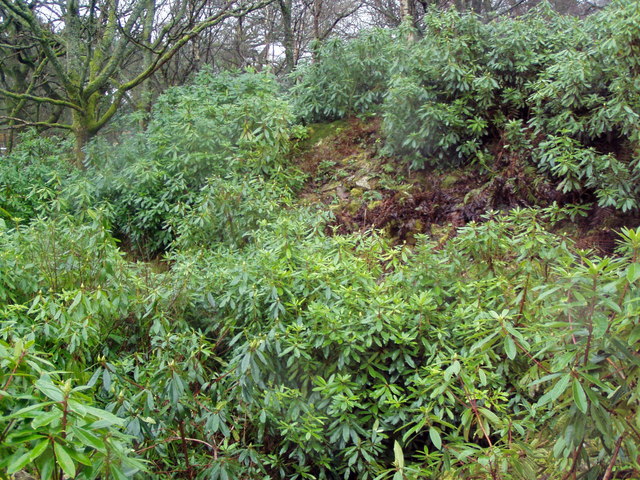
Photo: Ewen Rennie / Wikimedia Commons / CC BY-SA 2.0 Leckie Broch
Comparator Lowland broch; cited as a contrast because, unlike Tappoch, it yielded Roman material
-
Falkirk
Nearest town; the broch lies in woodland nearby
Discovery & excavation
First excavated by Colonel Joseph Dundas in 1864, with sporadic small-scale work since, then laser-scanned by AOC Archaeology in 2014 and excavated internally for the first time in 2025 by Dr Murray Cook. Finds from the broch were relatively sparse - saddle and rotary querns, a possible stone 'lamp', and several sherds of coarse pottery - with no Roman material on site.
What to look for
-
The oval interior chamber, measuring about 10.8 by 9.8 m, paved and with a large fire spot at its centre.
-
The unusually well-preserved staircase set within the wall in the south-west of the chamber - eleven steps survived in 1864, with inward-sloping side walls indicating an original cantilever vault.
-
The entrance passage from the south-east, with a door-stop and latch for the door beam about halfway along.
-
The massive dry-stone walls - about six metres thick, built of large irregular local blocks - still standing two to three metres high.
Plan your visit
- Location
- 56.0435°N · 3.8744°W
- Nearest settlement
- Torwood
- Access
- Reached on a public path
- Terrain
- Moderate walking
- Start point
- Torwood village (roadside) (parking unconfirmed) — No dedicated visitor car park. Tappoch (Torwood) Broch sits within Tor Wood; visitors generally park considerately on the roadside at Torwood village and walk in on the forestry tracks. The 836m is straight-line; the walked forest route is longer. Stout footwear advised.
Nearby places
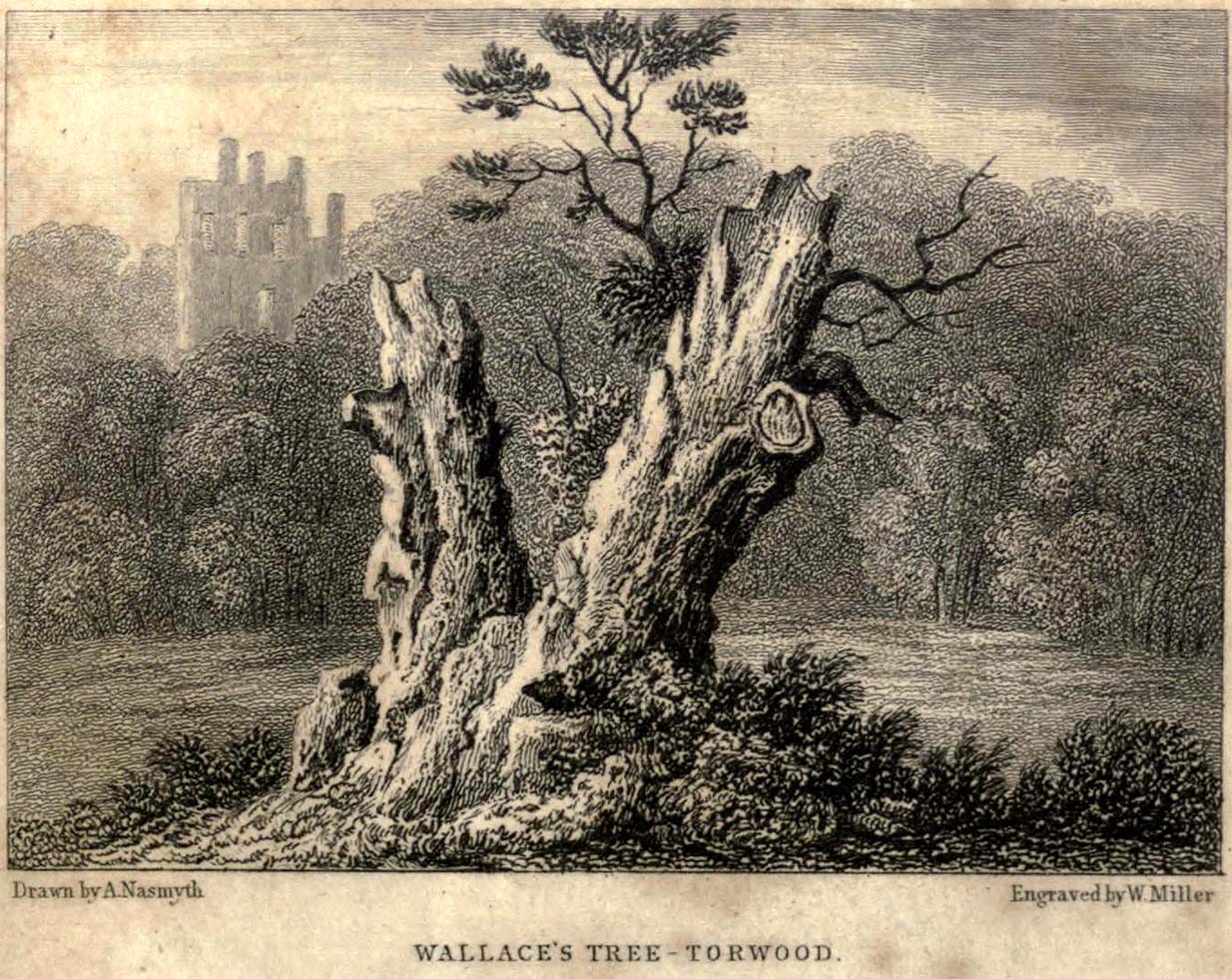
Ancient tree · Medieval
Wallace Oak (Torwood)
Falkirk
A named, long-standing tree carried in local memory as a landmark — included for its place in the landscape, with age and superlative claims held f…
- Near Falkirk
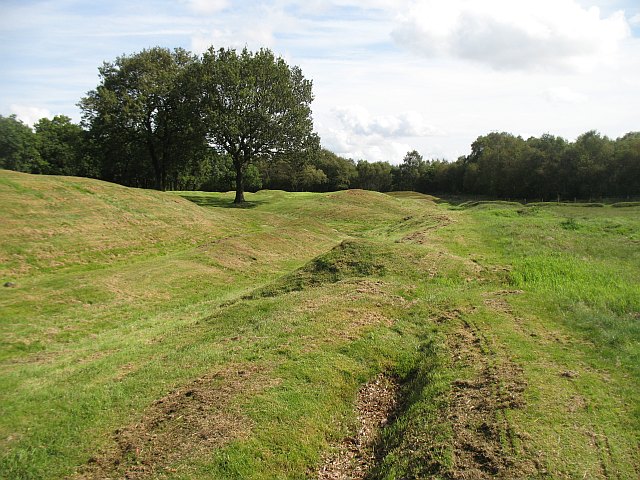
Fortified place · Roman
Antonine Wall: Rough Castle
Falkirk
Rough Castle was built as a Roman fort on the Antonine Wall, which dates from about AD 143. It stands against the southern rear face of the Wall, d…
- Near Bonnybridge
- 15 min walk from car park
- Some walking
Sources
- Canmore site record 47004 (accessed 2026-06-13)
- Trove (HES) record (accessed 2026-06-13)
- Wikipedia: Tappoch Broch (accessed 2026-06-13)
- Wikidata Q3410873 (accessed 2026-06-13)
Explore more: Carved stones · Prehistoric · Falkirk
The Ancient Codex, in your pocket
Get the Pocket Codex app
Carry the directory with you — Tappoch Broch and thousands of ancient places across Britain and Ireland, offline, wherever you roam.