
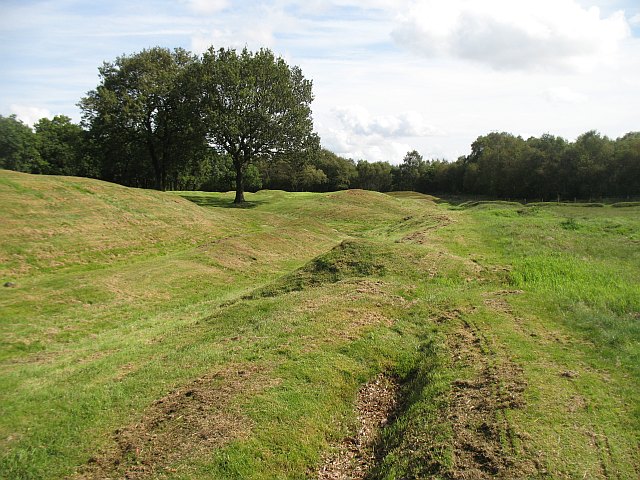
Rampart, ditch, causeways and defensive pits still make Rough Castle one of the easiest Antonine Wall forts to understand on the ground. The Roman fort stands against the rear face of the Antonine Wall, the frontier barrier across central Scotland, and preserves the outline of both military planning and frontier defence.
What follows is drawn from published sources, with each claim labelled by how firmly it is established.
History
The Antonine Wall dates from about 143 AD, and Rough Castle was built against the southern rear face of the wall. The wall's eastern and western ends were long debated, with Carriden near Bo'ness likely in the east and Old Kilpatrick on the Clyde in the west.
Rough Castle is one of the best-preserved forts built along the wall. It was defended by turf ramparts six metres thick and by surrounding ditches, with gateways through the wall to the north and through the other sides of the fort.
Causeways were constructed across the main Antonine ditch and secondary defensive ditches to allow movement to and from the fort. The military road on the south side of the wall, used for transport between forts, remains well defined.
The fort was the second smallest on the wall, covering about 4,000 square metres. Excavations in 1902-03, 1932 and 1957-61 found the foundations of the commander's house, barracks, headquarters, bath house and granary.
Inscriptions on recovered artefacts show that the fort housed 480 men of the Cohors VI Nerviorum, foot soldiers drawn from the Nervii, a north-eastern Gallic tribe. The source also names Flavius Betto as a commanding officer.
A sound and light show was organised at Rough Castle in November 2018 to promote tourism, showing the continuing public role of the fort within the Antonine Wall landscape.
People
-
Flavius Betto
Named in the source as a commanding officer at Rough Castle.
-
Geoff Bailey
Keeper of Archaeology and Local History at Falkirk Museum who presented an overview of the site in a Falkirk Council video.
-
Sir George Macdonald
His writings are identified as a source for early discoveries at Rough Castle.
Connections
-
National Trust for Scotland
The source says Rough Castle Fort is owned by the National Trust for Scotland.
-
Antonine Wall
The fort was built against the wall's southern rear face.
-
Cohors VI Nerviorum
The infantry unit recorded by inscriptions as the fort's garrison.
-
Bridgeness Slab video
The source points to Falkirk Council's video for an overview of Rough Castle.
Discovery & excavation
Excavations in 1902-03, 1932 and 1957-61 identified building foundations, while finds include an altar to Victory discovered in 1843, a bangle, window glass and leather shoes.
Finds now held at: Rough Castle Fort; south of the fort.
In culture
-
Video reconstruction
A video reconstruction of Rough Castle Fort has been produced.
-
2018 sound and light show
A sound and light show was organised at the fort in November 2018 to promote tourism.
What to look for
-
Turf ramparts
The fort was defended by six-metre-thick turf ramparts.
-
Rampart and ditch west of the fort
A fine length of rampart and ditch remains intact to the west.
-
Military road
The road south of the wall is still well defined.
-
Lilia pits
The lilia, defensive pits that originally held sharpened stakes, lay north-west of the causeway across the Antonine ditch.
-
Building foundations
Excavations found the commander's house, barracks, headquarters, bath house and granary.
Plan your visit
- Location
- 55.9978°N · 3.8560°W
- Access
- Open access
- Terrain
- Moderate walking
Opening & admission
No admission arrangement is stated in the source.
- The fort is roughly south-east of Bonnybridge near Tamfourhill.
- Visible earthworks include rampart, ditch, road and defensive pits.
Nearby places
Fortified place · Roman
Antonine Wall: Rough Castle
Falkirk
Rough Castle was built as a Roman fort on the Antonine Wall, which dates from about AD 143. It stands against the southern rear face of the Wall, d…
- Near Bonnybridge
- 15 min walk from car park
- Some walking
Carved stone · Prehistoric
Tappoch Broch
Falkirk
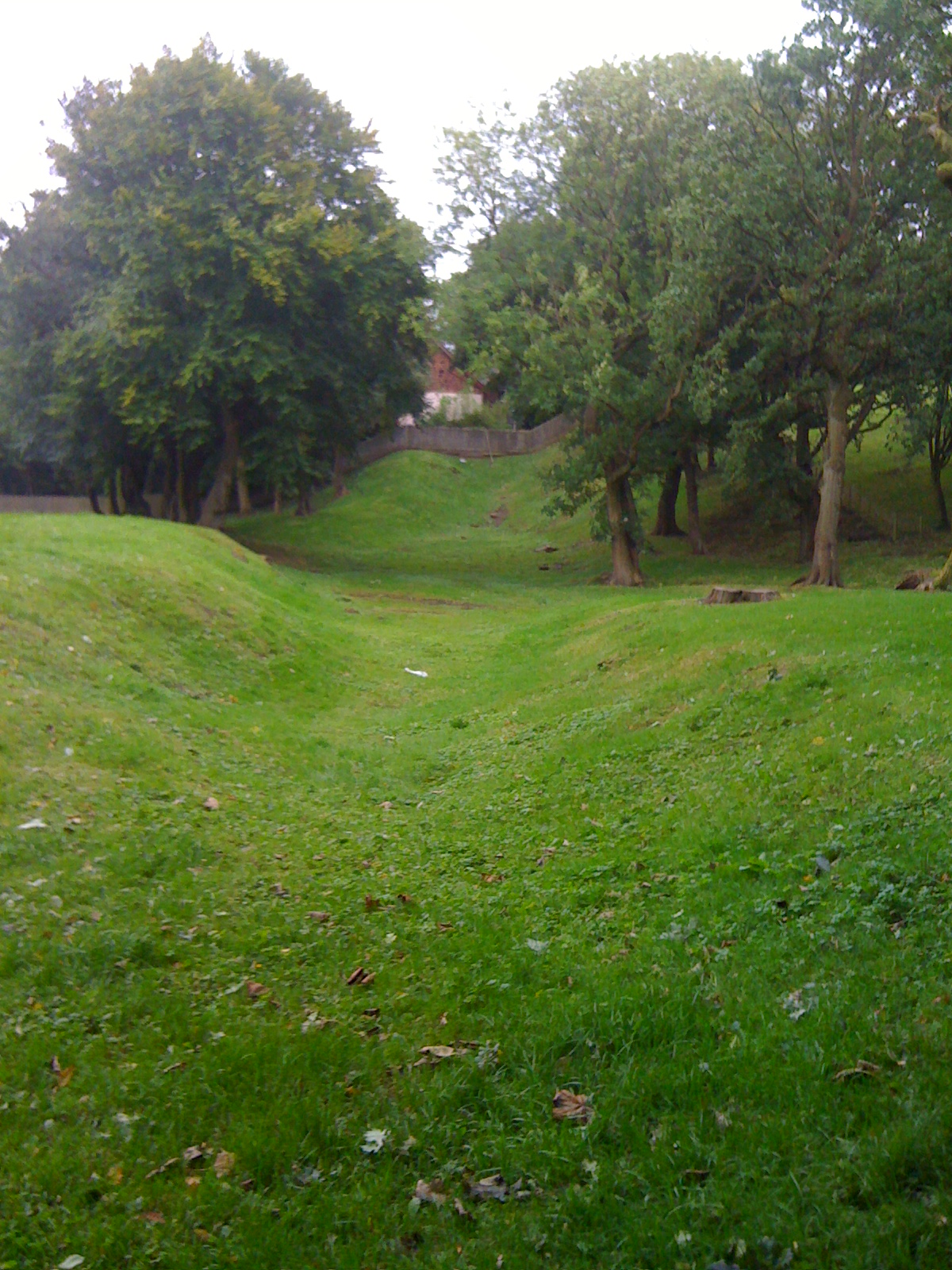
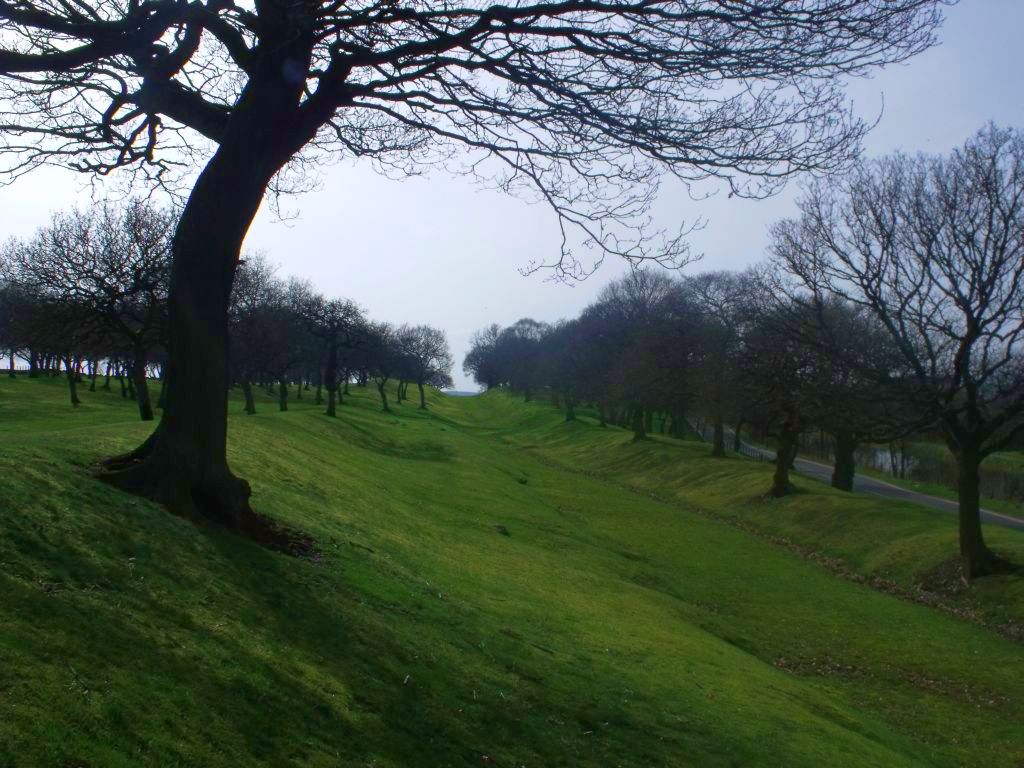
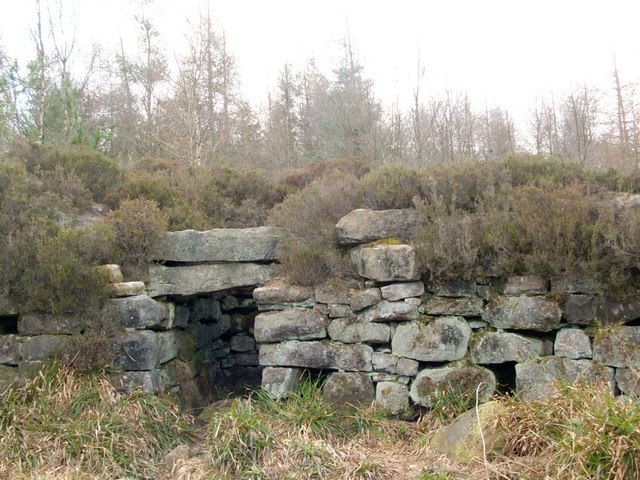
Tappoch Broch is an Iron Age broch set in a remote spot in dense woodland near Falkirk; the dry-stone walls, about six metres thick, still stand tw…
- Near Torwood
- 20 min walk from car park
- Some walking
Questions people ask
- What is Rough Castle Fort?
- It is a Roman fort on the Antonine Wall near Tamfourhill in the Falkirk council area.
- Who owns Rough Castle Fort?
- The source says it is owned by the National Trust for Scotland.
- Why is Rough Castle important?
- It is one of the best-preserved forts on the Antonine Wall, with visible rampart, ditch and defensive features.
- Who garrisoned Rough Castle?
- Inscriptions indicate a garrison of 480 men of the Cohors VI Nerviorum.
- What were the lilia?
- They were defensive pits that would originally have contained sharpened stakes near the vulnerable northern gateway.
Sources
Explore more: Fortified places · Roman · Falkirk
The Ancient Codex, in your pocket
Get the Pocket Codex app
Carry the directory with you — Rough Castle Fort and thousands of ancient places across Britain and Ireland, offline, wherever you roam.