
Road, canal, railway and motorway all press close to Castlecary, but the older line through the village is Roman. The Antonine Wall, the Roman frontier barrier across central Scotland, passed here beside a large fort whose finds still show soldiers, civilians and ritual life on the edge of empire.
What follows is drawn from published sources, with each claim labelled by how firmly it is established.
History
Around 80 AD a Roman camp was built at Castlecary, possibly during Agricola's fourth campaign season. Later, the route of the Antonine Wall passed through the village, giving the place a long association with Roman military infrastructure.
Most forts along the Antonine Wall held garrisons of about 500 men, but larger forts such as Castlecary and Birrens had a nominal cohort, or military unit, of 1,000 men. The source also notes that women, children and civilian communities were likely present around such forts, even though soldiers were not permitted to marry.
In 1769 workmen looking for material for the Forth and Clyde Canal uncovered eight apartments and the remains of an L-shaped hypocausted bathhouse, meaning a bathhouse heated by an underfloor system. Human bones, pottery sherds and boars' tusks were also found within the walls.
The fort was not always treated carefully: the source says even gunpowder was used to improve land for agriculture. A more sympathetic excavation followed in 1902.
Eleven inscribed stones have been recovered from Castlecary, including nine altars, and six of the altars bear the names of Roman military units. A Fortuna statuette was found in 1771, and a Roman altar to Mercury by the Sixth Legion is also recorded.
Later Castlecary developed around fireclay brickworks, railway infrastructure and road links. The Roman fort and castle now sit east of the M80, which cuts the modern village off from much of its older history.
People
-
Agricola
Roman governor whose fourth campaign season may be connected with the early camp at Castlecary.
-
George MacDonald
Recorded Castlecary Roman finds in The Roman Wall in Scotland.
-
Alexander Weir
Established Weir's Castlecary fireclay works in the late nineteenth century.
-
John G Stein
Established Stein's Castlecary Works, later associated with a major fireclay business.
Connections
-
Antonine Wall
The Roman frontier route passes through Castlecary.
-
Forth and Clyde Canal
Workmen seeking canal material uncovered Roman bathhouse remains in 1769.
-
Hunterian Museum
Artefacts from Castlecary, including the Fortuna altar, can be viewed there.
-
Tollpark
A long continuous stretch of the Antonine Wall survives between Castlecary and Westerwood.
Discovery & excavation
Finds from Castlecary include an L-shaped hypocausted bathhouse, human bones, pottery sherds, boars' tusks, inscribed altars, a Fortuna statuette, coins, a Roman tuba, small shoes, a cornu mouthpiece, glass, iron tools, a wooden spatula, sculpted stones and a twenty-first-century lion's head treasure find.
Finds now held at: Castlecary fort; Tollpark; Garnhall.
In culture
-
Castlecary gala film
Some early footage of the 1932 Castlecary gala day survives, shot by the Stein family.
What to look for
-
Antonine Wall line
The wall route passes through the Castlecary area.
-
Tollpark stretch
A long continuous stretch of wall remains between Castlecary and Westerwood, accessed by a kissing gate behind the hotel.
-
Roman bathhouse record
The eighteenth-century discovery included eight apartments and an L-shaped heated bathhouse.
-
Castlecary Arches
The railway viaduct, officially the Castlecary, Red Burn, Railway Viaduct, is a later landmark commonly associated with the village.
What is said
Folklore and tradition, recorded as what is said — not as established fact.
-
Lizzie Baillie
Local tradition says Lizzie Baillie jumped from a window at Castle Cary Castle, on the opposite side of the M80.
Plan your visit
- Location
- 55.9820°N · 3.9413°W
- Access
- Reached on a public path
- Terrain
- Moderate walking
Opening & admission
No admission arrangement is stated in the source.
- A kissing gate behind the hotel provides access to the Tollpark wall stretch.
- The fort and castle lie east of the M80.
Nearby places
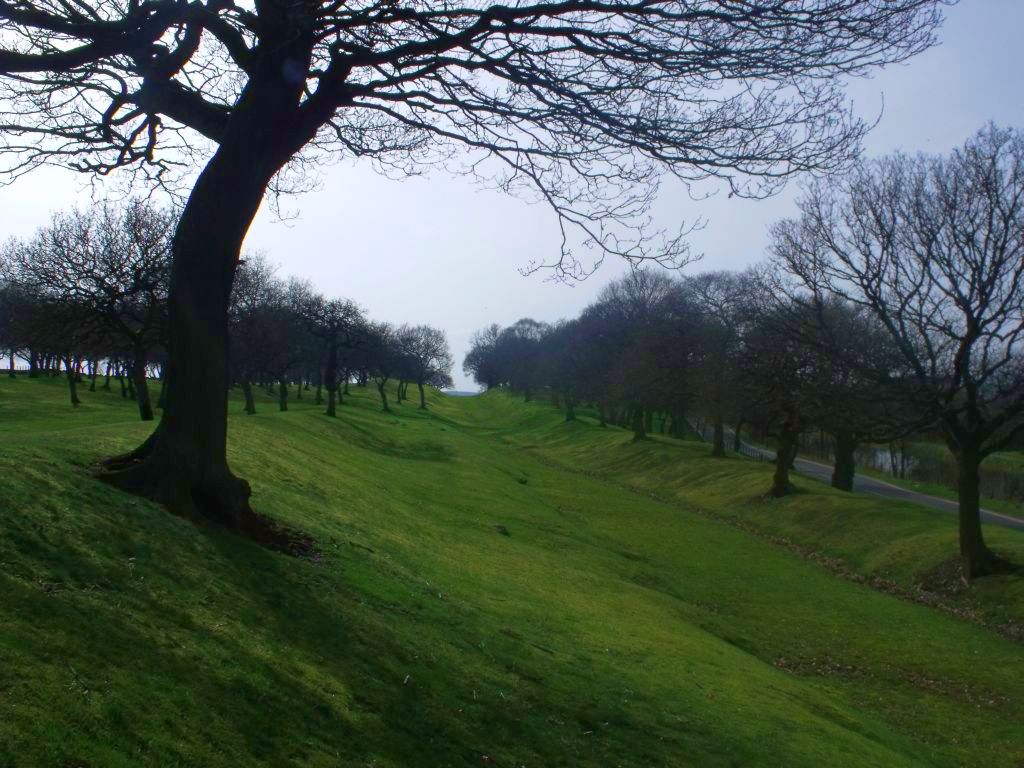
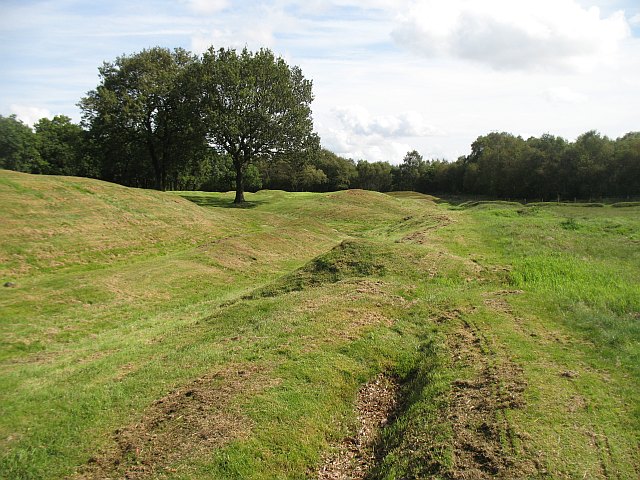
Fortified place · Roman
Antonine Wall: Rough Castle
Falkirk
Rough Castle was built as a Roman fort on the Antonine Wall, which dates from about AD 143. It stands against the southern rear face of the Wall, d…
- Near Bonnybridge
- 15 min walk from car park
- Some walking
Questions people ask
- What is Castlecary Roman fort?
- It was a large Roman fort on or near the Antonine Wall route at Castlecary.
- What was found at Castlecary in 1769?
- Workmen uncovered eight apartments and an L-shaped hypocausted bathhouse while seeking material for the Forth and Clyde Canal.
- Where can Castlecary artefacts be seen?
- The source says artefacts such as the altar to Fortuna can be viewed at the Hunterian Museum in Glasgow.
- Was Castlecary carefully excavated?
- The source says the site was damaged in earlier land improvement, but excavated more sympathetically in 1902.
- Is there a visible wall stretch nearby?
- At Tollpark, between Castlecary and Westerwood, the source records one of the longest continuous stretches of the Antonine Wall.
Sources
Explore more: Fortified places · Roman · Falkirk
The Ancient Codex, in your pocket
Get the Pocket Codex app
Carry the directory with you — Castlecary Roman fort and thousands of ancient places across Britain and Ireland, offline, wherever you roam.