
Stone rampart traces make Balmuildy stand out among Antonine Wall forts. Balmuildy was a Roman fort (a frontier military base), and one of only two known forts on the Wall with stone ramparts.
Its excavated bath-house finds, inscriptions and everyday objects turn a strategic frontier post into a more human place. Altars, drains, pots, a surgical probe and a cheese press point to worship, repair, health, bathing and food preparation beside the Roman frontier.
What follows is drawn from published sources, with each claim labelled by how firmly it is established.
History
Balmuildy was built between 142 and 154 AD under Antoninus Pius as part of the Roman advance into Scotland.
Quintus Lollius Urbicus, governor of Roman Britain, supervised the early Antonine Wall effort.
The Wall and Balmuildy were abandoned only a short time after completion, with garrisons relocating to Hadrian's Wall.
Septimius Severus ordered repairs to the Wall in 208, after which occupation ended again a few years later.
Steuart Napier Miller excavated the site and published The Roman fort at Balmuildy in 1922.
People
-
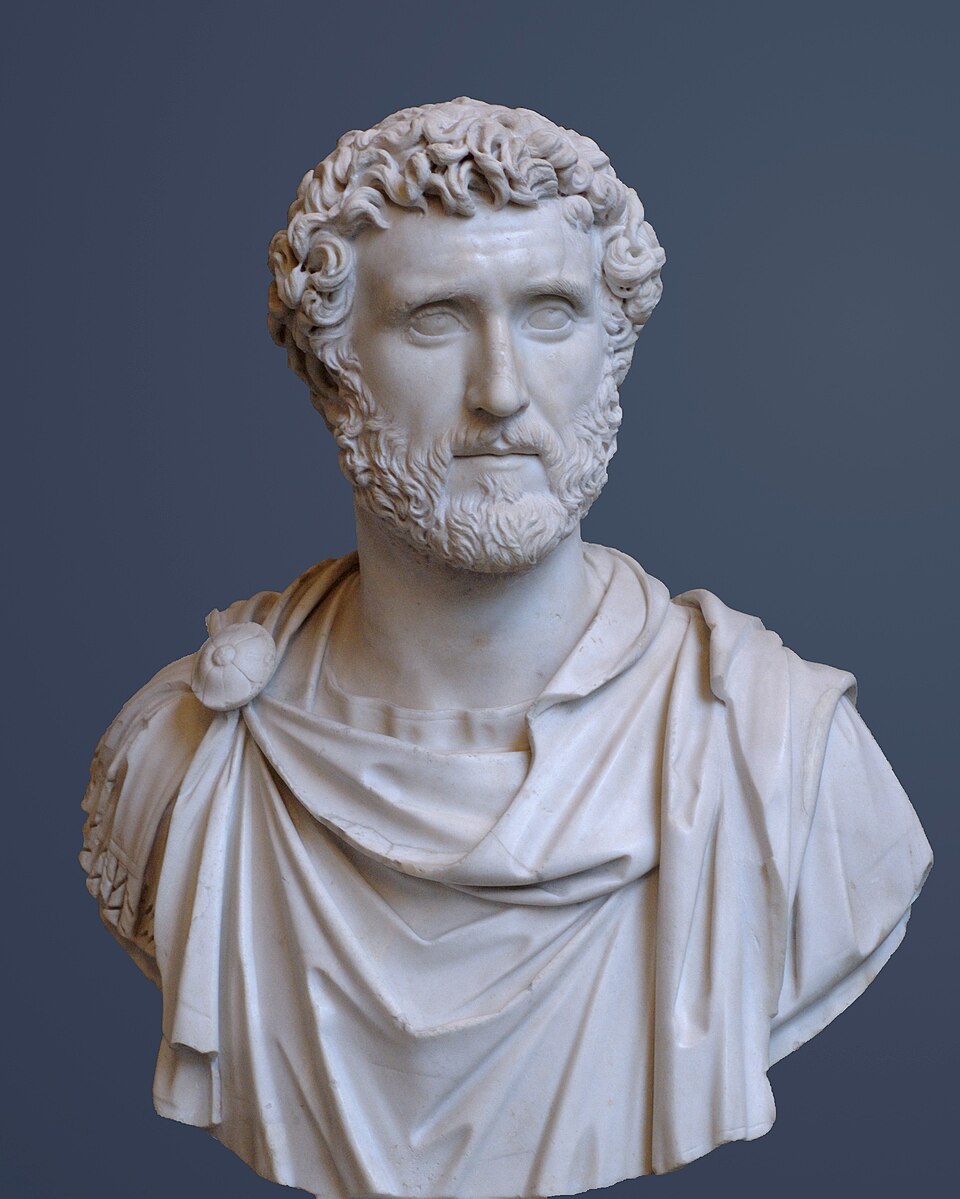
Portrait: Unknown artistUnknown artist / Wikimedia Commons / Public domain Antoninus Pius
Roman emperor under whose orders Balmuildy and the Antonine Wall were built.
-
Portrait: Unknown authorUnknown author / Wikimedia Commons / Public domain Quintus Lollius Urbicus
Governor who supervised the northern frontier works.
-
Steuart Napier Miller
Excavator and author of the 1922 Balmuildy report.
-
Sir George Macdonald
Described the site in The Roman wall in Scotland.
Cultural influences
-
Stone ramparts
Balmuildy is rare on the Antonine Wall because stone ramparts were identified there.
-
Material culture
Objects from the bath houses and fort buildings show the practical life of the garrison.
Connections
-
Hunterian Museum
Holds the finds listed in the source pack.
-
Bearsden and Cadder
Neighbouring forts west and east of Balmuildy.
-
Military Way
The Roman road linking Wall forts and fortlets.
Discovery & excavation
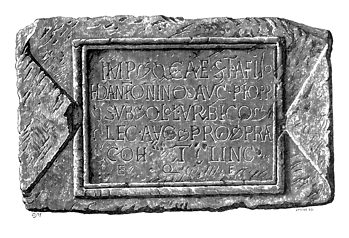
Excavation produced altars to Fortuna and Mars, a Second Legion building dedication, bath-house fittings, pottery, an oil lamp, a surgical probe and other small finds, several of which have been scanned to video.
In culture
-
Digital reconstruction
A digital reconstruction of the fort has been created.
What to look for
-
Fort footprint
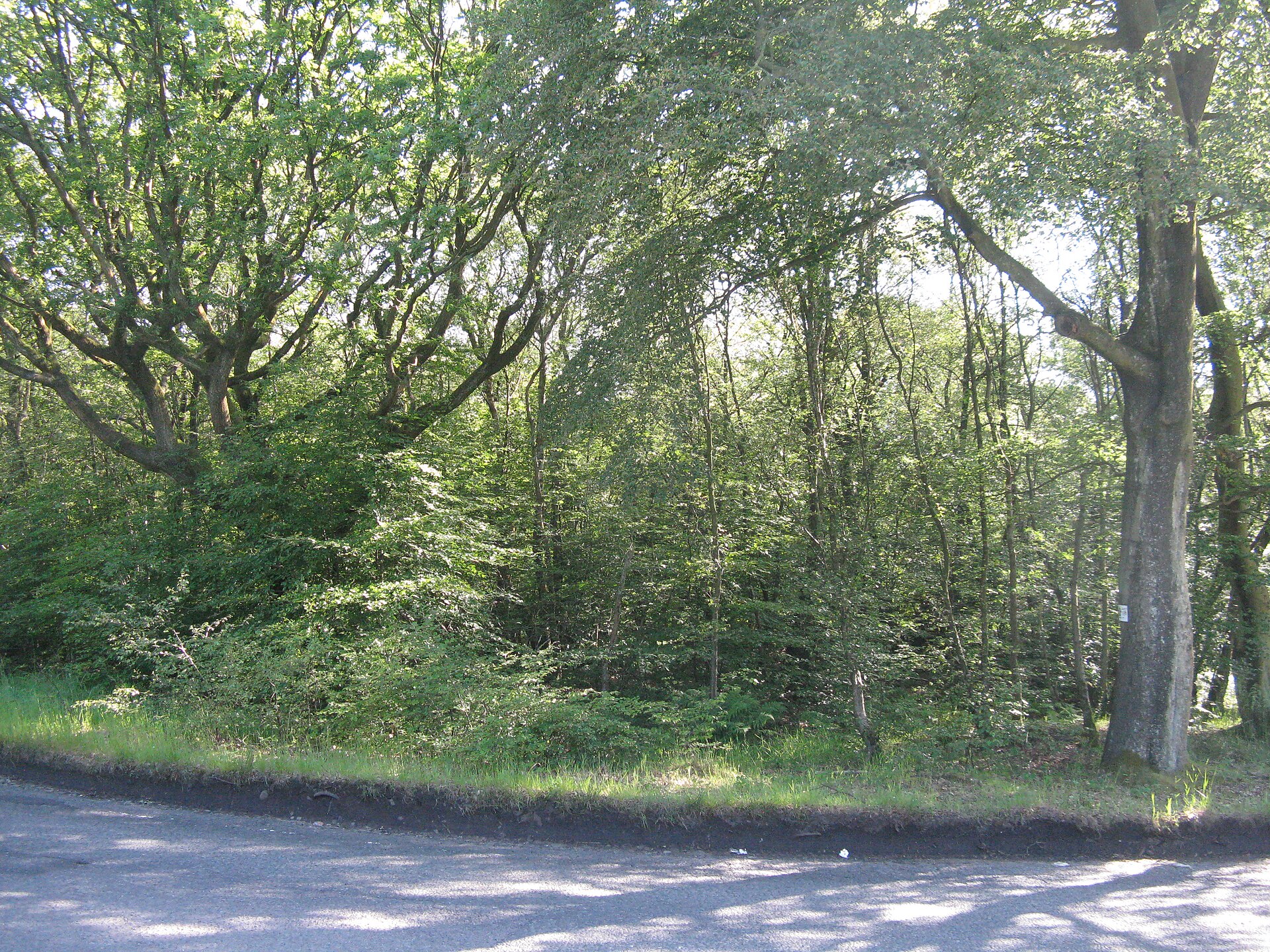
The Roman site lies near the River Kelvin and the Forth and Clyde Canal.
-
Bath-house evidence
Many finds came from bath-house contexts.
-
Museum objects
The Hunterian Museum preserves the portable material from the site.
Plan your visit
- Location
- 55.9173°N · 4.2719°W
- Access
- Open access
- Terrain
- Moderate walking
Opening & admission
The pack does not provide current access or admission details for the fort site; check local access information before travelling.
- The site lies near the River Kelvin and the Forth and Clyde Canal.
- Finds are held by the Hunterian Museum.
Nearby places
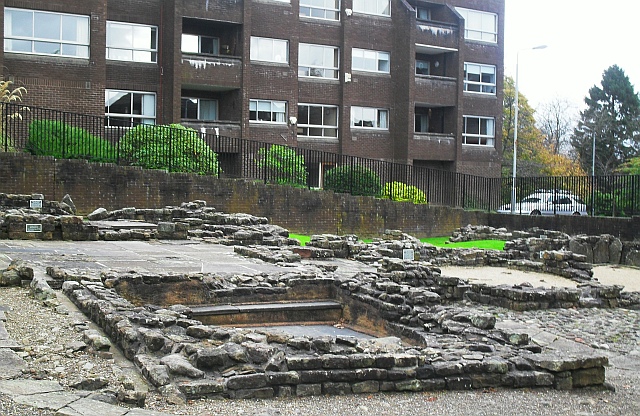
Fortified place · Roman
Bearsden Roman Bath House
East Dunbartonshire
The Romans built a stone-and-turf fortification, the Antonine Wall, between the Firth of Clyde and the Firth of Forth between AD 142 and 144 under…
- Near Bearsden
- 3 min walk from car park
Questions people ask
- What makes Balmuildy unusual?
- It is one of only two Antonine Wall forts where stone ramparts have been found.
- When was Balmuildy built?
- The source pack dates construction to between 142 and 154 AD under Antoninus Pius.
- Who excavated Balmuildy?
- Steuart Napier Miller excavated the site and published a 1922 volume on the fort.
- Where are the finds from Balmuildy?
- The pack says the finds are now in the Hunterian Museum in Glasgow.
- What kinds of objects were found?
- Finds include altars, building inscriptions, bath-house fittings, pottery, an oil lamp, a surgical probe and a cheese press.
Sources
Explore more: Fortified places · Roman · East Dunbartonshire
The Ancient Codex, in your pocket
Get the Pocket Codex app
Carry the directory with you — Balmuildy and thousands of ancient places across Britain and Ireland, offline, wherever you roam.