
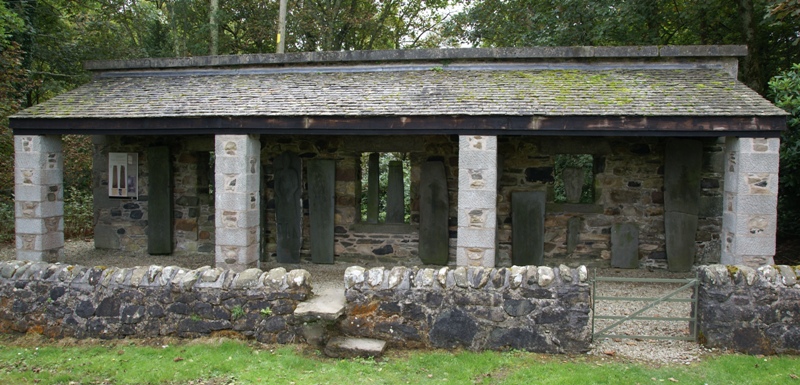
The chapel was built in the 13th century. After its roof was lost the building was used as a burial enclosure, and it was re-roofed in 1934 to shelter a collection of carved stones.
Built in the 13th century and later stripped of its roof, Kilmory Knap Chapel served for a time as a burial enclosure before being re-roofed in 1934 to shelter its collection of carved stones. Among them stands Macmillan’s Cross, a well-preserved medieval carving portraying the clan chief with his hunting dogs.
What follows is drawn from published sources, with each claim labelled by how firmly it is established.
History
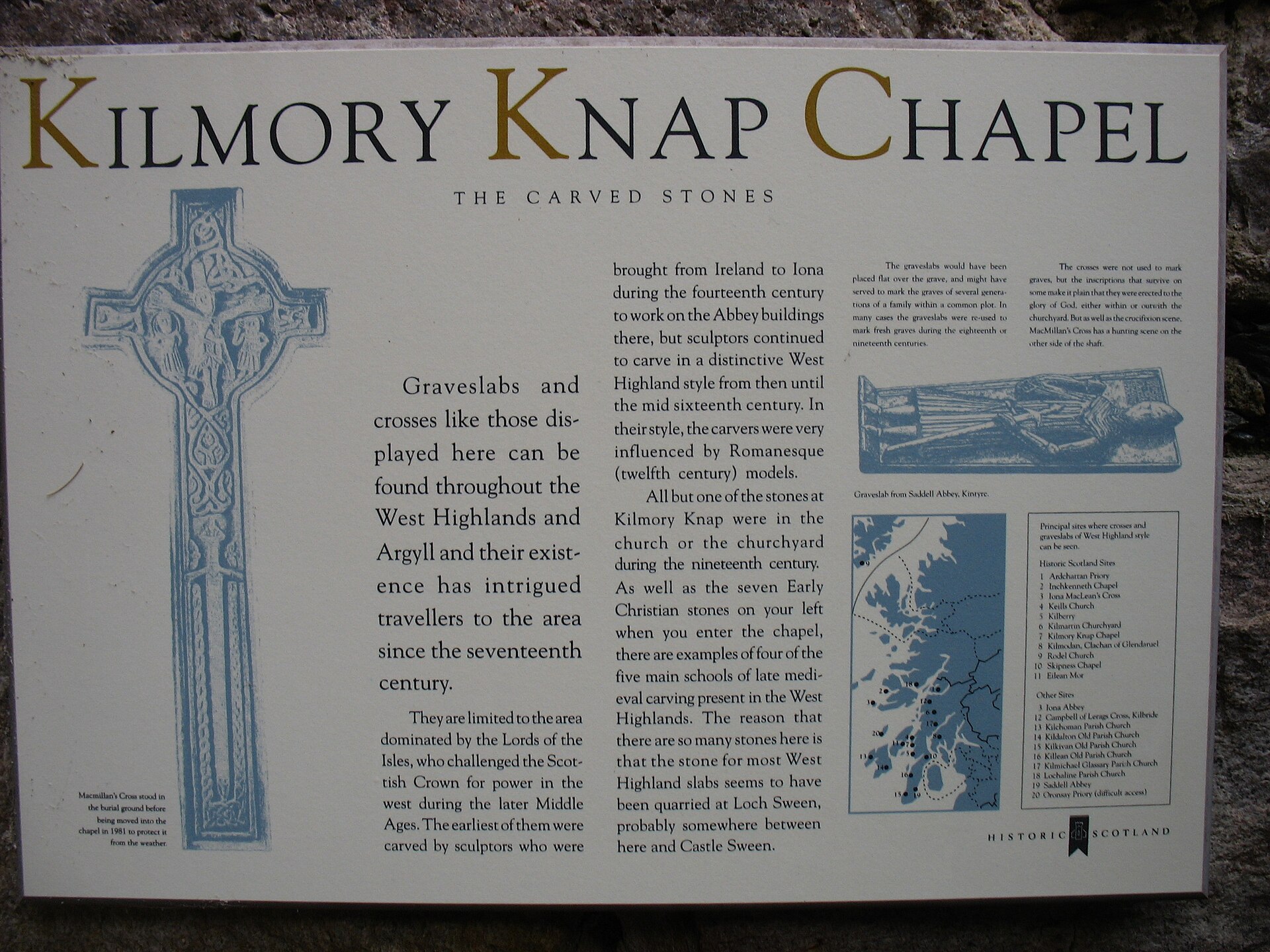
The chapel was built in the 13th century. After its roof was lost the building was used as a burial enclosure, and it was re-roofed in 1934 to shelter a collection of carved stones.
People
-
Clan Macmillan (of Knap)
Clan for whom the chapel is an important historical site; depicted on Macmillan's Cross
-
Simon Brighton
Writer who associates the chapel with the Knights Templar
Cultural influences
-
West Highland sculpture — the chapel shelters Early Christian cross slabs and late medieval graveslabs and standing crosses of West Highland type, dating from the 14th to 16th centuries.
Connections
-
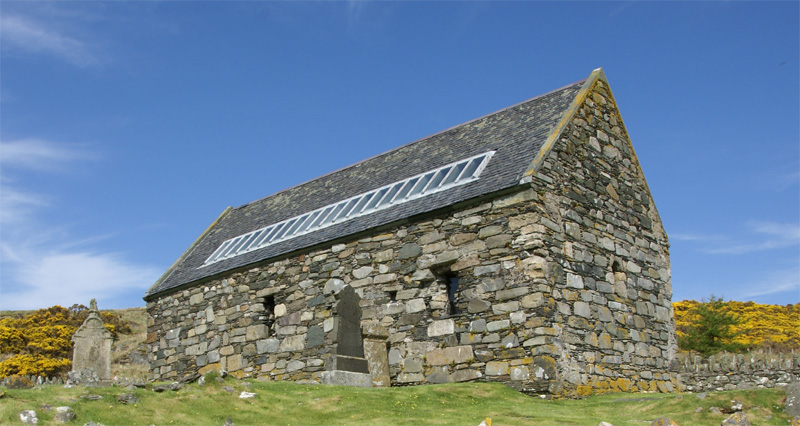
Photo: Otter / Wikimedia Commons / CC BY-SA 3.0 Keills Chapel
Comparable chapel on the opposite shore of Loch Sween
-
Ellary Estate
Estate on which the chapel stands, beside Loch Sween
What to look for
-
Macmillan's Cross — a well-preserved piece of medieval carving portraying the Chief of Clan Macmillan with hunting dogs.
-
The sheltered collection of Early Christian cross slabs, late medieval West Highland graveslabs and standing crosses (14th-16th centuries).
-
The re-roofed 13th-century chapel structure itself, beside Loch Sween on the Ellary Estate.
What is said
Folklore and tradition, recorded as what is said — not as established fact.
-
The chapel is associated with the Knights Templar, with the suggestion that the area may have given refuge to Templars fleeing persecution in France. (attributed to writer Simon Brighton; not established history)
Plan your visit
- Location
- 55.9140°N · 5.6778°W
- Nearest settlement
- Kilmory, Knapdale
- Access
- Open access
- Start point
- On the shore between Loch Sween and Loch Caolisport in South Knapdale off the B8025.
- Best time
- 1 April to 30September: Daily, 9.30am to 5.30pm Last entry 5pm 1 October to 31 March: Daily, 10am to 4pm Last entry 3.30pm The door is opened using a key, which is attached by chain to the door.
- Start point
- Kilmory hamlet (road end off the B8025) (parking unconfirmed) — Remote single-track approach off the B8025 in South Knapdale. No dedicated car park is published by HES or mapped in OpenStreetMap; visitors park considerately at the road end by the chapel. Postcode PA31 8PB is the hamlet, not a precise parking spot.
- Sat-nav
- PA31 8PB
Opening & admission
Free entry
- 1 April to 30September: Daily, 9.30am to 5.30pm Last entry 5pm 1 October to 31 March: Daily, 10am to 4pm Last entry 3.30pm The door is opened using a key, which is attached by chain to the door.
Nearby places
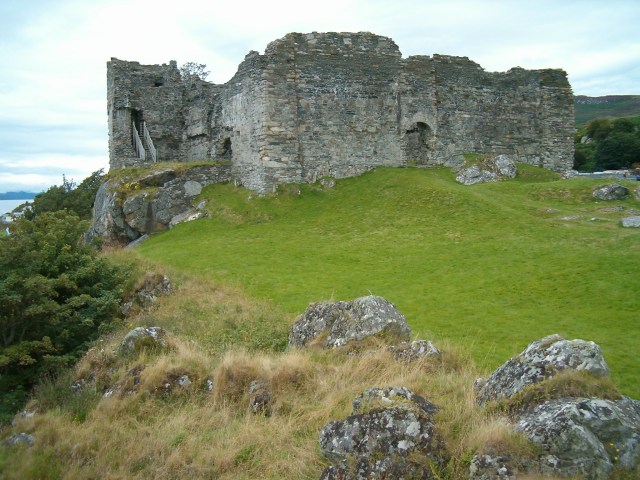
Fortified place · Medieval
Castle Sween
Argyll and Bute
Castle Sween, on the eastern shore of Loch Sween in Knapdale, Argyll, is thought to be one of the earliest stone castles built in Scotland — and is…
- Near Achnamara
- 466 metres from car park
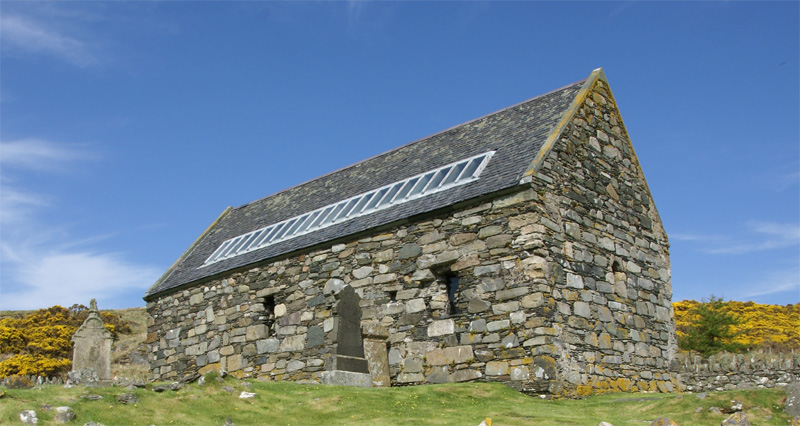
Tomb or burial place · Pictish & early medieval
Keills Chapel and Cross
Argyll and Bute
The chapel dates from the 11th century. Its now re-roofed structure houses an important collection of early stone sculpture, and the original Keill…
- Near Tayvallich
- 73 metres from car park
Carved stone · Medieval
Kilberry Sculptured Stones
Argyll and Bute
A surviving group of late medieval cross-slabs and grave markers rescued from a lost parish church, now protected as a scheduled monument in the gr…
- Easy path
Sources
- Canmore site record 39050 (accessed 2026-06-13)
- Trove (HES) record (accessed 2026-06-13)
- Wikipedia: Kilmory Knap Chapel (accessed 2026-06-13)
- Wikidata Q3025004 (accessed 2026-06-13)
Explore more: Tomb or burial places · Pictish & early medieval · Argyll and Bute
The Ancient Codex, in your pocket
Get the Pocket Codex app
Carry the directory with you — Kilmory Knap Chapel and thousands of ancient places across Britain and Ireland, offline, wherever you roam.