
The chapel dates from the 11th century. Its now re-roofed structure houses an important collection of early stone sculpture, and the original Keills Cross has been moved inside to protect it from the…
The name Keills comes from the Gaelic keeill, meaning chapel — and the 11th-century building it names now shelters the Keills Cross, moved indoors to protect its carving from the weather. Carved from local grey-green epidiorite in the late 8th or early 9th century, the cross shows the archangel Michael standing over a serpent.
What follows is drawn from published sources, with each claim labelled by how firmly it is established.
The name
The name Keills originates from the word keeill, meaning 'chapel'.
History
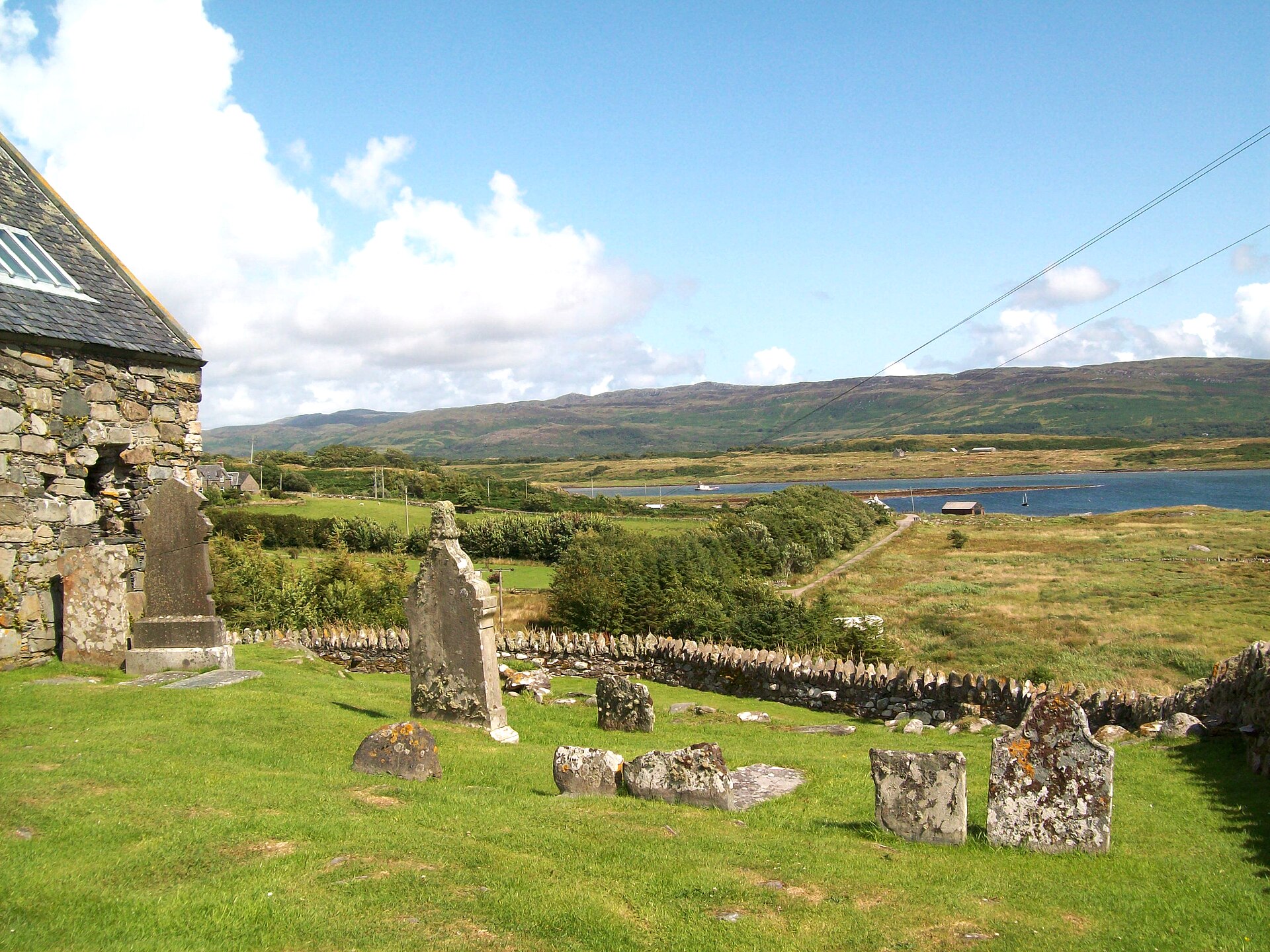
The chapel dates from the 11th century. Its now re-roofed structure houses an important collection of early stone sculpture, and the original Keills Cross has been moved inside to protect it from the elements, with a blank modern replacement standing where it once stood outside.
Cultural influences
-
The Keills Cross belongs to the early Christian sculptural tradition of the west Highlands; its iconography draws on standard medieval Christian imagery — the Judgement, the evangelists, and the triumph of St Michael over the serpent.
Connections
-
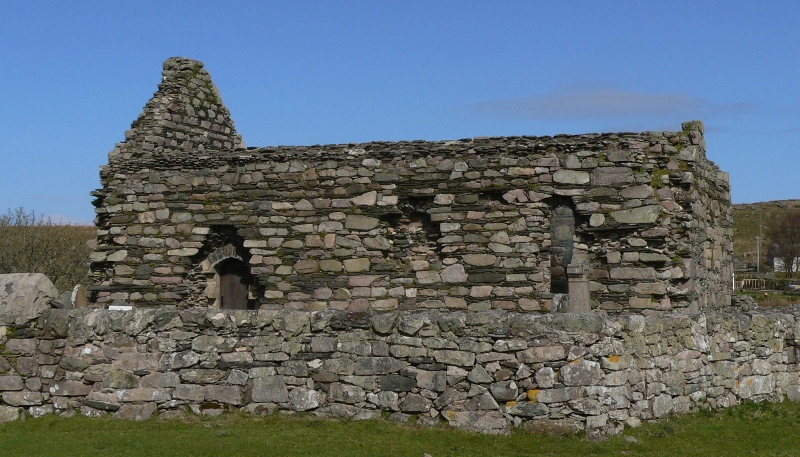
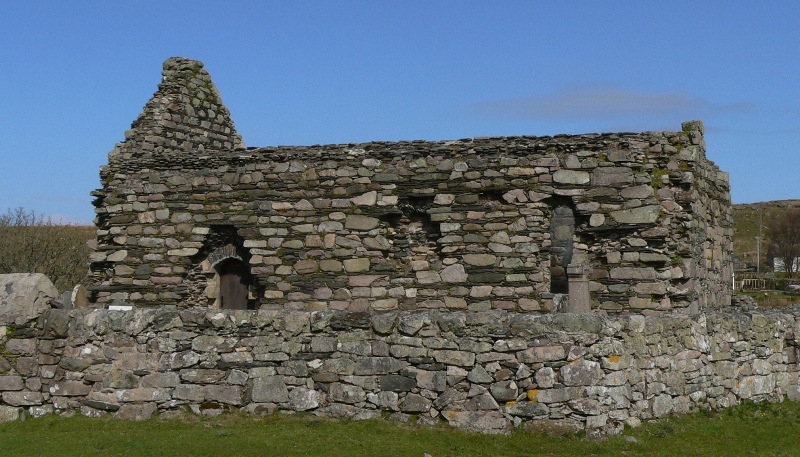
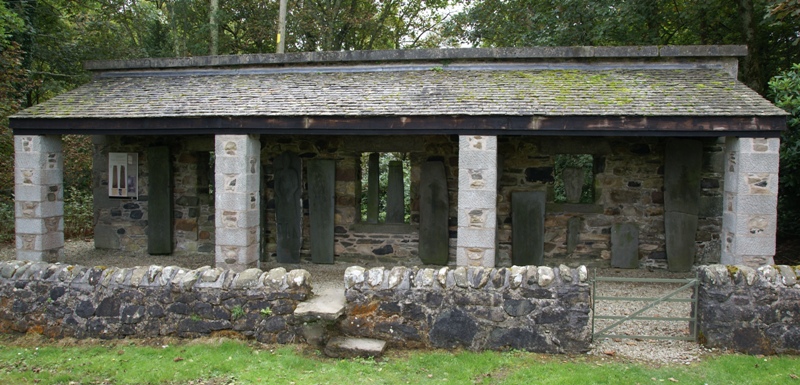
Photo: Otter / Wikimedia Commons / CC BY-SA 3.0 Kilmory Knap Chapel
Comparable chapel in HES care on the opposite shore of Loch Sween
What to look for
-
The Keills Cross — a complete, well-preserved late 8th to early 9th century cross carved from local grey-green epidiorite, decorated on one face only, with unusually short side-arms broader than the shaft.
-
On the cross's upper limb, the archangel St Michael standing over a serpent (a symbol of triumph over the devil); on the lower limb, Christ on the Judgement Seat holding a book (mercy) in his left hand and a flail (judgement) in his right.
-
At the crossing, a circular design with three round objects that may symbolise the Holy Trinity, surrounded by four animals representing the four evangelists.
-
The chapel's collection of six early Christian cross-slabs and around forty late medieval grave slabs recovered from the chapel or churchyard.
Plan your visit
- Location
- 55.9626°N · 5.7027°W
- Nearest settlement
- Tayvallich
- Access
- Open access
- Start point
- 6m south west of Tayvallich off the B8025
- Start point
- Keills road-end (end of the B8025 minor road) (parking unconfirmed) — The minor road south-west of Tayvallich (off the B8025) terminates close to the chapel; a short footway leads the rest of the way. No formal car park is named by HES or mapped in OpenStreetMap — visitors park at the road end. Verify parking arrangements locally before travel.
Opening & admission
Free entry
Nearby places
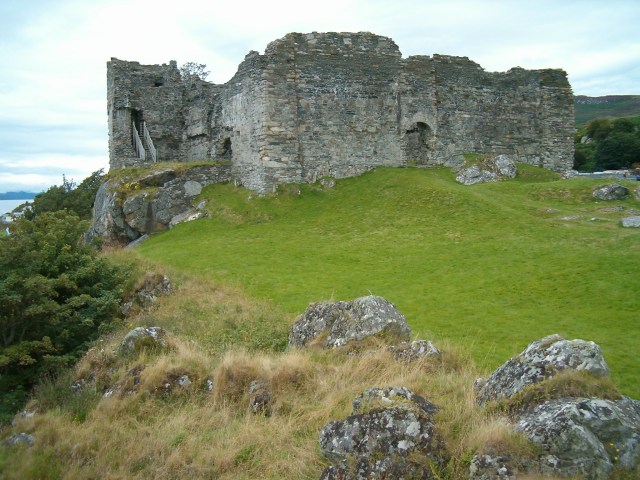
Fortified place · Medieval
Castle Sween
Argyll and Bute
Castle Sween, on the eastern shore of Loch Sween in Knapdale, Argyll, is thought to be one of the earliest stone castles built in Scotland — and is…
- Near Achnamara
- 466 metres from car park
Tomb or burial place · Pictish & early medieval
Kilmory Knap Chapel
Argyll and Bute
The chapel was built in the 13th century. After its roof was lost the building was used as a burial enclosure, and it was re-roofed in 1934 to shel…
- Near Kilmory, Knapdale
Carved stone · Medieval
Kilberry Sculptured Stones
Argyll and Bute
A surviving group of late medieval cross-slabs and grave markers rescued from a lost parish church, now protected as a scheduled monument in the gr…
- Easy path
Sources
- Canmore site record 38654 (accessed 2026-06-13)
- Trove (HES) record (accessed 2026-06-13)
- Wikipedia: Keills Chapel (accessed 2026-06-13)
- Wikidata Q2780450 (accessed 2026-06-13)
Explore more: Tomb or burial places · Pictish & early medieval · Argyll and Bute
The Ancient Codex, in your pocket
Get the Pocket Codex app
Carry the directory with you — Keills Chapel and Cross and thousands of ancient places across Britain and Ireland, offline, wherever you roam.