
Dunadd is a hillfort in Argyll and Bute, occupied from the Iron Age and into the early medieval period, and believed to have been the capital of the Gaelic kingdom of Dál Riata, which spanned the…
A fort on the River Add gives Dunadd its name — Dún Ad in Gaelic — a rocky crag occupied from the Iron Age into the early medieval period. It is widely believed to have served as the capital of the Gaelic kingdom of Dál Riata.
What follows is drawn from published sources, with each claim labelled by how firmly it is established.
The name
Dunadd (Scottish Gaelic Dún Ad, Old Irish Dún Att) means 'fort on the [River] Add', the river beside which the crag lies.
History
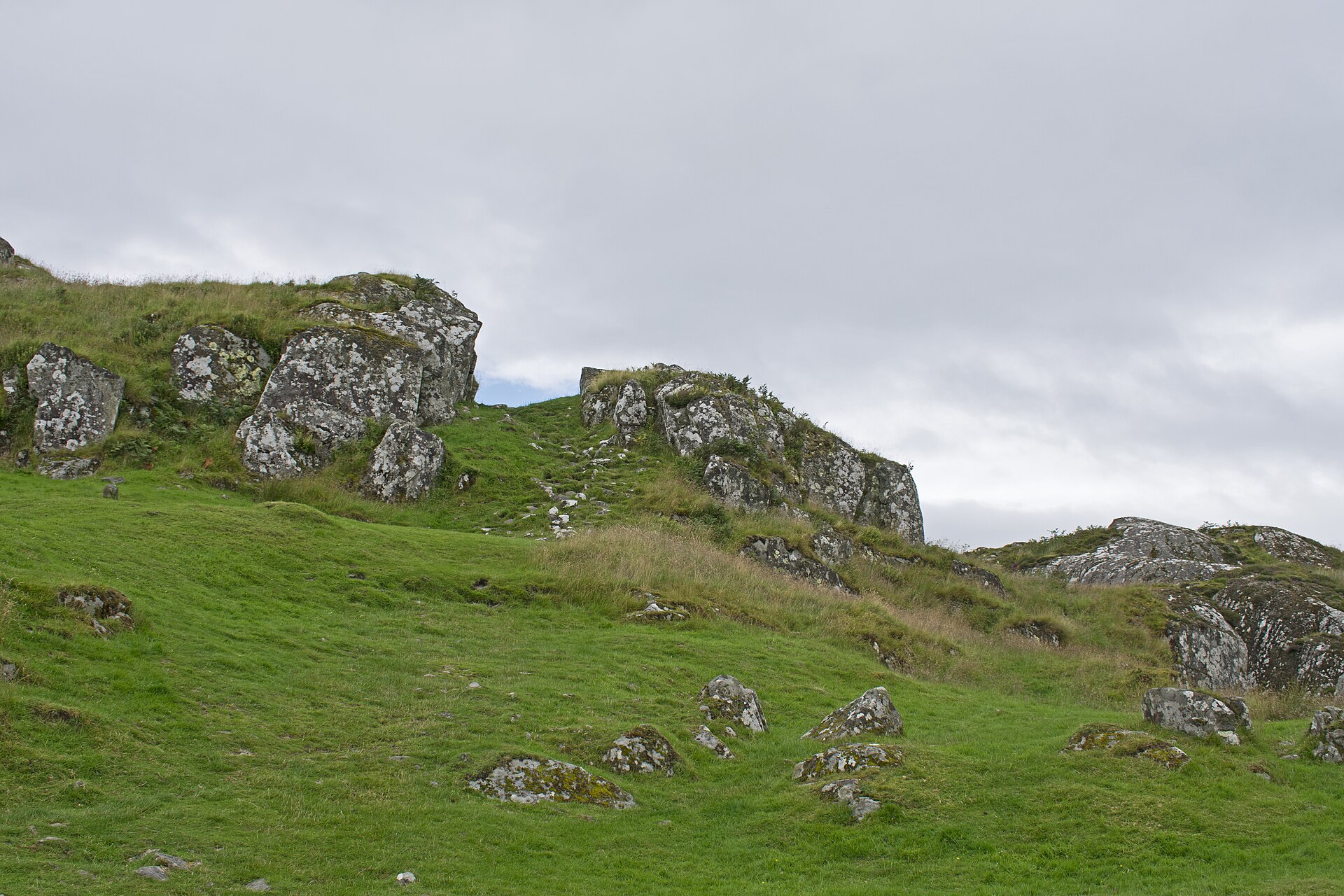
Dunadd is a hillfort in Argyll and Bute, occupied from the Iron Age and into the early medieval period, and believed to have been the capital of the Gaelic kingdom of Dál Riata, which spanned the northern Irish coast, Argyll and the Scottish islands in the early centuries AD.
Dunadd is mentioned twice in early sources: the Annals of Ulster record 'the siege of Dún At' in 683, and for 736 state that Aengus son of Fergus, king of the Picts, laid waste Dál Riata, seized Dún At, burned Creic, and bound in chains two sons of Selbach (Donngal and Feradach).
The site was occupied after 736, at least into the 9th century, and retained importance into later centuries: in 1436 Alan son of John Riabhach MacLachlan of Dunadd was made seneschal of the lands of Glassary, and in June 1506 commissioners appointed by James IV — including the earl and bishop of Argyll — met at Dunadd to collect rents and resolve feuds.
Analysis of sea-level change suggests Dunadd was an island or promontory into historic times, with receding sea levels leaving the fortification open to siege and seizure in the 6th to 7th centuries.
People
-
Kings of Dál Riata
The Gaelic rulers for whom Dunadd served as a royal seat
-
Aengus son of Fergus (Óengus, king of the Picts)
Seized Dún At and laid waste Dál Riata in 736, per the Annals of Ulster
-
Finn Manach
Name read in the ogham inscription on the summit outcrop, dated to the late 8th century or after
Cultural influences
-
As the believed capital of Dál Riata, Dunadd was a focal seat of the Gaelic kingdom that linked Ireland and Argyll, at a time when the Romans had abandoned southern Britain and the Anglo-Saxons were arriving across the North Sea.
-
The carved footprint and basin below the upper enclosure are thought to have formed part of Dál Riata's inauguration ritual for kings — making Dunadd a candidate royal coronation place.
-
Its early-medieval finds — including imported pottery and moulds for fine metalwork — point to wide trade and craft connections and mark it as one of the most important such assemblages from any early-medieval site in Scotland.
Connections
-
Kingdom of Dál Riata
Believed capital of the kingdom
-
Bruach An Druimein
Site 7 km to the north whose early-medieval glass beads chemically match Dunadd's, suggesting it was associated with or controlled by Dunadd
-
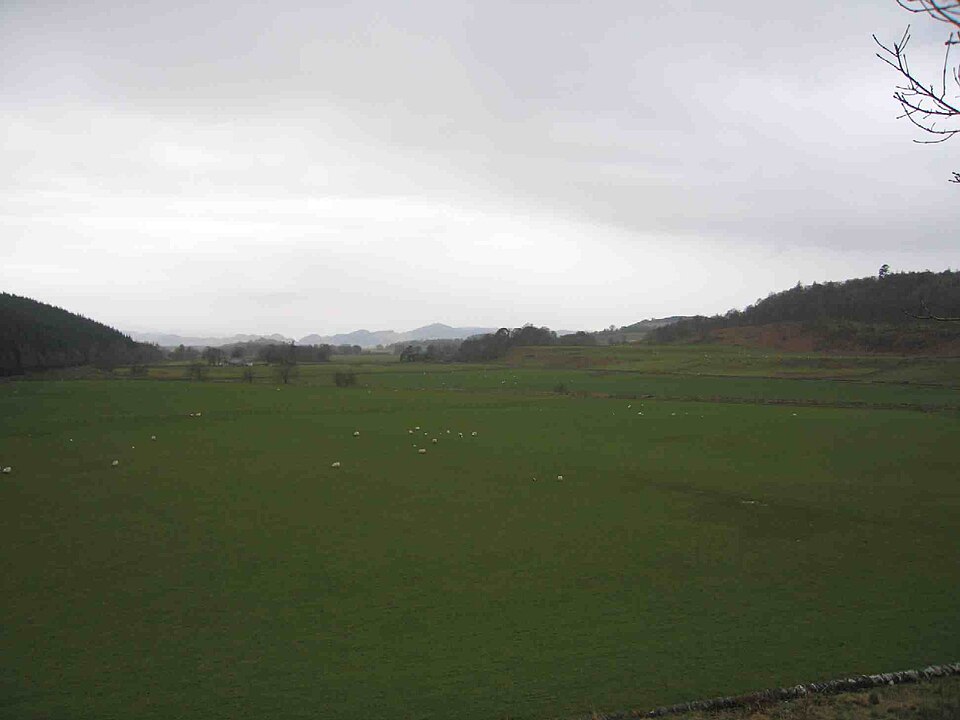
Photo: Laurence Nolan, aka User:Lnolan / Wikimedia Commons / CC BY 2.5 Kilmartin Glen
The wider valley of ancient monuments in which Dunadd sits
Discovery & excavation
Because Dunadd is named in early sources and readily identified, it has been excavated several times (1904–1905, 1929 and 1980) and has one of the most important ensembles of finds from any early-medieval site in Scotland. The finds range from the 6th to the 8th centuries and include tools, weapons, quernstones, imported pottery, and motif-pieces and moulds for the manufacture of fine metalwork, especially jewellery.
In culture
-
Dunadd (as Dun Monaidh) is central to Rosemary Sutcliff's 1965 novel The Mark of the Horse Lord, which depicts a Dál Riada succession struggle and a royal coronation using the carved footprint.
-
It is the setting for Claire R. McDougall's novel Veil of Time, in which a modern woman is transported to Dunadd's 8th-century heyday; the footprint, boar, well and ruins all feature.
What to look for
-
The carved footprint and basin in the rock below the upper enclosure, thought to have been used in royal inauguration ritual.
-
An incised boar in Pictish style on the same flat outcrop.
-
An ogham inscription, read as referring to a Finn Manach and dated to the late 8th century or after.
-
The rocky crag itself rising from the former bog of the Mòine Mhòr ('Great Moor') near the River Add, north of Lochgilphead.
Plan your visit
- Location
- 56.0857°N · 5.4789°W
- Nearest settlement
- Kilmartin
- Access
- Reached on a public path
- Terrain
- Moderate walking
- Parking
- Parking available nearby — see the official getting-here page.
- Start point
- Signposted 2m south of Kilmartin off the A816.
- Best time
- Open year-round.
- Start point
- Dunadd Fort car park — Car park at the foot of the crag, signposted 2 miles south of Kilmartin off the A816; a path leads across to the rock with a short rocky climb to the summit features.
- Sat-nav
- NR 837 936
Opening & admission
Free entry
- Open year-round.
Nearby places
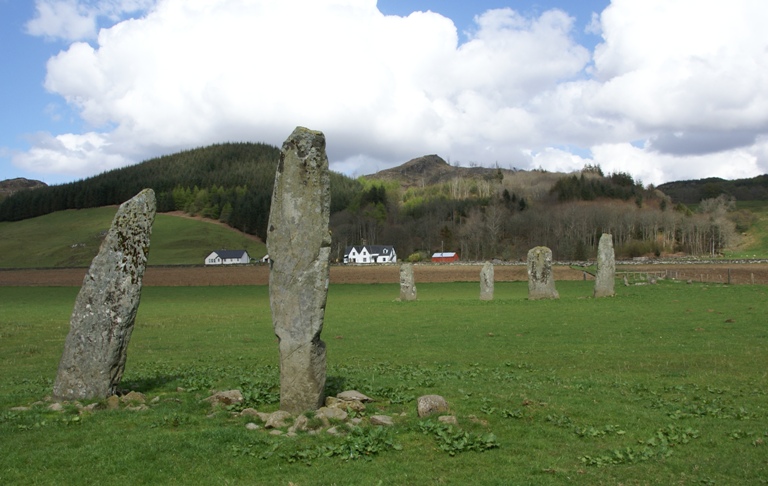
Tomb or burial place · Prehistoric
Ballymeanoch Standing Stones and Henge
Argyll and Bute
Ballymeanoch is a complex of Neolithic structures in Kilmartin Glen: an avenue of two rows of standing stones (of four and two stones), a stone cir…
- Near Kilmartin
- 6 min walk from car park
- Easy path
Tomb or burial place · Prehistoric
Dunchraigaig Cairn
Argyll and Bute
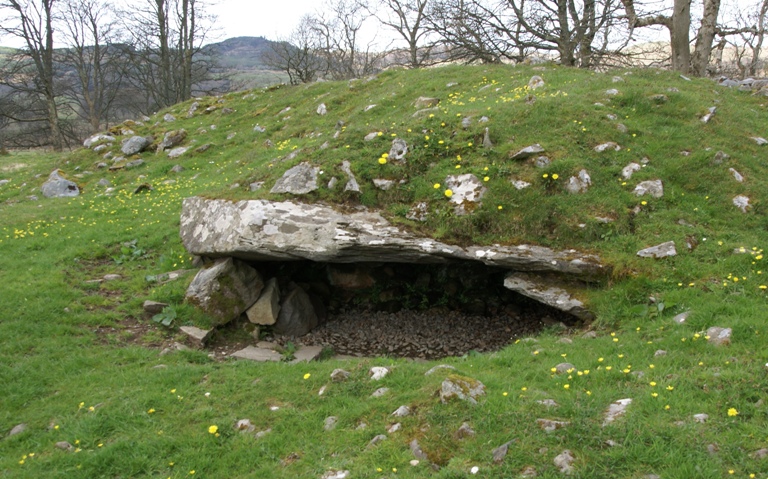
Dunchraigaig is an Early Bronze Age round cairn, about 30 m across, set a little apart to the south-east of the famous 2 km linear cemetery of cair…
- Near Kilmartin
- 1 min walk from car park
- Easy path
Carved stone · Prehistoric
Achnabreck Cup and Ring Marks
Argyll and Bute
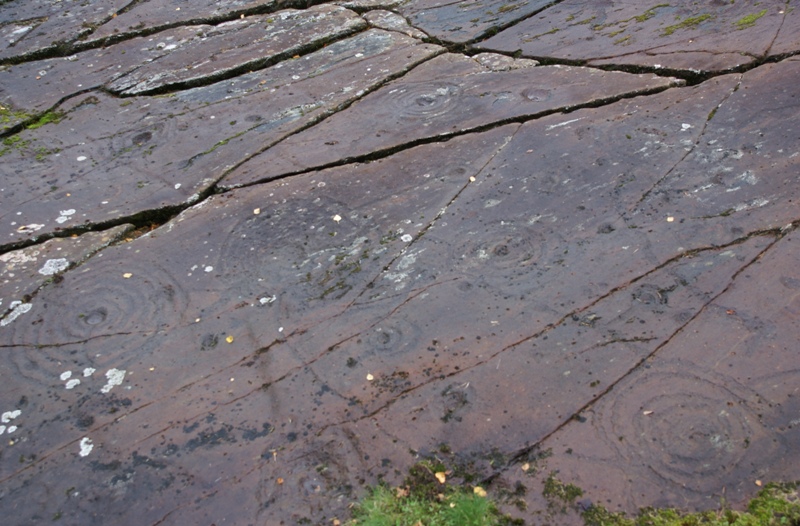
Achnabreck's rock surfaces were carved with cup and ring marks in prehistory — the purpose, and even the precise date, of the markings is uncertain…
- Near Lochgilphead
- 6 min walk from car park
- Easy path
Questions people ask
- What is Dunadd Fort?
- It is an Iron Age and early-medieval hillfort in Argyll, believed to have been the capital of the Gaelic kingdom of Dál Riata.
- What is Dál Riata?
- Dál Riata was a Gaelic kingdom spanning parts of Argyll, the Scottish islands and the northern Irish coast in the early centuries AD.
- What carvings survive at Dunadd Fort?
- A carved footprint, basin, Pictish-style boar and ogham inscription survive on the rock outcrop below the upper enclosure.
- Can you visit Dunadd Fort?
- Yes — Historic Environment Scotland lists it as free to enter and open year-round, signposted two miles south of Kilmartin off the A816.
Sources
- Canmore site record 39564 (accessed 2026-06-13)
- Wikipedia: Dunadd (accessed 2026-06-13)
- Wikidata Q233579 (accessed 2026-06-13)
Explore more: Fortified places · Iron Age · Argyll and Bute
The Ancient Codex, in your pocket
Get the Pocket Codex app
Carry the directory with you — Dunadd Fort and thousands of ancient places across Britain and Ireland, offline, wherever you roam.