
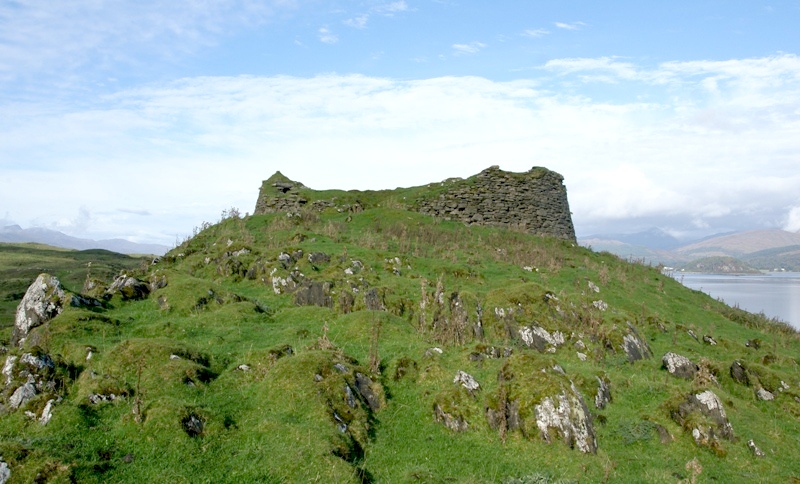
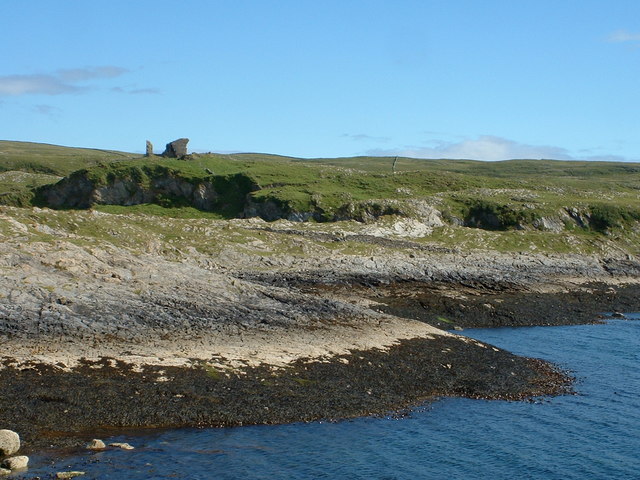
A ruined hall-house looks across Loch Linnhe from Lismore, with a small bay and older coastal defences close by. Castle Coeffin is a medieval castle ruin, probably built by the MacDougalls of Lorn in the 13th century.
The site is layered with earlier and later associations: a claimed Viking predecessor, a tidal fish trap of unknown date, and a local tale connecting its name with a Danish prince’s haunted sister.
What follows is drawn from published sources, with each claim labelled by how firmly it is established.
History
Castle Coeffin stands on Lismore's north-west coast across Loch Linnhe from Glensanda.
The castle was built on the site of a Viking fortress, according to the source.
It was built in the 13th century, probably by the MacDougalls of Lorn.
Lismore was important in the lordship of Lorn and held St Moluag's Cathedral, the seat of the Bishop of Argyll.
The first written evidence for the castle is from 1469-70, when it was granted to Sir Colin Campbell of Glenorchy by Colin Campbell, 1st Earl of Argyll.
The castle was probably not occupied after the medieval period.
An 1892 gazetteer lists Castle Rachal at the same location as an ancient Scandinavian fortalice and ivy-clad ruin.
People
-
Sir Colin Campbell of Glenorchy
Received the castle in a 1469-70 grant.
-
Colin Campbell, 1st Earl of Argyll
Granted Castle Coeffin to Sir Colin Campbell of Glenorchy.
Connections
-
Lismore
The castle stands on the island's north-west coast.
-
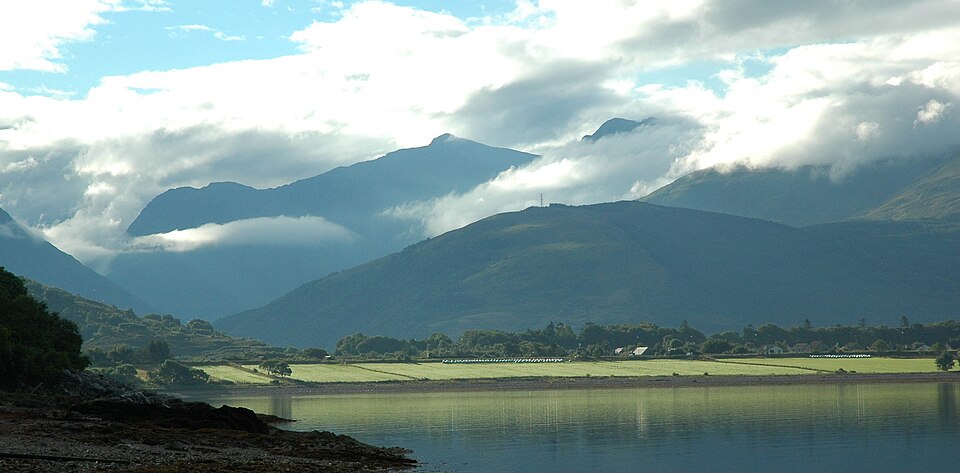
Photo: Unknown / Wikimedia Commons / CC BY-SA 3.0 Loch Linnhe
The ruin looks across the loch toward Glensanda.
-
MacDougalls of Lorn
Probably built the 13th-century castle.
-
St Moluag's Cathedral
Shows Lismore's wider importance in the lordship and bishopric.
What to look for
-
Hall-house
The main ruin is an oblong hall-house.
-
Irregular bailey
An enclosed outer yard lies around the hall-house, with much of it later in date.
-
External stair position
A stair probably linked the north-east entrance to the bailey.
-
Sea access door
A second door gave access toward the sea on the south-west side.
-
Tidal fish trap
A fish trap of unknown age lies in a small bay south-east of the castle.
What is said
Folklore and tradition, recorded as what is said — not as established fact.
-
Caifen and the haunting
Tradition connects the name Coeffin with Caifen, a Danish prince, and says his sister haunted the castle until her remains were returned to Norway to be buried beside her lover. (legend)
Plan your visit
- Location
- 56.5368°N · 5.4924°W
- Terrain
- Rough ground — reasonable boots advised
Opening & admission
Check locally before travelling
- The ruin stands on Lismore's north-west coast.
- The source does not state public access arrangements.
Nearby places
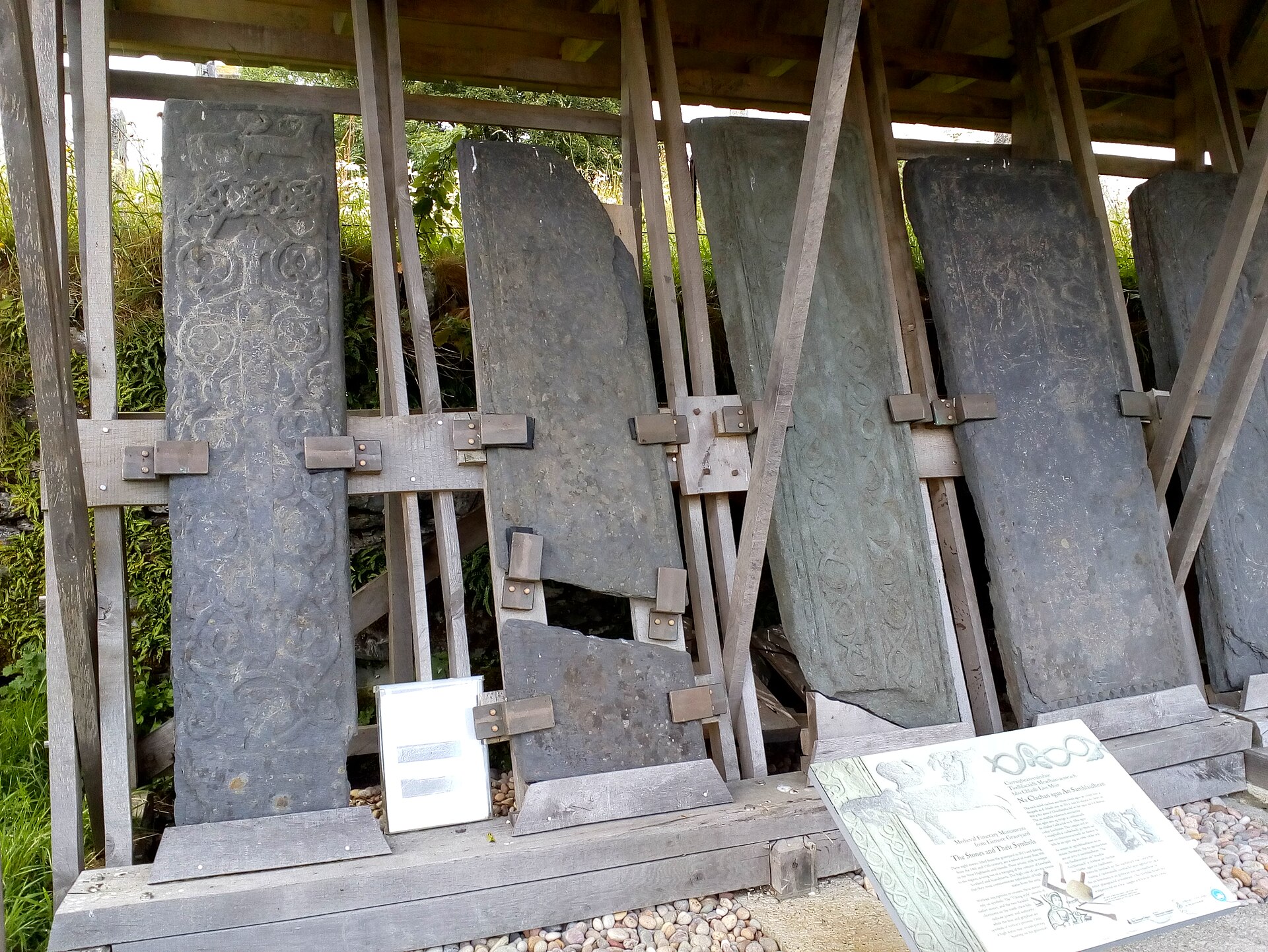
Sacred place · Medieval
St Moluag's Cathedral, Lismore
Argyll and Bute
It preserves the much-reduced remains of the cathedral of the medieval diocese of Argyll, rooted in a monastery traced to the sixth-century saint M…
Questions people ask
- What is Castle Coeffin?
- It is a ruined 13th-century castle on Lismore, probably built by the MacDougalls of Lorn.
- Where is Castle Coeffin?
- It stands on the north-west coast of Lismore, looking across Loch Linnhe toward Glensanda.
- Why is it called Castle Coeffin?
- The source says the name is thought to derive from Caifen, a Danish prince, though the haunting story attached to the name is legend.
- What survives at Castle Coeffin?
- An oblong hall-house, irregular bailey, doorway evidence and nearby coastal features survive.
Sources
Explore more: Building or ruins · Medieval · Argyll and Bute
The Ancient Codex, in your pocket
Get the Pocket Codex app
Carry the directory with you — Castle Coeffin and thousands of ancient places across Britain and Ireland, offline, wherever you roam.