
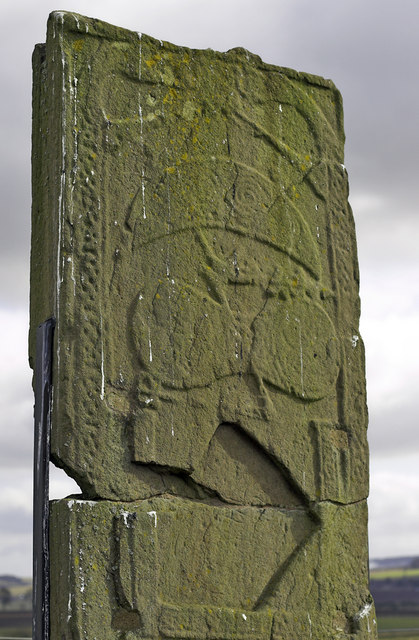
A rough sandstone slab from Dunnichen now stands in the Meffan Institute at Forfar. The Dunnichen Stone is a Pictish symbol stone, an early-medieval carved stone bearing non-Christian Pictish symbols, probably dating to the seventh century.
The stone matters because its history is a chain of discovery, movement, and reinterpretation. Found by ploughing in 1811, moved between church, house garden, museum stores, and display, it preserves a rare flower symbol alongside more familiar Pictish motifs.
What follows is drawn from published sources, with each claim labelled by how firmly it is established.
History
The Dunnichen Stone was discovered in 1811 at Dunnichen.
Its exact findspot is unknown, though East Mains of Dunnichen is usually suggested.
James Headrick described the discovery as a carved flat stone turned up by the plough.
Andrew Jervise identified Headrick's account with the surviving Dunnichen Stone.
The stone was moved to St Vigeans Museum in 1967 and Dundee Museum in 1972.
It is now on long-term loan to the Meffan Institute in Forfar.
A fibreglass replica stands at the church in Dunnichen.
People
-
James Headrick
Recorded an early account of the stone's discovery.
-
Andrew Jervise
Connected Headrick's description with the surviving stone.
-
Meffan Institute
Current display location for the stone.
Connections
-
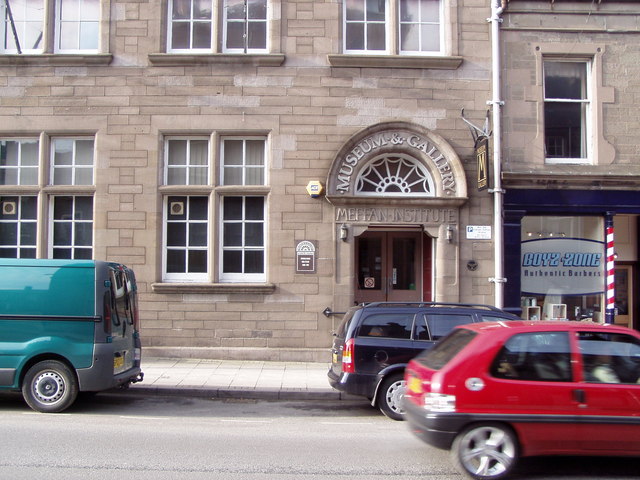
Photo: Ewen Rennie / Wikimedia Commons / CC BY-SA 2.0 Meffan Institute
Current home of the original stone.
-
Dunnichen
Village and landscape where the stone was found.
-
St Vigeans Museum
Former location of the stone after 1967.
What to look for
-
Class I form
Class I Pictish stones are natural stones incised with symbols rather than cross-slabs.
-
Pictish flower
The flower is a relatively rare Pictish symbol.
-
Double disc and Z-rod
This common Pictish motif combines paired discs with a Z-shaped rod.
-
Mirror and comb
The mirror and comb is another common Pictish symbol pairing.
-
Replica at Dunnichen
A modern replica marks the local connection while the original is displayed in Forfar.
Plan your visit
- Location
- 56.6441°N · 2.8891°W
- Access
- Paid entry — managed visitor site
- Terrain
- Easy going
Opening & admission
- Original displayed at the Meffan Institute in Forfar; check museum opening details.
Nearby places
Building or ruin · Pictish & early medieval
Restenneth Priory
Angus
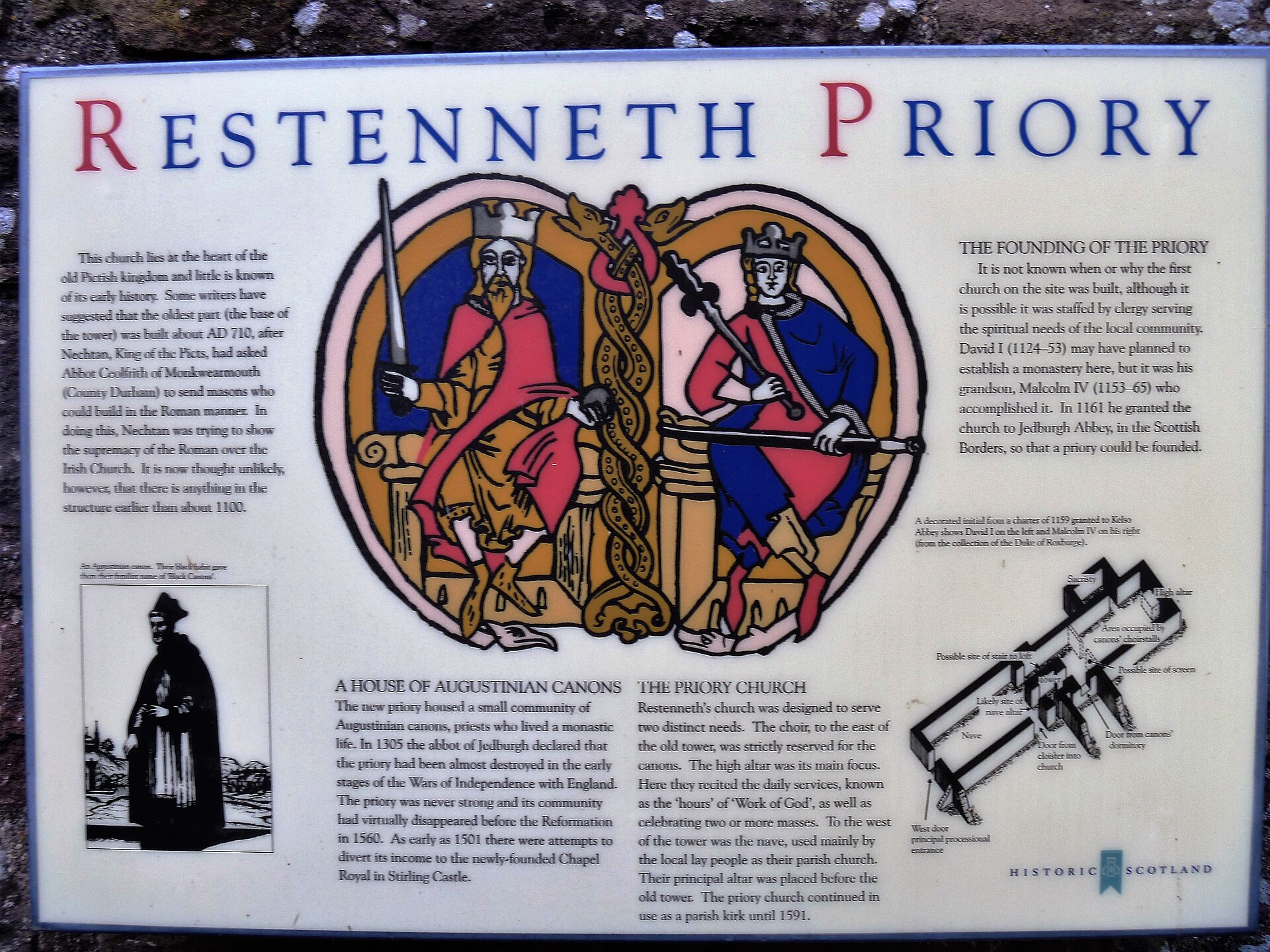
Restenneth Priory was a monastic house of Augustinian canons founded by Jedburgh Abbey, under the patronage of King Malcolm IV of Scotland, in 1153…
- Near Forfar
- 3 min walk from car park
Carved stone · Pictish & early medieval
St Orland's Stone
Angus
The stone is a Class II Pictish cross-slab - worked Old Red Sandstone carved in relief on both faces, bearing Pictish symbols alongside a Christian…
- Near Forfar
- 15 min walk from car park
- Easy path
Questions people ask
- What is the Dunnichen Stone?
- It is a Class I Pictish symbol stone discovered at Dunnichen in 1811.
- Where is it now?
- The original is on long-term loan to the Meffan Institute in Forfar.
- What symbols are carved on it?
- It has a Pictish flower, a double disc and Z-rod, and a mirror and comb.
- Is the original findspot known?
- No. East Mains of Dunnichen is suggested, but the exact location is uncertain.
Sources
Explore more: Carved stones · Pictish & early medieval · Angus
The Ancient Codex, in your pocket
Get the Pocket Codex app
Carry the directory with you — Dunnichen Stone and thousands of ancient places across Britain and Ireland, offline, wherever you roam.