
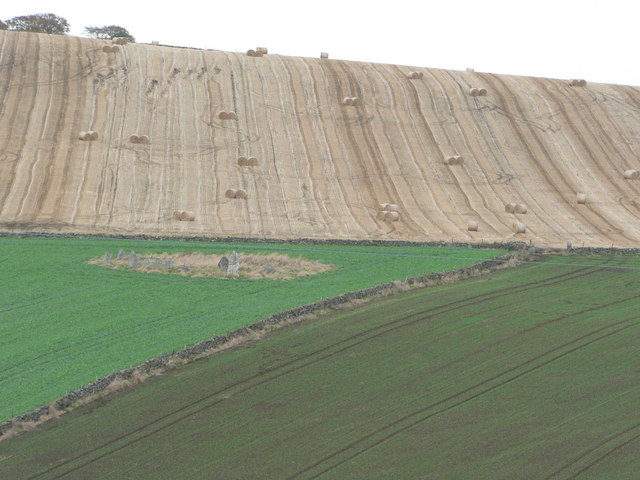
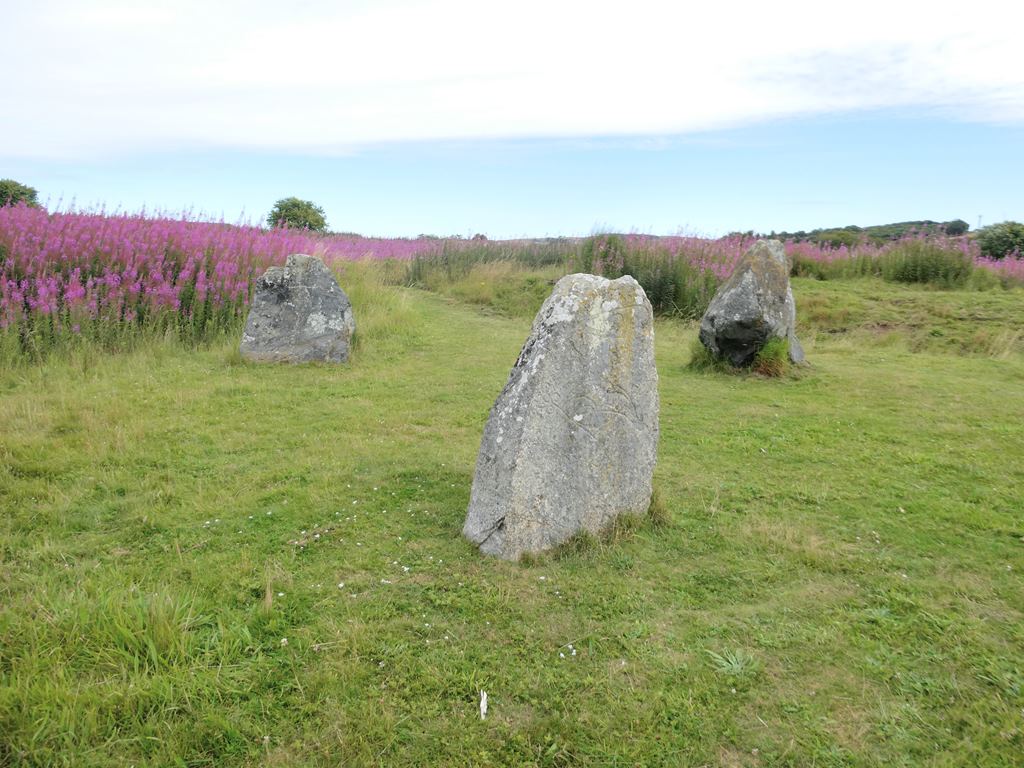
Red and grey stones stand together on a gentle slope west of Inverurie. Easter Aquhorthies stone circle is a recumbent stone circle, and the source pack calls it one of the best-preserved examples of that north-east Scottish monument type.
Its full standing ring, careful colour contrast, possible central cist (a stone-lined burial box), lunar alignment, and long antiquarian record make it unusually rich for visitors and researchers. The site was scheduled in 1925 and taken into State guardianship in 1963.
What follows is drawn from published sources, with each claim labelled by how firmly it is established.
History
Easter Aquhorthies stands near Inverurie in north-east Scotland. It is one of the few recumbent stone circles with its full complement of stones.
It is the only one whose stones all still stand without having been re-erected, according to the pack. The ring has nine stones, with grey granite opposite reddish stones on the SSW side.
The recumbent is red granite flecked with crystals and lines of quartz. A possible cist, or stone-lined burial box, was found at the centre of the circle.
The placename Aquhorthies may mean field of prayer. The circle was brought to wider attention through paintings, drawings, and descriptions in the 1870s and 1880s.
Augustus Pitt Rivers took interest in 1884, and his assistants later measured and photographed it for a scale model. The stones were cleaned in 1985, revealing subtleties in their colouring.
People
-
Christian Maclagan
early interpreter whose reconstruction was described as far-fetched.
-
Augustus Pitt Rivers
archaeologist who took interest in the site in 1884.
-
William Tomkin
assistant who measured and documented the circle for a model.
-
Claude Gray
assistant who documented the circle for a model.
-
Frederick Coles
surveyor who found it in excellent preservation in 1900.
Plan your visit
- Location
- 57.2770°N · 2.4456°W
- Access
- Open access
- Terrain
- Easy going
Opening & admission
The source pack does not provide reliable current admission details; verify before travelling.
- The pack says the circle was taken into State guardianship in 1963.
Nearby places
Carved stone · Pictish & early medieval
Brandsbutt Stone
Aberdeenshire
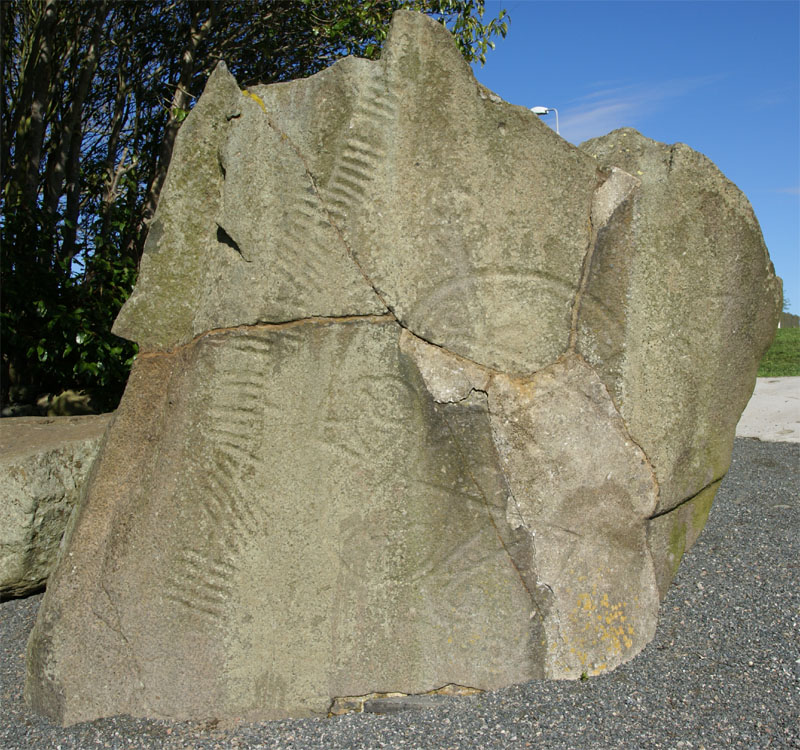
The Brandsbutt Stone is a Class I Pictish symbol stone in Inverurie, Aberdeenshire, a large block of whinstone bearing two incised Pictish symbols…
- Near Inverurie
- 1 min walk from car park
- Easy path
Questions people ask
- Why is Easter Aquhorthies important?
- It is exceptionally well preserved and retains its full standing stone ring without re-erection.
- What is a cist?
- A cist is a small stone-lined box or grave; the pack notes a possible one under a capstone at the centre.
- Why do the stone colours matter?
- The builders used red and grey stones in a deliberate contrast, with reddish stones on the SSW side and grey stones opposite.
- Who manages the site?
- The pack says it was taken into State guardianship in 1963.
Sources
- Wikipedia article
- Source pack: Easter Aquhorthies stone circle
Explore more: Tomb or burial places · Prehistoric · Aberdeenshire
The Ancient Codex, in your pocket
Get the Pocket Codex app
Carry the directory with you — Easter Aquhorthies stone circle and thousands of ancient places across Britain and Ireland, offline, wherever you roam.