
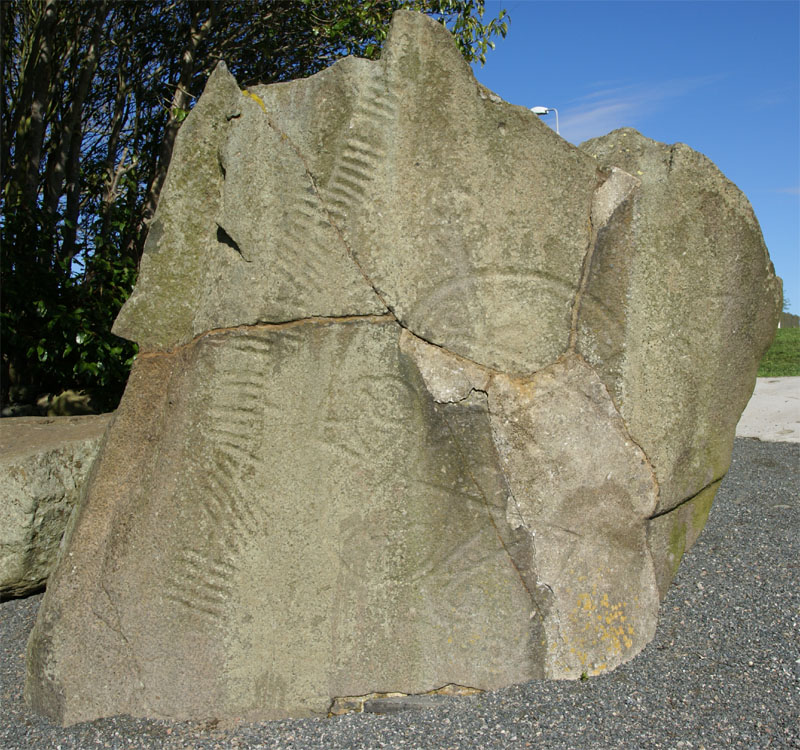
A reassembled block of whinstone in Inverurie carries two Pictish symbols and an Ogham inscription. The Brandsbutt Stone is a Class I Pictish symbol stone, an early carved stone without a Christian cross as its main design.
Its survival is unusually tangled: before 1866 the stone had been broken up and used in a dry-stone wall. Once reassembled, it preserved a crescent and V-rod, a serpent and Z-rod, and the puzzling inscription IRATADDOARENS.
What follows is drawn from published sources, with each claim labelled by how firmly it is established.
History
The Brandsbutt Stone stands in Inverurie, Aberdeenshire. Before 1866 it had been broken up and reused in a dry-stone wall.
The stone was later reassembled. Its incised symbols are a crescent and V-rod and a serpent and Z-rod.
It also carries an Ogham inscription reading IRATADDOARENS. The carvings are dated to around AD 600.
Katherine Forsyth described the inscription as baffling. Thomas Clancy proposed that the text represents a Gaelic phrase about the property of Aduaren.
The Brandsbutt Stone is a scheduled monument.
People
-
Katherine Forsyth
scholar who discussed the difficulty of the inscription.
-
Thomas Clancy
scholar who proposed a Gaelic interpretation of the text.
-
Saint Ethernan
possible name connection suggested by some interpretations.
Plan your visit
- Location
- 57.2916°N · 2.4000°W
- Access
- Open access
- Terrain
- Easy going
Opening & admission
The source pack does not provide reliable current admission details; verify before travelling.
- The stone is in Inverurie and is scheduled; check local access before travelling.
Nearby places
Carved stone · Pictish & early medieval
Brandsbutt Stone
Aberdeenshire
The Brandsbutt Stone is a Class I Pictish symbol stone in Inverurie, Aberdeenshire, a large block of whinstone bearing two incised Pictish symbols…
- Near Inverurie
- 1 min walk from car park
- Easy path
Building or ruin · Medieval
Bass of Inverurie
Aberdeenshire
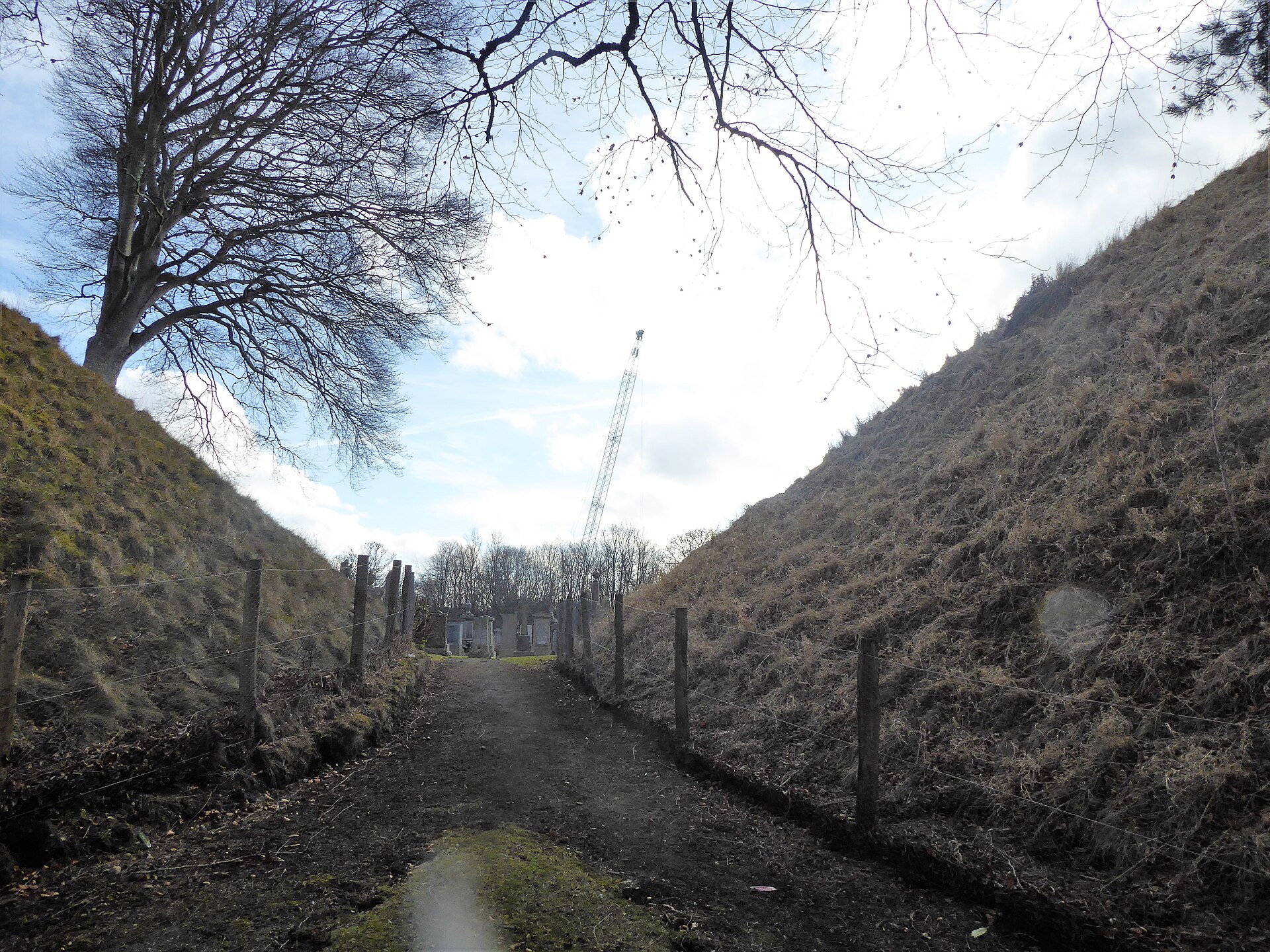
A rare surviving twelfth-century motte-and-bailey earthwork that served as the administrative heart of the medieval Garioch.
Questions people ask
- What is carved on the Brandsbutt Stone?
- It bears a crescent and V-rod, a serpent and Z-rod, and an Ogham inscription.
- What is Ogham?
- Ogham is an early medieval alphabet often carved as strokes along an edge or line.
- What does the inscription mean?
- The meaning is disputed; the pack records several proposals and says Katherine Forsyth considered it baffling.
- How old are the carvings?
- The carvings are dated to around AD 600.
Sources
Explore more: Carved stones · Pictish & early medieval · Aberdeenshire
The Ancient Codex, in your pocket
Get the Pocket Codex app
Carry the directory with you — Brandsbutt Stone and thousands of ancient places across Britain and Ireland, offline, wherever you roam.