
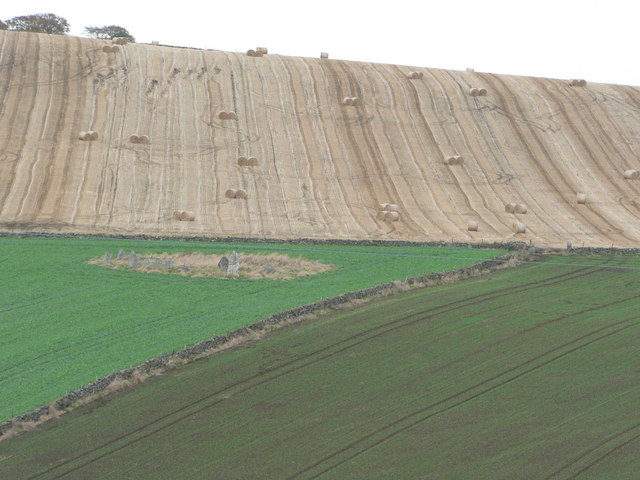
The Brandsbutt Stone is a Class I Pictish symbol stone in Inverurie, Aberdeenshire, a large block of whinstone bearing two incised Pictish symbols — a crescent and V-rod and a serpent and Z-rod…
Brandsbutt Stone is a carved stone near Inverurie, Aberdeenshire, Scotland.
What follows is drawn from published sources, with each claim labelled by how firmly it is established.
History
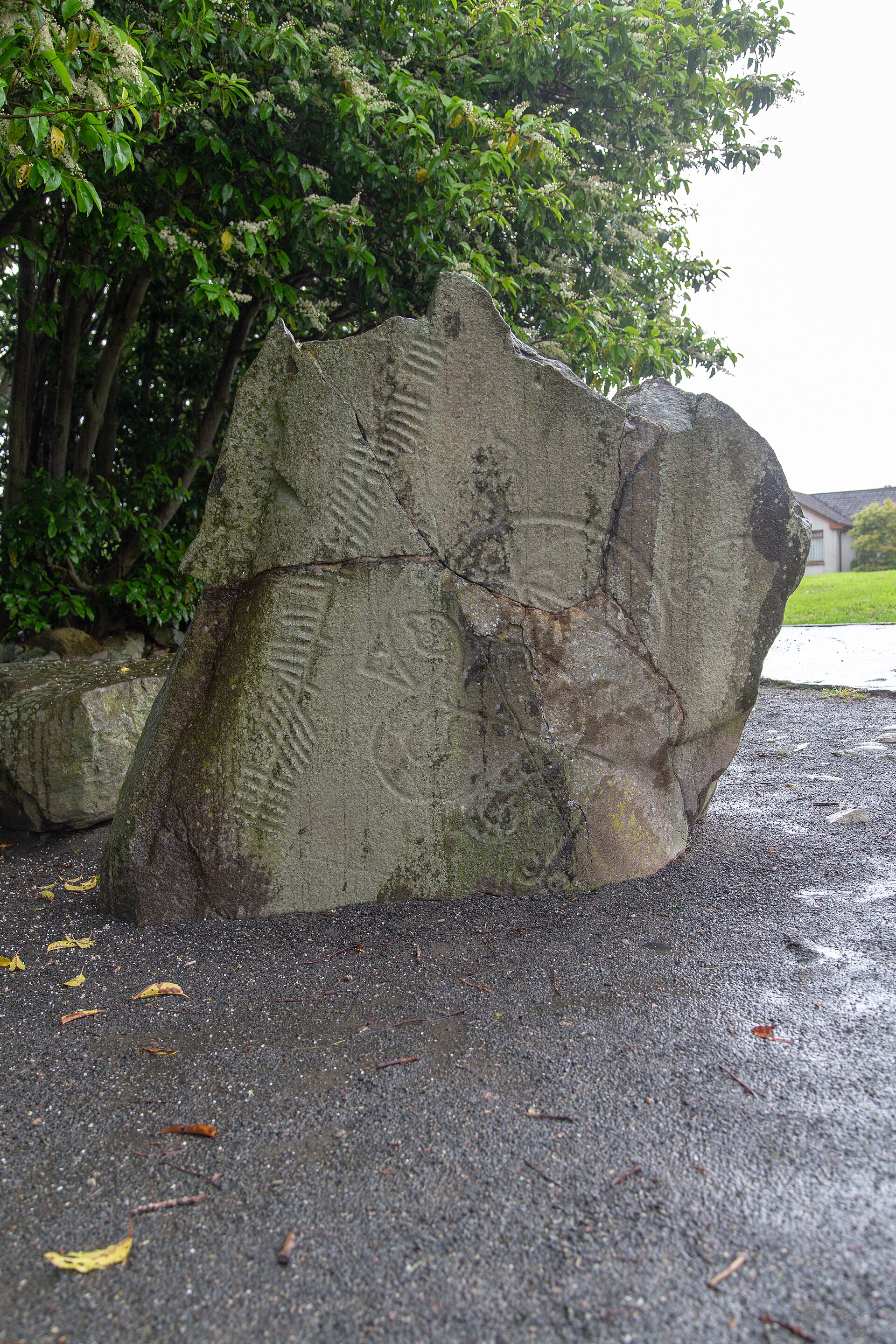
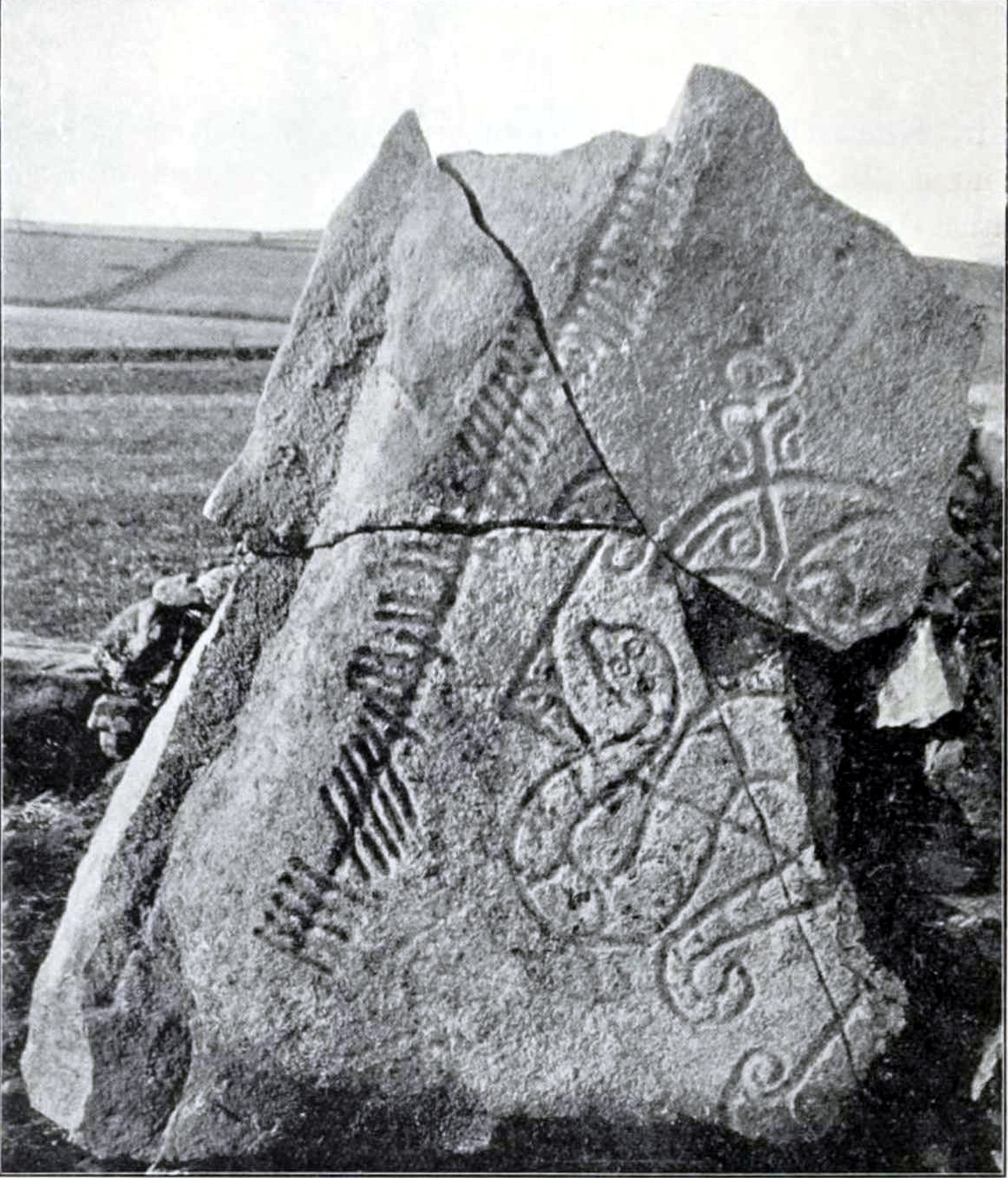
The Brandsbutt Stone is a Class I Pictish symbol stone in Inverurie, Aberdeenshire, a large block of whinstone bearing two incised Pictish symbols — a crescent and V-rod and a serpent and Z-rod — together with an Ogham inscription reading IRATADDOARENS. The carvings are dated to around AD 600.
The stone had been broken up and reused in building a dry-stone wall before 1866; it has since been reassembled.
The Ogham inscription IRATADDOARENS has been described by Katherine Forsyth as appearing 'utterly baffling'. Among the interpretations offered, it may contain a corrupted form of the personal name Ethernan — possibly referring to the little-known 7th-century saint Ethernan, recorded in the Annals of Ulster (AD 669) as having been killed by the Picts along with Corindu.
Other readings of the inscription have been proposed: that 'ira-' may be a Pictish verb cognate with Breton irha, 'he lies' (though Rodway doubts the verb existed); and Thomas Clancy's suggestion that the text is the Gaelic phrase 'i rath Aduarén s-', meaning 'this is the property of Aduarén here'.
People
-
Katherine Forsyth
Scholar who described the Ogham inscription as appearing 'utterly baffling'
-
Saint Ethernan
7th-century saint venerated by the Picts; the inscription may preserve a corrupted form of his name
-
Thomas Clancy
Scholar who read the inscription as Gaelic for 'this is the property of Aduarén here'
Cultural influences
-
The Pictish symbol tradition — the crescent-and-V-rod and serpent-and-Z-rod are among the standard incised symbols of Class I Pictish stones.
-
The Ogham script — the stone is one of a group of Pictish monuments carrying Ogham inscriptions, here possibly recording the name Ethernan.
Connections
-
The Newton Stone
Other Pictish stone preserving the name Ethernan in Ogham (IDDARRNNN)
-
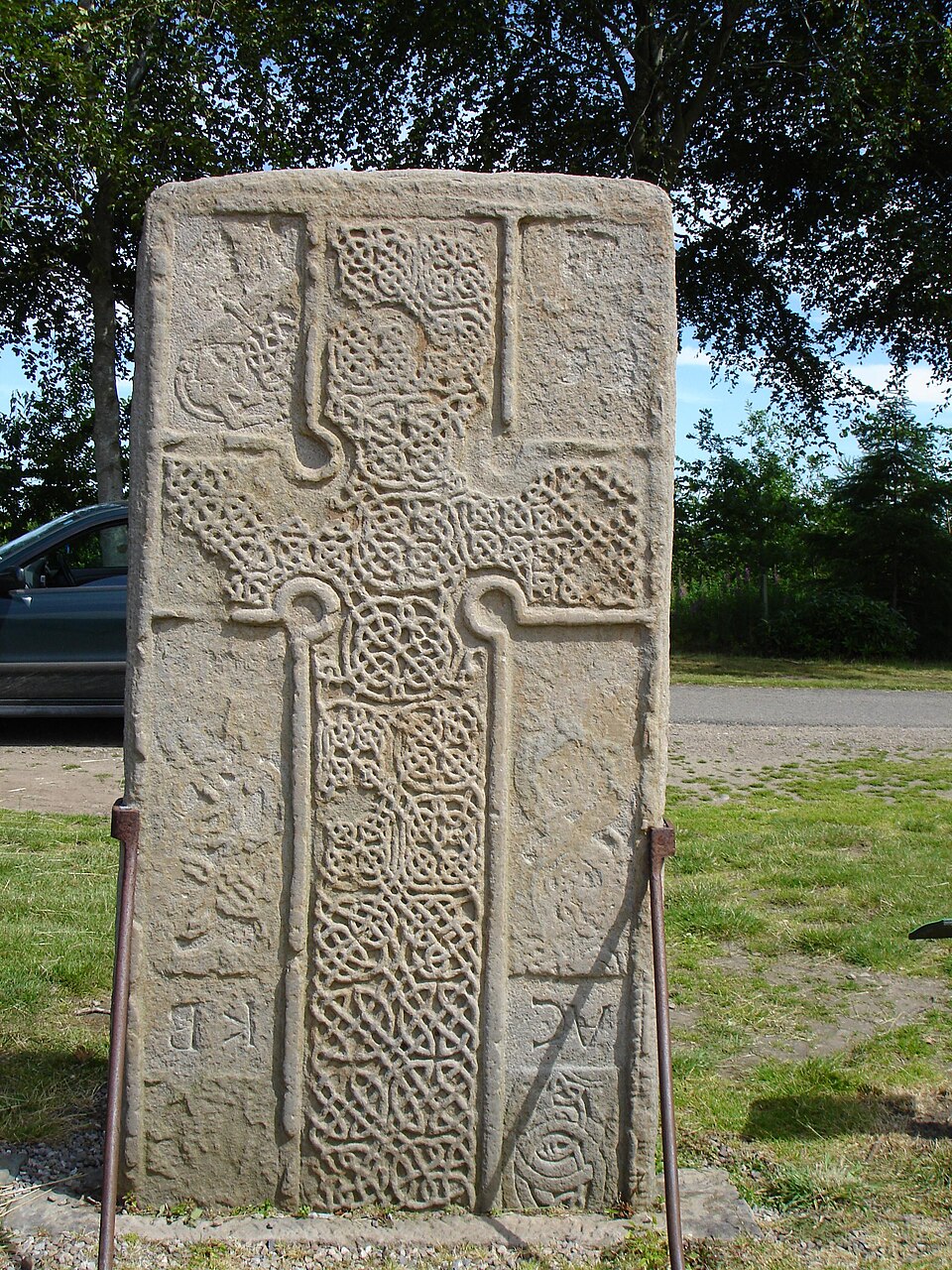
Photo: Calgacus / Wikimedia Commons / Public domain Rodney's Stone
Other Pictish stone with the name Ethernan in Ogham (EDDARRNON)
-
The Scoonie Stone
Other Pictish stone with the name Ethernan in Ogham (EDDARRNONN)
-
The Fordoun Stone
Pictish stone preserving the name Ethernan in Latin script (PIDARNOIN)
What to look for
-
The two incised Pictish symbols — a crescent and V-rod and a serpent and Z-rod.
-
The Ogham inscription IRATADDOARENS running along the stone.
-
Signs of the stone's reassembly, after it was broken up and built into a dry-stone wall before 1866.
Plan your visit
- Location
- 57.2916°N · 2.4000°W
- Nearest settlement
- Inverurie
- Access
- Open access
- Terrain
- Easy going
- Start point
- The Brandsbutt Stone · About 1m north-west of Inverurie off the A96. · On a pathway between Brankie Rd and Gordon Dr.
- Best time
- Open year-round.
- Start point
- Brandsbutt Stone path parking — Parking area immediately beside the pathway between Brankie Road and Gordon Drive where HES locates the stone.
Opening & admission
Free entry
- Open year-round.
Nearby places
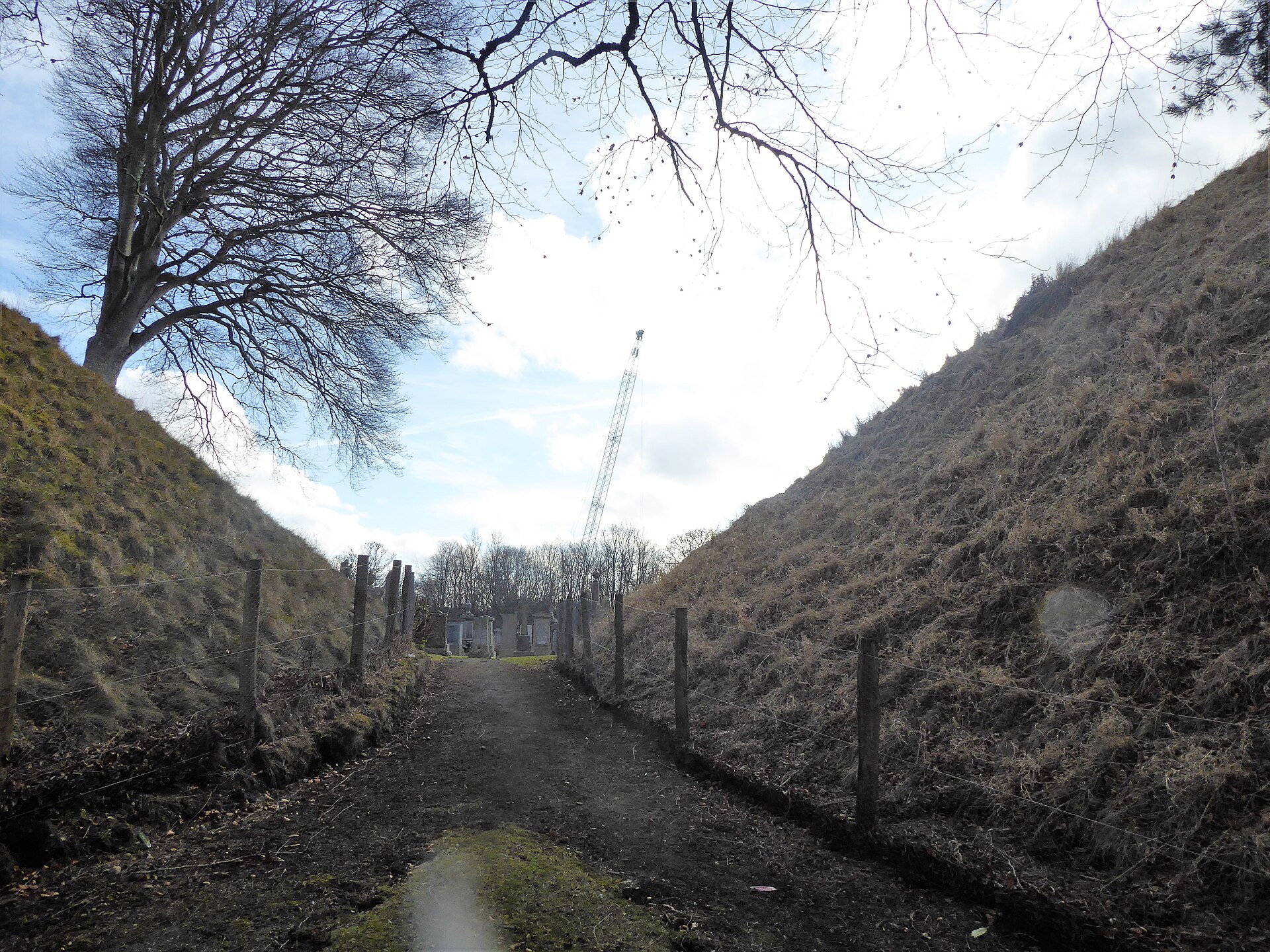
Building or ruin · Medieval
Bass of Inverurie
Aberdeenshire
A rare surviving twelfth-century motte-and-bailey earthwork that served as the administrative heart of the medieval Garioch.
Sources
- Canmore site record 18894 (accessed 2026-06-13)
- Trove (HES) record (accessed 2026-06-13)
- Wikipedia: Brandsbutt Stone (accessed 2026-06-13)
- Wikidata Q4957169 (accessed 2026-06-13)
Explore more: Carved stones · Pictish & early medieval · Aberdeenshire
The Ancient Codex, in your pocket
Get the Pocket Codex app
Carry the directory with you — Brandsbutt Stone and thousands of ancient places across Britain and Ireland, offline, wherever you roam.