
Tomb or burial place · Prehistoric · Stirling
Killin Stone Circle
Dark grey stones stand in a flattened ring near the western end of Loch Tay. Killin Stone Circle, also called Kinnell Stone Circle, is a prehistoric stone circle set in pasture close to Kinnell House.
What follows is drawn from published sources, with each claim labelled by how firmly it is established.
History
Killin Stone Circle stands east of Killin at the western end of Loch Tay, in a pasture field immediately southwest of Kinnell House.
The circle consists of six upright slabs of dark grey schist. The stones form a flattened circle rather than a perfect round.
The two tallest stones stand next to each other in the southwest quadrant. On the top of the northernmost stone are three cupmarks, shallow prehistoric hollows cut into the stone surface.
The circle is one of the more westerly examples of a larger group of central Scottish stone circles, many of which consist of six stones.
Its good condition may be due to its position in the grounds of Kinnell House. The source also notes that it may have been restored in the 18th or 19th century.
The site is protected as a scheduled monument.
Cultural influences
-
Central Scottish six-stone circles
Killin belongs to a wider regional pattern of stone circles, many with six stones.
-
Estate-ground survival
The source suggests that its position by Kinnell House may help explain its good condition.
-
Possible restoration
A possible 18th- or 19th-century restoration means the present appearance may partly reflect later intervention.
Connections
-
Kinnell House
The circle stands immediately southwest of the house in a pasture field.
-
Loch Tay
The monument is near the western end of the loch.
-
Killin
The stone circle stands east of the village.
What to look for
-
Six upright slabs
The circle is made of six standing stones.
-
Dark grey schist
The stones are of dark grey schist.
-
Southwest pair
The two tallest stones stand beside one another on the southwest side of the ring.
-
Cupmarks
Three cupmarks are visible on the top of the northernmost stone.
Plan your visit
- Location
- 56.4653°N · 4.3120°W
- Access
- Open access
- Terrain
- Easy going
Opening & admission
The source places the circle in a pasture field near Kinnell House but gives no current visitor access or admission details.
- The circle is immediately southwest of Kinnell House.
- The monument is in a pasture field at the western end of Loch Tay.
Nearby places
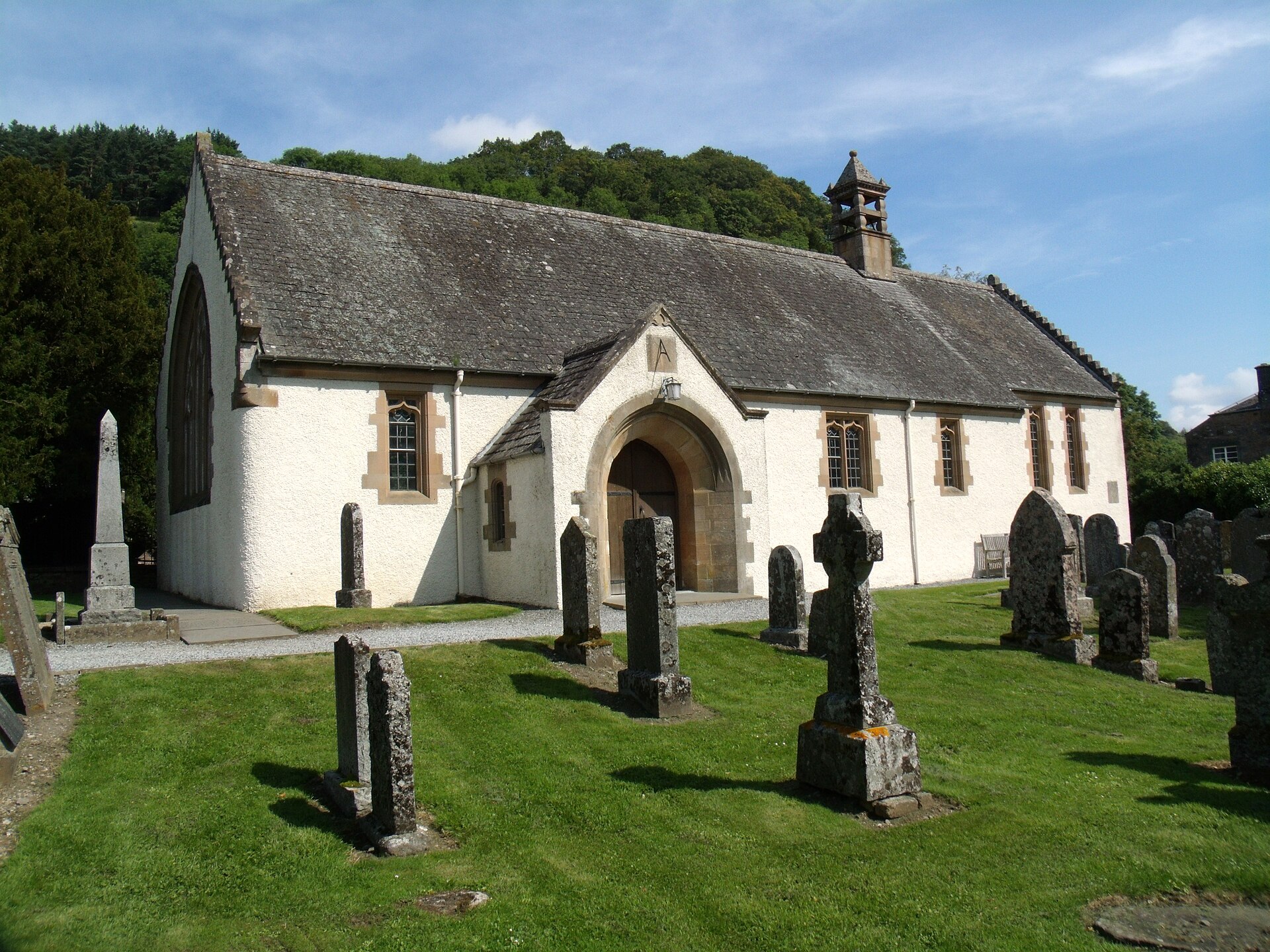
Ancient tree · Medieval
Fortingall Yew
Perth and Kinross
A named, long-standing tree carried in local memory as a landmark — included for its place in the landscape, with age and superlative claims held f…
- Near Fortingall
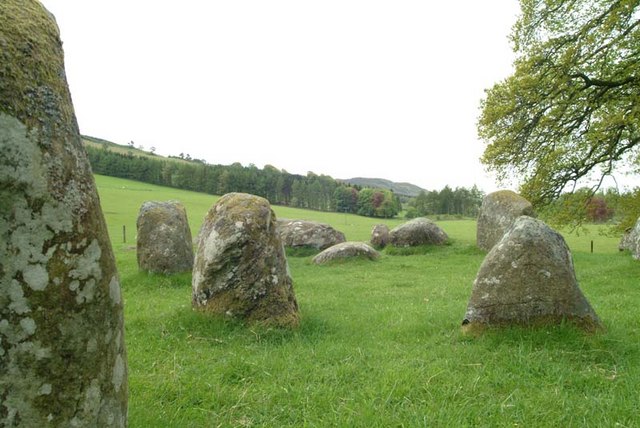
Carved stone · Prehistoric
Croft Moraig Stone Circle
Perth and Kinross
Croft Moraig is a complex multi-phase monument. Excavation in 1965 revealed three phases of construction: first a horseshoe of fourteen timber post…
- Near Kenmore
- 3.1 km from car park
- Easy path
Questions people ask
- What is Killin Stone Circle?
- It is a prehistoric stone circle near Killin at the western end of Loch Tay.
- How many stones are in the circle?
- The source says it consists of six upright slabs.
- What are the stones made of?
- They are dark grey schist.
- Are there cupmarks at Killin Stone Circle?
- Yes. Three cupmarks are on the top of the northernmost stone.
- Is Killin Stone Circle protected?
- Yes. It is a scheduled monument.
Sources
- Wikipedia article
- Wikidata
- Scheduled monument record
Explore more: Tomb or burial places · Prehistoric · Stirling
The Ancient Codex, in your pocket
Get the Pocket Codex app
Carry the directory with you — Killin Stone Circle and thousands of ancient places across Britain and Ireland, offline, wherever you roam.