
The chambered cairn was built sometime between about 3400 and 2800 BC (on the evidence of nearby tombs) as a Neolithic burial monument on a promontory reaching into the Loch of Stenness, near Howe on…
Unstan Chambered Cairn is a tomb or burial place near Stenness, Orkney, Scotland.
What follows is drawn from published sources, with each claim labelled by how firmly it is established.
The name
The second element of the name — 'stan' or 'ston' — comes from a particularly Orcadian version of the Norse word 'stadr', meaning a farm settlement. (The tomb is also recorded as Onstan or Onston.)
History
The chambered cairn was built sometime between about 3400 and 2800 BC (on the evidence of nearby tombs) as a Neolithic burial monument on a promontory reaching into the Loch of Stenness, near Howe on Orkney Mainland.
The tomb may have remained in use well into the second millennium BC: an arrowhead characteristic of the Beaker People (Late Neolithic into the Bronze Age) was found inside, and the crouched-position burials it contained were not a Neolithic practice.
The original roof is long gone; a modern concrete dome was built over the chamber in the 1930s to protect the site, now a scheduled monument in the care of Historic Environment Scotland.
People
-
Neolithic builders of Orkney
Raised the stalled cairn c. 3400–2800 BC and used it for communal burial
-
The Beaker People
Later Late-Neolithic/Bronze-Age people whose characteristic arrowhead in the tomb suggests continued or renewed use
Cultural influences
-
The Orkney–Cromarty 'stalled' cairn tradition — a central passage flanked by paired transverse slabs dividing the space into stall-like compartments — whose earliest, simplest forms (no more than four compartments) are found in Caithness and which grew more elaborate in Orkney, reaching fourteen compartments at the Knowe of Ramsay on Rousay.
-
The Maeshowe-type tomb tradition: Unstan is an atypical hybrid, taking from the Maeshowe form its circular barrow, a side chamber, and a main chamber entered along one long side rather than at the passage end.
Connections
-
Unstan ware
Distinctive Neolithic pottery style first found and named here; Unstan is its type-site
-
Knowe of Ramsay, Rousay
Most elaborate stalled cairn of the same Orkney–Cromarty tradition, with fourteen compartments
-
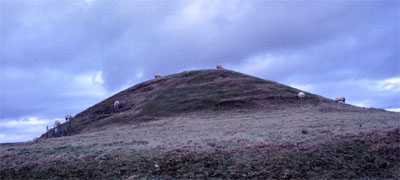
Photo: Otter at Dutch Wikipedia (Original text: Hopmans) / Wikimedia Commons / CC BY-SA 3.0 Maeshowe
Tomb type whose circular-barrow and side-chamber features Unstan atypically borrows
-
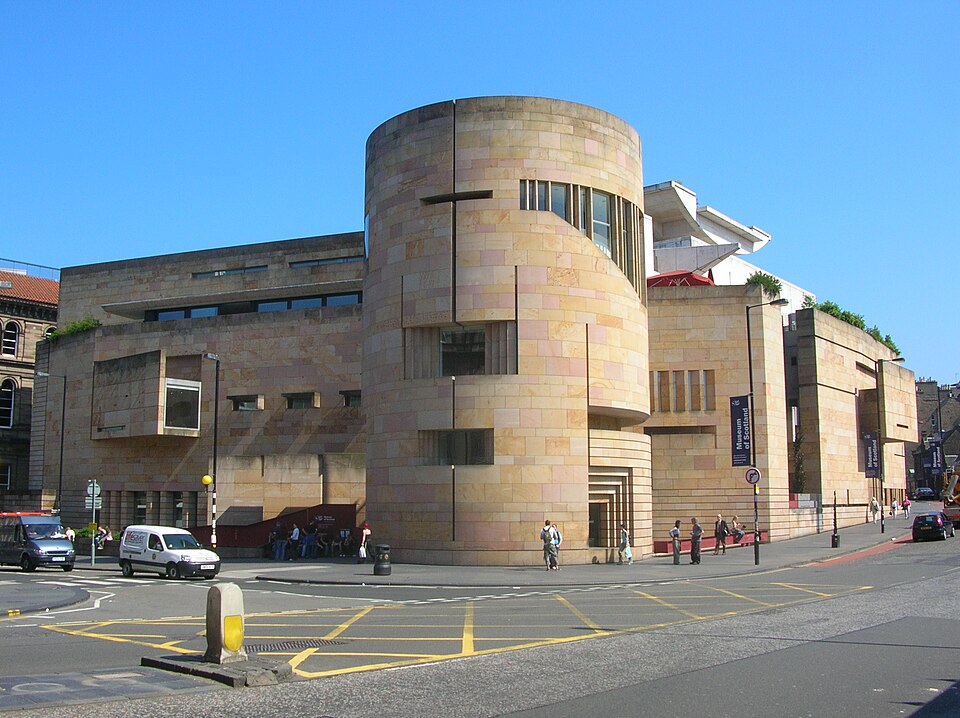
Photo: No machine-readable author provided. Maccoinnich~commonswiki assumed ( / Wikimedia Commons / CC BY-SA 3.0 National Museum of Scotland
Holds several of the reconstructed Unstan-ware vessels found in the tomb
-
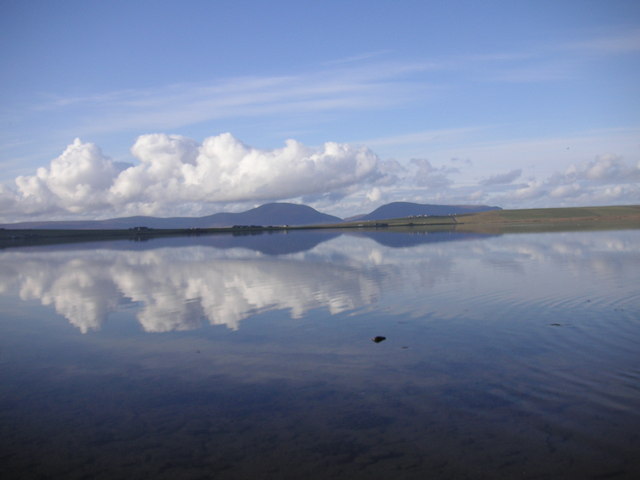
Photo: John Ireland / Wikimedia Commons / CC BY-SA 2.0 Loch of Stenness
Loch into which the promontory holding the tomb extends
Discovery & excavation
Excavation in 1884 produced the first-ever discovery of a distinctive pottery style, since named Unstan ware after the tomb — elegant shallow bowls with a band of grooved 'stab-and-drag' patterning below the rim, plus undecorated round-bottomed bowls. Parts of twenty to thirty bowls were found, most shattered or incomplete (a pattern common in chambered cairns, suggesting vessels deliberately broken for inclusion with the dead); some sherds carried impressions of barley grains, showing prior domestic use. Human remains were recovered — two crouched skeletons in the side cell, several more in the main compartment, and scattered bones throughout — alongside animal bones and charcoal. Several reconstructed vessels are now in the National Museum of Scotland.
Finds now held at: National Museum of Scotland (reconstructed Unstan-ware vessels).
In culture
-
Unstan is the type-site that gave its name to 'Unstan ware', a defining pottery class of the Scottish Neolithic.
What to look for
-
The stalled interior — a passage 6.4 m long flanked by paired transverse slabs dividing the space into five compartments, the walls of thin stacked local Old Red Sandstone flagstone rising to almost 2 m.
-
The side chamber off the main space — a Maeshowe-type feature unusual for a stalled cairn — and the main chamber's entry along one long side rather than at the passage end.
-
The circular barrow, about 13 m across and built of two or three concentric rows of stonework — round rather than the usual oblong or rectangular form.
-
The modern 1930s concrete protective dome that now caps the chamber in place of the lost original roof.
Plan your visit
- Location
- 58.9867°N · 3.2494°W
- Nearest settlement
- Stenness
- Access
- Open access
- Terrain
- Easy going
- Parking
- Parking available nearby — see the official getting-here page.
- Start point
- About 3.5m North East of Stromness on the A965. · This site is not suitable for visitors arriving by coach. There is no coach parking and it is not possible to turn coaches once you enter the road.
- Start point
- Unstan Chambered Cairn car park — Small free visitor car park (about 5 spaces) with an interpretation board beside it, off the minor road from the A965. Not suitable for coaches. Chamber entry is via a low, confined passage.
Opening & admission
Free entry
Nearby places
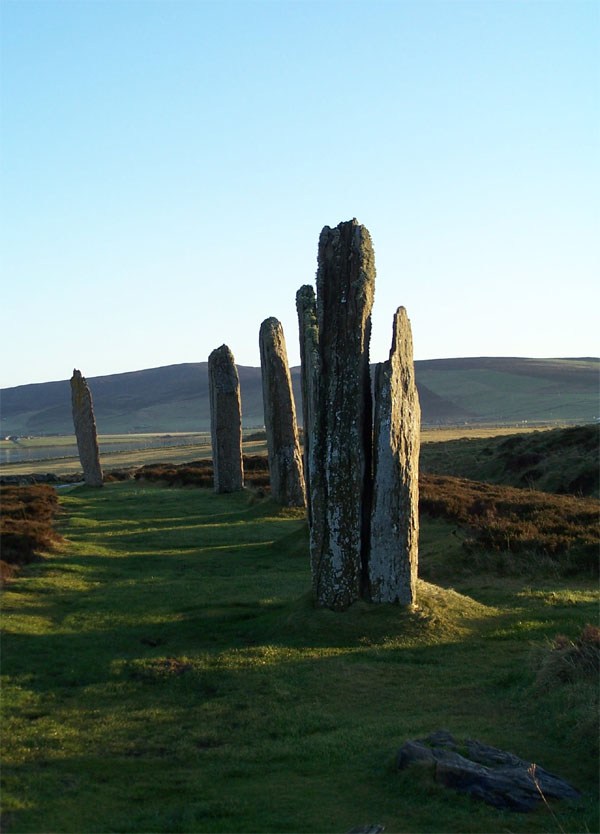
Carved stone · Prehistoric
Ring of Brodgar
Orkney Islands
The Ring of Brodgar is a Neolithic henge and stone circle on the narrow isthmus between the Lochs of Stenness and Harray on Mainland, Orkney. It is…
- Near Stenness
- 5 min walk from car park
- Easy path
Carved stone · Prehistoric
Stones of Stenness Circle and Henge
Orkney Islands
The Stones of Stenness are a Neolithic monument and may be the oldest henge site in the British Isles; radiocarbon dating indicates work on the sit…
- Near Stenness
- 2 min walk from car park
- Easy path
Sources
- Canmore site record 1740 (accessed 2026-06-13)
- Trove (HES) record (accessed 2026-06-13)
- Wikipedia: Unstan Chambered Cairn (accessed 2026-06-13)
- Wikidata Q1568701 (accessed 2026-06-13)
Explore more: Tomb or burial places · Prehistoric · Orkney Islands
The Ancient Codex, in your pocket
Get the Pocket Codex app
Carry the directory with you — Unstan Chambered Cairn and thousands of ancient places across Britain and Ireland, offline, wherever you roam.