
The Stones of Stenness are a Neolithic monument and may be the oldest henge site in the British Isles; radiocarbon dating indicates work on the site had begun by 3100 BCE.
Stones of Stenness Circle and Henge is a carved stone near Stenness, Orkney, Scotland.
What follows is drawn from published sources, with each claim labelled by how firmly it is established.
The name
The name Stenness - pronounced 'stane-is' in Orcadian dialect - comes from Old Norse meaning 'stone headland', reflecting the promontory between the Loch of Stenness and the Loch of Harray on which the stones stand.
History
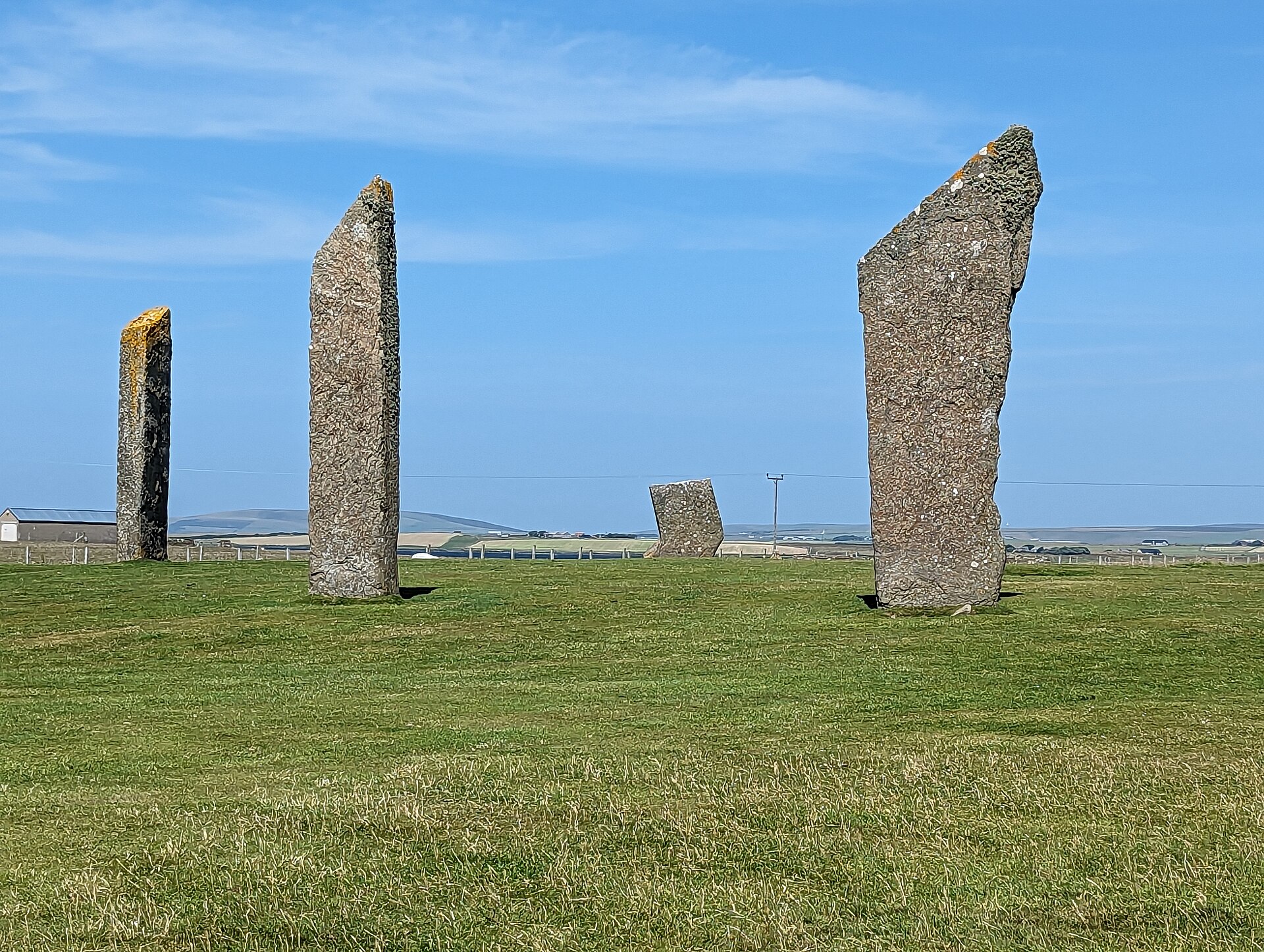
The Stones of Stenness are a Neolithic monument and may be the oldest henge site in the British Isles; radiocarbon dating indicates work on the site had begun by 3100 BCE.
In December 1814 Captain W. Mackay, a recent immigrant who owned nearby farmland, set out to remove the stones because local people were trespassing to use them in rituals. He smashed the Odin Stone and destroyed another stone and toppled a third before public outrage stopped him.
The toppled stone was re-erected in 1906, alongside some reconstruction inside the circle now regarded as inaccurate. In the 1970s a dolmen structure of doubtful authenticity was toppled, leaving its two upright stones in place.
The site was visited by Walter Scott in 1814, and antiquarians documented the stones and recorded the local traditions and beliefs attached to them.
The Heart of Neolithic Orkney - which includes the Stones of Stenness alongside Maeshowe, Skara Brae and the Ring of Brodgar - was inscribed as a UNESCO World Heritage Site in December 1999.
People
-
Captain W. Mackay
Landowner who began destroying the stones in December 1814, smashing the Odin Stone before being stopped
-
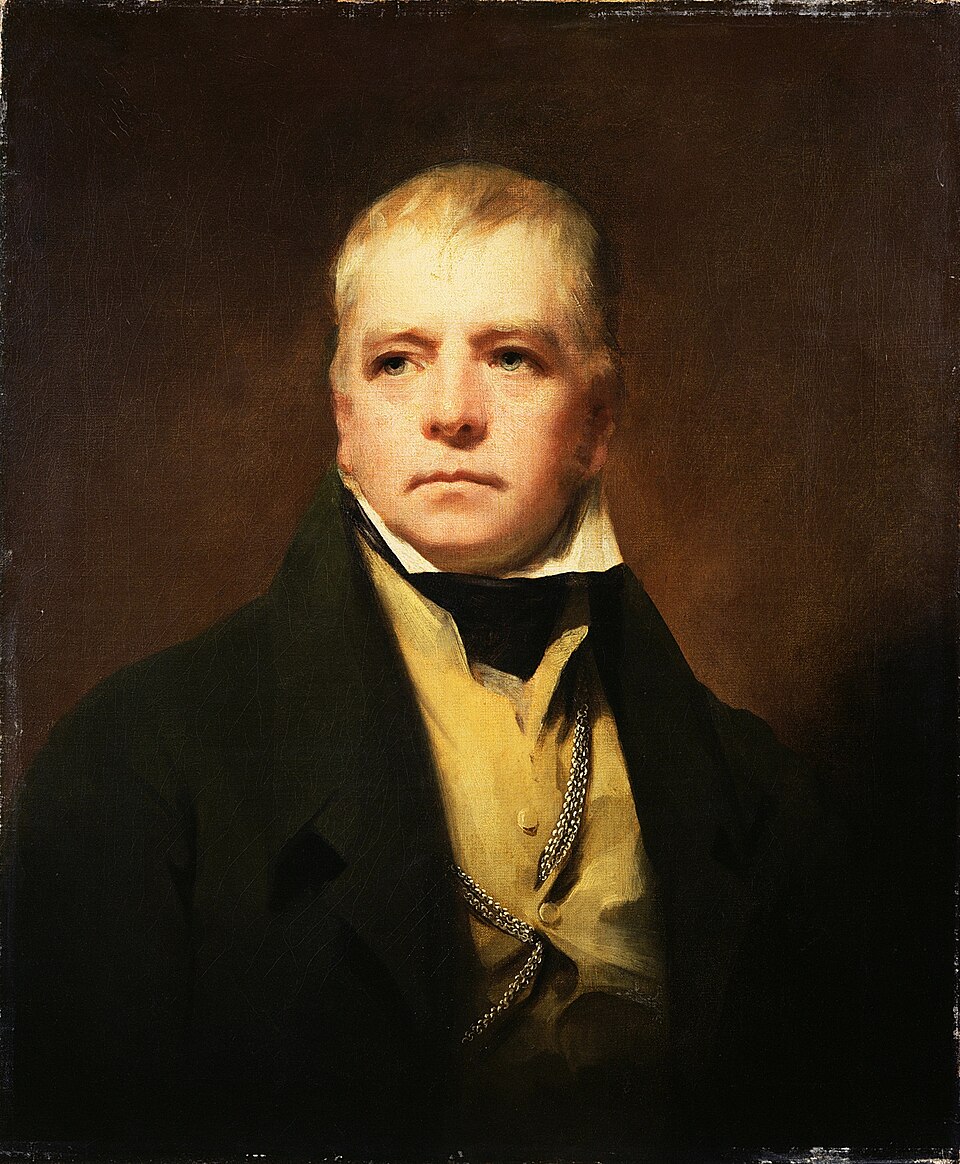
Portrait: Henry Raeburn / Wikimedia Commons / Public domain Walter Scott
Visited the site in 1814
Cultural influences
-
Neolithic Orkney - pottery from the site links the monument to the settlements of Skara Brae and the chambered cairn of Maeshowe, and the central 'hearth' setting parallels one found at the adjacent Barnhouse Settlement.
-
Henge tradition of the British Isles - excavation showed the site to be a true henge monument with ditch and bank, possibly the oldest in the British Isles.
Connections
-
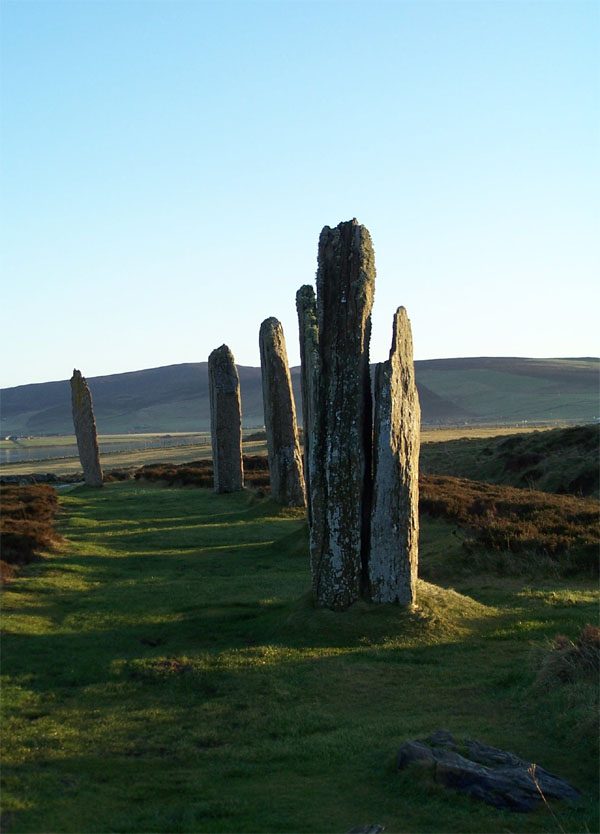
Photo: Original uploader was Otter at nl.wikipedia (Original text : Hopmans) / Wikimedia Commons / CC BY-SA 3.0 Ring of Brodgar
Sister Neolithic monument about 1.2 km to the north-west across the isthmus; part of the same World Heritage Site
-
Photo: Otter at Dutch Wikipedia (Original text: Hopmans) / Wikimedia Commons / CC BY-SA 3.0 Maeshowe
Chambered cairn about 1.2 km to the east; pottery links the two; part of the same World Heritage Site
-
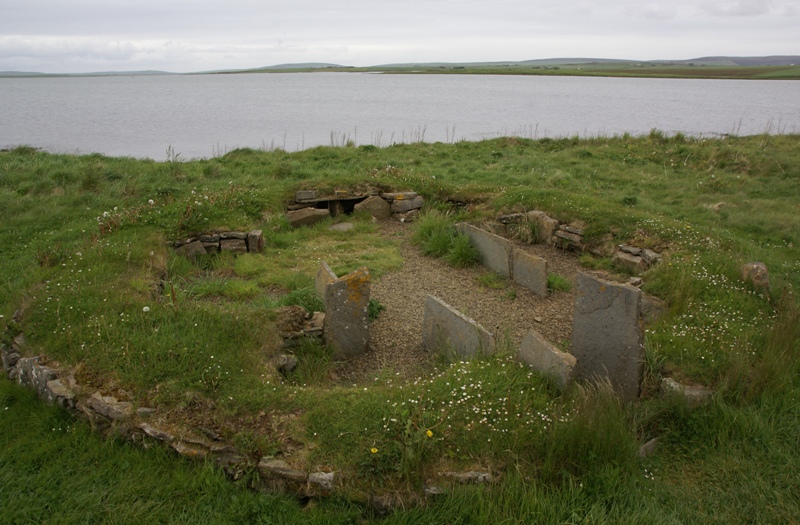
Photo: Otter / Wikimedia Commons / CC BY-SA 3.0 Barnhouse Settlement
Adjacent Neolithic settlement on the Loch of Harray; the circle's entrance causeway faces towards it and its 'hearth' parallels the one at Stenness
-
Skara Brae
Neolithic village linked to Stenness by shared pottery; part of the Heart of Neolithic Orkney World Heritage Site
-
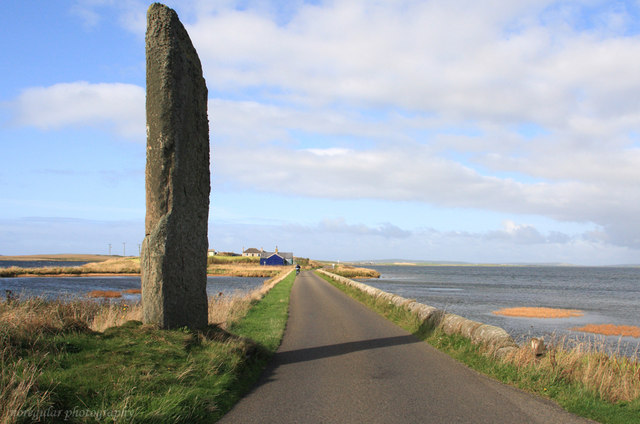
Photo: will craig / Wikimedia Commons / CC BY-SA 2.0 Watch Stone
5.6 m monolith standing outside the circle to the north-west, towards the Ring of Brodgar
Discovery & excavation
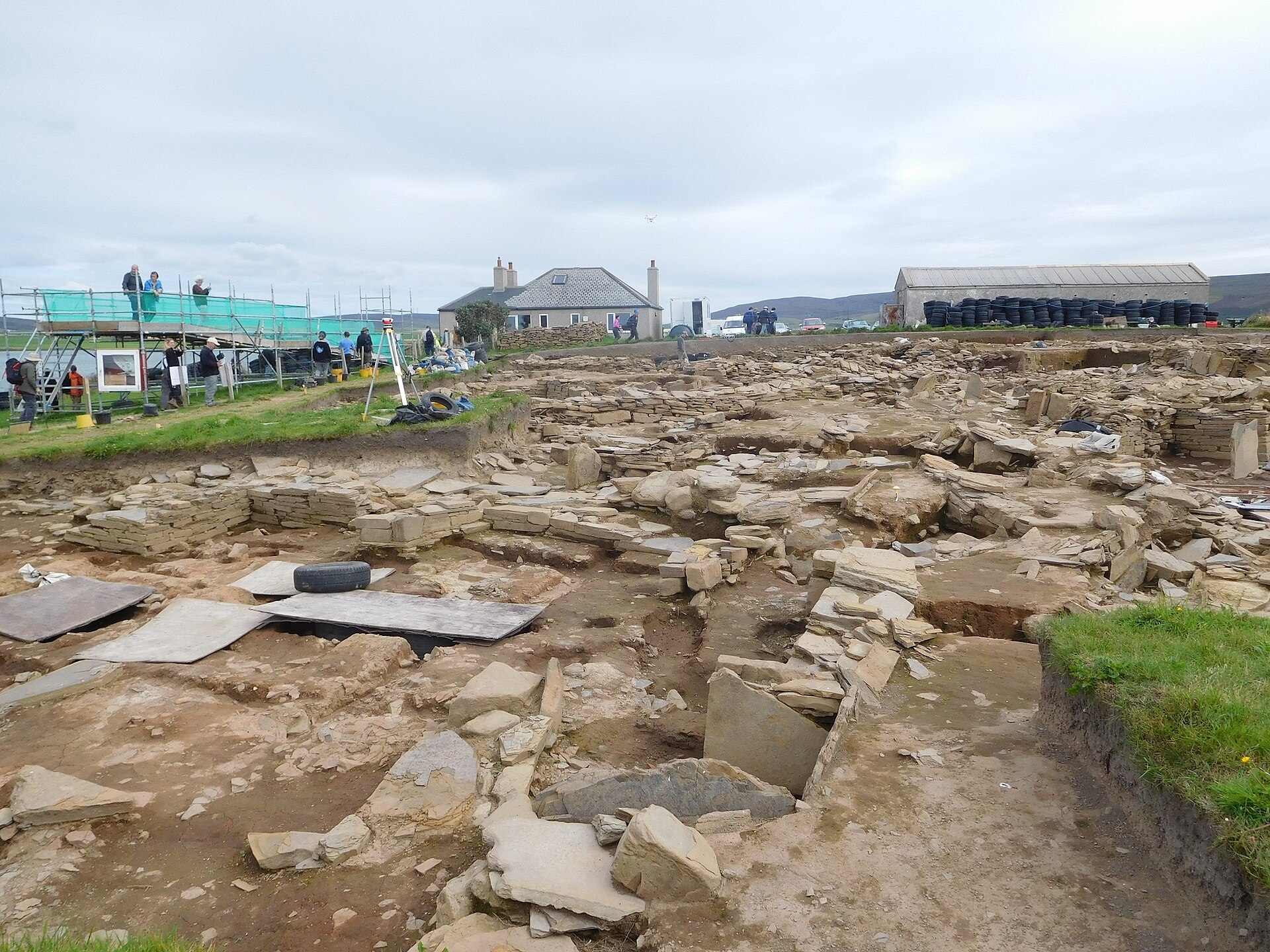
Excavation established the site as a henge monument and recovered, from a square 'hearth' setting at the centre of the platform, cremated bone, charcoal and pottery; animal bones were found in the ditch. The pottery ties the monument to Skara Brae and Maeshowe, and radiocarbon dating places the start of work by 3100 BCE.
In culture
-
A picture of the Stones of Stenness appears on the cover of Van Morrison's album The Philosopher's Stone.
-
The Odin Stone is depicted on Julian Cope's album Discover Odin.
-
The stones are the setting for Loreena McKennitt's song 'Standing Stones' from her album Parallel Dreams, whose lyrics describe star-crossed lovers meeting at the Odin Stone.
-
Odin Stone is also the name of a darkwave band formed in 2021 with members in the USA and Portugal.
What to look for
-
The four surviving thin slab stones - up to about 5 m high with sharply angled tops - remnants of an original ellipse of up to 12 stones about 32 m across.
-
The rock-cut ditch (up to 2 m deep, 7 m wide) and surrounding earth bank with its single entrance causeway on the north side, facing towards the Barnhouse Settlement.
-
The square central stone setting - the 'hearth' - where cremated bone, charcoal and pottery were found.
-
The Watch Stone, 5.6 m high, standing outside the circle to the north-west towards the Ring of Brodgar.
What is said
Folklore and tradition, recorded as what is said — not as established fact.
-
The Odin Stone, which stood in the field to the north of the henge, was pierced with a circular hole through which local couples would join hands to plight their engagements; it was also credited with magical power. (recorded_local_tradition)
-
There was a reported tradition of swearing oaths or making promises with one's hand in the Odin Stone, known as taking the 'Vow of Odin'. (recorded_local_tradition)
-
Even in the 18th century the site was still bound up with traditions and rituals, by then attached to the Norse gods. (recorded_local_tradition)
Standing there
- The surviving stones rise on a promontory between the sea loch Loch of Stenness and the freshwater Loch of Harray, where a stream joins the two — so you stand on a narrow neck of land almost surrounded by water, under big Orkney sky with the Ring of Brodgar and Maeshowe in view across the lochs.
- Four great stones survive, up to about 5 metres high — thin angled slabs of flagstone only around 30 cm thick with sharply sloping tops — so close up they read as tall, blade-like uprights, much taller than a person, weathered grey and standing stark against loch and sky.
- This may be the oldest henge in the British Isles, with work begun by around 3100 BC, and at its centre archaeologists found a square stone hearth setting with cremated bone, charcoal and pottery — so the heart of the circle was a place of fire, burning and deposited remains.
- In the Neolithic the circle sat inside a deep rock-cut ditch and earth bank entered by a single causeway facing the nearby Barnhouse settlement, so arriving meant crossing the bank and entering an enclosed ritual arena — gatherings here involved feasting and fire, with animal bone left in the ditch and a hearth blazing at the centre.
- Reaching the stones once meant crossing the stream between the lochs on a stepping-stone causeway — so the sounds of moving water and the crossing itself were part of the approach, a threshold of water passed before entering the standing stones.
Plan your visit
- Location
- 58.9939°N · 3.2081°W
- Nearest settlement
- Stenness
- Access
- Open access
- Terrain
- Easy going
- Start point
- Stones of Stenness car park — Free council-operated (OIC) car park on the B9055 directly beside the stones. Short level walk through the field gate to the circle.
Nearby places
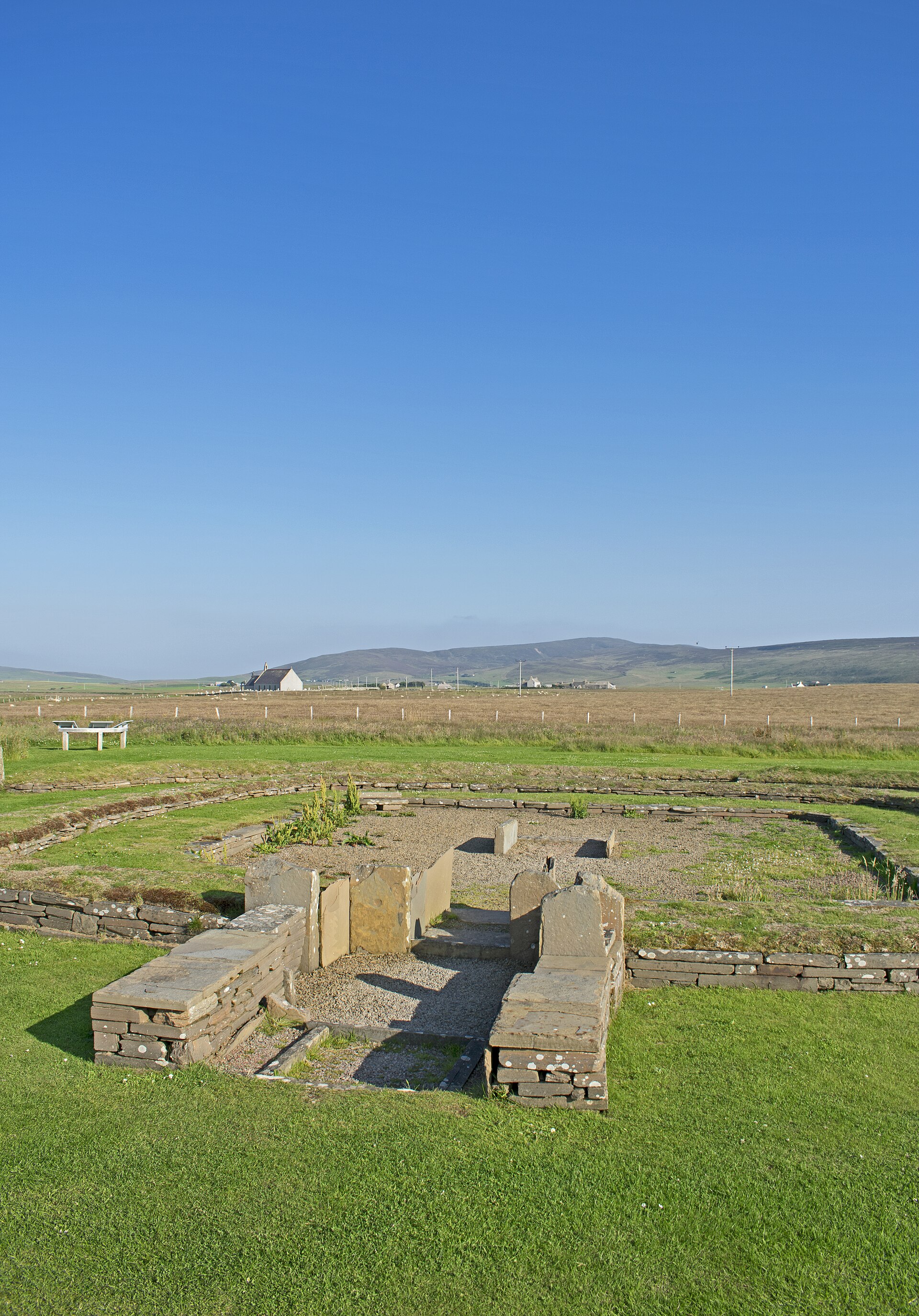
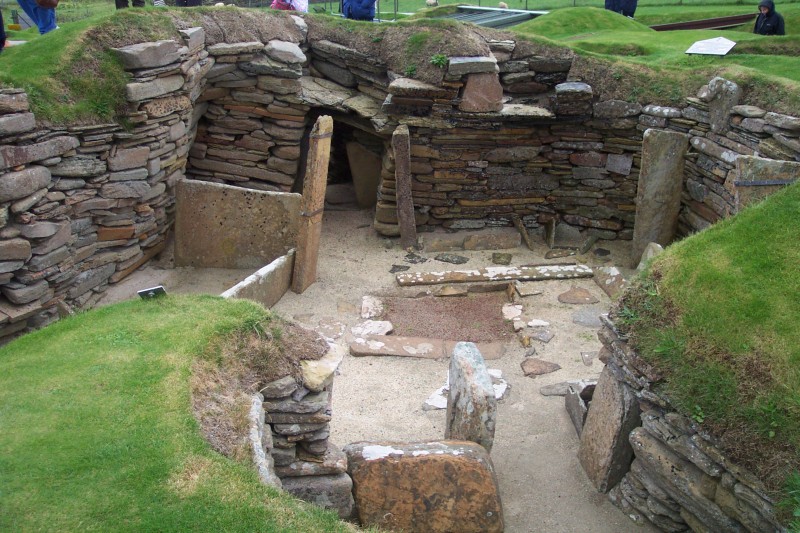
Tomb or burial place · Prehistoric
Maeshowe Chambered Cairn
Orkney Islands
The chambered cairn was built around 2800 BC by Neolithic farming communities of central Orkney, associated with the Grooved ware pottery tradition…
- Near Stenness
- 1.6 km from car park
- Easy path
Sources
- Canmore site record 2105 (accessed 2026-06-13)
- Trove (HES) record (accessed 2026-06-13)
- Wikipedia: Standing Stones of Stenness (accessed 2026-06-13)
- Wikidata Q1478558 (accessed 2026-06-13)
Explore more: Carved stones · Prehistoric · Orkney Islands
The Ancient Codex, in your pocket
Get the Pocket Codex app
Carry the directory with you — Stones of Stenness Circle and Henge and thousands of ancient places across Britain and Ireland, offline, wherever you roam.