
Low bumps in a field east of the Loch of Harray mark one of Britain’s major Bronze Age cemeteries. Knowes of Trotty is a group of barrows, prehistoric burial mounds, where gold discs and amber ornaments made the largest mound one of Orkney’s richest graves.
The cemetery began as a striking barrow (a prehistoric burial mound) landscape rather than the faint earthworks visible today. Its nineteenth-century discovery, twenty-first-century re-excavation, and surveys show cremated remains, elite grave goods, possible extra barrows, pyres, pits, enclosures, and even earlier Neolithic structures nearby.
What follows is drawn from published sources, with each claim labelled by how firmly it is established.
History
Knowes of Trotty is a Bronze Age cemetery on Orkney Mainland. Twelve burial mounds survive, dating to 2030-1770 BC.
The site is one of the earliest groups of burial mounds in Orkney and one of the largest Bronze Age cemeteries in the United Kingdom. The mounds are laid out in two rows below the Ward of Redland.
The barrows were originally stone cairns covered with earth. In the Bronze Age the mounds would have been much higher and visible from far away.
Nicol Flett opened the largest mound in 1858 and found a stone cist containing cremated bones, four gold discs, and amber beads and pendants. George Petrie excavated the site further after Flett reported the discovery.
The gold and amber artefacts were sold to the National Museum of Antiquities of Scotland in 1859. Nick Card and Jane Downes excavated again between 2002 and 2005, recovering the human remains and more gold and amber fragments.
A 2005-2006 survey suggested the site may originally have had twenty barrows plus funeral pyres, pits, and enclosures. The amber is thought to come from eastern Sweden and southern Finland, while the gold was Scottish and the disc decoration resembles Wessex work.
People
-
Nicol Flett
farmer who opened the largest mound in 1858.
-
George Petrie
antiquarian who excavated after Flett reported the discovery.
-
Nick Card
archaeologist who co-led the 2002-2005 excavations.
-
Jane Downes
archaeologist who co-led the 2002-2005 excavations.
What to look for
-
Two rows of mounds
The surviving barrows are laid out in rows below Ward of Redland.
-
Subtle earthworks
Today the mounds appear as slight bumps because of erosion and time.
Plan your visit
- Location
- 59.0402°N · 3.1492°W
- Access
- Visible from a public way
- Terrain
- Easy going
Opening & admission
The source pack does not provide reliable current admission details; verify before travelling.
- The mounds are visible today only as slight bumps in a large field.
Nearby places
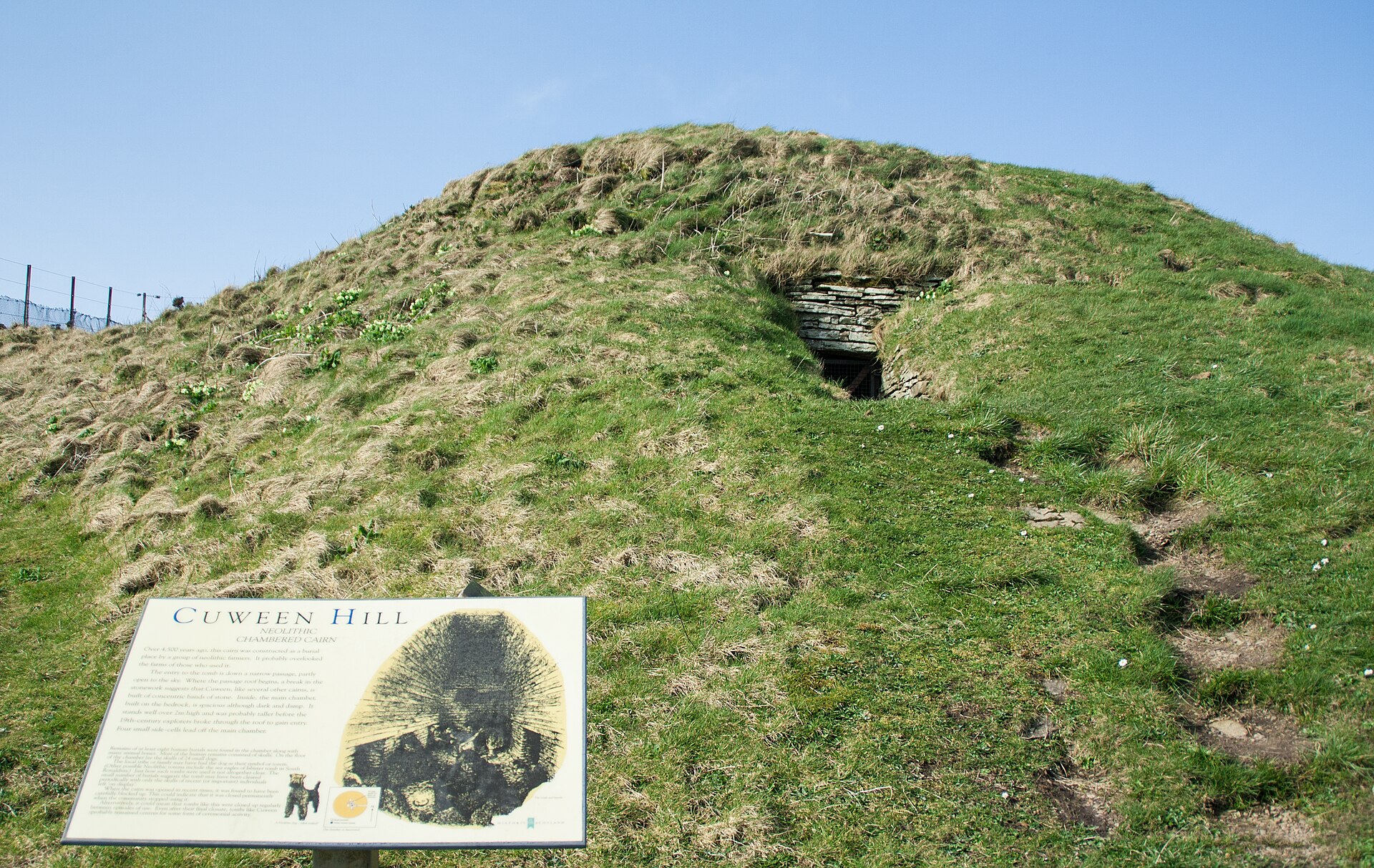
Tomb or burial place · Prehistoric
Cuween Hill Chambered Cairn
Orkney Islands
Cuween Hill is a Neolithic chambered cairn on the Orkney Mainland, dating to around 3000 BC and built by Neolithic farmers as a burial place. It is…
- Near Finstown
- 270 metres from car park
- Easy path
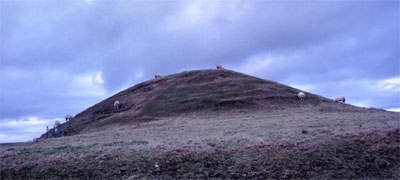
Tomb or burial place · Prehistoric
Maeshowe Chambered Cairn
Orkney Islands
The chambered cairn was built around 2800 BC by Neolithic farming communities of central Orkney, associated with the Grooved ware pottery tradition…
- Near Stenness
- 1.6 km from car park
- Easy path
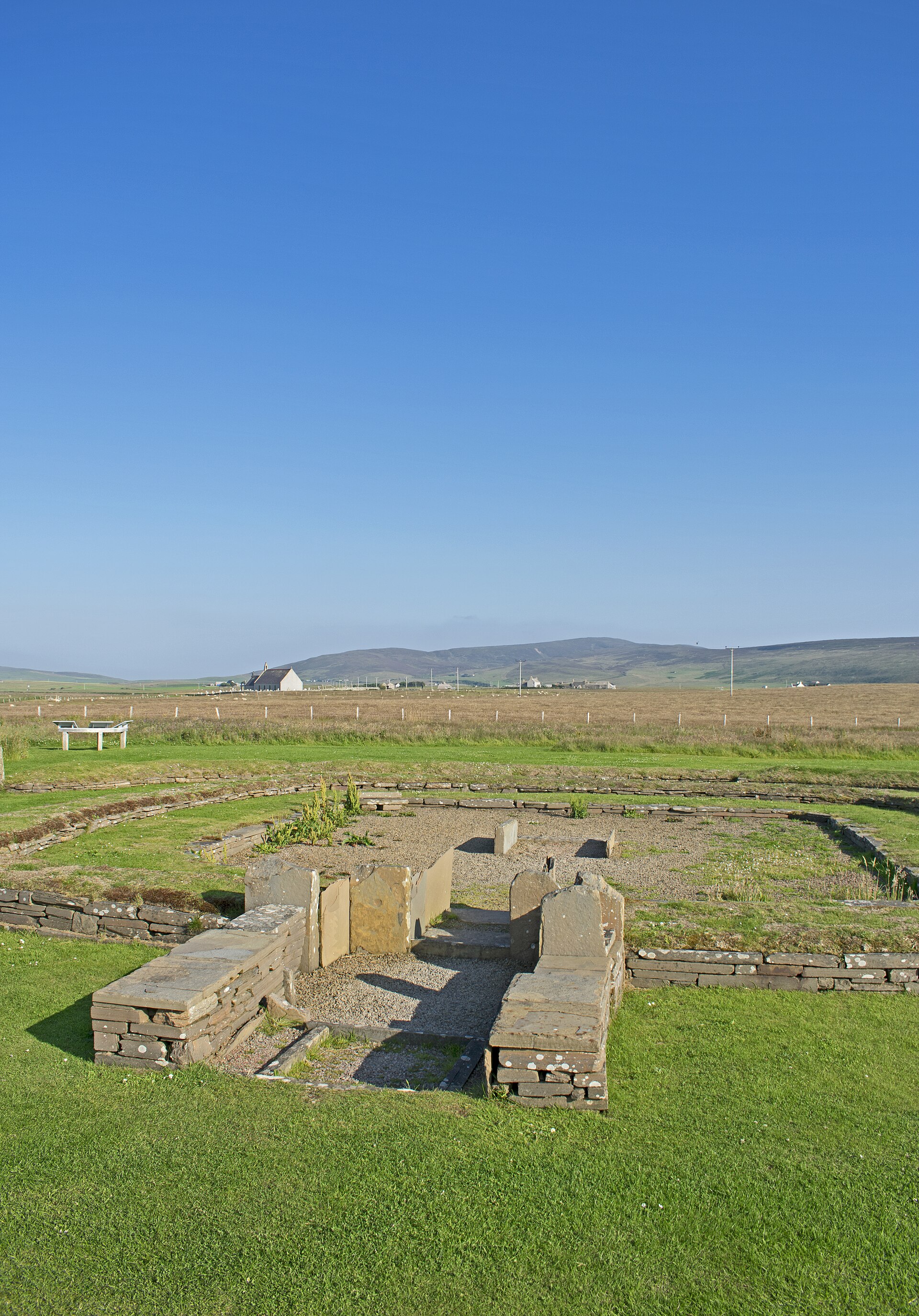
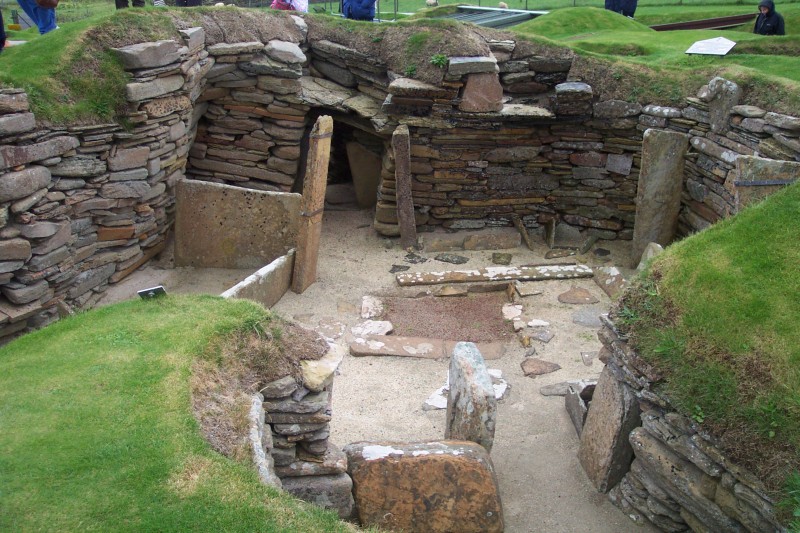
Questions people ask
- What is Knowes of Trotty?
- It is a Bronze Age cemetery of burial mounds east of the Loch of Harray.
- What was found in the largest mound?
- A stone cist held cremated human bones, four gold discs, and amber beads and pendants.
- Why are the artefacts important?
- The pack calls them the richest grave goods found in Orkney.
- What did later survey show?
- A 2005-2006 survey suggested the cemetery may originally have had twenty barrows with pyres, pits, and enclosures.
Sources
- Wikipedia article
- Source pack: Knowes of Trotty
Explore more: Tomb or burial places · Prehistoric · Orkney Islands
The Ancient Codex, in your pocket
Get the Pocket Codex app
Carry the directory with you — Knowes of Trotty and thousands of ancient places across Britain and Ireland, offline, wherever you roam.