
Cuween Hill is a Neolithic chambered cairn on the Orkney Mainland, dating to around 3000 BC and built by Neolithic farmers as a burial place. It is similar in design to Maeshowe but on a smaller…
Cuween Hill Chambered Cairn is a tomb or burial place near Finstown, Orkney, Scotland.
What follows is drawn from published sources, with each claim labelled by how firmly it is established.
History
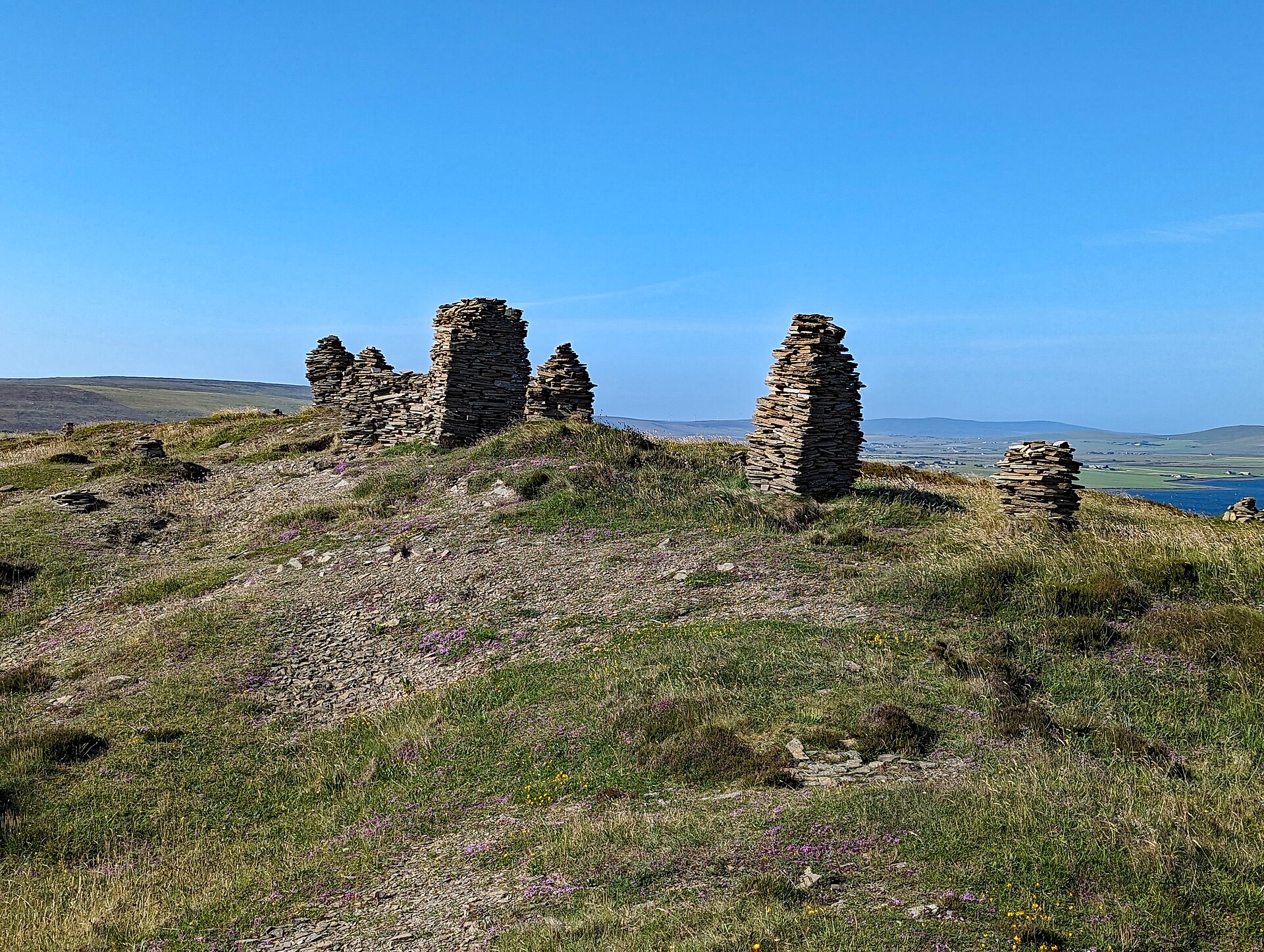
Cuween Hill is a Neolithic chambered cairn on the Orkney Mainland, dating to around 3000 BC and built by Neolithic farmers as a burial place. It is similar in design to Maeshowe but on a smaller scale.
When the cairn was reopened in modern times it was found to have been carefully blocked up. This may indicate it was permanently closed when the community stopped using it, or that tombs like this were sealed regularly between episodes of use.
People
-
Amy Thornton
Forensic artist who modelled the head of one of the Cuween dogs from a 3D print of its CT-scanned skull (image published 2019)
-
Dr Alison Sheridan
Principal Archaeological Research Curator, National Museums Scotland; commented on the dog reconstruction and the symbolic significance of the dog in Late Neolithic Orkney
Cultural influences
-
The find of 24 dog skulls laid on the chamber floor has prompted suggestions that the local tribe or family may have taken the dog as a symbol or totem.
-
The small number of human burials suggests the tomb may have been cleared periodically, with only the skulls of recent or important individuals left on display.
Connections
-
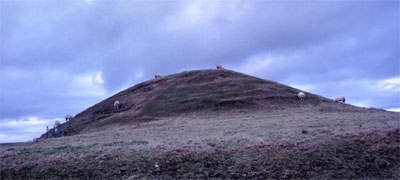
Photo: Otter at Dutch Wikipedia (Original text: Hopmans) / Wikimedia Commons / CC BY-SA 3.0 Maeshowe
Closest design parallel — Cuween is similar in plan but smaller in scale
-
Stonehall Neolithic settlement
Settlement remains found in 1990s excavations at the foot of Cuween Hill, below the cairn
-
Royal (Dick) School of Veterinary Studies, University of Edinburgh
CT-scanned one of the canine skulls, enabling the 2019 forensic reconstruction
Discovery & excavation
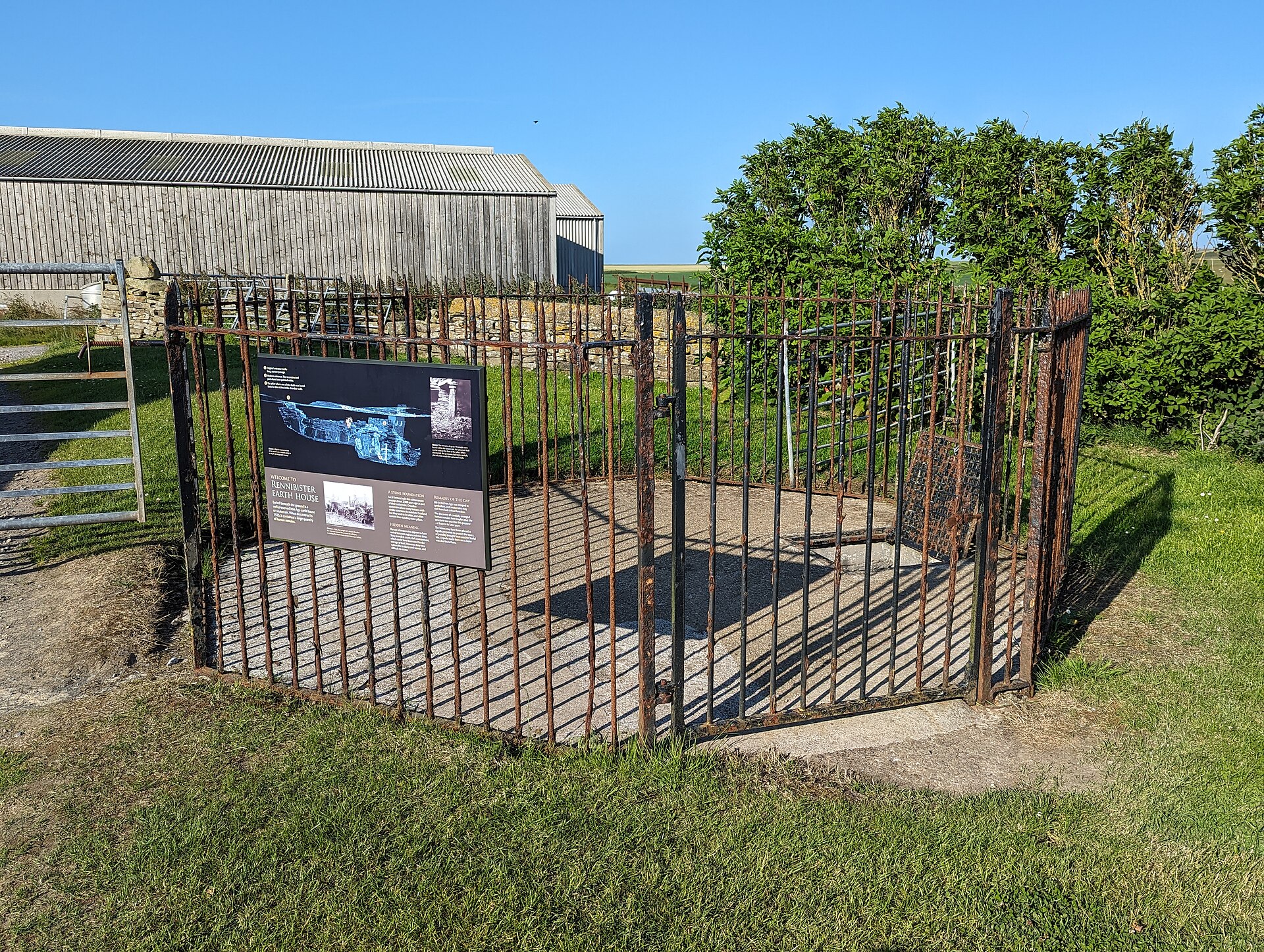
The cairn was excavated in 1901, when the remains of at least eight human burials — mostly skulls — were found along with many animal bones, including the skulls of 24 small dogs on the chamber floor. Nineteenth-century explorers had earlier broken through the roof to gain entry. In the 1990s, excavations uncovered a small Neolithic settlement at Stonehall below the cairn. In 2019, scientists at Edinburgh University's Royal (Dick) School of Veterinary Studies CT-scanned one of the dog skulls, and forensic artist Amy Thornton built a model of the dog's head — described as the size of a large collie with features reminiscent of a European grey wolf.
In culture
-
The 2019 forensic reconstruction of one of the Cuween dog skulls is described as a rare attempt to forensically reconstruct an animal from the Neolithic, after similar reconstructions had been made of people from the period.
What to look for
-
A narrow entrance passage, partly open to the sky, that visitors must crawl through on hands and knees to reach the chamber.
-
The main chamber, built on bedrock and standing well over 2 m high (probably taller before its roof was broken through in the 19th century), now capped with a modern concrete dome.
-
Four small side-cells leading off the main chamber.
Plan your visit
- Location
- 58.9975°N · 3.1083°W
- Nearest settlement
- Finstown
- Access
- Open access
- Terrain
- Easy going
- Parking
- Parking available nearby — see the official getting-here page.
- Start point
- Located between Kirkwall and Finstown, signposted from Finstown Road.
- Best time
- Open year-round.
- Start point
- Cuween Hill car park (foot of the hill) — Small car park at the foot of Cuween Hill, off the Finstown road; an uphill walk on a path leads to the cairn. HES advise the cairn entrance is reached by crawling through a low passage.
Opening & admission
Free entry
- Open year-round.
Nearby places
Tomb or burial place · Prehistoric
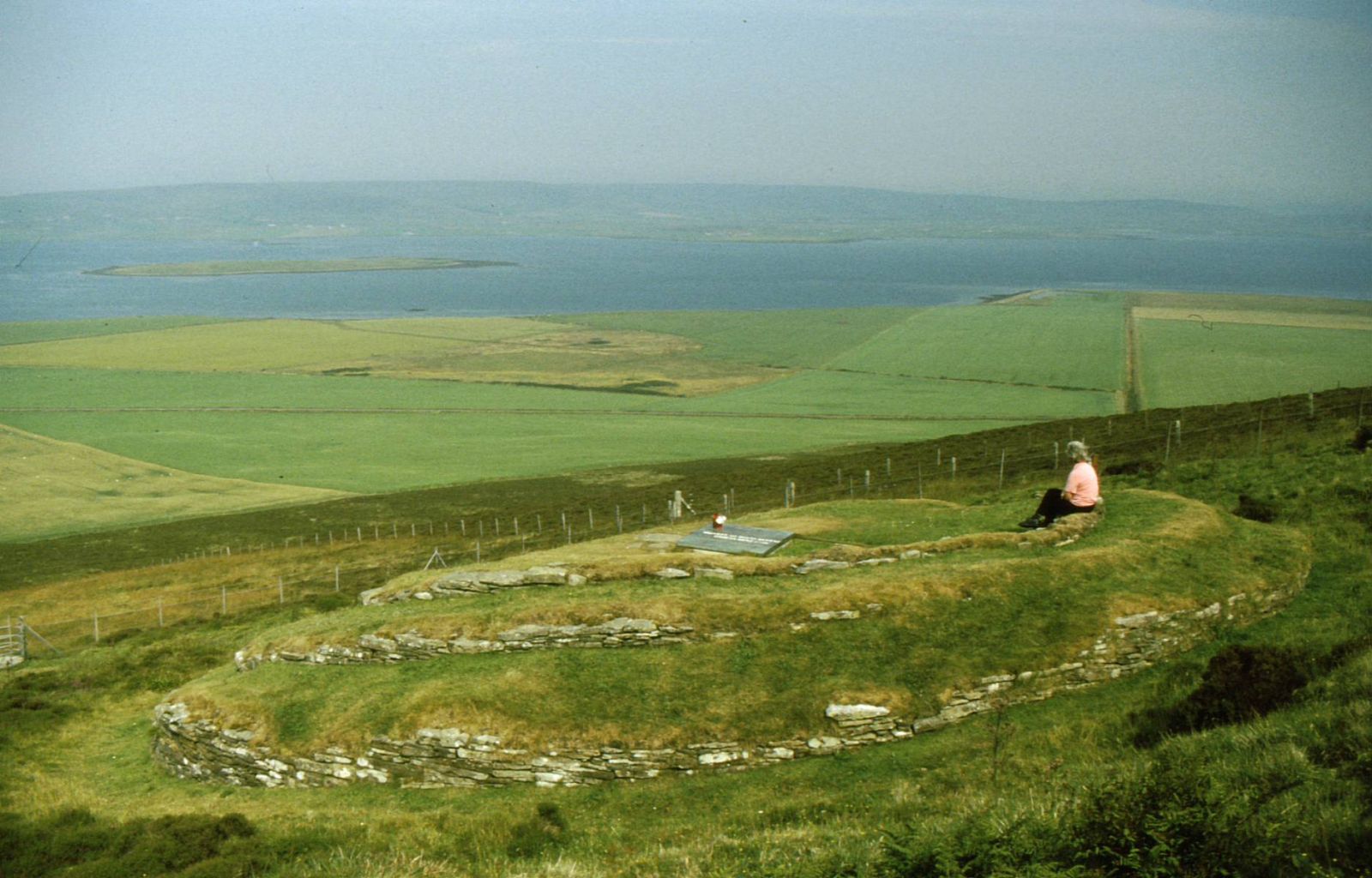
Maeshowe Chambered Cairn
Orkney Islands
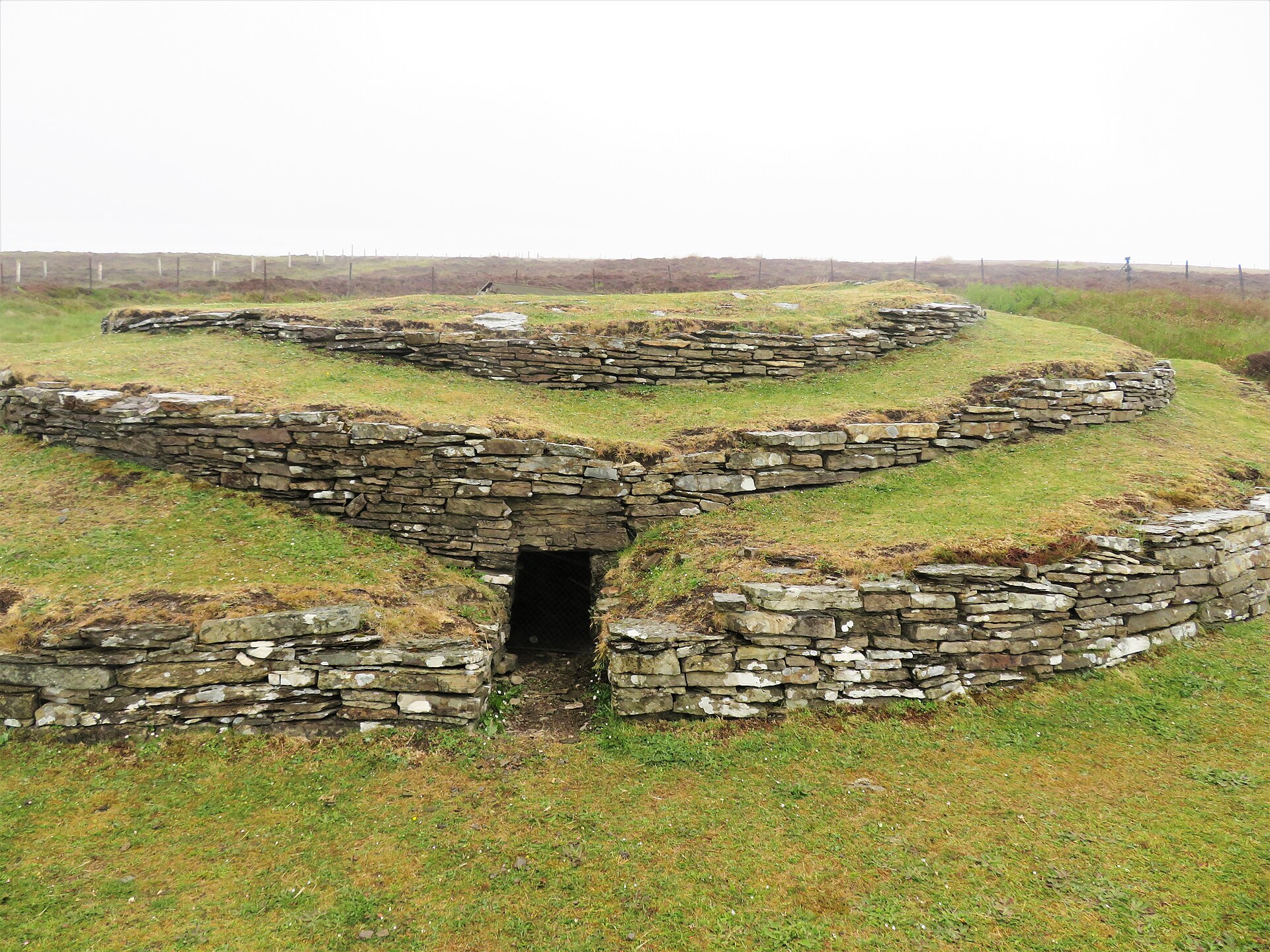
The chambered cairn was built around 2800 BC by Neolithic farming communities of central Orkney, associated with the Grooved ware pottery tradition…
- Near Stenness
- 1.6 km from car park
- Easy path
Sources
- Canmore site record 2059 (accessed 2026-06-13)
- Trove (HES) record (accessed 2026-06-13)
- Wikipedia: Cuween Hill Chambered Cairn (accessed 2026-06-13)
- Wikidata Q1146656 (accessed 2026-06-13)
Explore more: Tomb or burial places · Prehistoric · Orkney Islands
The Ancient Codex, in your pocket
Get the Pocket Codex app
Carry the directory with you — Cuween Hill Chambered Cairn and thousands of ancient places across Britain and Ireland, offline, wherever you roam.