
The tomb was plundered at an unknown date by breaking an opening through the roof of the chamber; the hole had been noted by the 16th century and was repaired with concrete in the 1950s or 1960s.
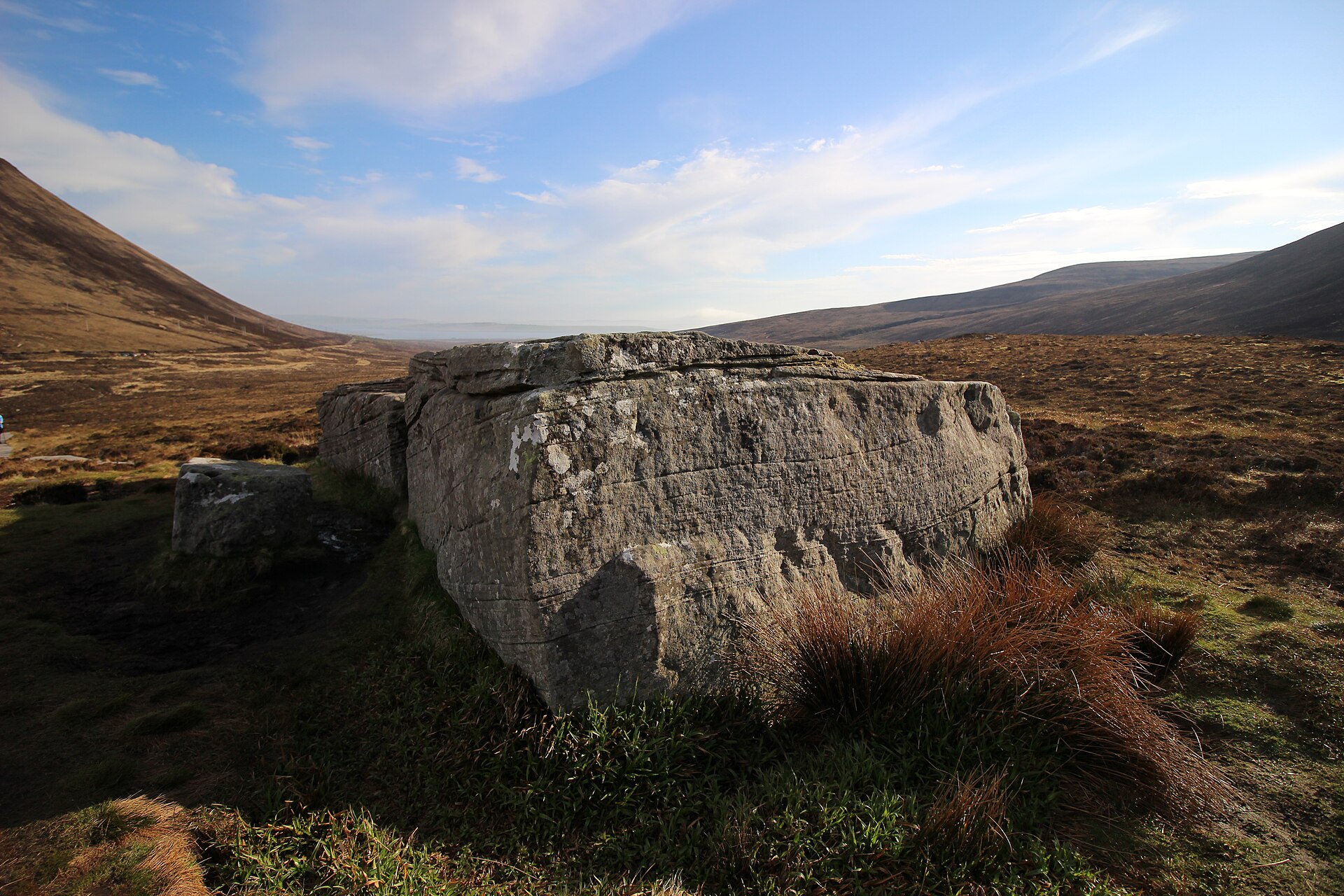
Dwarfie Stane is a tomb or burial place near Rackwick, Orkney, Scotland.
What follows is drawn from published sources, with each claim labelled by how firmly it is established.
The name
The name derives from a local legend that a dwarf named Trollid lived in the stone; the tomb has also, conversely, been claimed as the work of giants.
History
The tomb was plundered at an unknown date by breaking an opening through the roof of the chamber; the hole had been noted by the 16th century and was repaired with concrete in the 1950s or 1960s.
Captain William Mounsey camped at the stone in 1850, leaving a Persian-calligraphy inscription reading 'I have sat two nights and so learnt patience', with his name written backwards in Latin above it.
People
-
Captain William Mounsey
Camped here in 1850 and carved the Persian inscription on the tomb
-
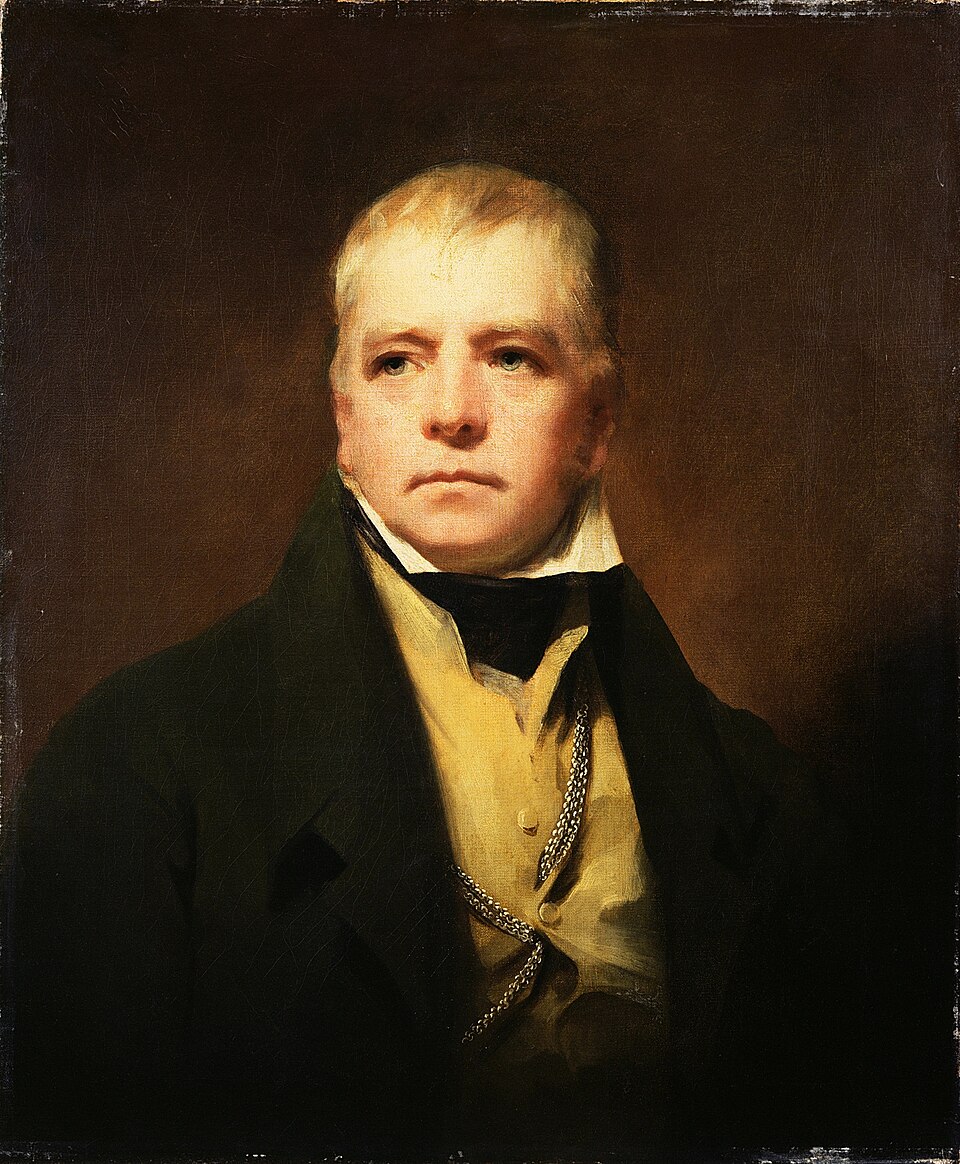
Portrait: Henry Raeburn / Wikimedia Commons / Public domain Sir Walter Scott
Popularised the stone through his 1821 novel The Pirate
-
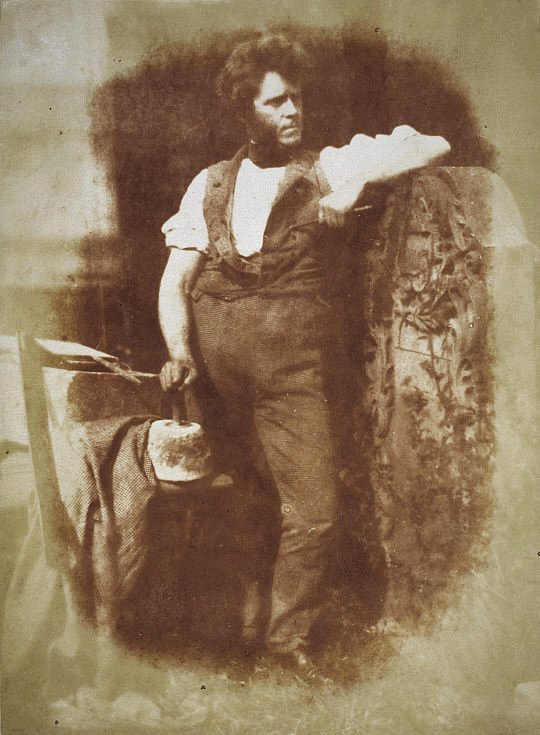
Portrait: Hill & Adamson / Wikimedia Commons / Public domain Hugh Miller
Folklorist and stonemason who described the tomb as built from 'extremely compact' Old Red Sandstone
-
R. Castleden
Author who characterised the Dwarfie Stane as 'the imported idea of the rock-cut tomb', 'tried once and found to be unsatisfactory'
Cultural influences
-
Mediterranean rock-cut tombs — the Dwarfie Stane's attribution as a tomb was originally based on its resemblance to recognised tombs in southern Europe, and it bears similarity to Neolithic or Bronze Age tombs around the Mediterranean, though there is no direct evidence of a link to their builders.
-
Orkney-Cromarty (or 'Bookan'-class) chambered tombs — despite its unique cut-from-stone construction, the plan of the Dwarfie Stane is consistent with this class of chambered tomb found throughout Orkney.
Connections
-
Photo: Otter at Dutch Wikipedia (Original text: Hopmans) / Wikimedia Commons / CC BY-SA 3.0 Maeshowe
Neighbouring Neolithic Orkney chambered monument
-
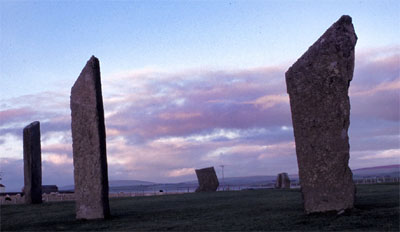
Photo: Otter at Dutch Wikipedia (Original text: Hopmans) / Wikimedia Commons / CC BY-SA 3.0 Standing Stones of Stenness
Neighbouring Neolithic Orkney monument
-
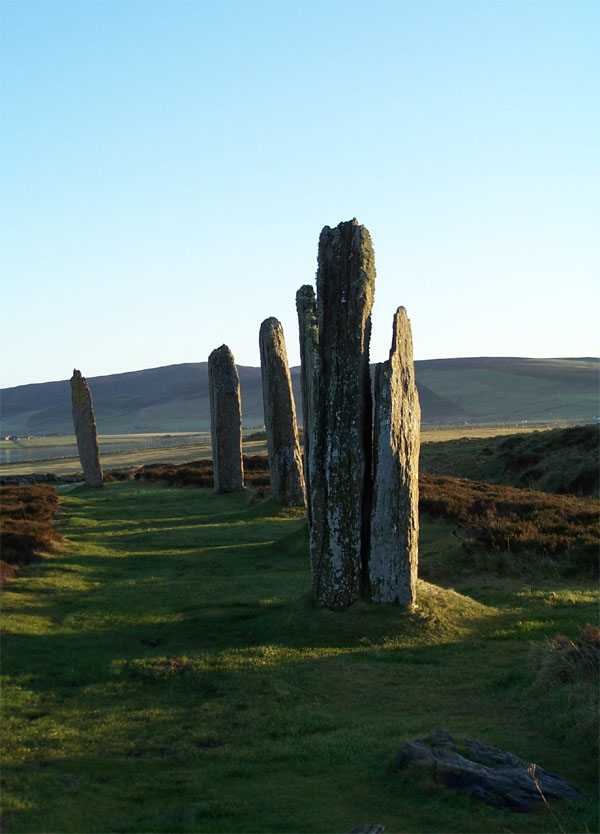
Photo: Original uploader was Otter at nl.wikipedia (Original text : Hopmans) / Wikimedia Commons / CC BY-SA 3.0 Ring of Brodgar
Neighbouring Neolithic Orkney monument
In culture
-
The Dwarfie Stane's existence was popularised in Walter Scott's 1821 novel The Pirate.
-
The rock-cut tomb carries a variety of 18th- and 19th-century graffiti, the most famous being Captain Mounsey's 1850 Persian inscription and his name in reversed Latin.
What to look for
-
The titanic block of Devonian Old Red Sandstone itself — a glacial erratic about 8.6 m long, 4 m wide and up to 2.5 m high, sitting in desolate peatland between Quoys and Rackwick on Hoy.
-
The 1-metre-square entrance cut into the west side, with the original blocking slab now lying on the ground in front of it.
-
The interior — a 2.2 m passage with two side cells (each about 1.7 m by 1 m), all about 1 metre high; the southern cell has a 'pillow' of uncut rock at its inner end.
-
The 18th- and 19th-century graffiti, including Captain Mounsey's 1850 Persian inscription and his reversed-Latin name.
-
The concrete-repaired hole in the roof, marking where the chamber was plundered before the 16th century.
What is said
Folklore and tradition, recorded as what is said — not as established fact.
-
Local legend holds that a dwarf named Trollid lived in the stone; it has also been claimed as the work of giants. (local legend)
Plan your visit
- Location
- 58.8847°N · 3.3128°W
- Nearest settlement
- Rackwick
- Access
- Open access
- Terrain
- Easy going
- Parking
- Parking available nearby — see the official getting-here page.
- Start point
- DwarfieStane · Towards the north end of Hoy, 3.5m from Rackwick. Reached via Orkney Ferries Ltd from Houton Terminal.
- Best time
- Open year-round.
- Start point
- Dwarfie Stane roadside parking (B9047, Hoy) — Small off-road parking area beside the B9047 on Hoy, towards the north end of the island about 3.5 miles from Rackwick. Hoy is reached by Orkney Ferries from Houton; no postcode available for this remote layby.
Opening & admission
Free entry
- Open year-round.
Nearby places
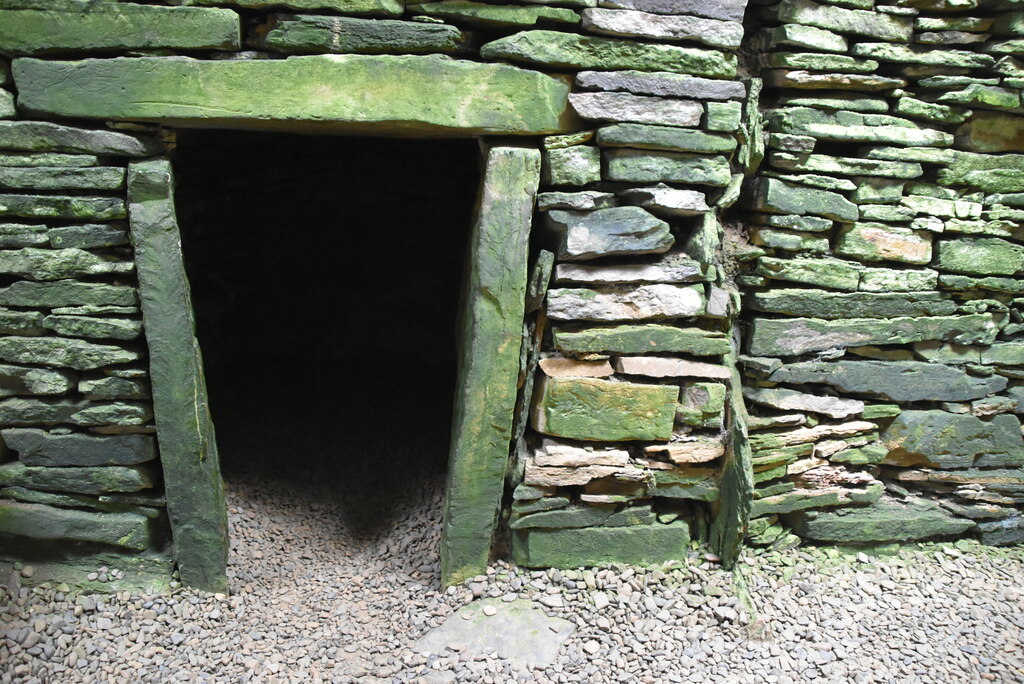
Tomb or burial place · Prehistoric
Unstan Chambered Cairn
Orkney Islands
The chambered cairn was built sometime between about 3400 and 2800 BC (on the evidence of nearby tombs) as a Neolithic burial monument on a promont…
- Near Stenness
- 2 min walk from car park
- Easy path
Carved stone · Prehistoric
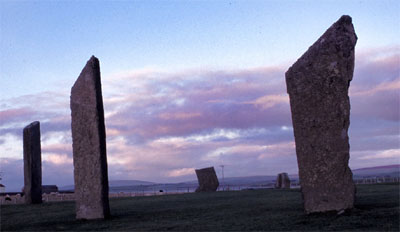
Stones of Stenness Circle and Henge
Orkney Islands
The Stones of Stenness are a Neolithic monument and may be the oldest henge site in the British Isles; radiocarbon dating indicates work on the sit…
- Near Stenness
- 2 min walk from car park
- Easy path
Sources
- Canmore site record 1597 (accessed 2026-06-13)
- Trove (HES) record (accessed 2026-06-13)
- Wikipedia: Dwarfie Stane (accessed 2026-06-13)
- Wikidata Q1268415 (accessed 2026-06-13)
Explore more: Tomb or burial places · Prehistoric · Orkney Islands
The Ancient Codex, in your pocket
Get the Pocket Codex app
Carry the directory with you — Dwarfie Stane and thousands of ancient places across Britain and Ireland, offline, wherever you roam.