
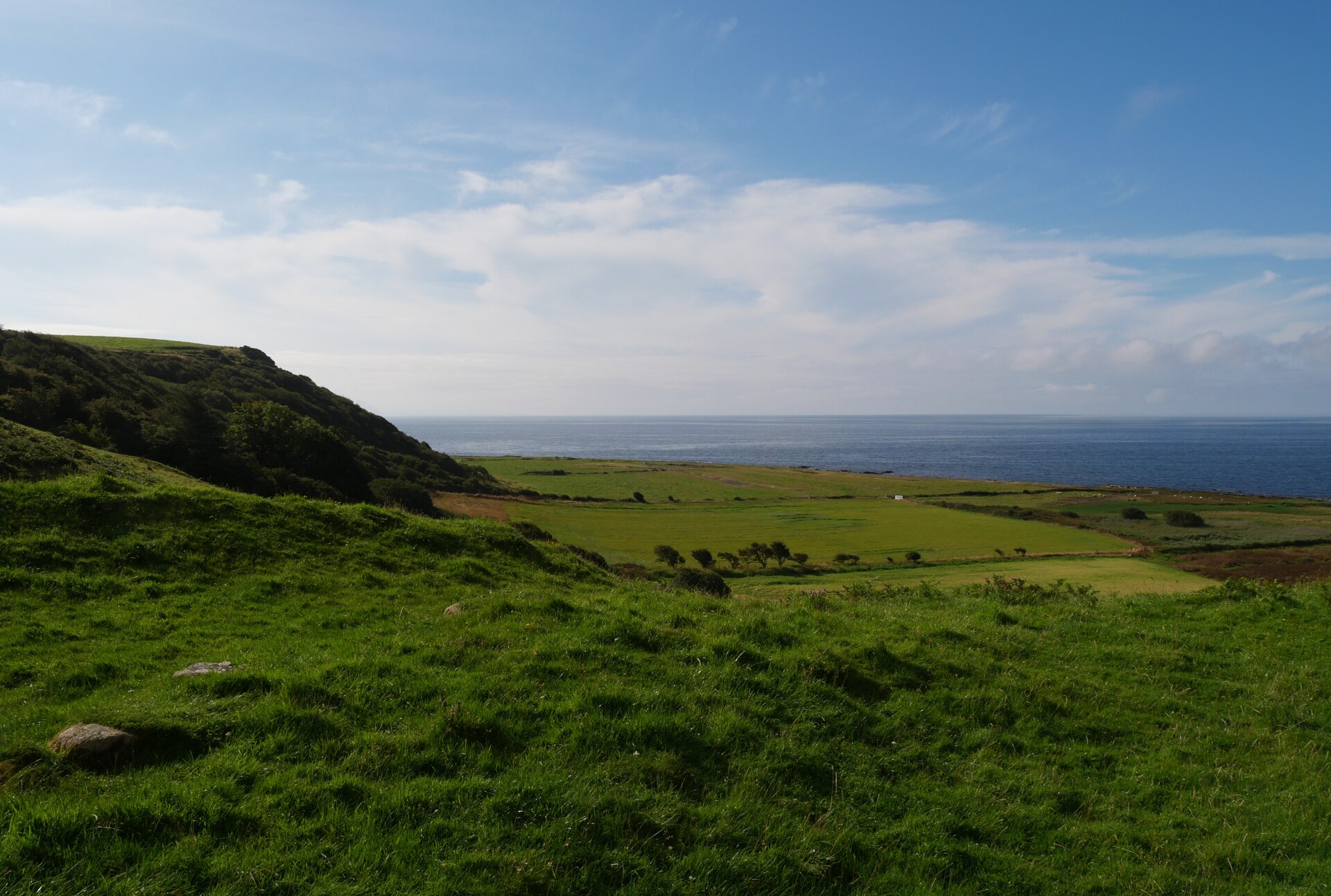
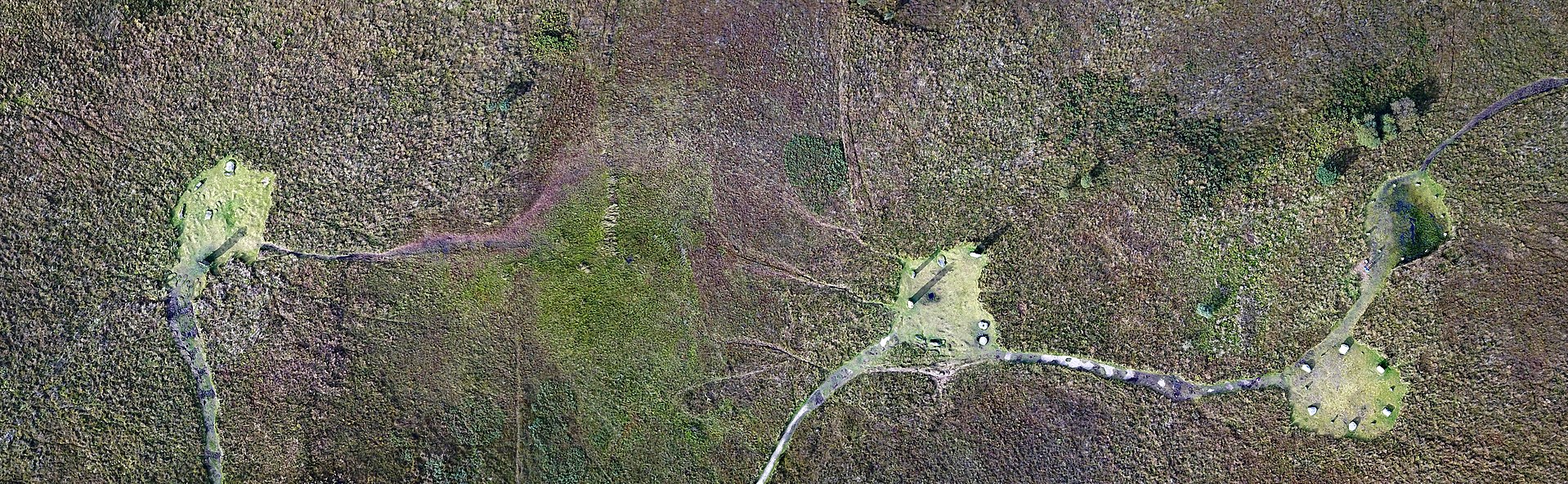
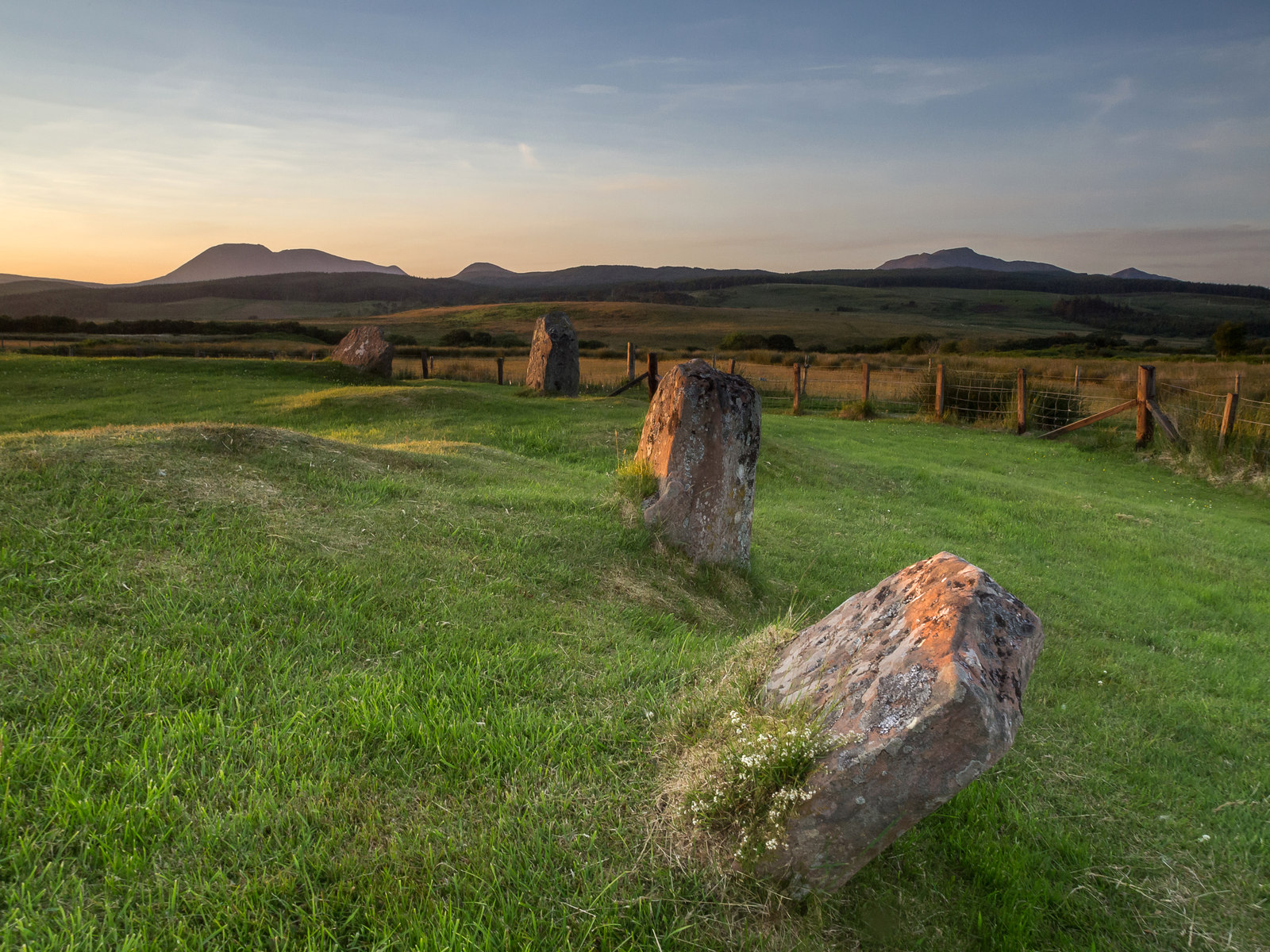
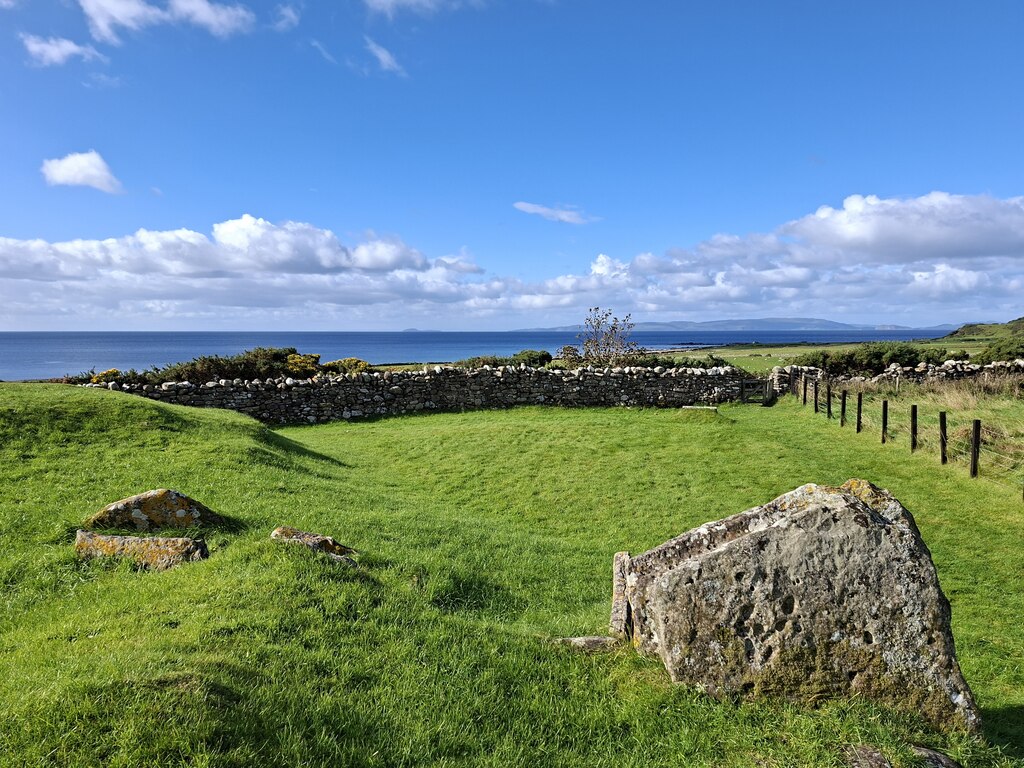
A thick circular wall lies on a north-westerly slope above the Arran coast. Kilpatrick Dun is an Iron Age dun, a compact stone-built defended home, set within a larger enclosure south of Blackwaterfoot.
The site has not always been read the same way. Earlier suggestions identified it as a Bronze Age burial cairn or an early Christian monastery, but current interpretation places it among the later Iron Age defended houses of western Scotland.
What follows is drawn from published sources, with each claim labelled by how firmly it is established.
History
Kilpatrick Dun is generally regarded as a later Iron Age dun, meaning a compact defended dwelling.
The monument stands south of Blackwaterfoot on Arran.
Earlier interpretations proposed that the site might have been a Bronze Age burial cairn or an early Christian monastery.
The circular dun has a thick wall with visible chambers built into it.
A larger enclosure surrounds the dun.
The enclosure has sometimes been compared with a cashel, an enclosed early Christian monastery, but the pack says the nearby rectangular structures make better sense as post-medieval croft or bothy remains.
The pack points to Torr a'Chaisteal, farther south, as a comparable Arran example.
What to look for
-
Circular defended core
The dun forms a compact circular structure within a heavy wall.
-
Wall chambers
Four chambers can be seen within the wall thickness.
-
Southern entrance
The entrance into the dun is on the south side.
-
Outer enclosure
A larger surrounding enclosure adds to the site's complicated appearance.
Plan your visit
- Location
- 55.4846°N · 5.3148°W
- Access
- Open access
- Terrain
- Moderate walking
Opening & admission
The pack gives a Historic Environment Scotland designation; check current official access information before travelling.
- The source pack describes a short walk from a small car park.
- The dun stands south of Blackwaterfoot on a north-westerly hill-slope.
Nearby places
Questions people ask
- What is Kilpatrick Dun?
- It is an Iron Age dun, meaning a compact defended dwelling, on Arran.
- Was Kilpatrick Dun always identified as a dun?
- No. The pack says it was previously proposed as a Bronze Age burial cairn or early Christian monastery before the fortified-residence interpretation became preferred.
- What can be seen in the wall at Kilpatrick Dun?
- Four chambers are visible within the thickness of the circular wall.
- What nearby site is similar to Kilpatrick Dun?
- The pack points to Torr a'Chaisteal farther south as a comparable Arran dun.
Sources
Explore more: Fortified places · Iron Age · North Ayrshire
The Ancient Codex, in your pocket
Get the Pocket Codex app
Carry the directory with you — Kilpatrick Dun and thousands of ancient places across Britain and Ireland, offline, wherever you roam.