
A plough turned up the light red sandstone of the Invereen Stone in 1932. The Invereen Stone belongs to the Class I Pictish group, meaning an early-medieval symbol-bearing carved stone, and was found near Invereen by A. Dunbar.
Its carved signs include a crescent and V-rod, a double disc and Z-rod, and a third circle-and-line design that may be later. The stone has left its field setting and is now displayed by the National Museums of Scotland in Edinburgh.
What follows is drawn from published sources, with each claim labelled by how firmly it is established.
History
The Invereen Stone was unearthed near Invereen in 1932.
A. Dunbar found the stone while ploughing.
The stone is made of light red sandstone.
Its carvings include a crescent and V-rod.
It also carries a double disc and Z-rod plus a possible later circle-and-line design.
The stone is now displayed at the National Museums of Scotland in Edinburgh.
Connections
-
A. Dunbar
Finder of the stone in 1932.
-
Invereen
Discovery place near Inverness.
-
National Museums of Scotland
Current display institution.
What to look for
-
Crescent and V-rod
One of the main Pictish symbols on the stone.
-
Double disc and Z-rod
Second major symbol on the face.
-
Possible later mark
Circle-and-line design may belong to another phase.
Plan your visit
- Location
- 57.3545°N · 4.0011°W
- Access
- Open access
- Terrain
- Easy going
Opening & admission
- Stone is displayed at the National Museums of Scotland in Edinburgh.
Nearby places
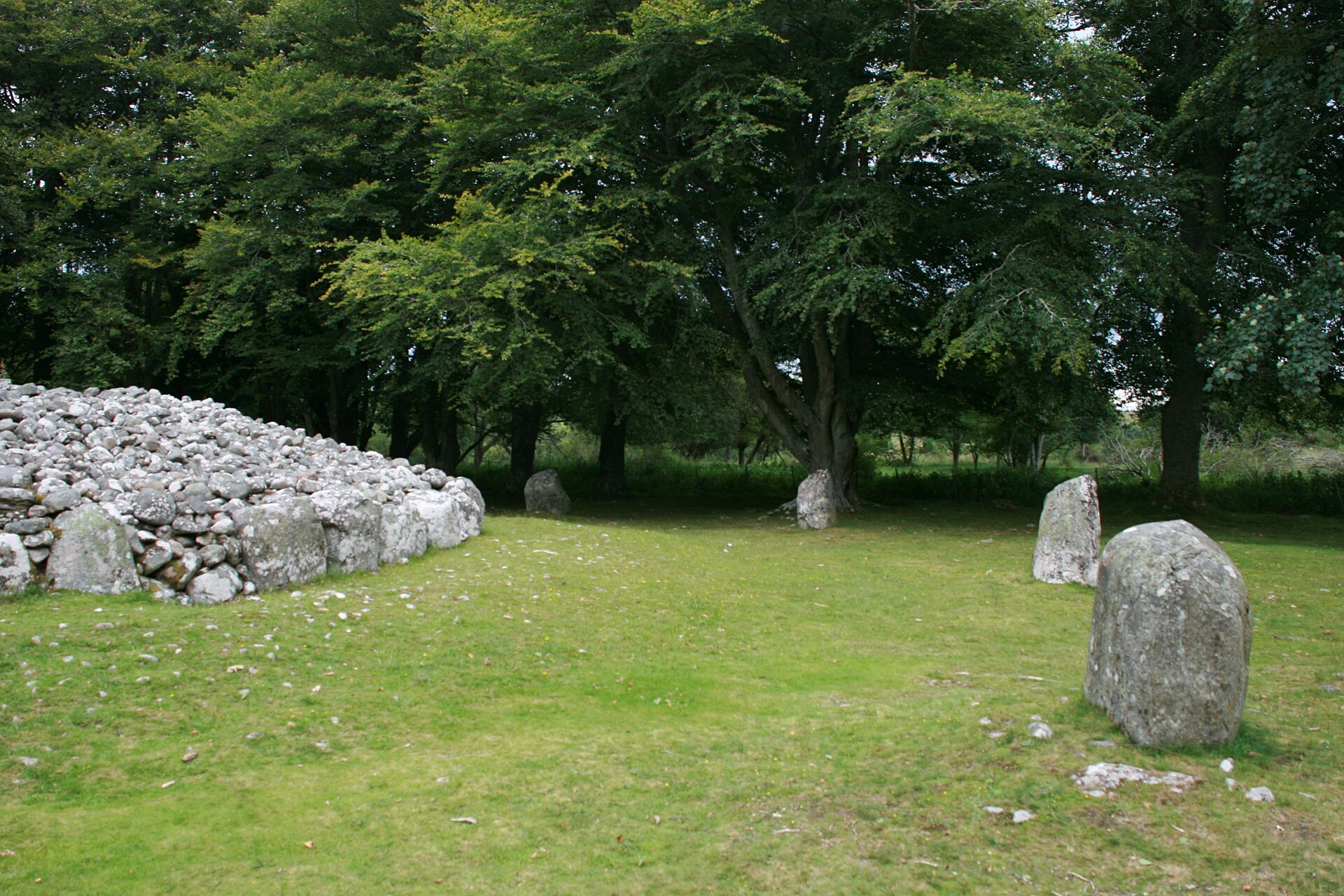
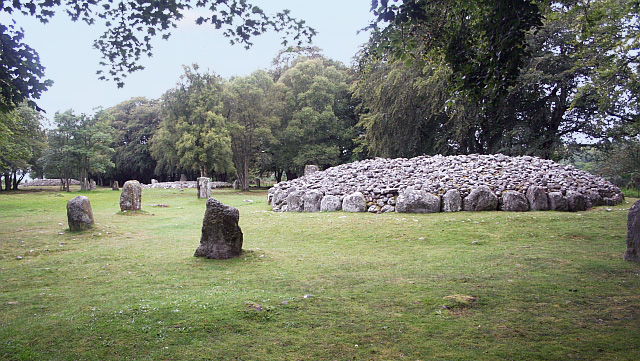
Tomb or burial place · Prehistoric
Clava Cairns
Highland
A Bronze Age funerary monument of the Inverness/Moray Firth communities; the three cairns and their stone circles appear to have been built as a si…
- Near Inverness
- 149 metres from car park
- Easy path
Questions people ask
- What is the Invereen Stone?
- It is a Class I Pictish symbol stone.
- How was it found?
- It was unearthed during ploughing in 1932.
- Where is it now?
- It is displayed at the National Museums of Scotland in Edinburgh.
- What is carved on it?
- It has a crescent and V-rod, a double disc and Z-rod, and a possible later circle-and-line design.
Sources
Explore more: Carved stones · Pictish & early medieval · Highland
The Ancient Codex, in your pocket
Get the Pocket Codex app
Carry the directory with you — Invereen Stone and thousands of ancient places across Britain and Ireland, offline, wherever you roam.