
Temple Wood, in Kilmartin Glen, comprises two stone circles - a northern and a southern circle. The southern circle's first incarnation may have been constructed around 3000 BC, according to the…
At the centre of the southern circle at Temple Wood lies a burial cist (a stone-lined burial box), ringed by a smaller circle of stones and set within a ring of 13 standing stones about 12 metres (40 feet) across. According to the Historic Scotland information marker at the site, this southern circle’s first incarnation may date to around 3000 BC.
The site sits in Kilmartin Glen, near Kintyre in Argyll, Scotland, and comprises two circles, northern and southern. It is a designated scheduled monument, lying just south of the southern Nether Largie cairn.
The name “Temple Wood”, also recorded as “Half Moon Wood”, is a 19th-century invention, coined when trees were planted around the circles. It has no relevance to the site’s original purpose.
What follows is drawn from published sources, with each claim labelled by how firmly it is established.
The name
The name Temple Wood originates in the 19th century, coinciding with the planting of trees around the circles. It has no relevance to the purpose of the prehistoric site. The site is also known as Half Moon Wood.
History
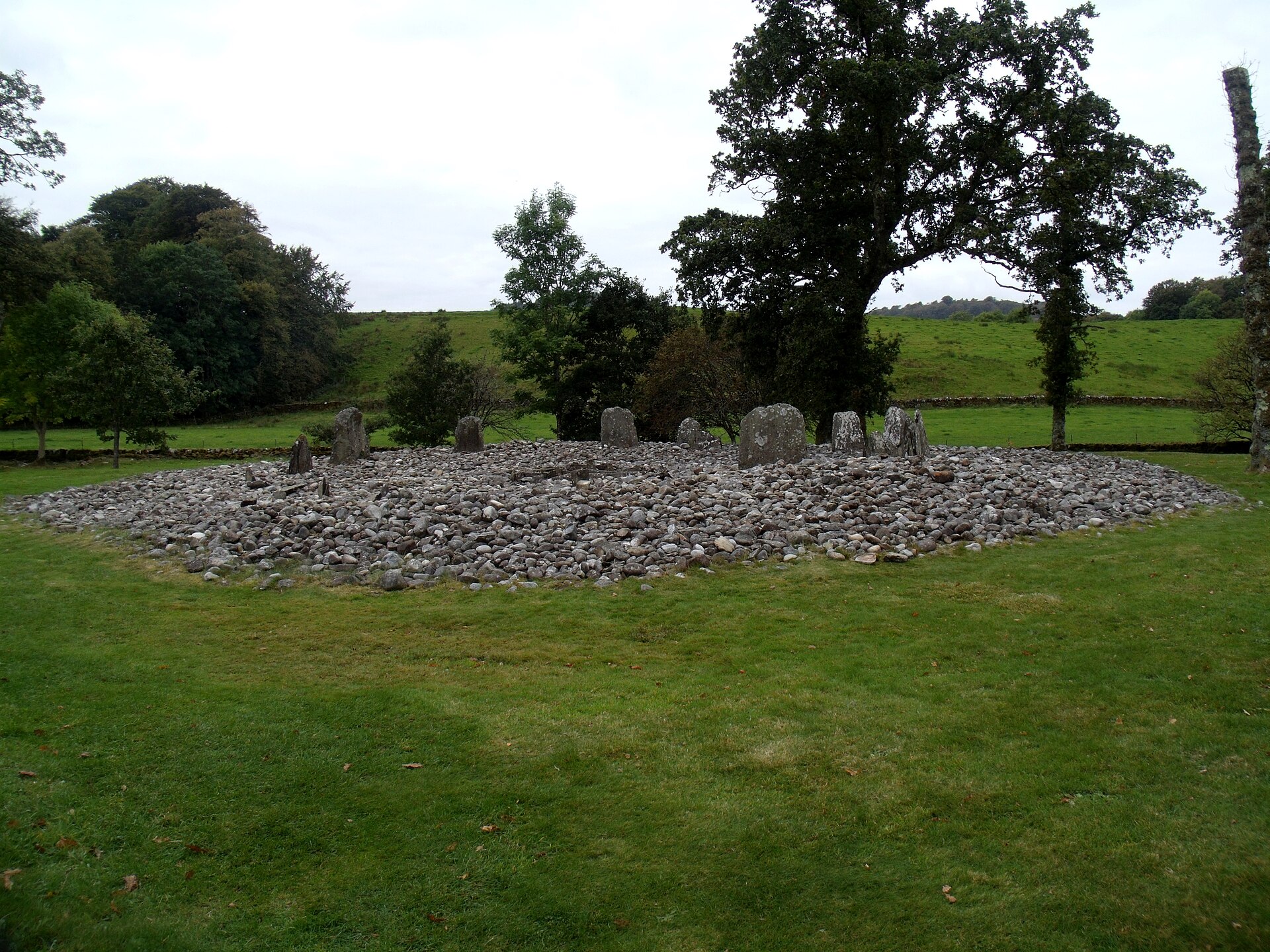
According to the Historic Scotland information marker at the site, the southern circle's first incarnation may have been constructed around 3000 BC. The southern circle contains a ring of 13 standing stones about 12 metres (40 feet) in diameter, and may in the past have had 22 stones.
At the centre of the southern circle is a burial cist surrounded by a circle of stones about 3 metres (10 feet) in diameter. Other, later burials are associated with the circle, indicating the site was reused over time.
The smaller northern circle consists of rounded river stones, which also fill the southern circle. At its centre is a single stone, with another stone set on the edge of the circle. This circle may have originated as a timber circle.
Connections
-
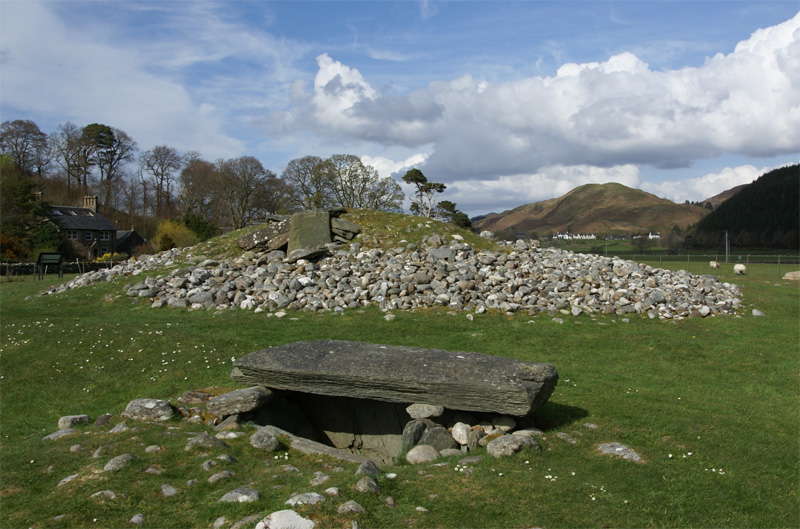
Photo: Otter / Wikimedia Commons / CC BY-SA 3.0 Nether Largie cairns
Temple Wood lies just south of the southern Nether Largie cairn, within the concentration of prehistoric monuments in Kilmartin Glen.
-
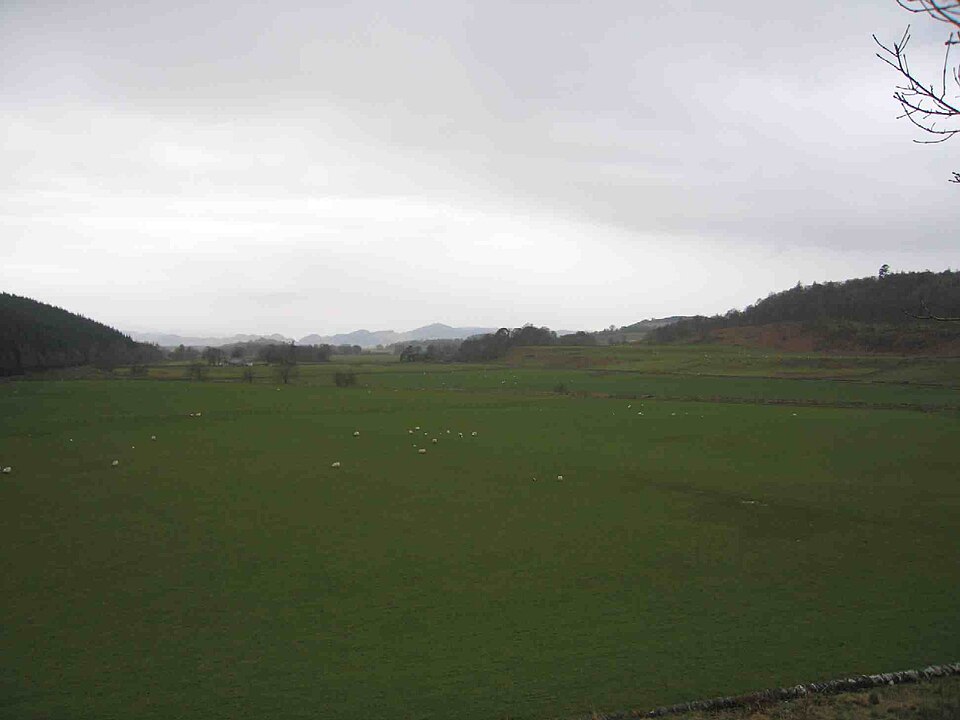
Photo: Laurence Nolan, aka User:Lnolan / Wikimedia Commons / CC BY 2.5 Kilmartin Glen
The site is located in Kilmartin Glen, near Kintyre, Argyll.
What to look for
-
Southern stone ring
A ring of 13 standing stones about 12 metres (40 feet) in diameter. In the past the ring may have held as many as 22 stones.
-
Central burial cist
At the centre of the southern circle is a burial cist surrounded by a smaller circle of stones about 3 metres (10 feet) across.
-
The northern circle
A smaller circle built of rounded river stones, with a single stone at its centre and another on its edge. It may have begun as a timber circle.
-
River-stone fill
Rounded river stones fill the southern circle as well as forming the northern circle, a distinctive feature of the site.
Plan your visit
- Location
- 56.1237°N · 5.4985°W
- Nearest settlement
- Kilmartin
- Access
- Open access
- Terrain
- Easy going
- Parking
- Parking available nearby — see the official getting-here page.
- Start point
- Temple Wood Stone Circle · 0.25m south west of Nether Largie off the A816. There is no tourist signposting from A816 in place. · Parking is at Lady Glassary Wood car park, about 400m from the stone circle.
- Best time
- Open year-round.
- Start point
- Lady Glassary Wood car park — Free car park (about 20 spaces) at Lady Glassary Wood, the recognised parking for Kilmartin Glen monuments. About 400m walk to the stone circles. No tourist signposting from the A816.
- Sat-nav
- NR 826 978
Opening & admission
Free entry
- Open year-round.
Nearby places
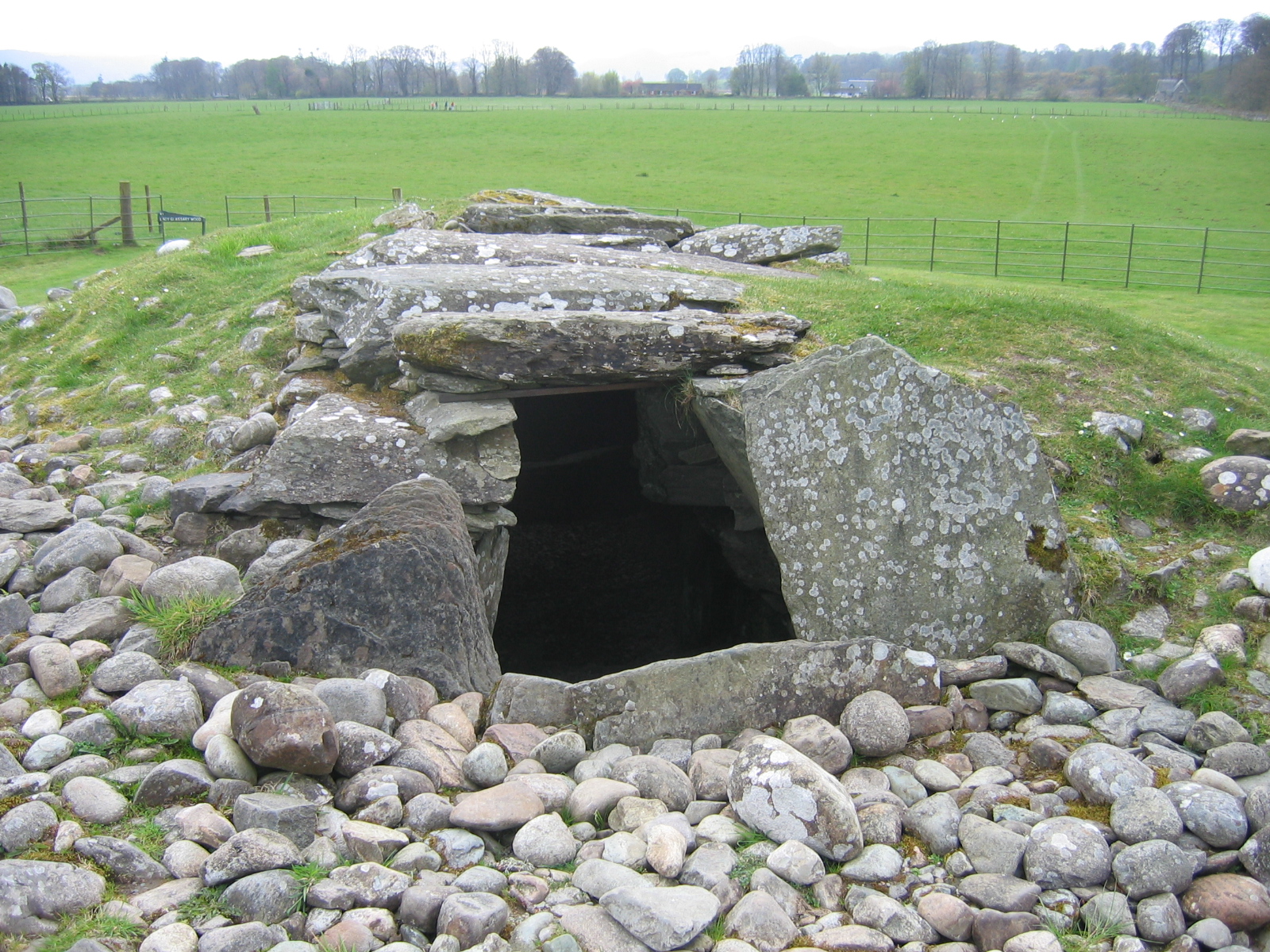
Tomb or burial place · Prehistoric
Nether Largie South Chambered Cairn
Argyll and Bute
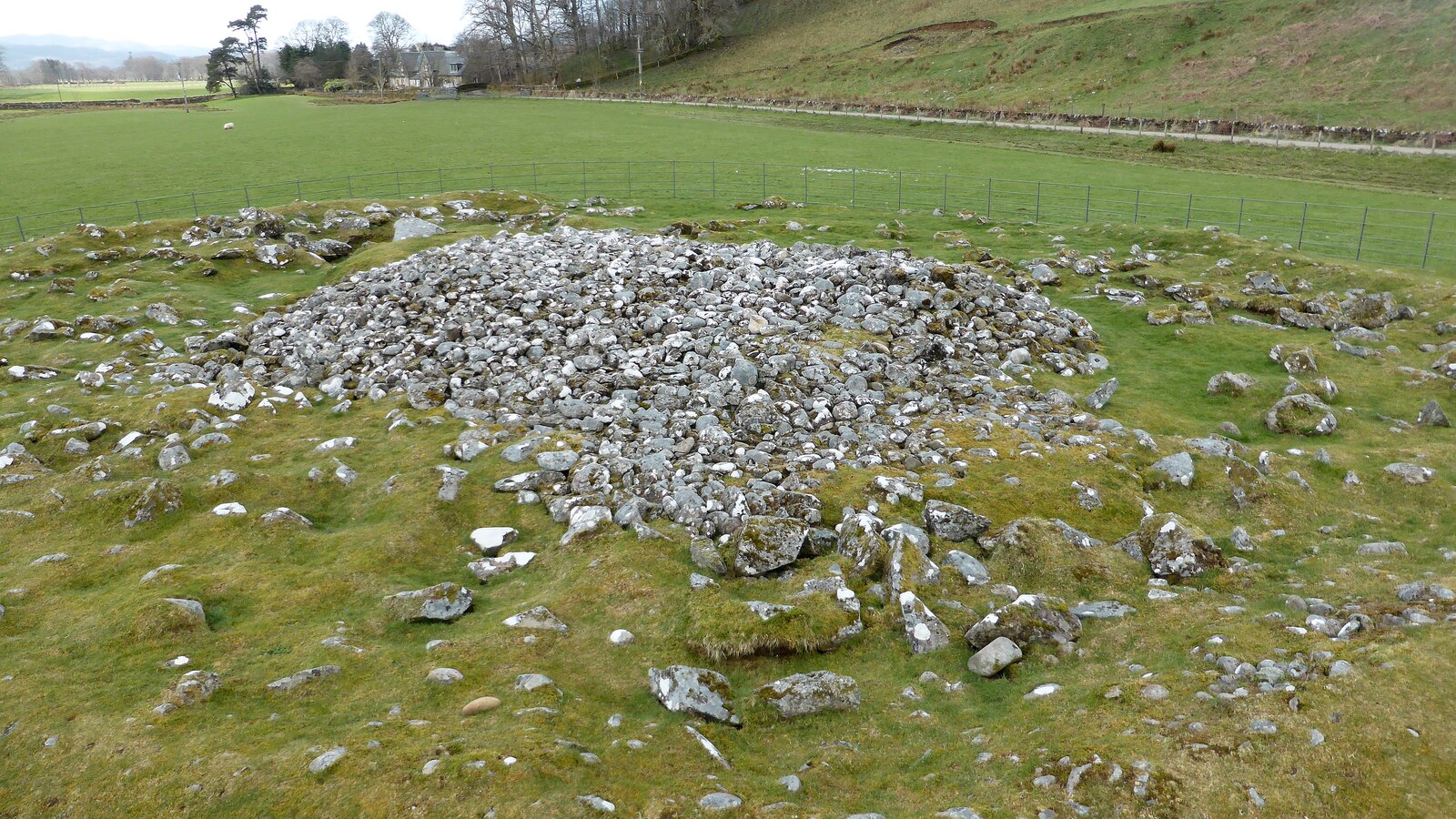
Nether Largie South is a Neolithic Clyde-type chambered cairn and the earliest monument in the Kilmartin Glen linear cemetery — the line of cairns…
- Near Kilmartin
- 7 min walk from car park
- Easy path
Tomb or burial place · Prehistoric
Nether Largie Mid Cairn
Argyll and Bute
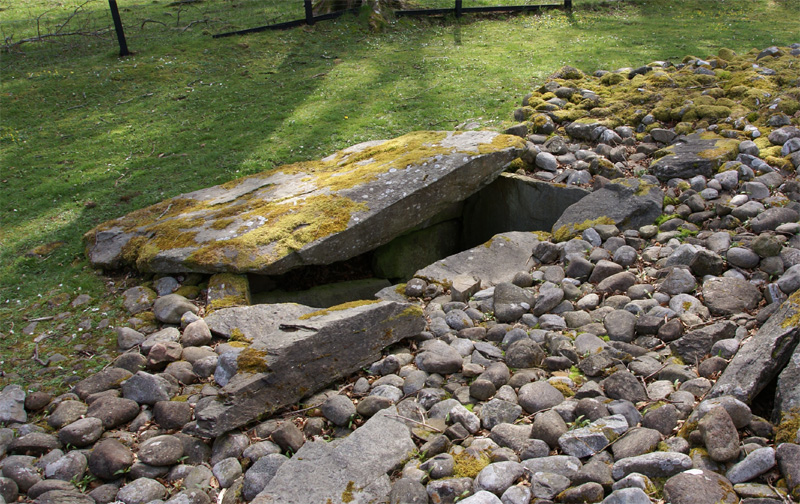
It forms a central link in the Kilmartin Glen linear cemetery, one of Scotland's most concentrated groupings of prehistoric burial monuments.
- Easy path
Tomb or burial place · Prehistoric
Ri Cruin Cairn
Argyll and Bute
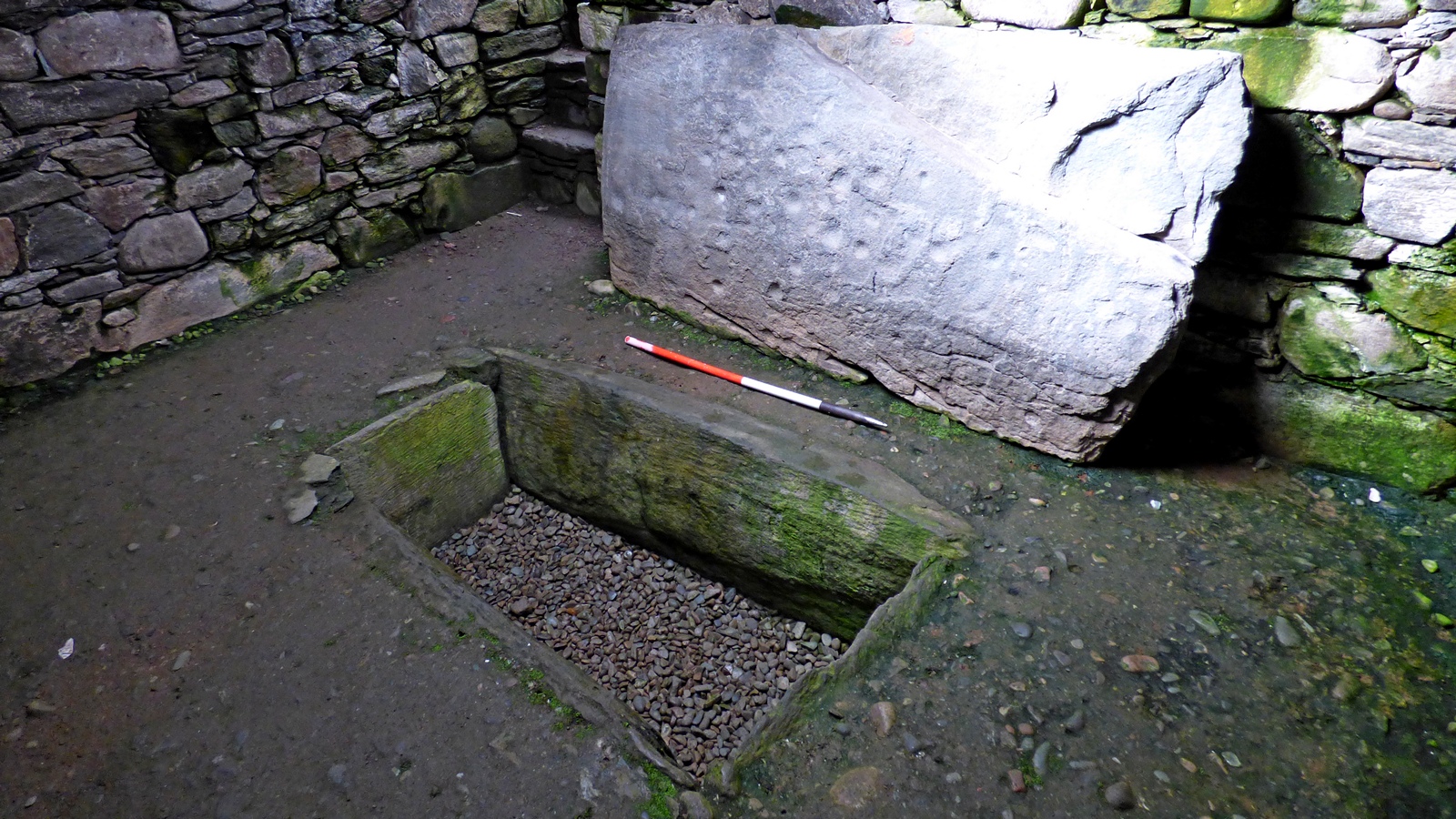
Ri Cruin is the most southerly cairn in the Kilmartin Glen linear cemetery, a Bronze Age burial cairn built between roughly 2200 BC and 1950 BC.
- Near Kilmartin
- 8 min walk from car park
- Easy path
Tomb or burial place · Prehistoric
Nether Largie North Cairn
Argyll and Bute
Its carved capstone, marked with dozens of cup-marks and ten axe-head symbols, makes it one of the most vividly decorated Bronze Age burial monumen…
- Easy path
Questions people ask
- How old are the Temple Wood Stone Circles?
- According to the Historic Scotland marker at the site, the southern circle's first incarnation may have been constructed around 3000 BC.
- Where are the Temple Wood Stone Circles?
- They are in Kilmartin Glen, near Kintyre, Argyll, Scotland, just south of the southern Nether Largie cairn.
- Why is it called Temple Wood?
- The name dates only to the 19th century, when trees were planted around the circles. It has no relevance to the site's original purpose. It is also known as Half Moon Wood.
- How many stones are in the southern circle?
- The southern circle contains a ring of 13 standing stones about 12 metres (40 feet) in diameter. In the past it may have had 22 stones.
- Are there burials at Temple Wood?
- Yes. The southern circle has a central burial cist surrounded by a ring of stones about 3 metres across, and other, later burials are associated with the circle.
Sources
- Wikipedia: Temple Wood (accessed 2026-07-18)
- Historic Environment Scotland: Visitor guide (accessed 2026-07-18)
Explore more: Tomb or burial places · Prehistoric · Argyll and Bute
The Ancient Codex, in your pocket
Get the Pocket Codex app
Carry the directory with you — Temple Wood Stone Circles and thousands of ancient places across Britain and Ireland, offline, wherever you roam.