
Ruined walls on a rocky point at Lagavulin Bay mark Dunyvaig Castle, once a sea base for the Lords of the Isles. The castle stands over an earlier dùn, a small defended fort, and its Gaelic name is anglicised as Fort of the galleys.
Dunyvaig’s story is unusually turbulent. It was a MacDonald naval anchorage, forfeited and restored, fought over in 1614-15, and finally pulled down after passing into Campbell hands.
What follows is drawn from published sources, with each claim labelled by how firmly it is established.
History
Dunyvaig Castle stands on the south side of Islay on the shore of Lagavulin Bay. Somerled built a castle on top of an earlier fort or dùn on the rocky promontory in the 12th century.
The MacDonalds, Lords of the Isles, used Lagavulin Bay as an anchorage for their fleet of galleys. After forfeiture in 1493, the castle passed to the MacIans of Ardnamurchan.
The castle was later transferred to a branch of the Campbells after the MacIans suffered for the 1501-1506 insurrection of Black Donald. MacDonald holdings in Islay and Jura were restored in 1545.
Lady Agnes Campbell gave Mary Queen of Scots a Highland costume in June 1563, when the queen planned an Argyll visit. Angus MacDonald surrendered Dunyvaig by negotiation to Lord Ochiltree and Bishop Andrew Knox on 2 August 1608.
The castle changed hands repeatedly during fighting in 1614 and 1615. Sir John Campbell of Calder, assisted by Sir Oliver Lambart, retook the castle in January 1615.
Sir James MacDonald and Coll Ciotach captured the castle again in June 1615. The Covenanters seized Dunyvaig in 1647.
Sir Hugh Campbell pulled down the castle in 1677 and moved to Islay House. The surviving remains are mainly of the 16th-century castle, with a 13th-century courtyard and 15th-century keep.
The site was designated a scheduled monument in 1989.
People
-
Somerled
Built a castle on the earlier fort in the 12th century.
-
Angus Mór MacDonald
MacDonald Lord of the Isles connected with the castle's 13th- and 14th-century use.
-
Angus MacDonald, 8th of Dunnyveg
Surrendered the castle by negotiation in 1608.
-
Andrew Knox, Bishop of the Isles
Helped install royal control in 1608 and attempted to retake the castle in 1614.
-
Sir John Campbell of Calder
Retook Dunyvaig in January 1615.
-
Coll Ciotach
Captured the castle in June 1615 and later surrendered to Argyll.
Connections
-
Lagavulin Bay
Anchorage and shore setting of the castle.
-
Lordship of the Isles
Dunyvaig was a naval base of the Lords of the Isles.
-
Clan MacDonald of Dunnyveg
Chiefs held the castle.
-
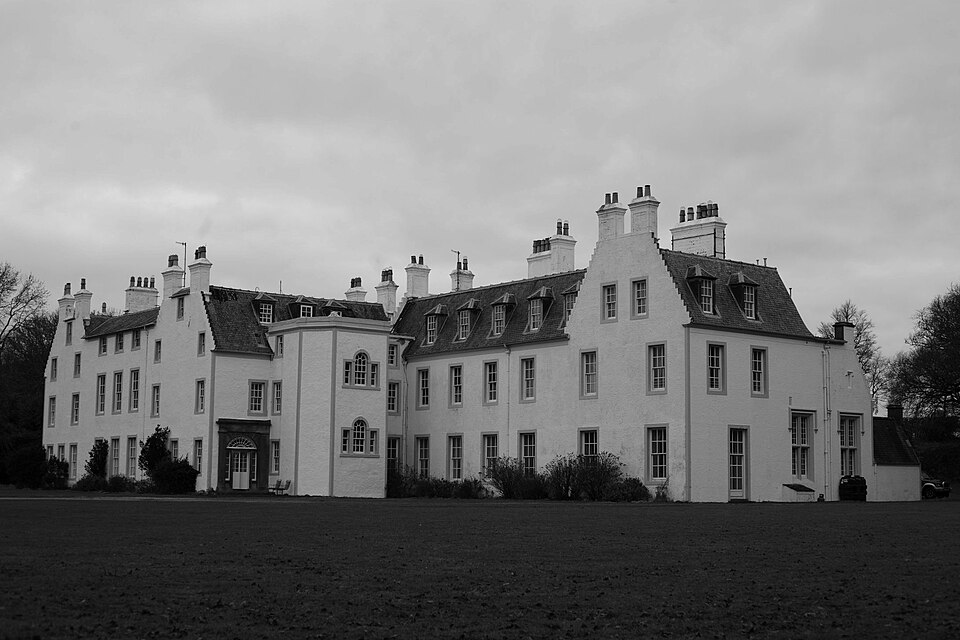
Photo: Haveyougotanypets / Wikimedia Commons / CC BY-SA 3.0 Islay House
Sir Hugh Campbell moved there after pulling down Dunyvaig.
What to look for
-
Rocky promontory
The castle occupies a point jutting into Lagavulin Bay.
-
16th-century ruins
Most visible remains belong to the later castle.
-
Older courtyard and keep
The site also includes a 13th-century courtyard and 15th-century keep.
Plan your visit
- Location
- 55.6336°N · 6.1231°W
- Terrain
- Rough ground — reasonable boots advised
Opening & admission
Check locally before travelling
- The ruin stands on a rocky promontory at Lagavulin Bay.
- The source gives no public access arrangements.
Nearby places
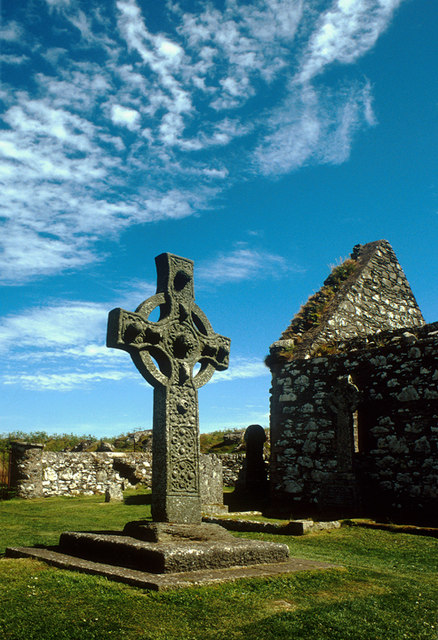
Tomb or burial place · Pictish & early medieval
Kildalton Cross and Chapel
Argyll and Bute
The high cross was carved probably in the second half of the 8th century AD, in a workshop tradition closely related to the contemporary crosses on…
- Near Port Ellen
- 1 min walk from car park
- Easy path
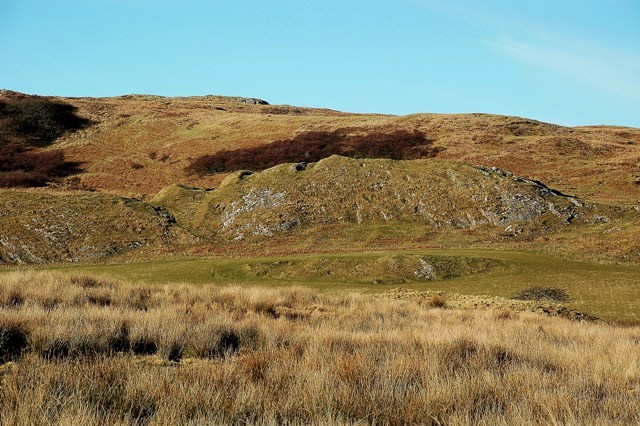
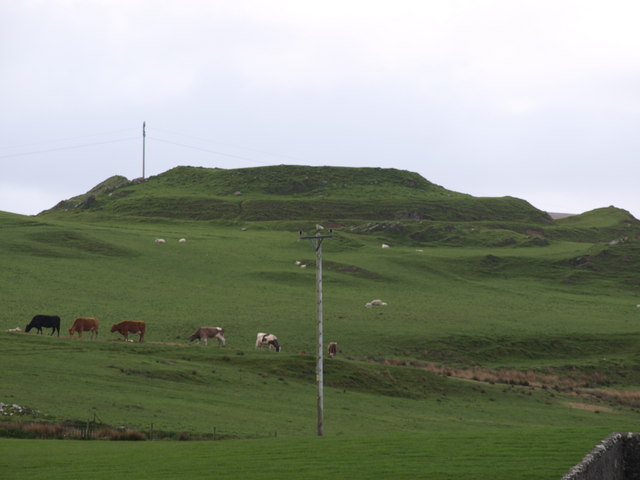
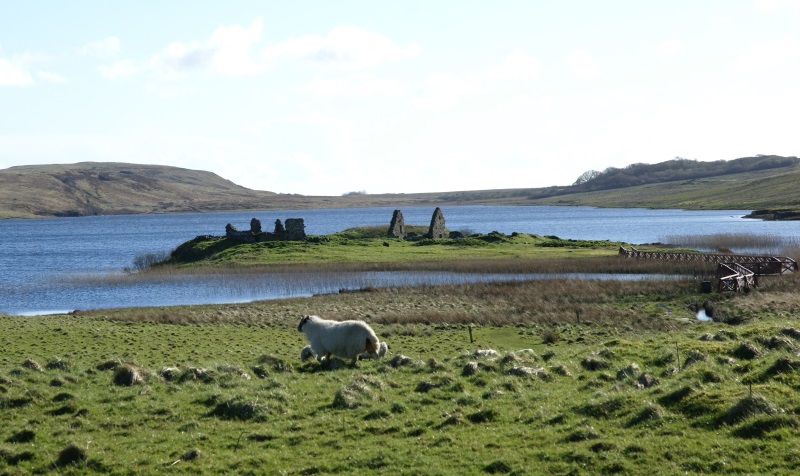
Building or ruin · Medieval
Finlaggan, Eilean Mor
Argyll and Bute
In the first half of the 7th century a monastic community was established on Eilean Mor, the largest of the three islands in Loch Finlaggan — eithe…
- Near Port Askaig
- 520 metres from car park
- Some walking
Questions people ask
- What is Dunyvaig Castle?
- It is a ruined castle on Lagavulin Bay, once a naval base of the Lords of the Isles and Clan Donald.
- What does Dunyvaig mean?
- Its Gaelic name Dùn Naomhaig is anglicised as Fort of the galleys.
- Who built the castle?
- The source says Somerled built a castle in the 12th century on top of an earlier fort or dùn.
- What survives today?
- Mainly 16th-century ruins survive, along with a 13th-century courtyard and 15th-century keep.
Sources
Explore more: Building or ruins · Medieval · Argyll and Bute
The Ancient Codex, in your pocket
Get the Pocket Codex app
Carry the directory with you — Dunyvaig Castle and thousands of ancient places across Britain and Ireland, offline, wherever you roam.