
A ruined 16th-century tower house stands on raised ground about 2 kilometres north of Kilmartin, at the head of Kilmartin Glen in Argyll and Bute. Its five-storey tower and adjoining three-storey hall house survive largely intact in their outer walls, presenting an unusually complete picture of 16th-century Scottish domestic architecture.
Carnasserie was built from 1565 by the reforming churchman John Carswell, using masons brought from Stirling. Though notionally raised for his patron the Earl of Argyll, Carswell intended it as his own residence. It was burnt during the aftermath of Argyll’s Rising in 1685 and never rebuilt.
What follows is drawn from published sources, with each claim labelled by how firmly it is established.
The name
The name is also recorded in the spelling Carnassarie. Over the entrance the castle bears the arms of the 5th Earl of Argyll with the Gaelic motto DIA LE UA NDUIBHNE, "God be with O'Duine", a reference to the semi-legendary ancestors of Clan Campbell.
History
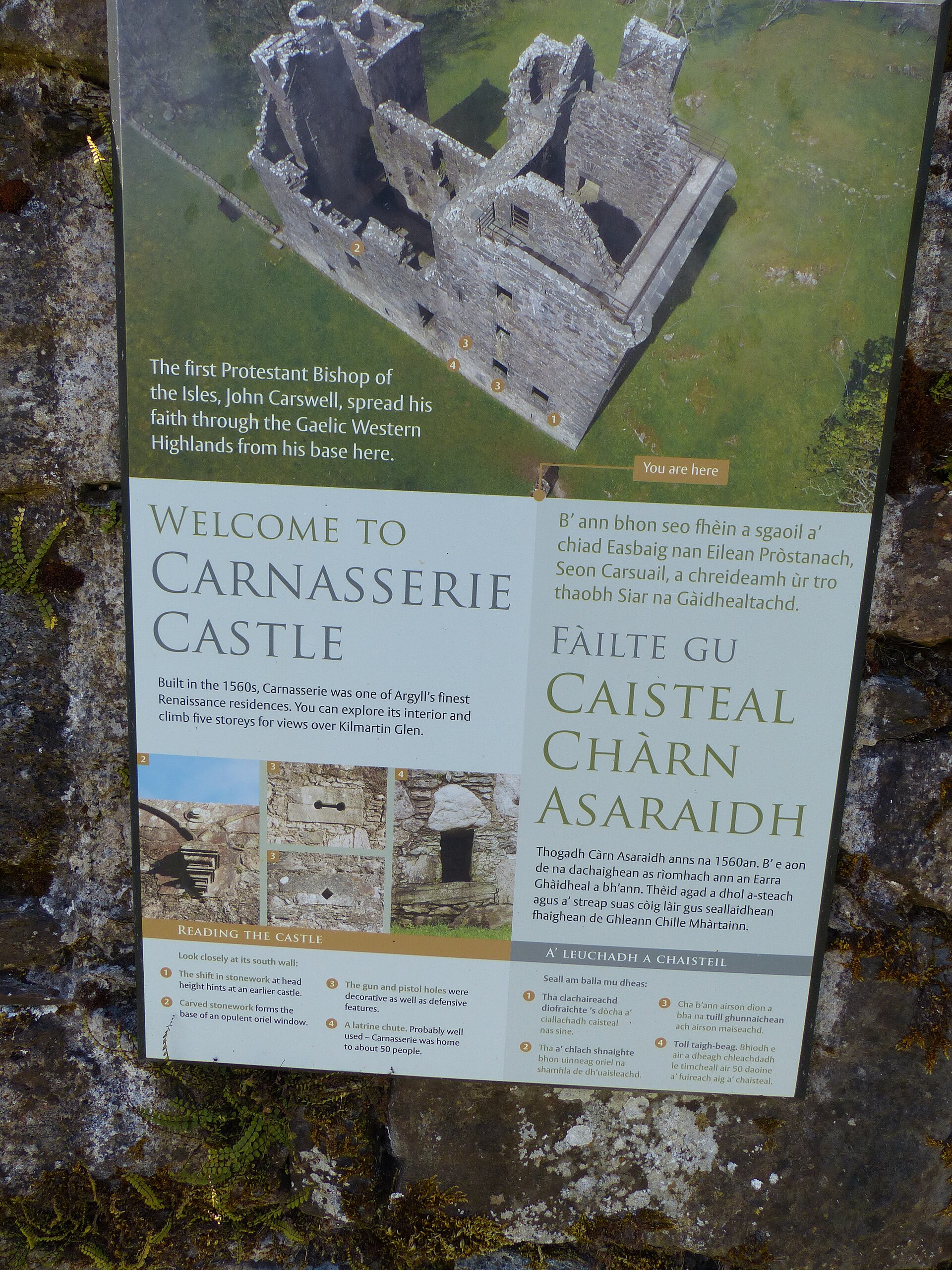
Construction began in 1565 for John Carswell, Rector of Kilmartin and later titular Bishop of the Isles, using masons brought from Stirling.
On Carswell's death in 1572 the castle passed to the Earl of Argyll.
In 1643 it was sold to Donald Campbell of Auchinleck.
Duncan Campbell, a successor, was among the few to actively support Argyll's Rising against James VII in 1685; the Atholl Raid that followed the Rising's failure devastated large parts of Argyllshire.
In 1690 Duncan Campbell petitioned Parliament claiming Maclean clansmen had burnt Carnasserie Castle, stolen 2,000 cattle and murdered his uncle Alexander Campbell of Strondour. The castle was never rebuilt.
In the 19th century the estate was sold to the Malcolms of Poltalloch, who also own nearby Duntrune Castle.
People
-
John Carswell
Reforming churchman who built the castle; Rector of Kilmartin, Chancellor of the Chapel Royal at Stirling, and later titular Bishop of the Isles. He published the first book printed in Scottish Gaelic, a translation of John Knox's Book of Common Order.
-
Earl of Argyll (5th Earl)
Carswell's patron; his arms appear over the entrance and the castle passed to the Earl on Carswell's death in 1572.
-
Donald Campbell of Auchinleck
Bought the castle in 1643.
-
Duncan Campbell
Successor who supported Argyll's Rising in 1685; financially ruined after the Atholl Raid, he petitioned Parliament in 1690 over the castle's burning.
-
Sir Duncan Campbell, 4th Baronet, and Lady Henrietta Lindsay
Commemorated by the inscription SDC LHL 1681 on a courtyard archway; their support for Argyll's uprising led to the castle's destruction.
Cultural influences
-
Renaissance detailing
The castle is noted for its unusual plan and renaissance detailing, with masons brought from Stirling giving it decorative refinement uncommon in western Highland towers.
Connections
-
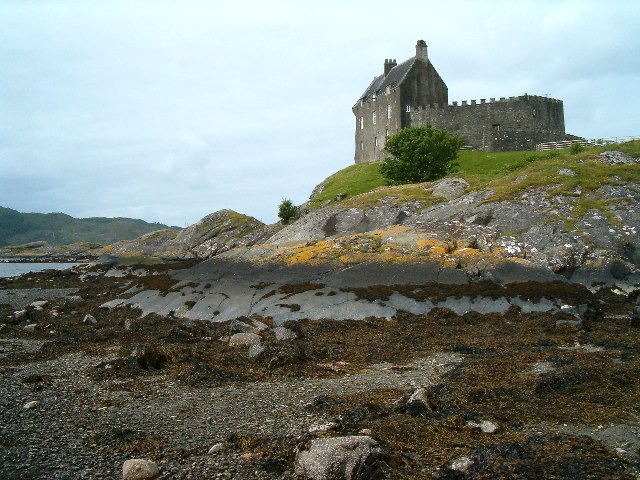
Photo: Patrick Mackie / Wikimedia Commons / CC BY-SA 2.0 Duntrune Castle
Nearby castle also owned by the Malcolms of Poltalloch, who acquired the Carnasserie estate in the 19th century.
-
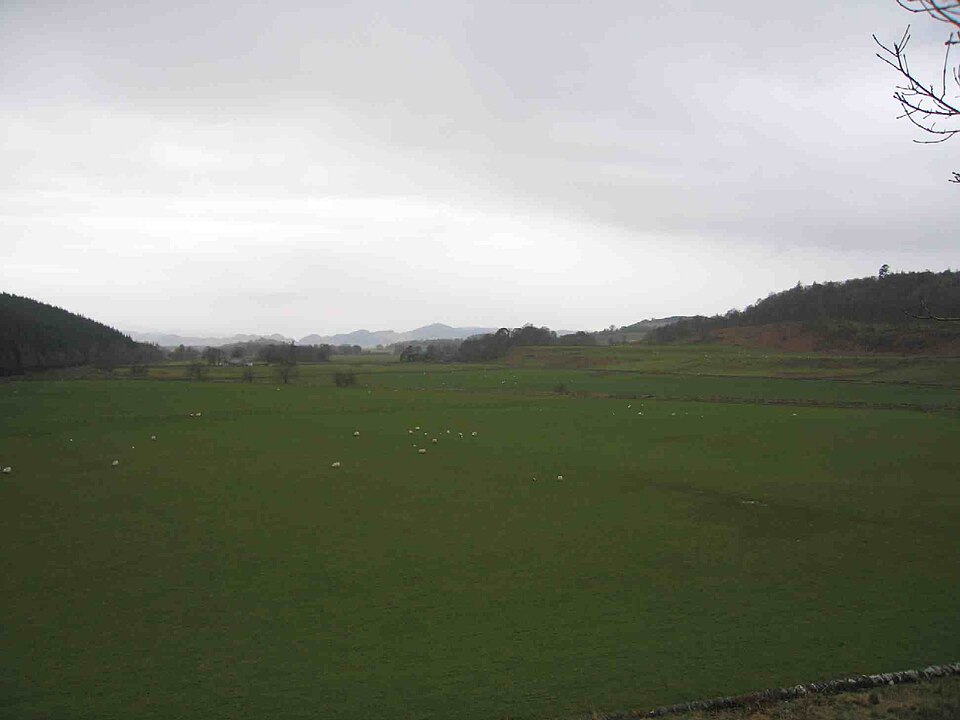
Photo: Laurence Nolan, aka User:Lnolan / Wikimedia Commons / CC BY 2.5 Kilmartin Glen
The castle stands at the head of the glen, close to a strategic pass, about 2 km north of Kilmartin.
What to look for
-
Double keyhole gunloops
The exterior displays numerous "double keyhole" gunloops, alongside decorative string courses and corbelling.
-
Argyll arms and Gaelic motto
Over the entrance are the arms of the 5th Earl of Argyll with the Gaelic motto DIA LE UA NDUIBHNE, framed by blank panels on carved supports.
-
Carved drawing-room fireplace
The drawing room in the tower house retains its stone floor and a large fireplace with finely carved stone decoration.
-
Basement kitchen
At basement level are the remains of cellars and a kitchen with a large fireplace and a water inlet.
-
Carved drain spouts
Fragments of carved drain spouts recovered from the site are on display in the cellars.
-
The 1681 courtyard archway
In the partially walled courtyard garden to the south and west, an archway bears the inscription SDC LHL 1681 for Sir Duncan Campbell and Lady Henrietta Lindsay.
-
Parapet rounds and cap-house
At the top of the tower are the remains of open rounds along the parapet and a cap-house above the stair.
Plan your visit
- Location
- 56.1515°N · 5.4809°W
Nearby places
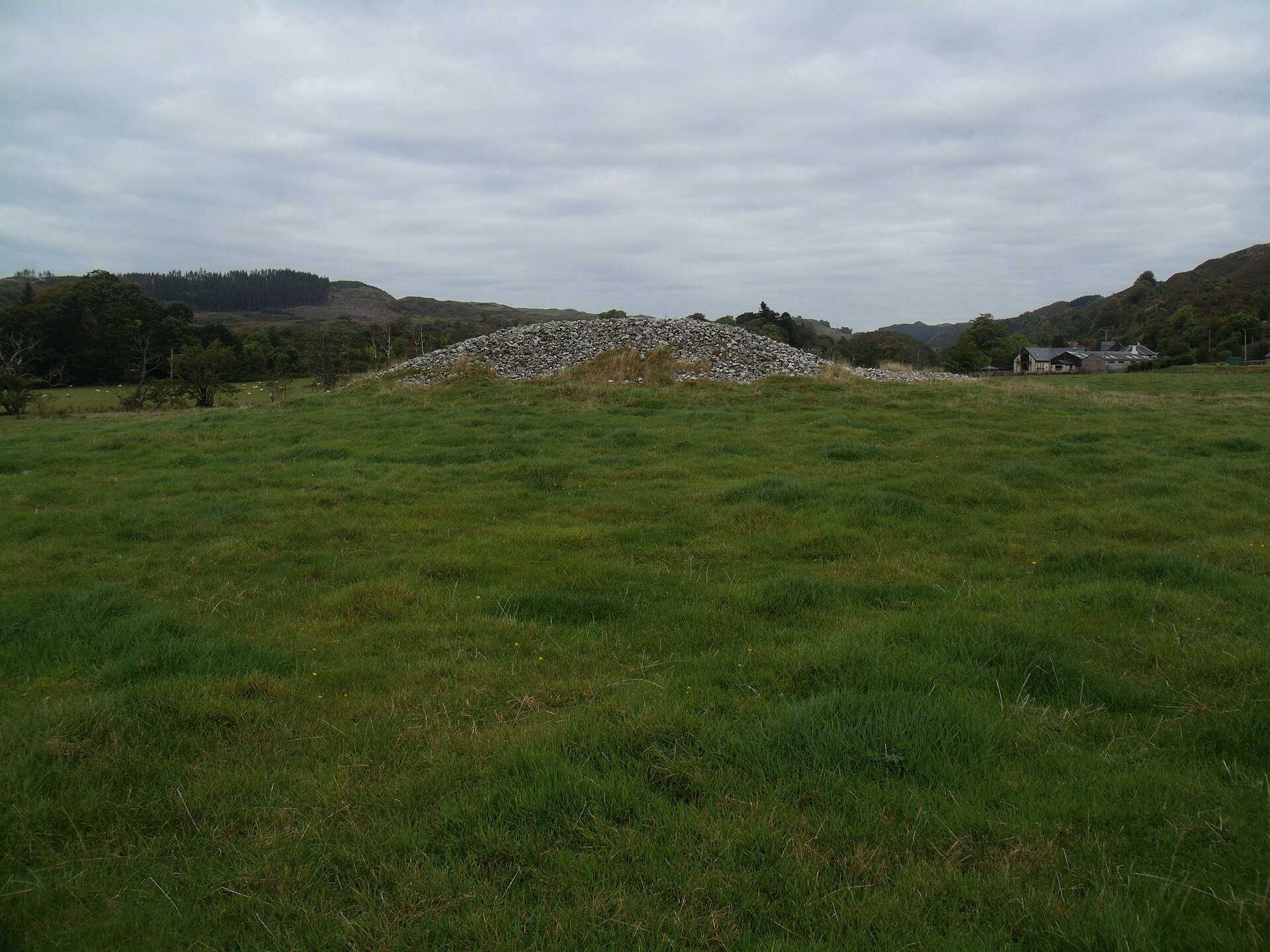
Tomb or burial place · Prehistoric
Glebe Cairn
Argyll and Bute
The northernmost cairn in Kilmartin Glen's Bronze Age linear cemetery, one of the richest concentrations of prehistoric ritual and burial monuments…
- Easy path
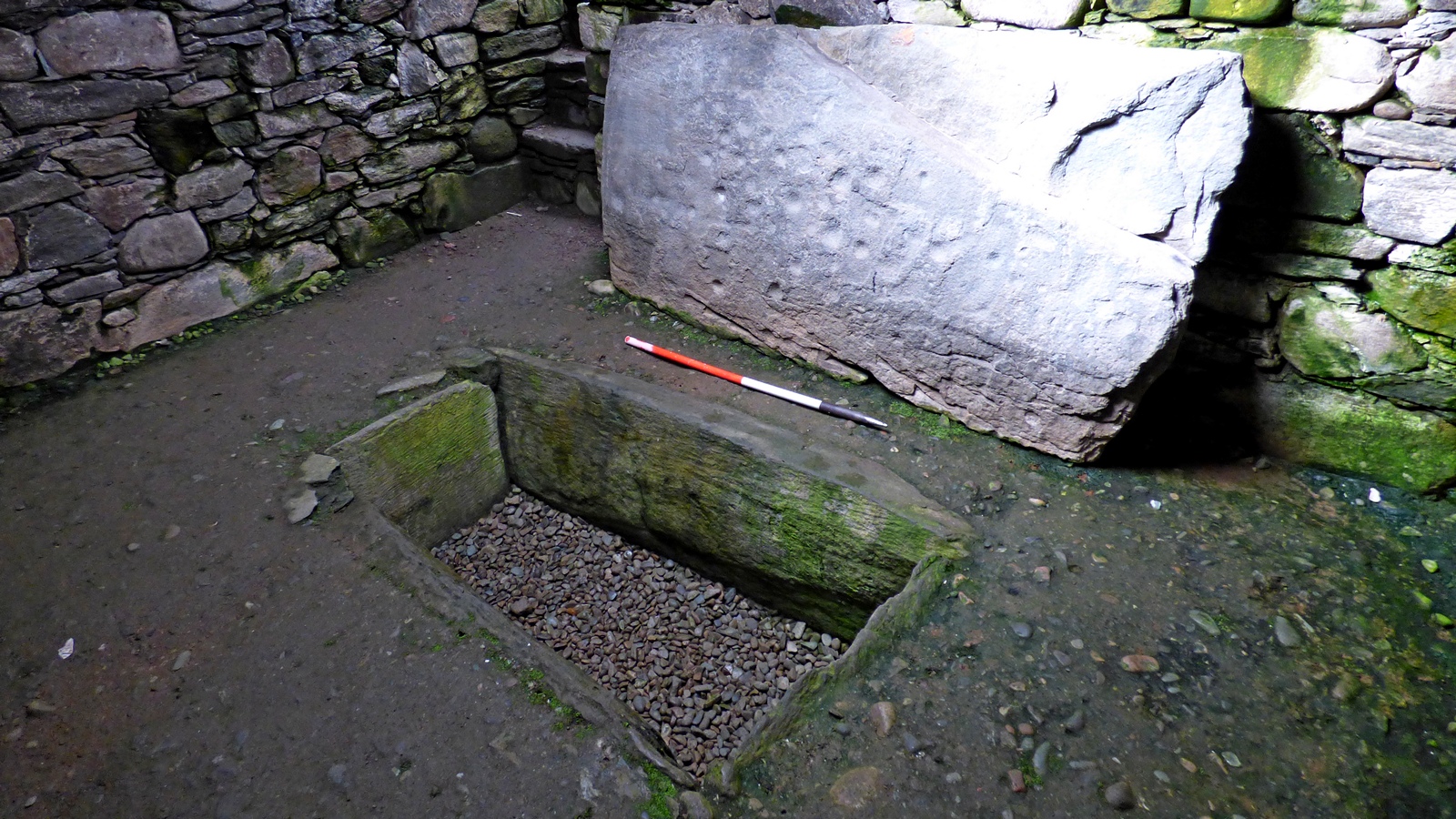
Tomb or burial place · Prehistoric
Nether Largie North Cairn
Argyll and Bute
Its carved capstone, marked with dozens of cup-marks and ten axe-head symbols, makes it one of the most vividly decorated Bronze Age burial monumen…
- Easy path
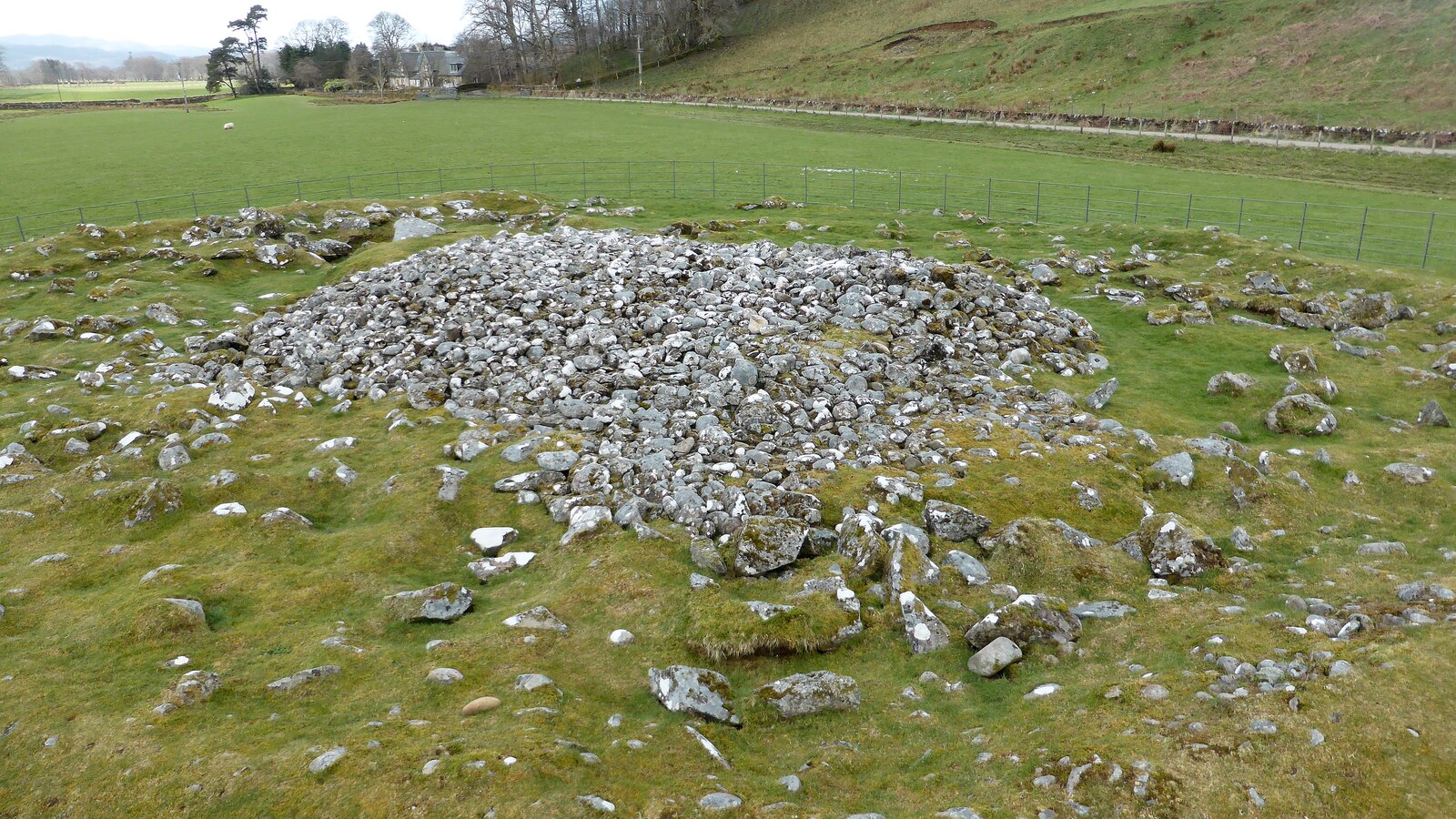
Tomb or burial place · Prehistoric
Nether Largie Mid Cairn
Argyll and Bute
It forms a central link in the Kilmartin Glen linear cemetery, one of Scotland's most concentrated groupings of prehistoric burial monuments.
- Easy path
Questions people ask
- Who built Carnasserie Castle?
- It was built from 1565 by John Carswell, a reforming churchman who was Rector of Kilmartin and later titular Bishop of the Isles, and who published the first book printed in Scottish Gaelic.
- Why is the castle a ruin?
- It was burnt in the aftermath of Argyll's Rising against James VII in 1685. A 1690 petition claimed Maclean clansmen destroyed it; though the outer walls survive largely undamaged, it was never rebuilt.
- Can the castle be visited?
- Yes. Carnasserie is protected as a scheduled monument, is in the care of Historic Environment Scotland, and is open to the public.
- Where is Carnasserie Castle?
- It stands on raised ground about 2 kilometres north of Kilmartin in Argyll and Bute, at the head of Kilmartin Glen, at grid reference NM837009.
- What makes its architecture notable?
- Only slightly altered in the late 17th century, it presents an accurate picture of 16th-century architecture, combining a five-storey tower house with a longer three-storey hall house and renaissance decorative detail.
Sources
- Wikipedia: Carnasserie Castle (accessed 2026-07-18)
- Historic Environment Scotland: Carnasserie Castle, castle, garden, enclosure and cup-marked stone (SM90061) (accessed 2026-07-18)
- Gazetteer for Scotland: Carnasserie Castle (accessed 2026-07-18)
Explore more: Building or ruins · Medieval · Argyll and Bute
The Ancient Codex, in your pocket
Get the Pocket Codex app
Carry the directory with you — Carnasserie Castle and thousands of ancient places across Britain and Ireland, offline, wherever you roam.