
A vitrified wall crowns Tap o’ Noth above a much larger early medieval settlement. Tap o’ Noth is a hillfort, a defended hilltop enclosure, whose burned-stone summit fort sits within a broader Pictish-period landscape.
The site has become central to understanding early medieval power in north-east Scotland. Drone and lidar evidence suggest a vast settlement, while finds and nearby Rhynie material point to high-status contacts, metalworking, and possible royal connections.
What follows is drawn from published sources, with each claim labelled by how firmly it is established.
History
Tap o’ Noth is a hill and hillfort south of Huntly in Aberdeenshire. The summit fort is the second highest fort in Scotland according to the pack.
Its main feature is a well-preserved vitrified wall, meaning stonework altered by intense heat. Finds from the site include a stone axe head and a decorated bronze rein-ring.
The vitrified fort sits within another rampart enclosing a much larger settlement area. The outer rampart was constructed in the fifth to sixth centuries AD.
Large-scale settlement within the outer area may date back to the third century AD. James Macdonald excavated the vitrified summit fort in the 1880s.
The University of Aberdeen Northern Picts project investigated the summit fort, larger rampart, and house platforms between 2017 and 2022. Drone photographs and lidar suggest as many as 800 huts.
The site has been described as the largest known settlement in early medieval post-Roman Britain.
People
-
James Macdonald
antiquarian who excavated the summit fort in the 1880s.
-
Northern Picts: Rhynie Environs Project
University of Aberdeen project that investigated the site from 2017 to 2022.
Plan your visit
- Location
- 57.3514°N · 2.8586°W
- Access
- Open access
- Terrain
- Rough ground — reasonable boots advised
Opening & admission
The source pack does not provide reliable current admission details; verify before travelling.
- The hillfort is on a summit south of Huntly; expect rough upland conditions.
Nearby places
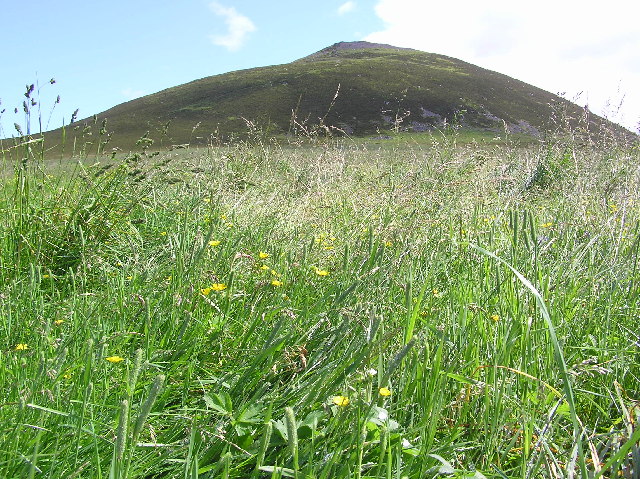
Fortified place · Iron Age
Tap o' Noth Hillfort
Aberdeenshire
Tap o' Noth is a hillfort on the summit of its hill in Aberdeenshire - the second highest fort in Scotland - whose principal feature is a well-pres…
- Near Rhynie
- 50 min walk from car park
- Some walking
Fortified place · Medieval
Huntly Castle
Aberdeenshire
Its ruined palace preserves some of the finest heraldic stone carving in Scotland alongside six centuries of the Gordon family's turbulent history.
Questions people ask
- What is Tap o’ Noth?
- It is a hillfort on a summit south of Huntly in Aberdeenshire.
- What does vitrified wall mean?
- It means stonework that has been affected or fused by intense heat.
- Why is the wider settlement important?
- Drone and lidar evidence suggest as many as 800 huts, making it possibly the largest known early medieval settlement in post-Roman Britain.
- What links it to high status?
- The nearby Rhynie landscape has evidence for Mediterranean wine, western French glass vessels, intensive metalwork, and possible royal connections.
Sources
Explore more: Fortified places · Iron Age · Aberdeenshire
The Ancient Codex, in your pocket
Get the Pocket Codex app
Carry the directory with you — Tap o' Noth and thousands of ancient places across Britain and Ireland, offline, wherever you roam.