
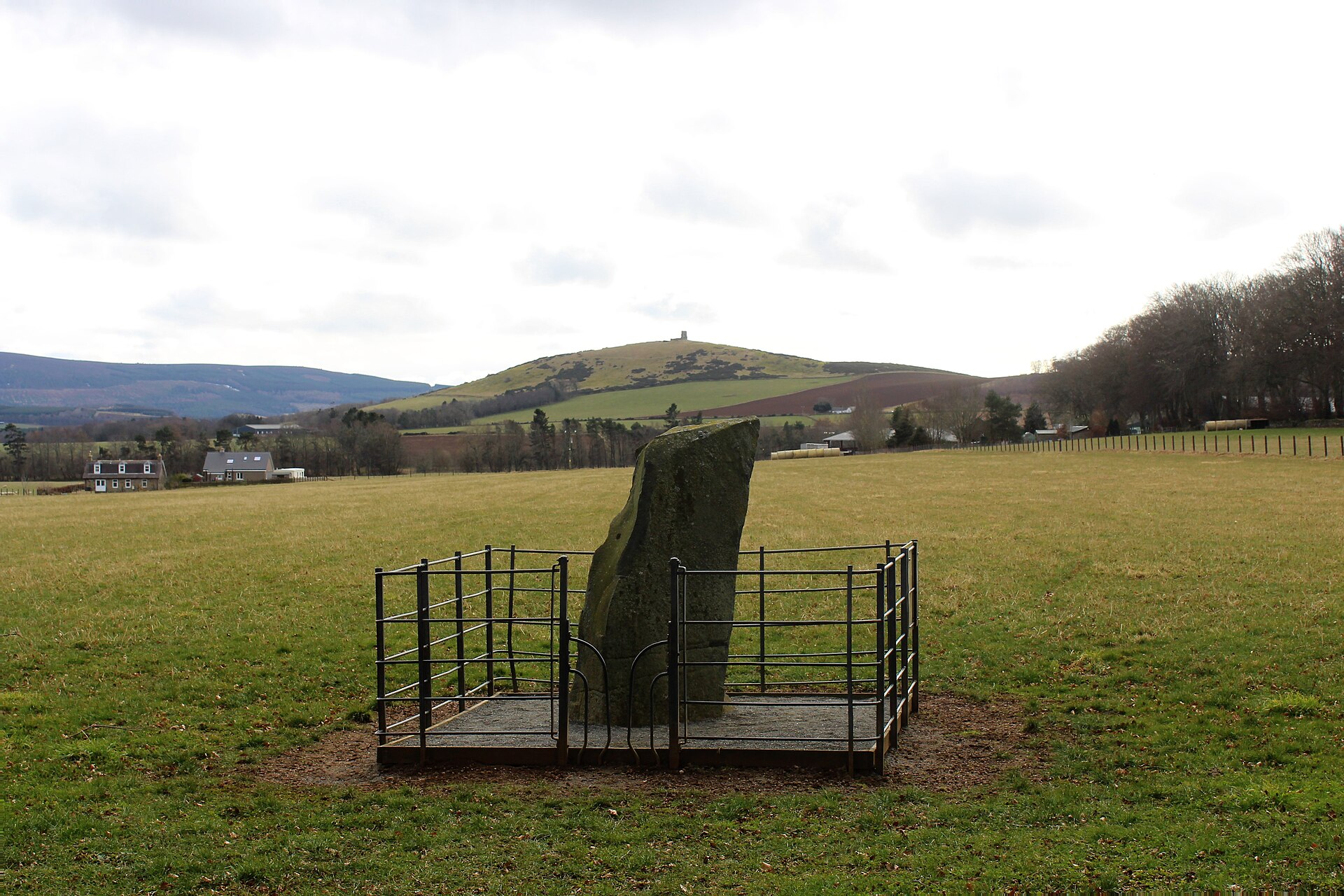
A rough grey gneiss slab stands in a field at Ardlair, its incised symbols carrying Pictish identity into an older stone landscape. The Ardlair Stone is a Class I Pictish stone, meaning an early symbol stone without a Christian cross.
The pack is brief, so the entry stays close to what is secure: the stone was identified as Pictish in 1901, bears three incised symbols, and has been associated by some with nearby stones proposed as a possible recumbent stone circle.
What follows is drawn from published sources, with each claim labelled by how firmly it is established.
History
The Ardlair Stone stands in a field at Ardlair, Kennethmont, Aberdeenshire.
It was identified as Pictish in 1901.
The stone is made from rough-hewn grey gneiss.
Its incised symbols include the Pictish beast, the tuning fork, and the mirror.
The stone is associated with other nearby stones that some have proposed as remains of a recumbent stone circle.
Plan your visit
- Location
- 57.3385°N · 2.7409°W
- Access
- Open access
- Terrain
- Easy going
Opening & admission
The source pack does not provide reliable current admission details; verify before travelling.
- The stone stands in a field; the pack gives no current public access details.
Nearby places
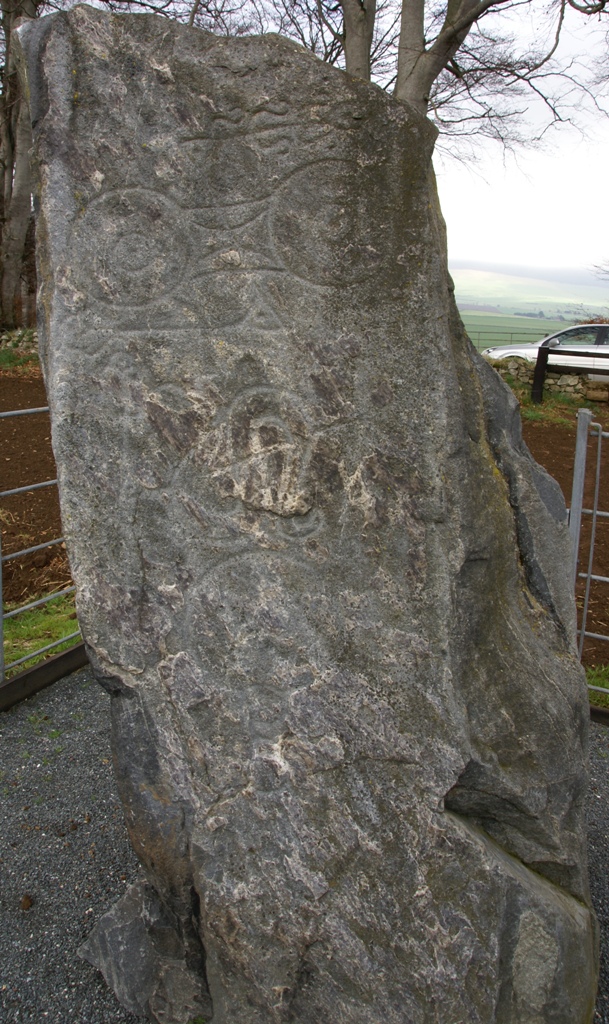
Carved stone · Pictish & early medieval
Picardy Symbol Stone
Aberdeenshire
The Picardy Symbol Stone is a Pictish symbol stone near Huntly, Aberdeenshire. Its carvings are dated to around AD 600, and it is a scheduled monum…
- Near Insch
- Easy path
Questions people ask
- What is the Ardlair Stone?
- It is a Class I Pictish symbol stone standing at Ardlair in Aberdeenshire.
- What does Class I Pictish stone mean?
- It means an early Pictish symbol stone without a cross as its main design.
- What symbols are carved on it?
- The pack lists the Pictish beast, tuning fork, and mirror symbols.
- When was it identified as Pictish?
- It was identified as Pictish in 1901.
Sources
Explore more: Carved stones · Pictish & early medieval · Aberdeenshire
The Ancient Codex, in your pocket
Get the Pocket Codex app
Carry the directory with you — Ardlair Stone and thousands of ancient places across Britain and Ireland, offline, wherever you roam.