
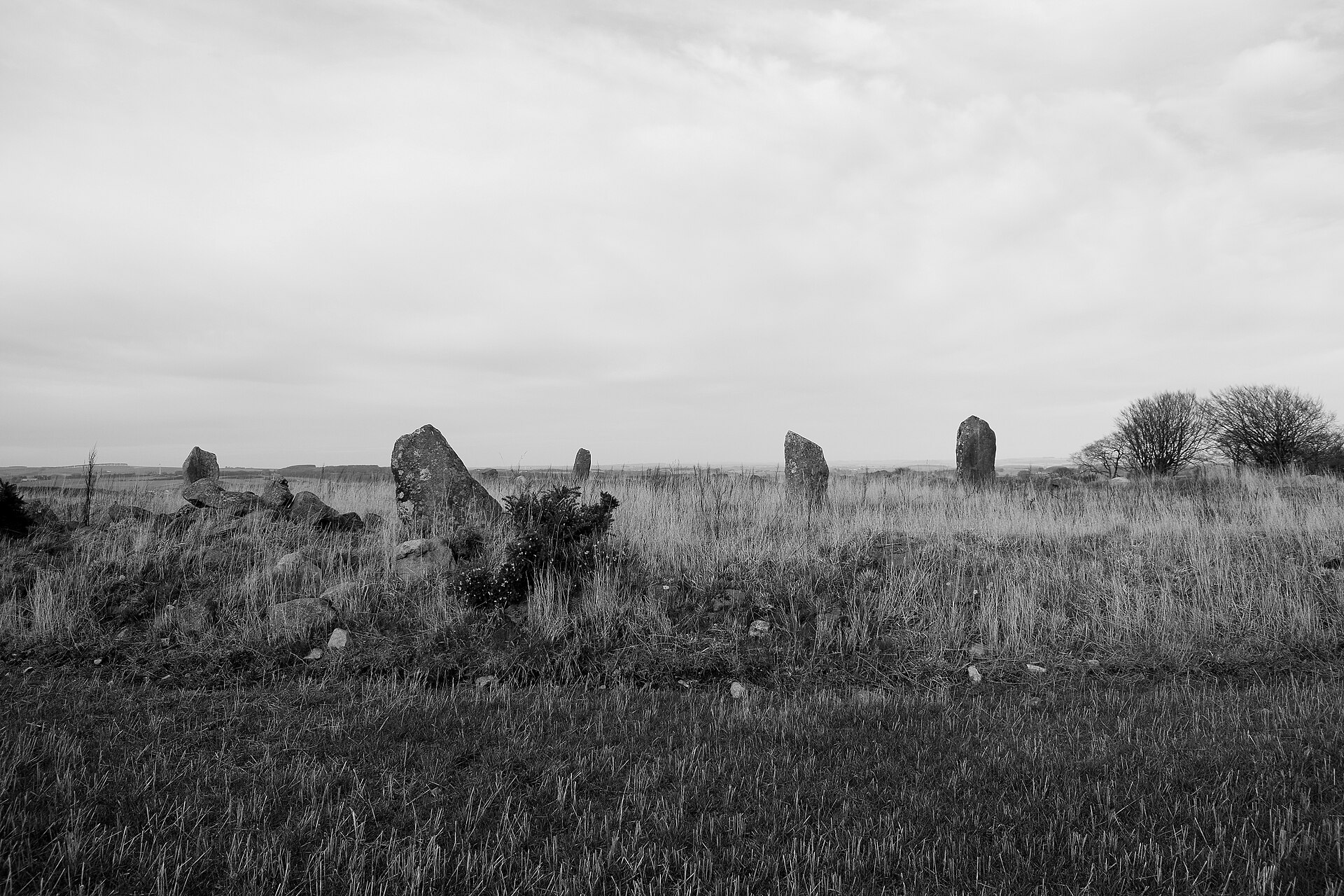
A broken recumbent and three other stones stand on arable land near Kirkton of Bourtie. Kirkton of Bourtie stone circle is a damaged recumbent circle whose largest slab is recorded as the longest known stone of its kind.
The site preserves a story of recent loss as well as prehistoric construction. Late eighteenth-century writing remembered several circles in the area, but by the Ordnance Survey mapping of 1867 Kirkton of Bourtie had already been reduced to its present four stones.
What follows is drawn from published sources, with each claim labelled by how firmly it is established.
History
Kirkton of Bourtie stone circle stands north-east of Inverurie. The circle is badly damaged, with the eastern flanker, recumbent, and two western stones surviving.
The broken recumbent is the longest known such stone according to the source pack. The recumbent is aligned with the major southern moonset.
Some stones possibly from the circle may have been incorporated into a nearby gateway and wall. Fragmentary cairns are visible within the ring.
The Reverend Thomas Shepherd wrote in the late eighteenth century that three circles were present in the area. By 1867 the circle had already been reduced to four stones.
The circle was scheduled in 1925, but its interior remained under the plough until as late as 1999.
People
-
Rev. Thomas Shepherd
late eighteenth-century writer who recorded three circles in the area.
Plan your visit
- Location
- 57.3141°N · 2.3321°W
- Access
- Visible from a public way
- Terrain
- Easy going
Opening & admission
The source pack does not provide reliable current admission details; verify before travelling.
- The circle stands on arable land near a minor road; verify access before travelling.
Nearby places
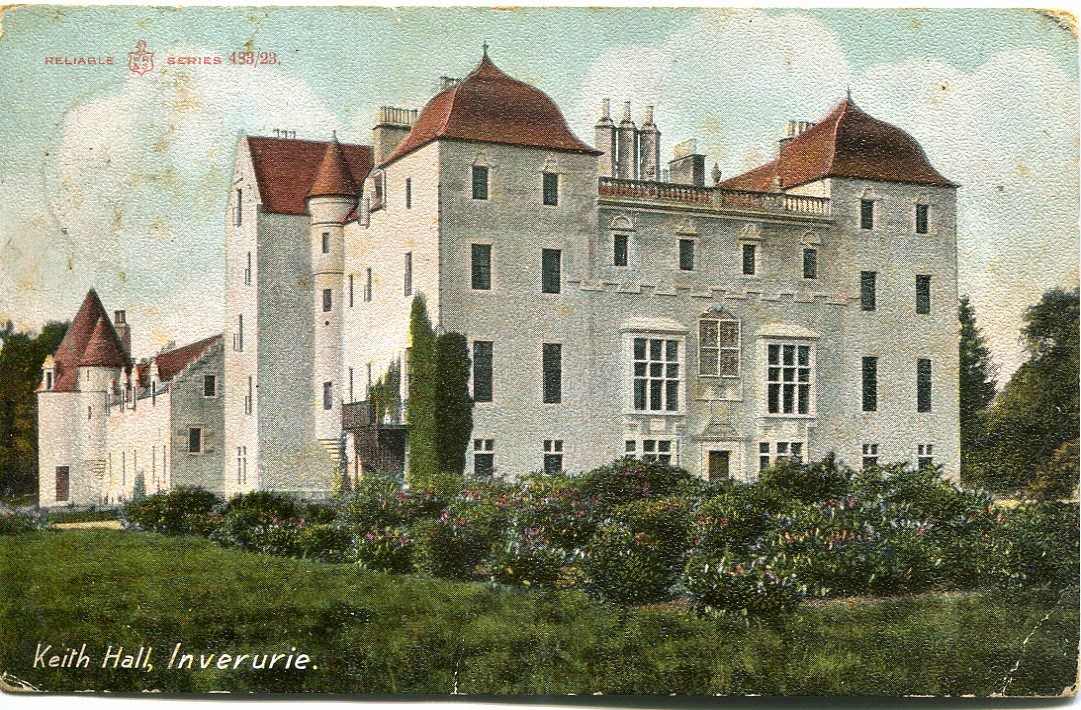
Building or ruin · Medieval
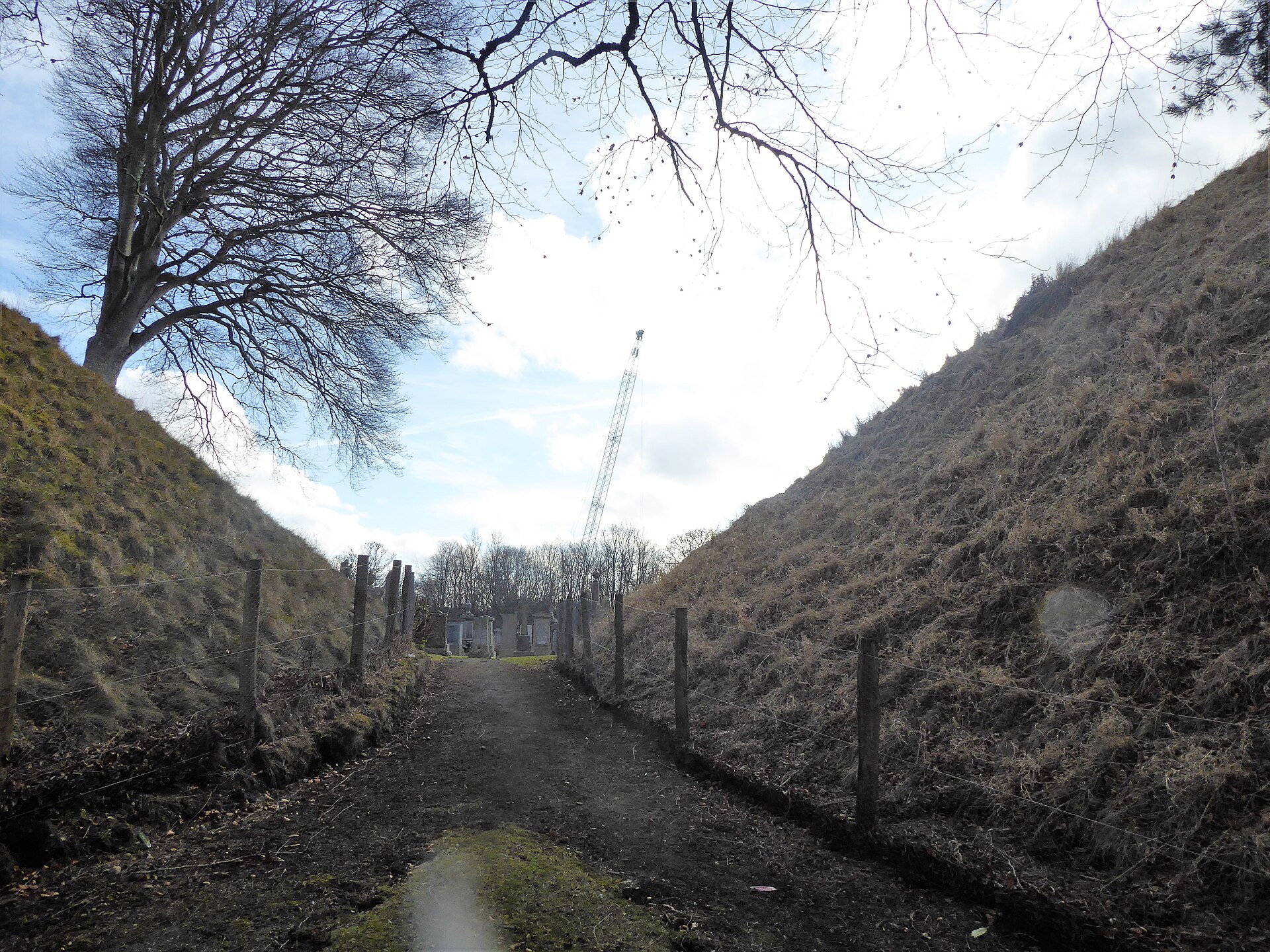
Bass of Inverurie
Aberdeenshire
A rare surviving twelfth-century motte-and-bailey earthwork that served as the administrative heart of the medieval Garioch.
Carved stone · Pictish & early medieval
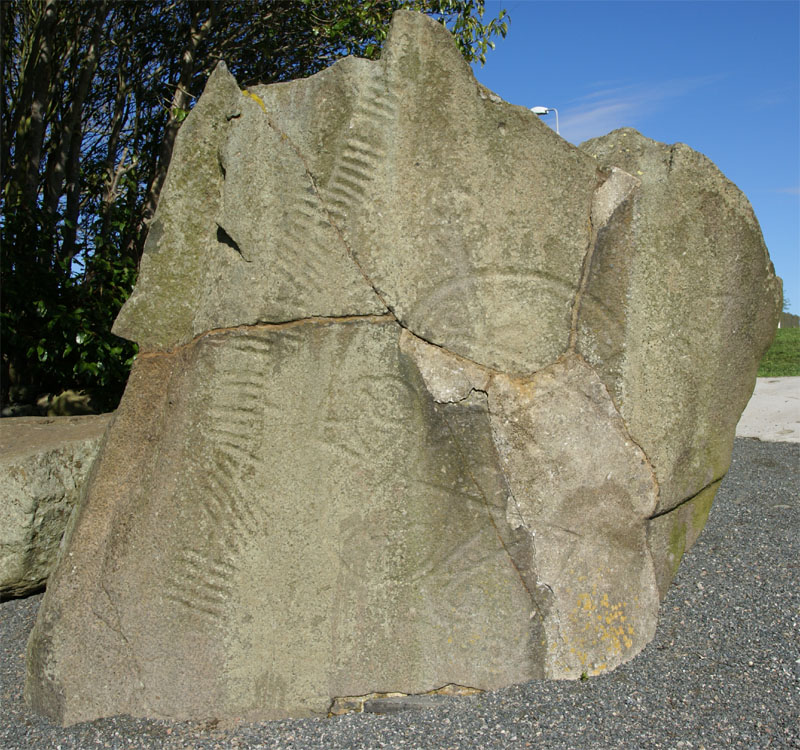
Brandsbutt Stone
Aberdeenshire
The Brandsbutt Stone is a Class I Pictish symbol stone in Inverurie, Aberdeenshire, a large block of whinstone bearing two incised Pictish symbols…
- Near Inverurie
- 1 min walk from car park
- Easy path
Questions people ask
- What survives at Kirkton of Bourtie?
- The eastern flanker, the broken recumbent, and two western stones survive.
- Why is the recumbent notable?
- The source says it is the longest known recumbent stone.
- What happened to the other stones?
- They are missing, and some stones that may be from the circle have been built into a nearby gateway and wall.
- Was the site protected from ploughing early?
- No. Although scheduled in 1925, the interior remained under the plough until as late as 1999.
Sources
Explore more: Tomb or burial places · Prehistoric · Aberdeenshire
The Ancient Codex, in your pocket
Get the Pocket Codex app
Carry the directory with you — Kirkton of Bourtie stone circle and thousands of ancient places across Britain and Ireland, offline, wherever you roam.