
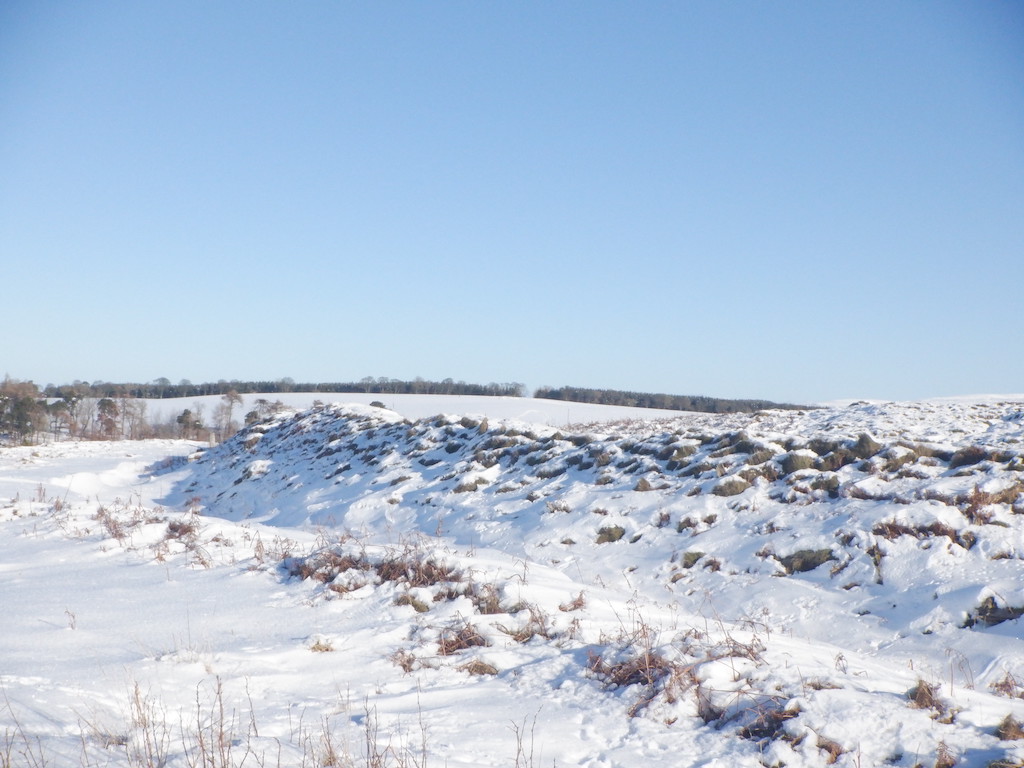
A robbed mass of stones lies on Byrecleugh Rig in the Lammermuir Hills. The Mutiny Stones form a long cairn, a prehistoric burial or ceremonial mound made of stones, now reduced by centuries of stone-taking.
The Mutiny Stones matter because the monument keeps both deep prehistory and local story in one rough heap. Its likely third-millennium BC origin, later robbing for walls and stells, and name from mittenfu’ o stones show how a cairn can be reshaped by use, memory, and folklore.
What follows is drawn from published sources, with each claim labelled by how firmly it is established.
History
The long cairn was probably built in the third millennium BC.
The monument stands on Byrecleugh Rig in the Lammermuir Hills.
Stone was repeatedly robbed from the cairn for shepherds' stells and dry-stone walls.
Local tradition explained the stones as a handful dropped by the devil.
The name developed from the Scots phrase mittenfu' o stones through Meeting Stones to Mutiny Stones.
People
-
James Hewat
Published an account of the monument in Proceedings of the Society of Antiquaries of Scotland.
Connections
-
Lammermuir Hills
Upland setting of the monument.
-
Longformacus
Nearest centre of habitation mentioned in the source.
-
Byrecleugh Rig
Rig or ridge on which the monument stands.
What to look for
-
Long cairn
A long cairn is an elongated prehistoric mound built from stone.
-
Robbed profile
The present form is lower than earlier accounts describe because stone was removed.
-
Shepherding traces
Stells are small stone livestock shelters built in upland grazing landscapes.
-
Name layers
The changing name preserves Scots speech, local legend, and later misunderstanding.
Plan your visit
- Location
- 55.8230°N · 2.6041°W
- Access
- Open access
- Terrain
- Rough ground — reasonable boots advised
Opening & admission
- Remote upland cairn in the Lammermuir Hills; expect rough moorland conditions.
Nearby places
Fortified place · Medieval
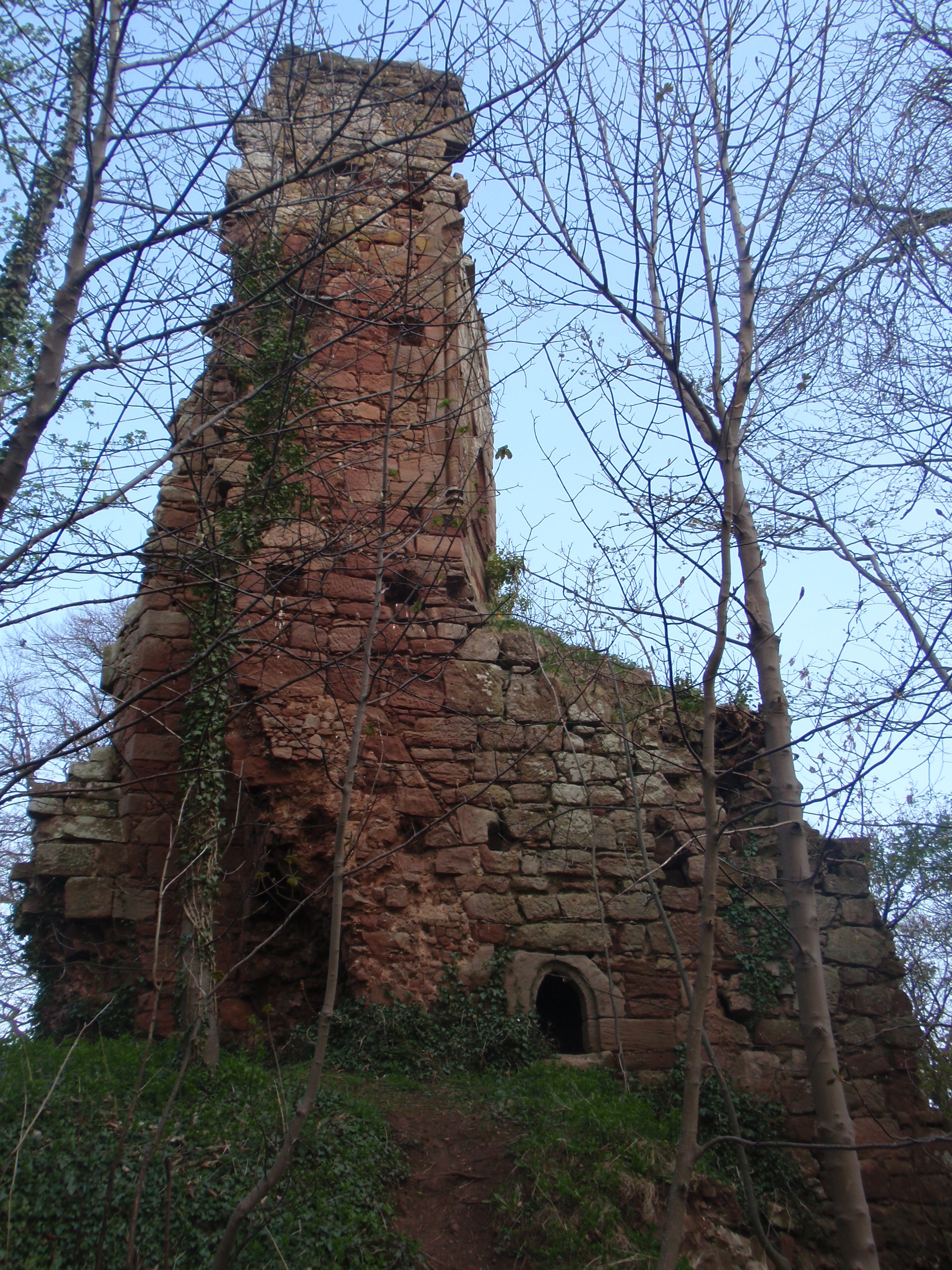
Yester Castle
East Lothian
Its subterranean Goblin Ha' is a rare surviving example of medieval Gothic vaulting, wrapped in centuries of local legend about its wizard builder.
Fortified place · Iron Age
Edin's Hall Broch, Fort and Settlement
Scottish Borders
The hilltop on the northeast slope of Cockburn Law was first fortified in the pre-Roman Iron Age, when double ramparts and ditches enclosed an oval…
- Near Duns
- 1.8 km from car park
- Some walking
Questions people ask
- What are the Mutiny Stones?
- They are a prehistoric long cairn in the Lammermuir Hills.
- How old are the Mutiny Stones?
- The cairn is thought to date to the third millennium BC.
- Why is it called Mutiny Stones?
- The name is a corruption of the Scots phrase mittenfu' o stones, linked to a local legend about dropped boulders.
- Has the cairn changed?
- Yes. Stone-robbing for stells and dry-stone walls reduced its height and form.
Sources
Explore more: Tomb or burial places · Prehistoric · Scottish Borders
The Ancient Codex, in your pocket
Get the Pocket Codex app
Carry the directory with you — Mutiny Stones and thousands of ancient places across Britain and Ireland, offline, wherever you roam.