
A dramatically sited Borders stronghold whose repeated changes of hand trace the long violence of the Anglo-Scottish frontier, and whose ruins are thought to have inspired Scott's Wolf's Crag.
Fast Castle clings to a narrow promontory on the Berwickshire coast, some four miles north-west of Coldingham, where cliffs of around forty-five metres fall away to the North Sea on either side. The setting is the defence: a stronghold reached only by a drawbridge thrown across a ravine and guarded by a barbican, with a pulley and basket to lower supplies to the water below. First recorded in 1333, the castle changed hands repeatedly across the turbulent Anglo-Scottish frontier. An English garrison held it in 1346; Patrick Dunbar recovered it for Scotland in 1410; and it was taken again during the Rough Wooing of 1547. Margaret Tudor lodged here in 1503 on her way to marry James IV, and Mary, Queen of Scots visited in 1566. For centuries the Home family controlled it, and George Home, 4th Lord Home, rebuilt the castle in 1522 after its destruction in 1515. It later passed to Robert Logan of Restalrig, who in 1594 engaged the mathematician John Napier to hunt for buried treasure within its walls; none was found. Little now survives beyond foundations and a stretch of the north-east wall. Sir Walter Scott is thought to have drawn on the ruin for the Wolf’s Crag of his novel The Bride of Lammermoor.
What follows is drawn from published sources, with each claim labelled by how firmly it is established.
What to look for
-
Foundations and a surviving section of the north-east wall, all that remains of the former courtyard and keep
-
The narrow ravine once crossed by a drawbridge and defended by a barbican
-
Cliffs of roughly forty-five metres dropping to the North Sea on either side of the promontory
-
The name's older form, 'Fause' (False) Castle, tied to a legend of lights luring ships onto the rocks below
Plan your visit
- Location
- General area near Scottish Borders, Scottish Borders
This is a sensitive or fragile site, so we show only its general area. Please check official heritage sources for access before visiting, and take care not to disturb it.
Nearby places
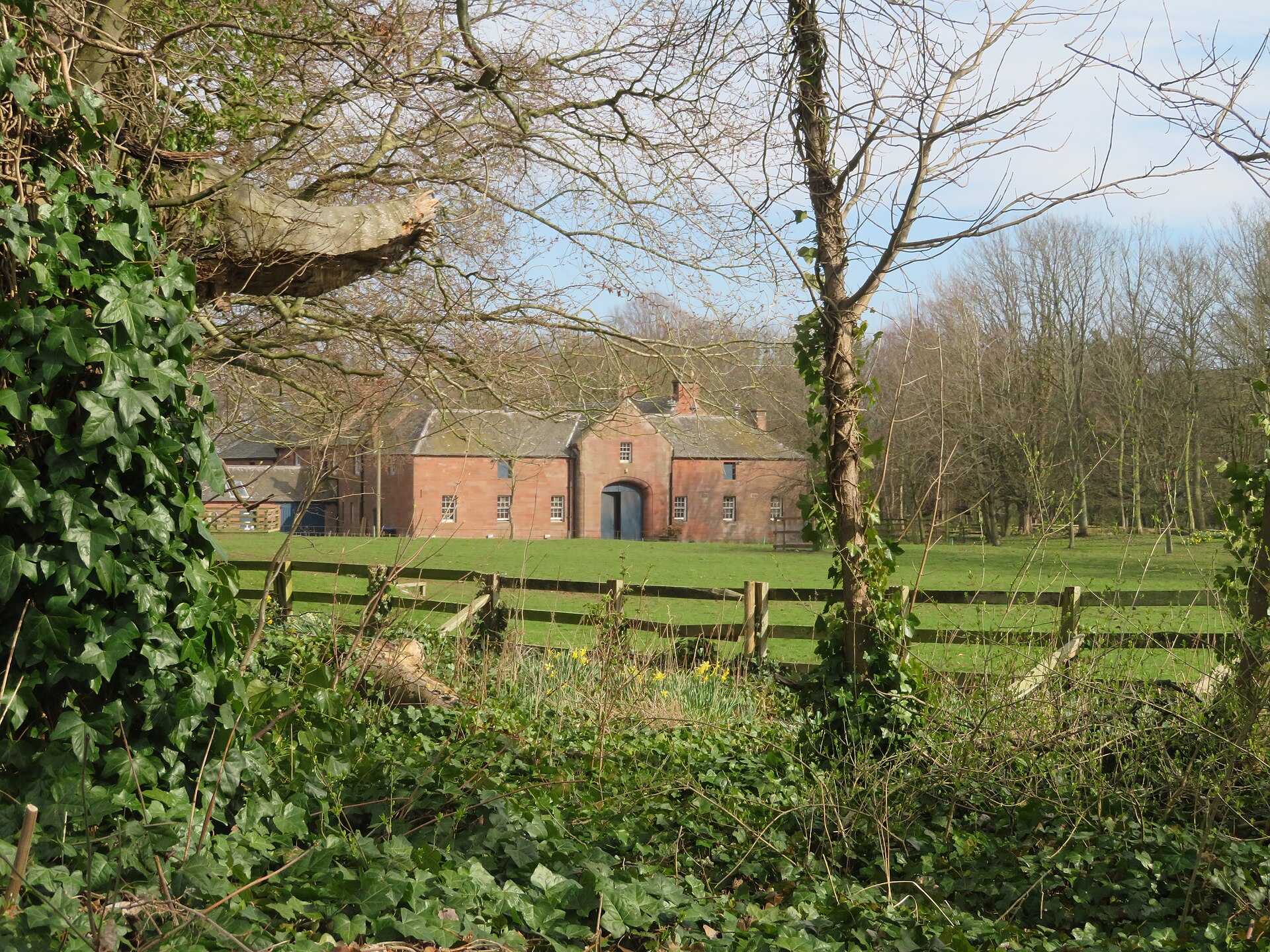
Minor monument · Medieval
Dovecot, Ayton Castle
Scottish Borders
Dovecote with HES-listed pre-1800 evidence (1745).
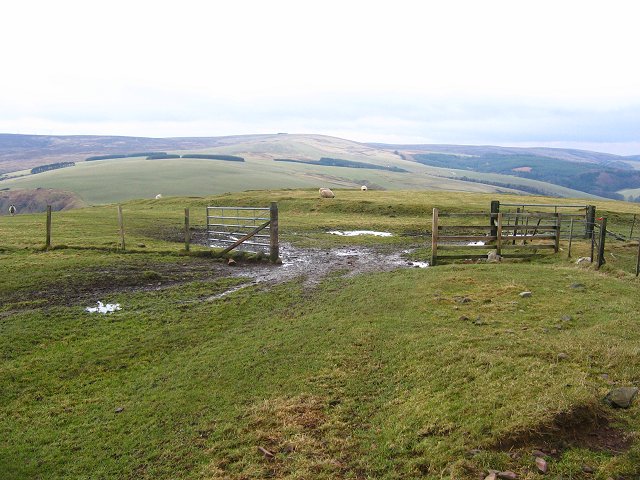
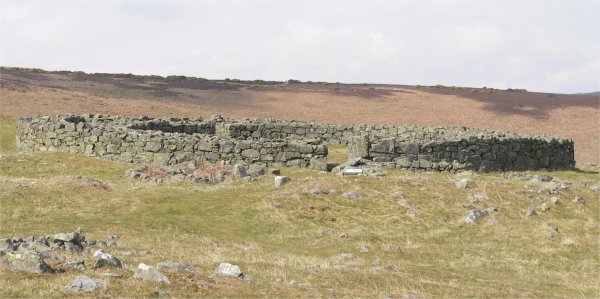
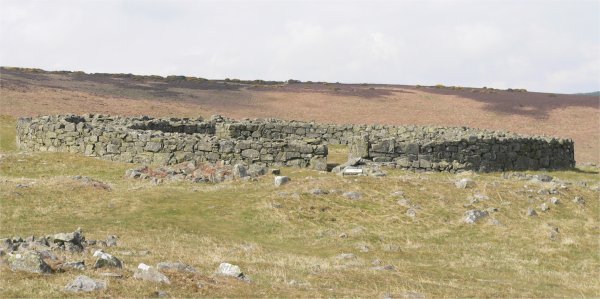
Fortified place · Iron Age
Edin's Hall Broch, Fort and Settlement
Scottish Borders
The hilltop on the northeast slope of Cockburn Law was first fortified in the pre-Roman Iron Age, when double ramparts and ditches enclosed an oval…
- Near Duns
- 1.8 km from car park
- Some walking
The Ancient Codex, in your pocket
Get the Pocket Codex app
Carry the directory with you — Fast Castle and thousands of ancient places across Britain and Ireland, offline, wherever you roam.