
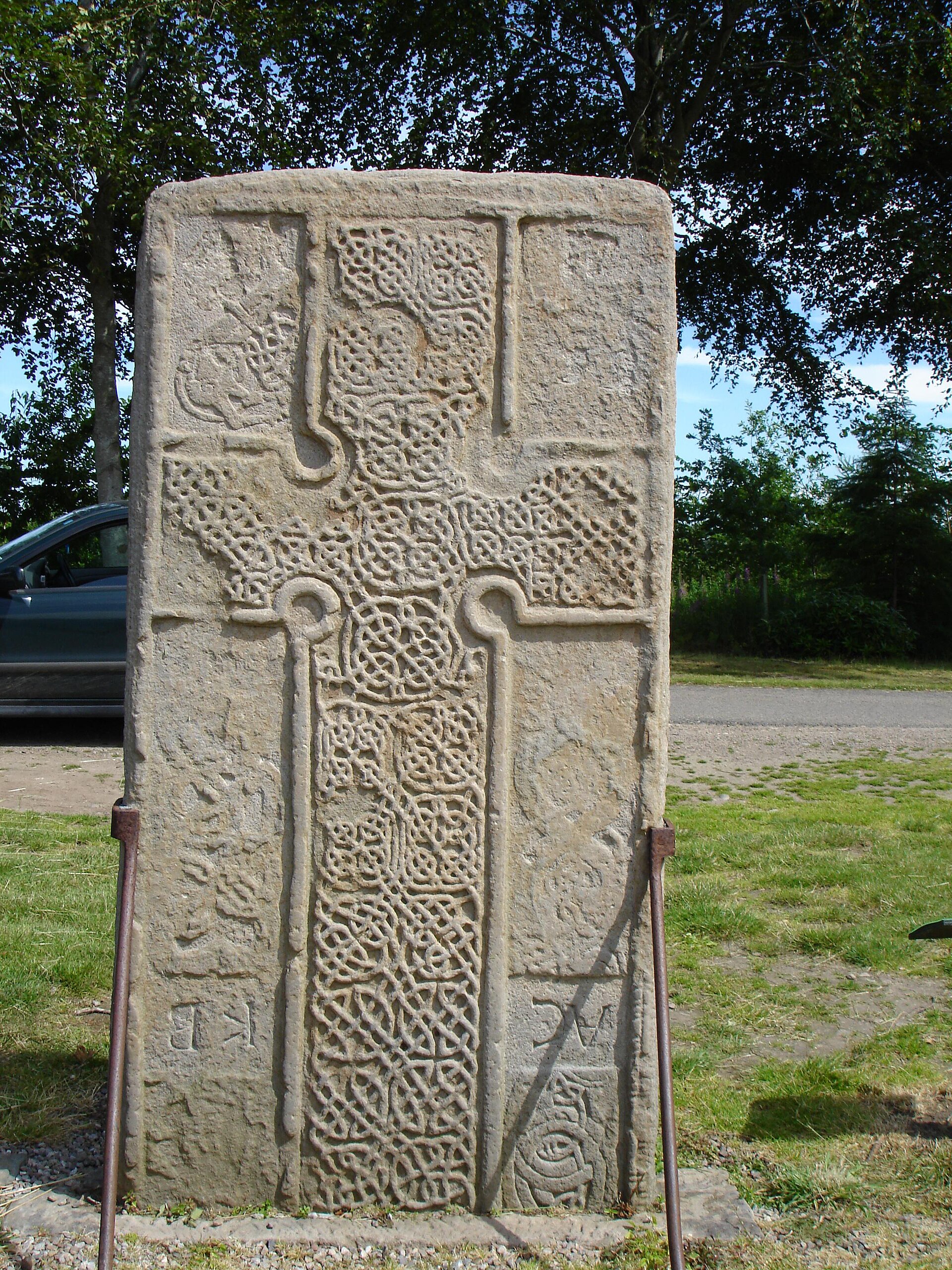
A towering carved cross-slab beside the old Forres road shows battle scenes, interlace and weathered royal stories in stone. Sueno’s Stone is a Picto-Scottish standing stone, a freestanding carved monument, and the largest surviving Pictish-style cross-slab of its kind in Scotland.
The stone matters because its carving has invited both historical interpretation and local legend. Its east face shows a crowded battle scene, its west face carries a decorated cross, and scholars continue to debate whether the monument commemorates a known ruler, an unknown victory or conflict between Picts and Vikings.
What follows is drawn from published sources, with each claim labelled by how firmly it is established.
The name
Cross-slab means a carved stone slab with a cross as a major design element.
History
Sueno's Stone was probably erected between about 850 and 950, though its maker and purpose remain unknown.
Early maps from Timothy Pont, Roy, Ainslie and Robert Campbell suggest that another large stone once stood nearby.
Lady Ann Campbell, Countess of Moray, helped stabilise the stone in the early 18th century with stepped plinths around its base.
Excavations in 1990 and 1991 suggested that Sueno's Stone may originally have been one of two monumental stones.
In the early 1990s the stone was encased in armoured glass to protect it from further erosion.
Its martial imagery has been interpreted in several ways, including as a battle monument, a royal authority scene or a possible Pictish-Viking conflict.
People
-
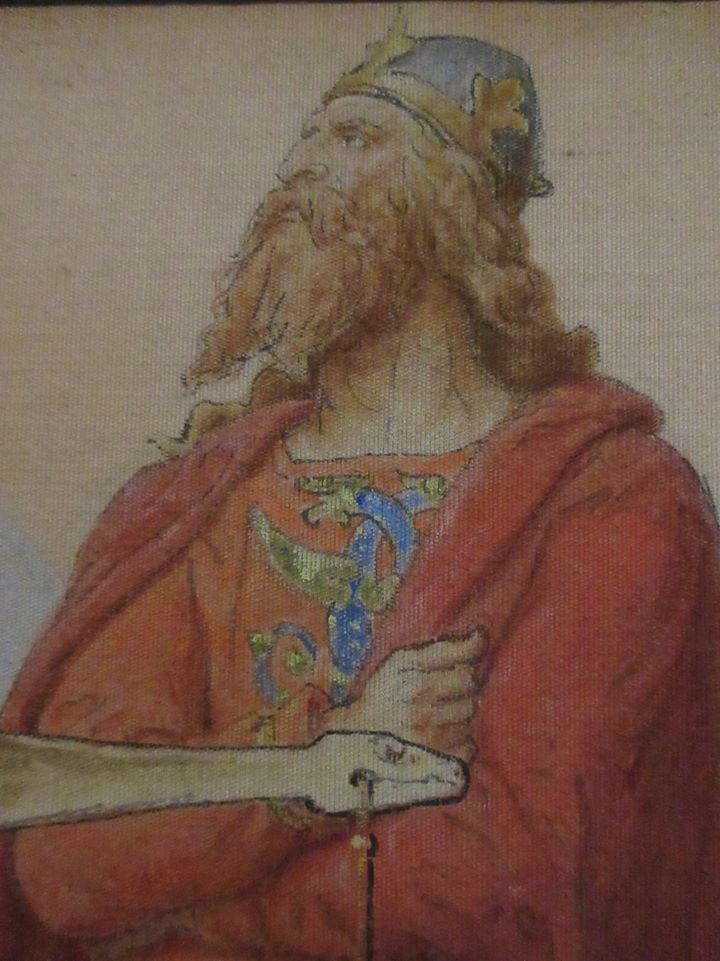
Portrait: Ole Ryhl Olsson / Wikimedia Commons / Public domain Sweyn Forkbeard
Norse king after whom the stone is named, although the association has been challenged.
-
Dubh mac Ailpin
King whose killing at Forres in 966 has been linked by some interpretations to the stone.
-
Lady Ann Campbell
Countess of Moray credited with stabilising the stone in the early 18th century.
-
Timothy Pont
Mapmaker whose map shows Sueno's Stone with a second now-lost stone.
-
Portrait: William Hole / Wikimedia Commons / Public domain Kenneth MacAlpin
Ruler connected with one proposed interpretation of the battle imagery.
-
Malcolm II
Ruler linked to a traditional but no longer supported interpretation of the battle scene.
What to look for
-
West-face cross
The west face carries a carved Celtic cross with interlaced decoration.
-
East-face battle scene
Four panels show horsemen, armed foot soldiers, decapitated defeated figures and a departing victorious army.
-
Armoured-glass case
The protective case was installed in the early 1990s to reduce further weathering.
-
Possible second pillar
Historic maps and excavation evidence suggest that a second monumental stone may once have stood nearby.
-
Interlace panels
Interlace is woven carved ornament, here used in Pictish-style edge panels and cross decoration.
What is said
Folklore and tradition, recorded as what is said — not as established fact.
-
Local legend says Macbeth met the three witches at the crossroads here and that they were imprisoned inside the stone.
-
Another tradition says the stone was erected for King Dubh mac Ailpin, killed in Forres in 966.
Plan your visit
- Location
- 57.6157°N · 3.5977°W
- Access
- Open access
- Terrain
- Easy going
Opening & admission
- Standing stone is in an armoured-glass case on a raised bank by the former road to Findhorn.
- Viewing is external; the protective case is part of the monument's conservation.
Nearby places
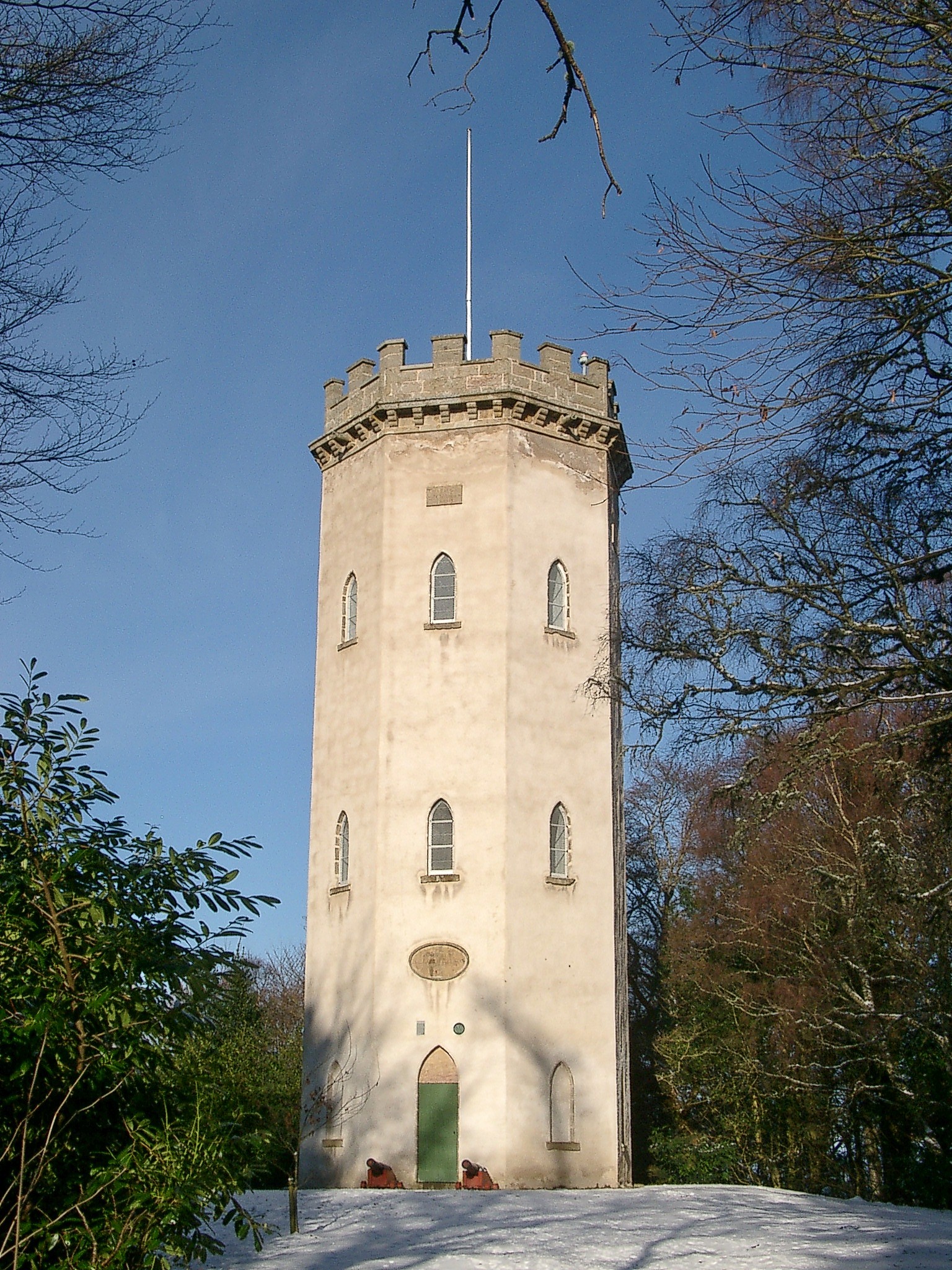
Fortified place · Iron Age
Burghead Fort
Moray
Burghead was one of the earliest power centres of the Picts and, at 12.4 acres, was three times the size of any other enclosed site in Early Mediev…
- Near Burghead
- 30 metres from car park
- Some walking
Questions people ask
- What is Sueno's Stone?
- It is a large Picto-Scottish standing cross-slab on the north-eastern edge of Forres.
- What is a cross-slab?
- A cross-slab is a carved stone slab with a cross forming a major part of its design.
- Why is it called Sueno's Stone?
- It is named after Sweyn Forkbeard, although that association has been challenged.
- What is carved on the stone?
- The west face has a decorated cross, while the east face shows a multi-panel battle scene.
- Why is it behind glass?
- It was encased in armoured glass in the early 1990s to prevent further erosion.
Sources
Explore more: Carved stones · Pictish & early medieval · Moray
The Ancient Codex, in your pocket
Get the Pocket Codex app
Carry the directory with you — Sueno's Stone and thousands of ancient places across Britain and Ireland, offline, wherever you roam.