
Burghead was one of the earliest power centres of the Picts and, at 12.4 acres, was three times the size of any other enclosed site in Early Medieval Scotland — probably the main centre of the…
Burghead Fort is a fortified place near Burghead, Moray, Scotland.
What follows is drawn from published sources, with each claim labelled by how firmly it is established.
The name
Burghead's name in the Pictish language is not recorded, and the fort is not named in any surviving annals; it has been suggested that it may be the 'Pinnata Castra' that features in Ptolemy's 2nd-century Geography.
History
Burghead was one of the earliest power centres of the Picts and, at 12.4 acres, was three times the size of any other enclosed site in Early Medieval Scotland — probably the main centre of the Pictish Kingdom of Fortriu, flourishing with the kingdom from the 4th to the 9th centuries.
Radiocarbon dating shows the main walls were built in the early historic period — possibly as early as the late 3rd century — and refurbished in the 6th or 7th centuries; differences in wall technique between the upper and lower enclosures suggest different construction dates, and the triple ramparts may predate the main fort as earlier Iron Age defences.
No sign of occupation of the fort survives after the 9th century, a period roughly coinciding with entries in the Annals of Ulster recording devastating Norse raids on the Kingdom of Fortriu.
The remains were largely destroyed when Burghead's harbour and town were remodelled in the early 19th century; the fort's layout survives in a plan drawn by William Roy and published posthumously in 1793.
During the early-19th-century destruction, up to thirty carved stone panels of bulls were discovered; most were built into the harbour quay wall and lost, but six survive.
People
-
The Picts (Kingdom of Fortriu)
Culture for whom Burghead was probably the principal royal and naval power centre
-
William Roy
Military surveyor whose plan of the fort, published posthumously in 1793, records its layout before destruction
-
Ptolemy
2nd-century geographer whose 'Pinnata Castra' has been tentatively identified with Burghead
Cultural influences
-
Continental La Tène / Murus Gallicus fortification — the lower enclosure's stone ramparts were built around a timber framework held together by giant iron spikes, an exceptional technique unrelated to earlier British Iron Age building and instead associated with the late La Tène fortifications of continental Europe.
-
A possible pagan bull cult — the naturalistic bull carvings found at the site have been read as evidence of a surviving cult, the carvings' degree of naturalism unequalled in early medieval art.
-
Early Christianity — there is archaeological evidence of a chapel within the fort by the 8th century, decorated stones of around AD 800 from Burghead churchyard probably from Christian crosses, and fragments of an early Christian shrine found just outside the fort.
Connections
-
Kingdom of Fortriu
The Pictish kingdom whose principal centre Burghead probably was
-
Kinneddar
Major Pictish religious centre 8 miles (13 km) east with which the secular fort may have had a significant relationship
-
Portmahomack
Pictish religious centre, just visible from Burghead across the Moray Firth
-
National Museum of Scotland, Edinburgh
Holds one of the surviving Burghead Bull carvings
-
British Museum, London
Holds one of the surviving Burghead Bull carvings
-
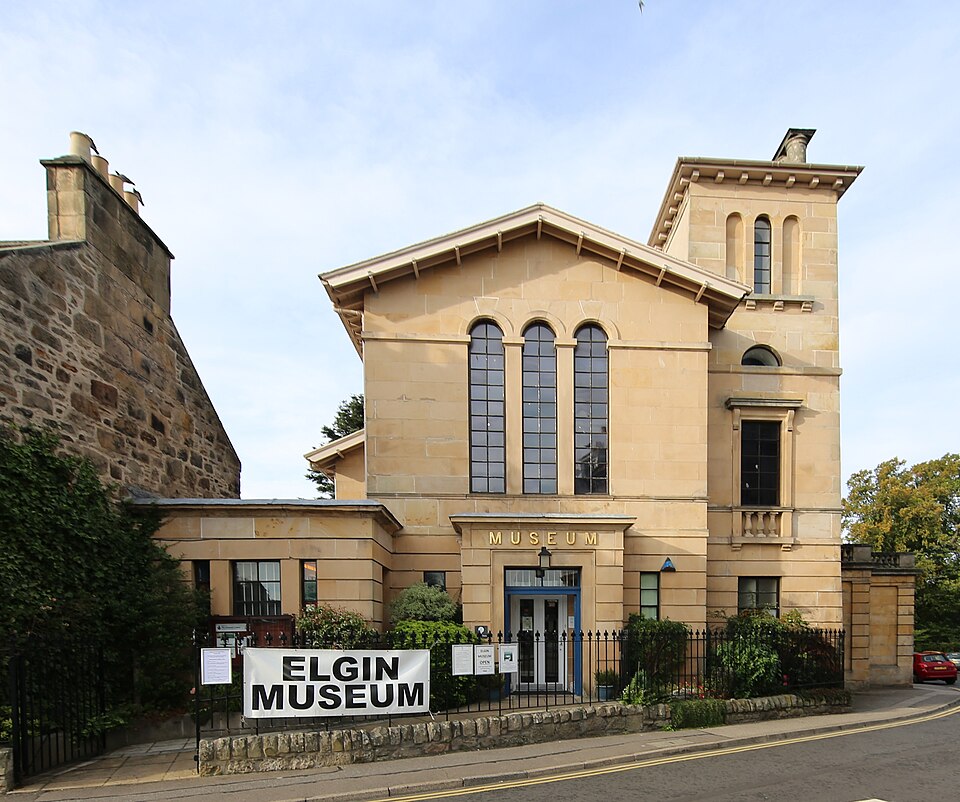
Photo: Geni / Wikimedia Commons / CC BY-SA 4.0 Elgin Museum
Holds two of the surviving Burghead Bull carvings
Discovery & excavation
Excavations in the 1890s revealed a paved roadway through the fort; the western wall of the upper enclosure, excavated in 1969, proved exceptionally massive with an 8 m-thick base. Signs of earlier occupation include a Late Bronze Age spearhead, a Greek coin from the reign of Nero (AD 54–68), and a Celtic stone head found within the underground well. The famous Burghead Bulls — up to thirty carved panels — came to light during the early-19th-century destruction; six survive, two in the Burghead visitor centre, two in Elgin Museum, one in the National Museum of Scotland and one in the British Museum.
Finds now held at: Burghead visitor centre (two Bull carvings); Elgin Museum (two Bull carvings); National Museum of Scotland (one Bull carving); British Museum (one Bull carving).
In culture
-
The Burghead Bulls are celebrated as early medieval art: their degree of naturalism is unequalled in the period, and they have been interpreted as part of a frieze set into the ramparts, perhaps a warrior cult celebrating strength and aggression.
What to look for
-
Sections of the inner ramparts still standing up to 9.8 ft (3.0 m) high, and a small surviving section of the innermost outer rampart known as the 'Doorie Hill'.
-
The underground ritual well in its rock-cut chamber, which can be visited.
-
The visitor centre, where important Pictish sculptures from the fort — including two of the Burghead Bulls — are displayed.
-
The setting of the surviving earthworks within the modern town, which now occupies the promontory the fort once commanded.
What is said
Folklore and tradition, recorded as what is said — not as established fact.
-
The Burning of the Clavie, a fire festival still held annually in Burghead, has been seen as a surviving pagan fire festival. (popular interpretation)
-
The underground well in its rock-cut chamber has been interpreted as the centre of a pagan water cult, a reading reinforced by the Celtic stone head discovered in it in the 19th century. (scholarly interpretation, not established fact)
Plan your visit
- Location
- General area near Burghead, Moray
- Nearest settlement
- Burghead
- Access
- Visible from a public way
- Terrain
- Moderate walking
- Start point
- Burghead promontory car park (near the Pictish Well and visitor centre) — The fort is largely built over by the modern town of Burghead; parking and the visitor centre (with two of the Burghead Bulls) are on the promontory. This is a public town amenity, not the monument's protected core.
This is a sensitive or fragile site, so we show only its general area. Please check official heritage sources for access before visiting, and take care not to disturb it.
Nearby places
Building or ruin · Medieval
Inchtuthil / Castra Pinnata
Scotland
It is one of Roman Scotland's genuine geographical puzzles — a place named by Ptolemy that scholars have spent a century trying, and failing, to pi…
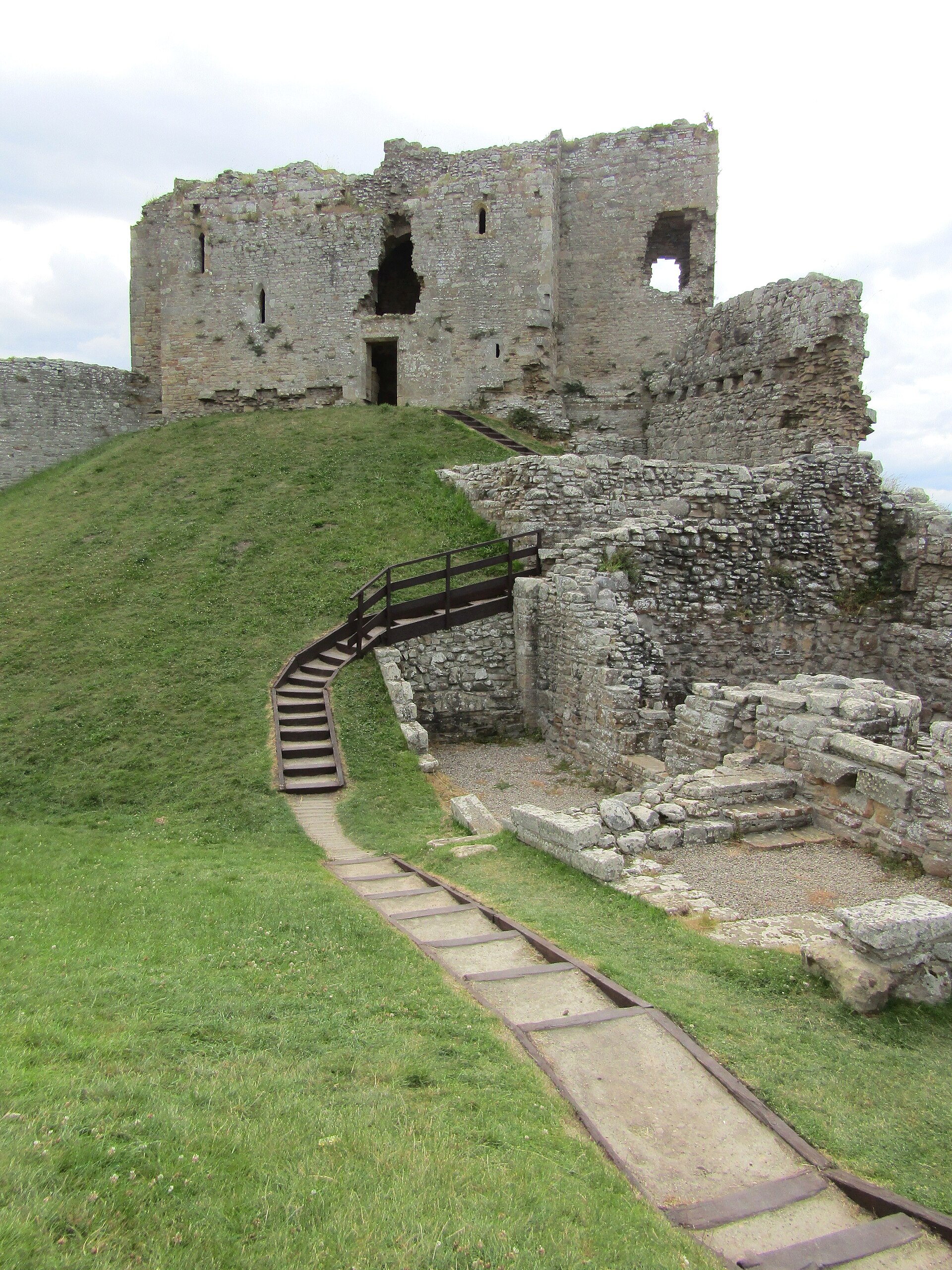
Fortified place · Medieval
Duffus Castle
Moray
Duffus Castle shows the rise and fall of a Norman-founded Moray lordship, from a twelfth-century timber motte to a stone tower undone by the very m…
Minor monument · Medieval
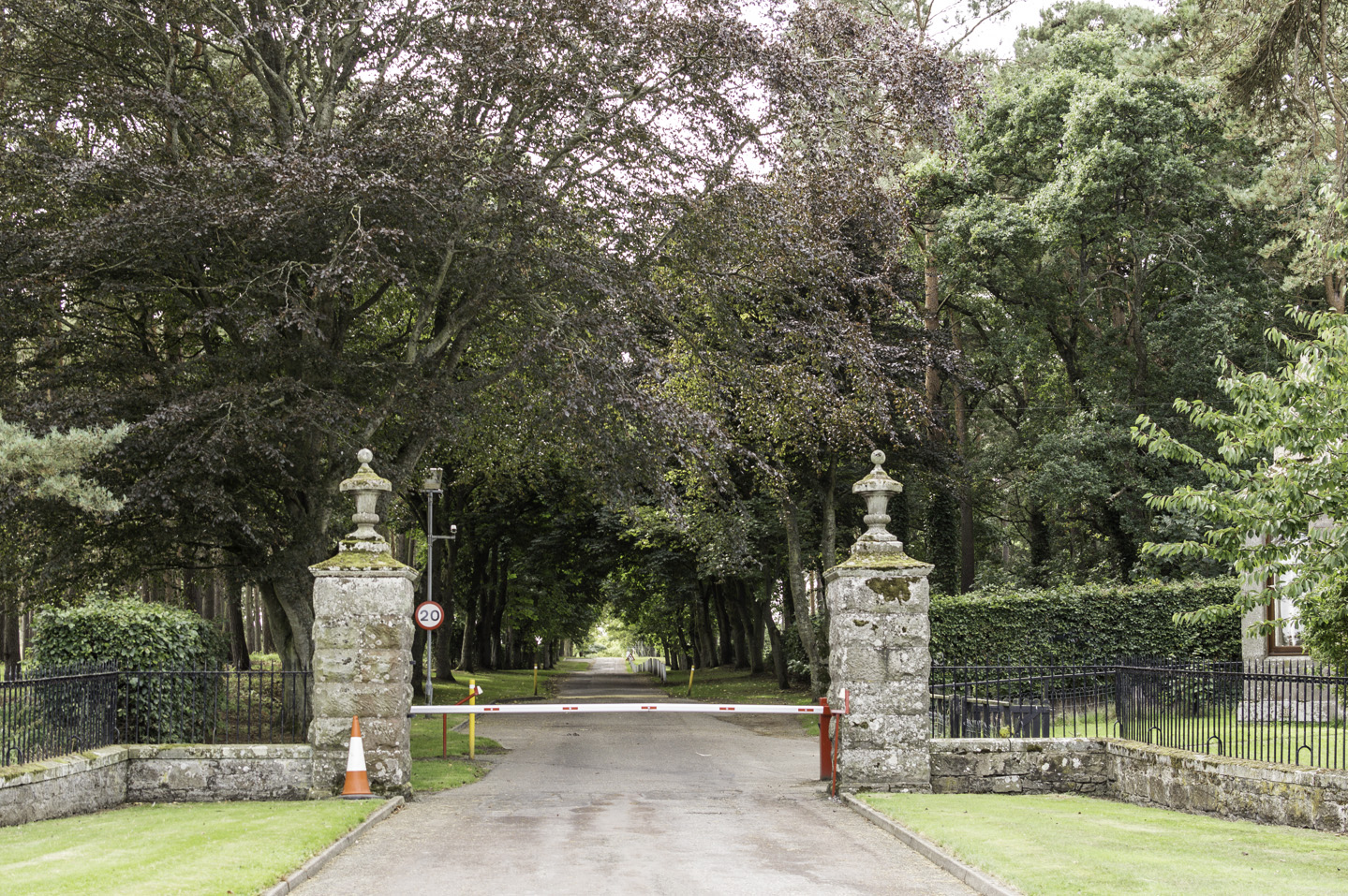
Ogston Market Cross, Michael Kirk, Gordonstoun
Moray
Mercat cross with HES-listed pre-1800 evidence (1705).
- Easy path
Sources
- Canmore site record 16146 (accessed 2026-06-13)
- Trove (HES) record (accessed 2026-06-13)
- Wikipedia: Burghead Fort (accessed 2026-06-13)
- Wikidata Q1015054 (accessed 2026-06-13)
Explore more: Fortified places · Iron Age · Moray
The Ancient Codex, in your pocket
Get the Pocket Codex app
Carry the directory with you — Burghead Fort and thousands of ancient places across Britain and Ireland, offline, wherever you roam.