
A carved horseman, bound captives and a ritual scene crowd the sandstone face of the Bridgeness Slab. This Roman distance slab (a carved marker recording a completed length of military construction) commemorated work on the Antonine Wall, the Roman frontier barrier across central Scotland, by the Second Legion.
What follows is drawn from published sources, with each claim labelled by how firmly it is established.
History
Around 142 CE the Second Legion erected the Bridgeness Slab to mark its completed section of the Antonine Wall. The inscription records that the legion built the wall over a distance of 4,652 paces.
The slab was found at Bridgeness in Bo'ness in 1868, on a promontory close to Harbour Road. The discovery took place during excavations on land owned by Henry Mowbray Cadell, and his son Dr Henry Cadell witnessed it.
Cadell offered the original to the Society of Antiquaries of Scotland for display in the National Museum of Scotland in Edinburgh, provided a local copy was made. The first on-site replica reproduced only the central panel.
A fuller replica, including the side panels, was unveiled by Bo'ness Community Council and Falkirk Council on 7 September 2012 in Kinningars Park. It was made using digital laser scanning because silicone and other moulding methods risked damaging the original.
Washing the original revealed faint traces of pigment, mainly red, showing that the slab was once highly coloured. That survival makes the stone important not only as an inscription but also as evidence for colour on Roman frontier sculpture.
People
-
Henry Mowbray Cadell
Owned the land where the slab was discovered in 1868.
-
Dr Henry Cadell
Witnessed the discovery of the slab.
-
Aulus Claudius Charax
Possibly the commander shown pouring a libation on the slab's right panel.
Cultural influences
-
Roman military display
The slab combines a formal imperial inscription with sculpted scenes of conquest and ritual.
-
Polychromy
Surviving pigment traces show that the sculpture was once coloured.
Connections
-
National Museum of Scotland
The original Bridgeness Slab is displayed there.
-
Hunterian Museum
An older copy of the slab and similar Antonine Wall distance slabs are held there.
-
Summerston distance slab
A similar Second Legion slab showing a helmeted horseman and naked captives.
-
Balmuildy and Westerwood slabs
Other slabs whose depictions of native people are compared with Bridgeness.
Discovery & excavation
The sandstone slab was uncovered in 1868 during excavations at Bridgeness, on land owned by Henry Mowbray Cadell.
Finds now held at: Bridgeness, Bo'ness.
In culture
-
Mark of Rome
Bo'ness Community Council and Falkirk Council produced a video titled Mark of Rome - The Story of the Bridgeness Slab.
-
Polychromy research
L. Campbell's 2020 Britannia article studied pigments on Antonine Wall distance sculptures.
What to look for
-
Central inscription
The Latin inscription names Antoninus Pius and the Second Augustan Legion and records 4,652 paces of work.
-
Left-hand cavalry scene
A victorious Roman cavalryman appears with four defeated Britons.
-
Right-hand ritual scene
The right panel shows a suovetaurilia, a Roman purification sacrifice involving a bull, pig and sheep.
-
Legionary standard
One soldier carries the vexillum, a military flag or standard, of the Second Legion.
-
Replica at Bo'ness
A replica including the side panels stands in Kinningars Park near the discovery site.
Plan your visit
- Location
- 56.0162°N · 3.5837°W
- Access
- Open access
- Terrain
- Easy going
Opening & admission
No local admission charge is stated in the source.
- The original slab is in the National Museum of Scotland in Edinburgh.
- A replica stands in Kinningars Park near the discovery site.
Nearby places
Building or ruin · Medieval
Linlithgow Palace
West Lothian
It was one of the principal residences of Scotland's Stewart monarchs and the birthplace of Mary, Queen of Scots.
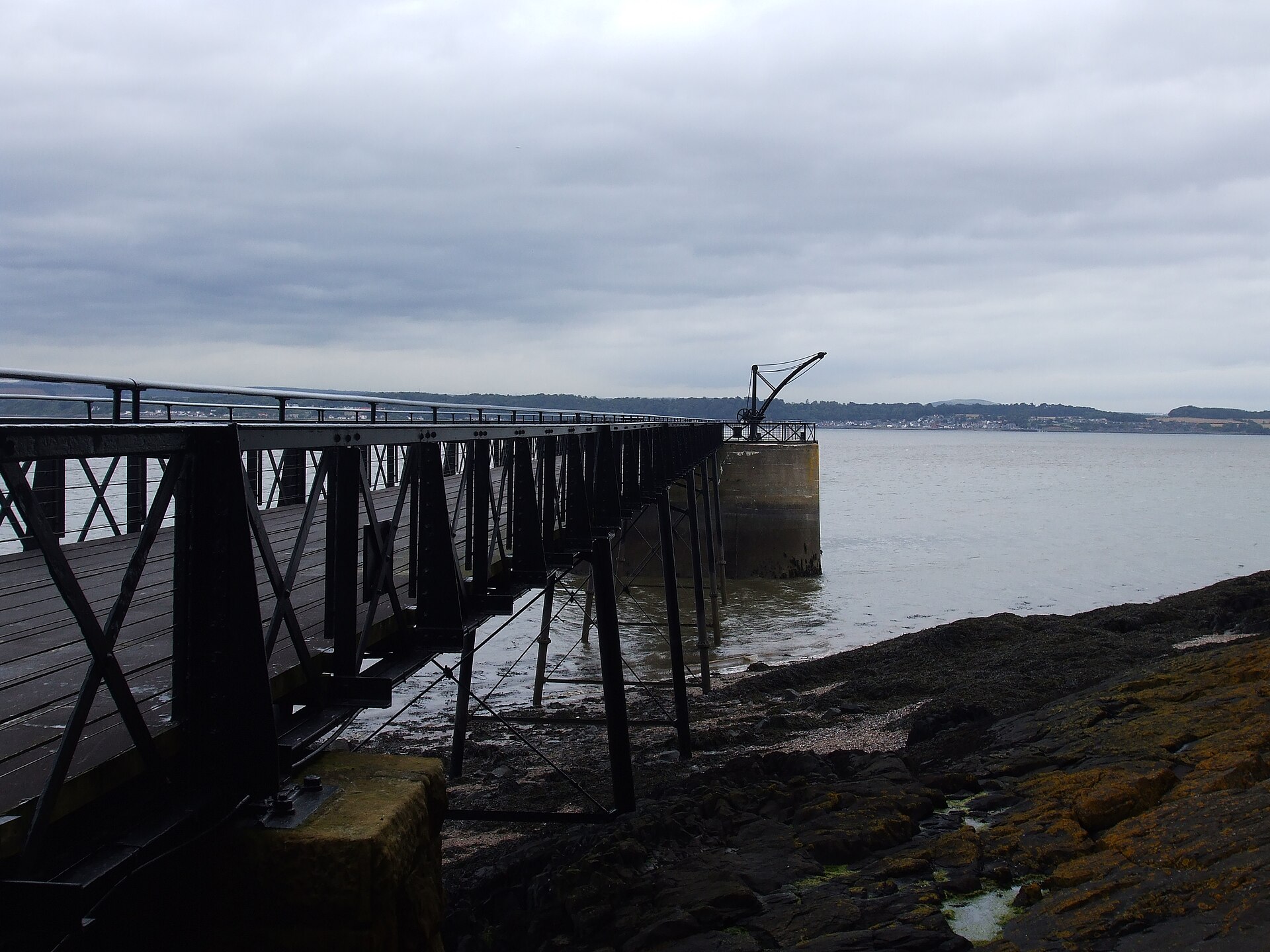
Fortified place · Medieval
Blackness Castle
Falkirk
One of Scotland's great artillery fortresses, Blackness served for centuries as a royal state prison and garrison guarding the Firth of Forth.
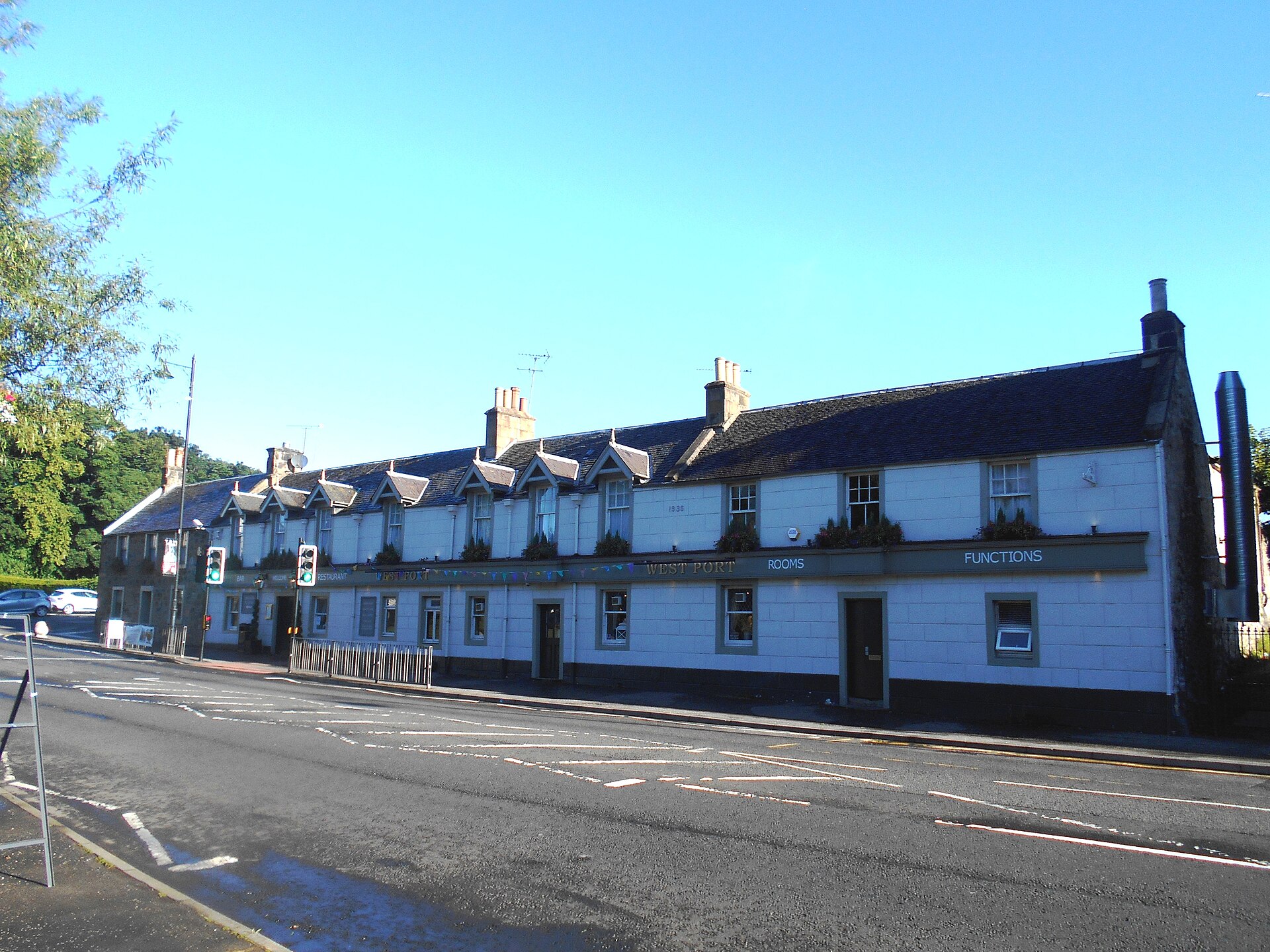
Ancient tree · Medieval
Katie Wearie's Tree
Perth and Kinross
A named, long-standing tree carried in local memory as a landmark — included for its place in the landscape, with age and superlative claims held f…
- Near Perth and Kinross
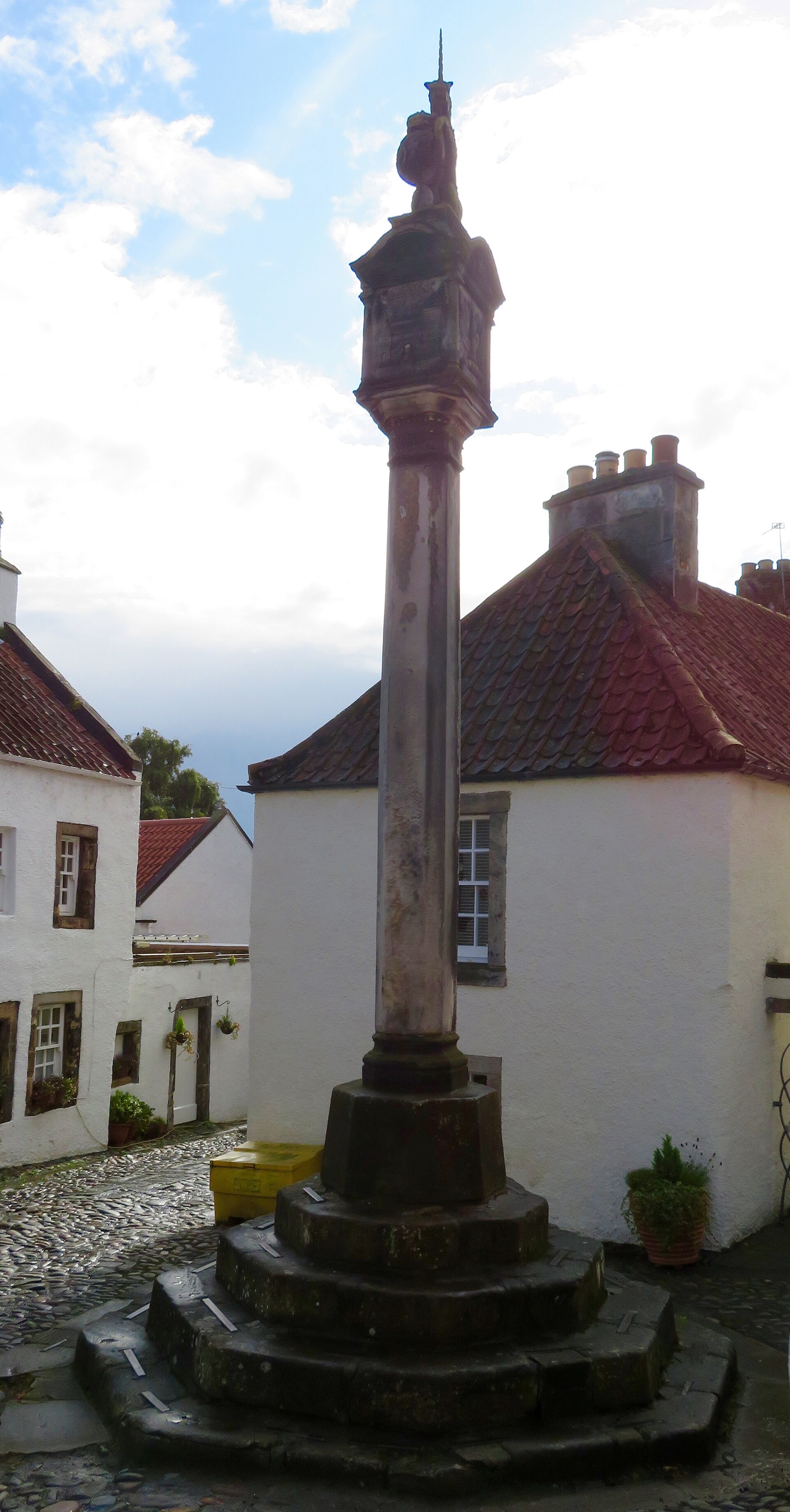
Minor monument · Medieval
Market Cross, The Cross, Culross
Fife
Mercat cross with HES-listed pre-1800 evidence (1588).
- Easy path
Questions people ask
- What is the Bridgeness Slab?
- It is a Roman distance slab made around 142 CE to mark a portion of the Antonine Wall built by the Second Legion.
- Where is the original slab?
- The original is in the National Museum of Scotland in Edinburgh.
- Where was it found?
- It was found at Bridgeness in Bo'ness in 1868, close to Harbour Road.
- What does the inscription record?
- It records that the Second Augustan Legion completed 4,652 paces of the Antonine Wall for Antoninus Pius.
- Was the slab painted?
- Faint pigment traces, mainly red, suggest that the original stone was once highly coloured.
Sources
- Wikipedia article
- Wikidata
- Campbell 2020
Explore more: Building or ruins · Medieval · Falkirk
The Ancient Codex, in your pocket
Get the Pocket Codex app
Carry the directory with you — Bridgeness Slab and thousands of ancient places across Britain and Ireland, offline, wherever you roam.