
It is one of Scotland's best-preserved 16th-century Z-plan tower houses, complete enough to show clearly how such a fortified residence was designed.
Claypotts Castle stands at West Ferry on the edge of Dundee, a compact tower house raised for John Strachan between about 1569 and 1588. Dates cut into its stones record an unusually drawn-out building programme, and the result is one of Scotland’s most complete examples of the Z-plan: a rectangular central block with towers projecting from opposite corners, an arrangement that let defenders sweep gunfire along every wall face. For all that martial detail, the castle was built as a comfortable residence rather than a serious stronghold. Ownership passed through several hands after Strachan. It was sold in 1601 to Sir William Graham of Ballunie and later came to the Grahams of Claverhouse, the family of John Graham, Viscount Dundee. When he fell at the Battle of Killiecrankie in 1689 the castle became crown property, and in 1694 it was granted to James Douglas, 2nd Marquess of Douglas. The 13th Earl of Home gave the building to the state in 1926. Today it is cared for as an ancient monument by Historic Environment Scotland. Local tradition tells of a helpful brownie who deserted the castle after a lazy kitchen maid gave him offence.
What follows is drawn from published sources, with each claim labelled by how firmly it is established.
What to look for
-
The Z-plan layout: a rectangular main block with towers set at opposite corners
-
Gunports and wall arrangements that allowed defenders to fire along each face of the building
-
Date stones marking the roughly twenty-year building programme under John Strachan
-
The domestic character behind the fortified exterior, built for comfort more than defence
Plan your visit
- Location
- 56.4764°N · 2.8900°W
Nearby places
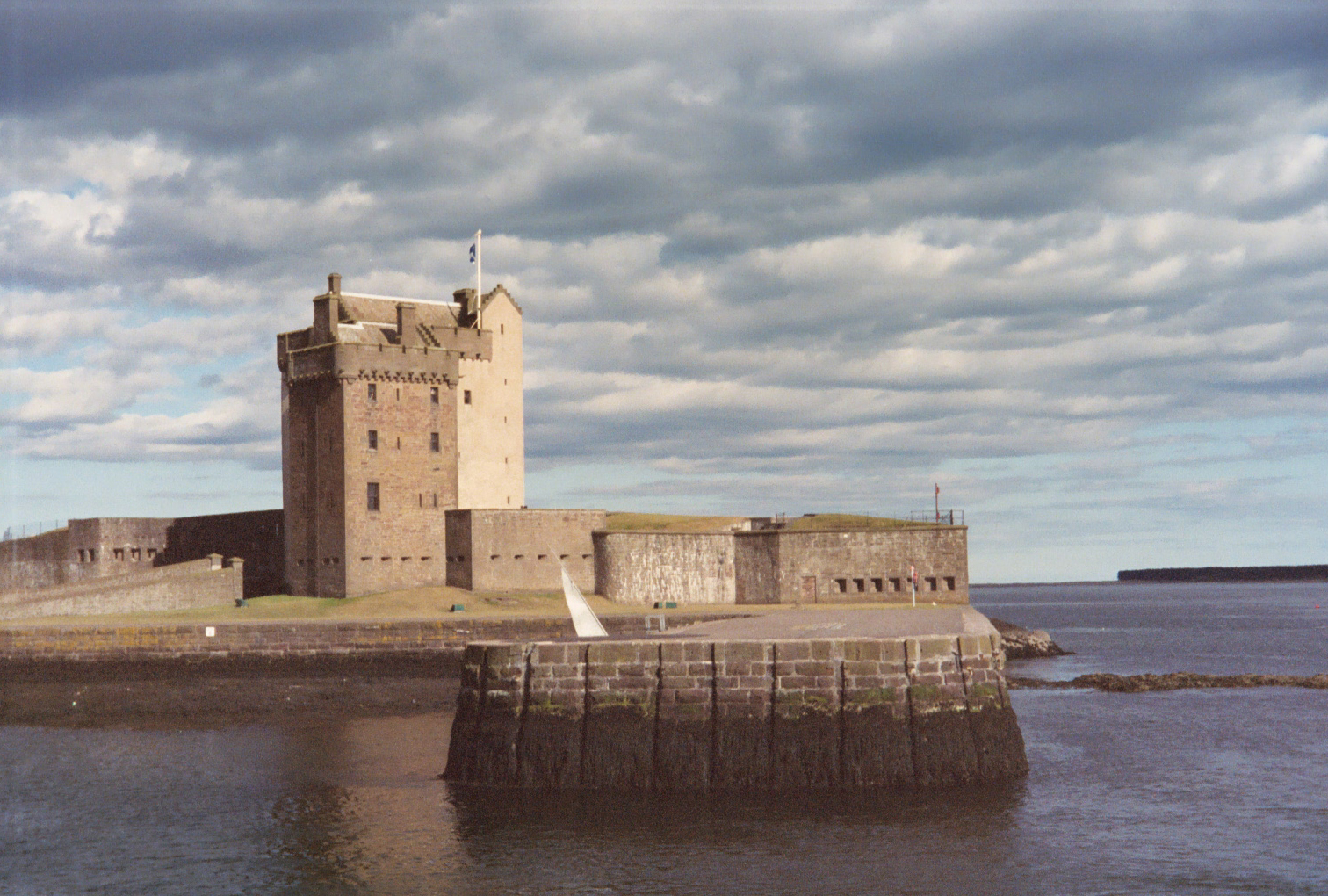
Building or ruin · Medieval
Broughty Castle
Dundee City
A much-fought-over tower house guarding the Tay estuary, later rebuilt as a Victorian coastal fort and now a museum of Dundee's military and mariti…
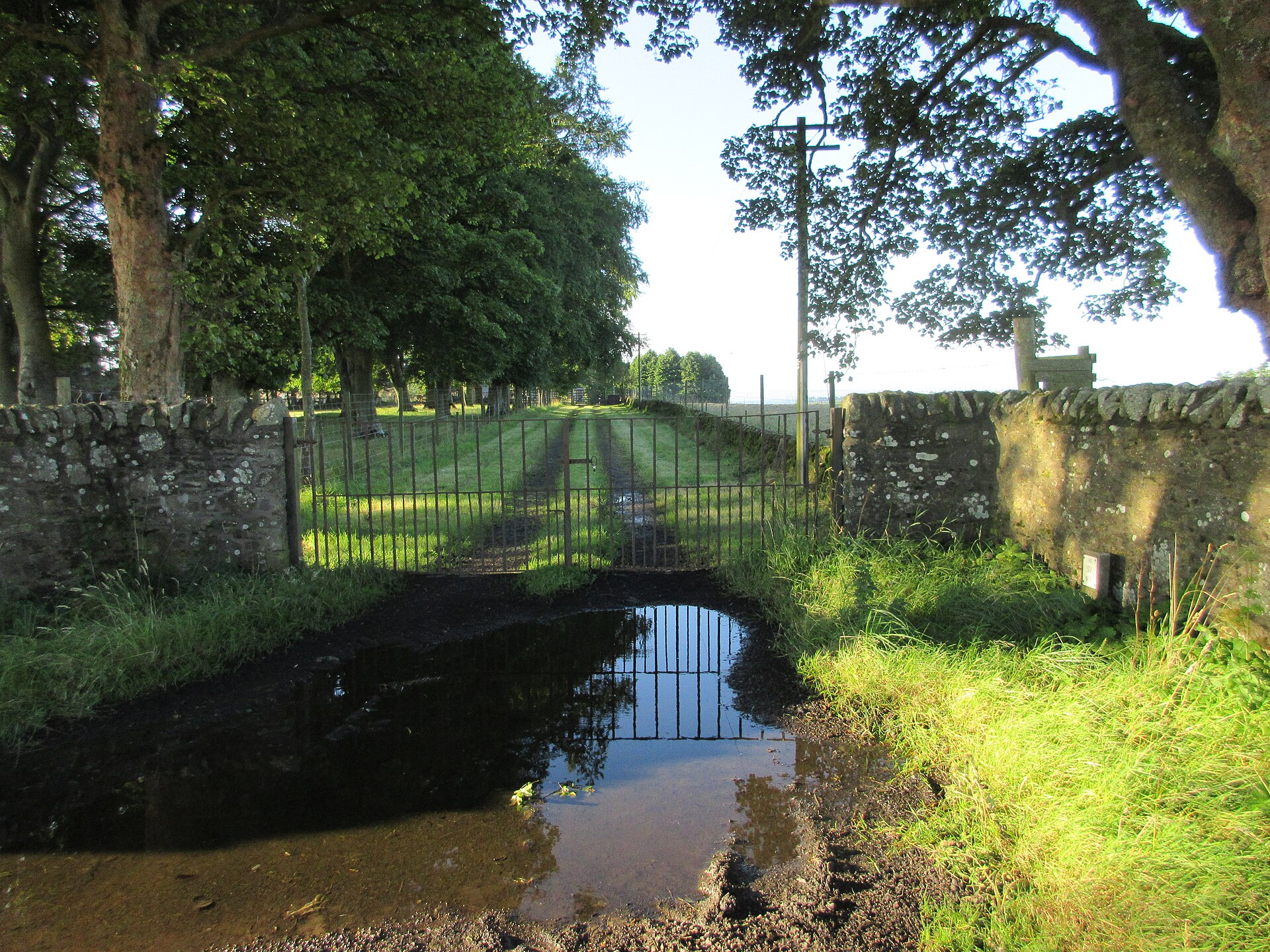
Fortified place · Medieval
Affleck Castle
Angus
A remarkably intact fifteenth-century tower house whose surviving oratory, complete with piscina, aumbry and holy-water stoup, preserves a rare med…
The Ancient Codex, in your pocket
Get the Pocket Codex app
Carry the directory with you — Claypotts Castle and thousands of ancient places across Britain and Ireland, offline, wherever you roam.