
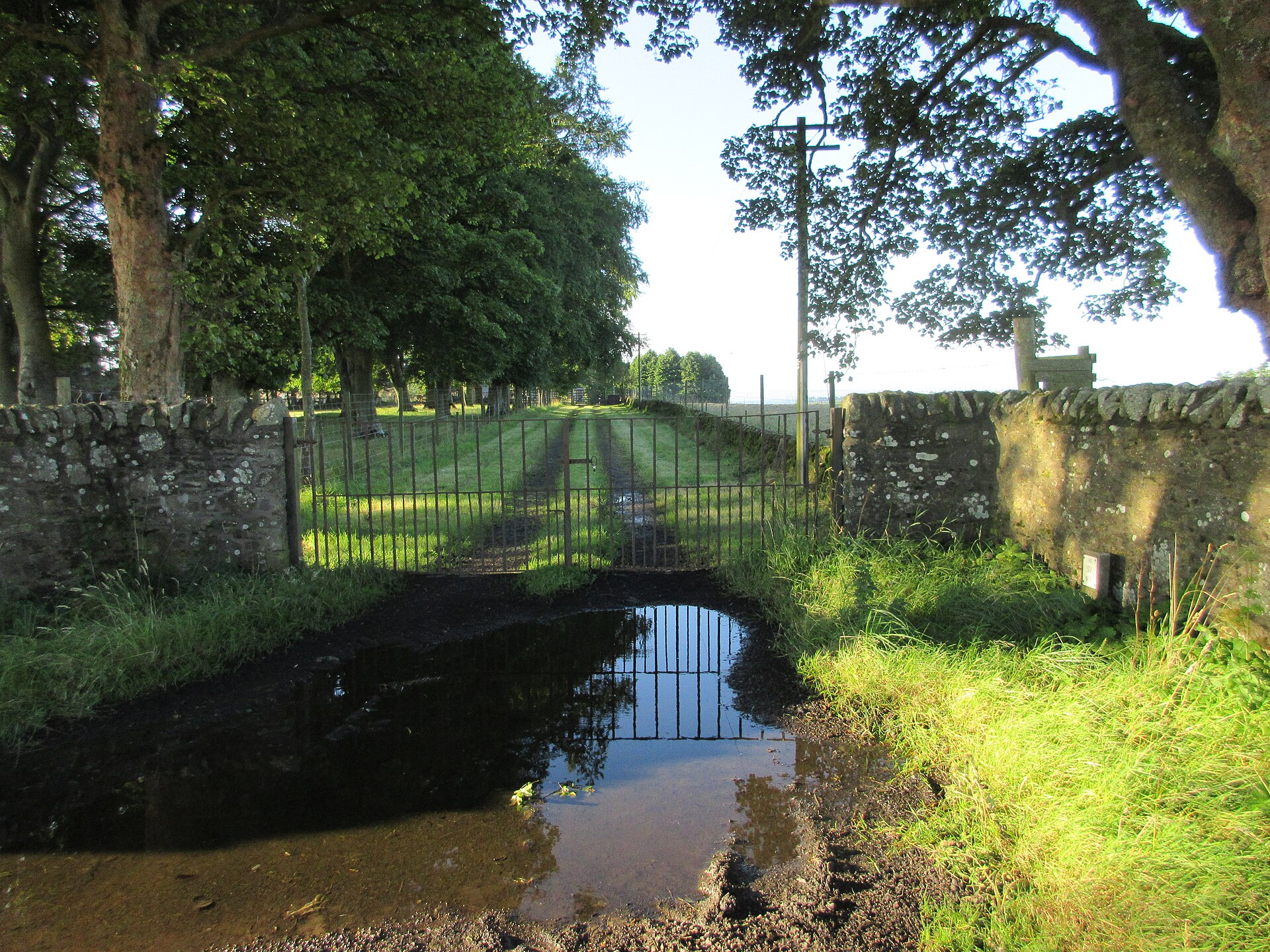
A freestanding sandstone cross stands in the tree-lined avenue of Camuston Wood. Camus Cross is an early-medieval carved cross, a stone Christian monument, with weathered panels, figures, foliage, and a long afterlife in local tradition.
Camus Cross matters because intact freestanding crosses of this age are rare in eastern Scotland. Its legal record from the fifteenth century, Robert Maule’s seventeenth-century description, Irish-influenced carving, and the later Camus battle legend make it one of Angus’s most layered carved monuments.
What follows is drawn from published sources, with each claim labelled by how firmly it is established.
History
The cross is thought to date from the tenth century.
It was first recorded in a legal document of 1481 defining land boundaries.
Hector Boece mentioned it in connection with the Battle of Barry in 1527.
Robert Maule moved and described the cross in 1620.
The Camus battle tradition is now regarded as historically inauthentic.
A burial found near the cross in 1598 was later linked by Maule with Camus, though its goods were typical Bronze Age artefacts.
People
-
Robert Maule
Moved the cross to its present position and recorded an early description.
-
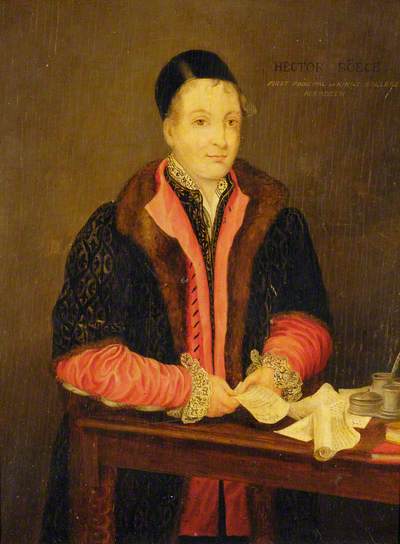
Portrait: Unknown artistUnknown artist / Wikimedia Commons / Public domain Hector Boece
Popularised the Battle of Barry tradition connected with Camus.
-
Malcolm II
Named in later tradition as the king who defeated Camus.
-
Camus
Legendary Norse leader whose supposed death was attached to the cross.
Connections
-
Panmure Estate
Estate landscape containing the Camuston Wood avenue.
-
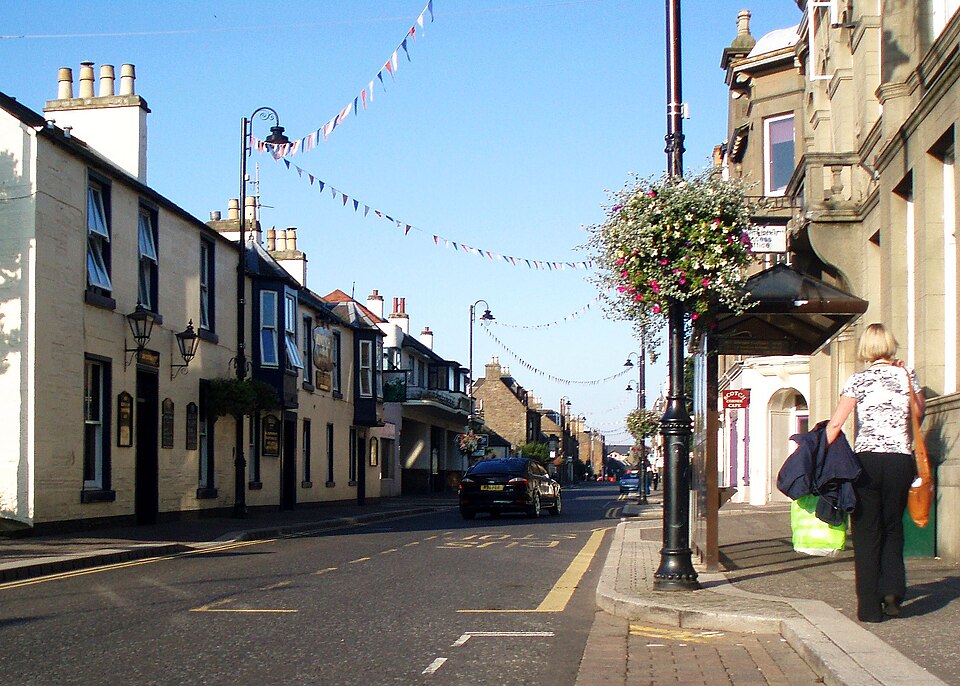
Photo: Ollie Lloyd / Wikimedia Commons / CC BY-SA 3.0 Battle of Barry
Later tradition linked the cross to this now doubtful battle story.
-
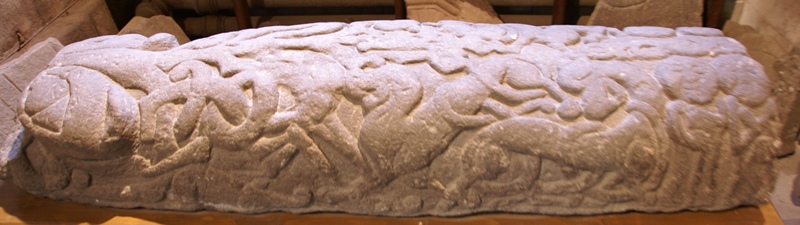
Photo: Otter / Wikimedia Commons / CC BY-SA 3.0 Brechin Hogback
Its figure style is compared with carving on the Camus Cross.
-
Camuston
Extinct village likely behind the cross's name.
What to look for
-
Freestanding form
The cross is not a slab but a carved standing cross.
-
Weathered west face
Weathering has obscured some carved panels, including an upper scene recorded by antiquarians.
-
Centaur panel
A centaur with a bow survives below the upper west-face scene.
-
East-face figures
The east face is usually read as Christ with angels above the evangelists.
-
Irish-style foliage
The foliar carving has close parallels in late tenth-century Irish insular art.
Plan your visit
- Location
- 56.5306°N · 2.7836°W
- Access
- Reached on a public path
- Terrain
- Easy going
Opening & admission
- Freestanding cross in the Panmure Estate avenue; follow estate/public access guidance.
Nearby places
Fortified place · Medieval
Affleck Castle
Angus
A remarkably intact fifteenth-century tower house whose surviving oratory, complete with piscina, aumbry and holy-water stoup, preserves a rare med…
Fortified place · Medieval
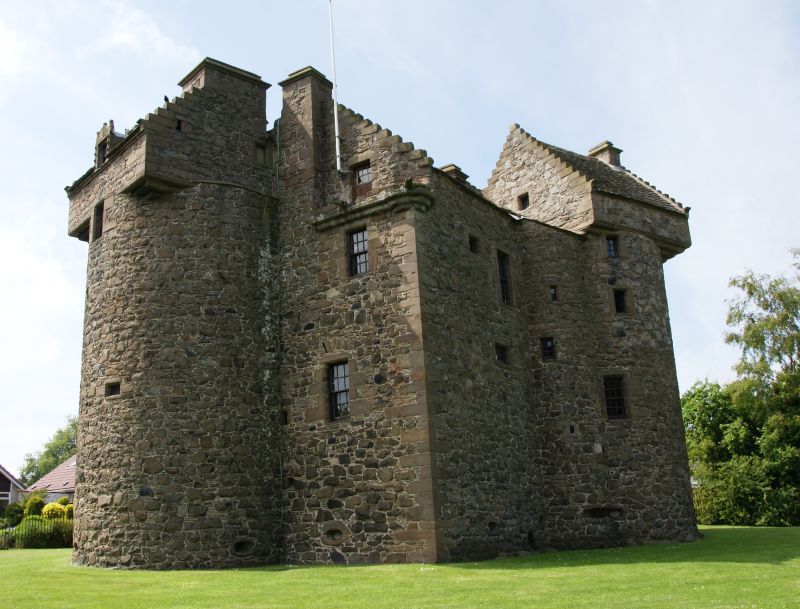
Claypotts Castle
Dundee City
It is one of Scotland's best-preserved 16th-century Z-plan tower houses, complete enough to show clearly how such a fortified residence was designed.
Building or ruin · Medieval
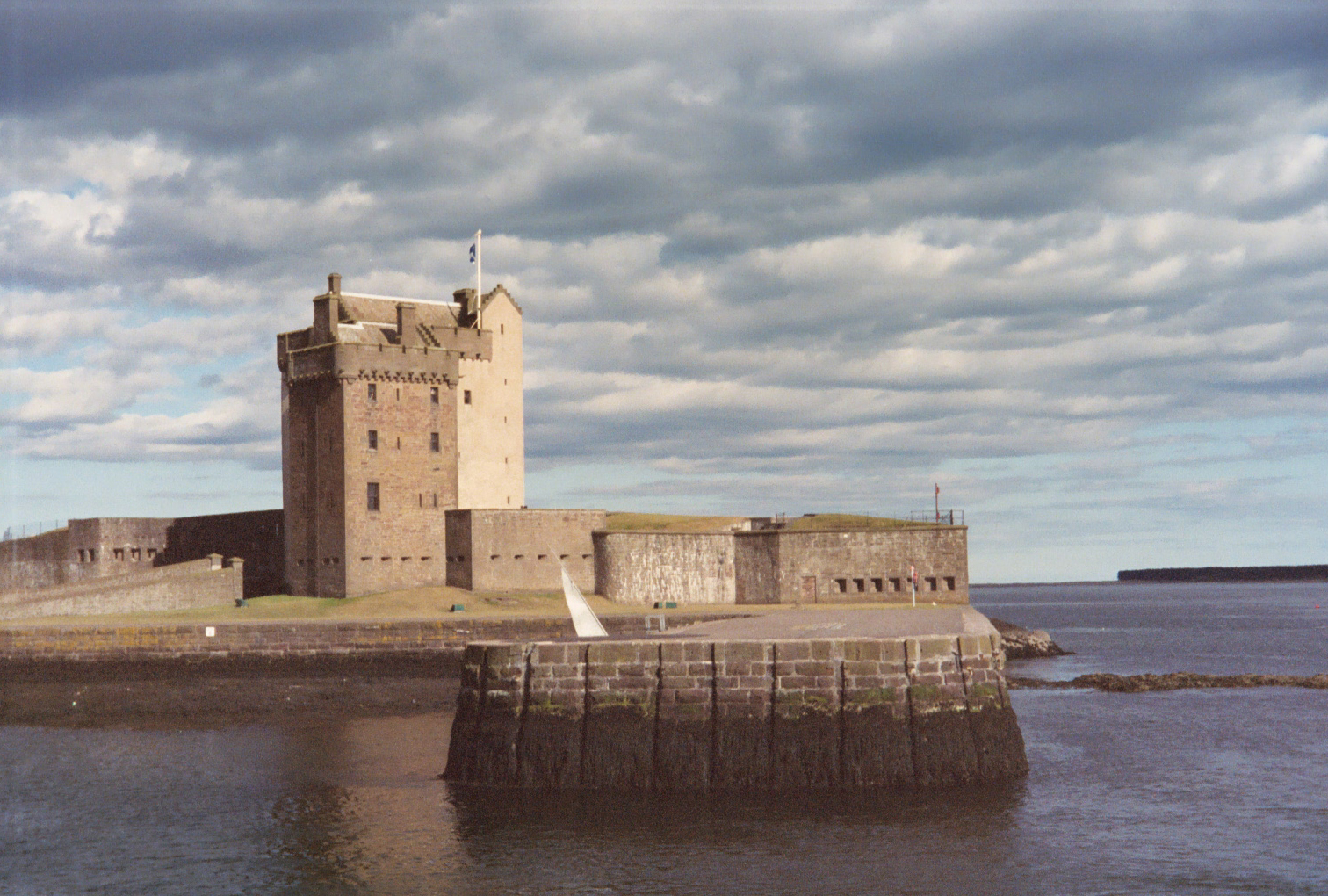
Broughty Castle
Dundee City
A much-fought-over tower house guarding the Tay estuary, later rebuilt as a Victorian coastal fort and now a museum of Dundee's military and mariti…
Questions people ask
- What is Camus Cross?
- It is an early-medieval freestanding stone cross near Carnoustie in Angus.
- How old is Camus Cross?
- It is currently thought to date from the tenth century.
- Is the Camus battle story reliable?
- No. The Battle of Barry and Camus tradition are now treated as historically inauthentic.
- Why is the cross important?
- Intact freestanding crosses of this period are rare in eastern Scotland, and the carving preserves important early-medieval art.
Sources
Explore more: Carved stones · Pictish & early medieval · Angus
The Ancient Codex, in your pocket
Get the Pocket Codex app
Carry the directory with you — Camus Cross and thousands of ancient places across Britain and Ireland, offline, wherever you roam.