
It preserves the story of a Cistercian house whose lands and manuscripts became prizes in the power struggles that followed the Scottish Reformation.
Glenluce Abbey stands in the valley of Luce in Dumfries and Galloway, a Cistercian monastery founded around 1190 by Roland, Lord of Galloway and Constable of Scotland. It was colonised by monks from Dundrennan Abbey, itself a daughter house of Rievaulx, and took the Latin name Vallis Lucis, the Valley of Luce. The abbey fell within the medieval Diocese of Galloway and worked the surrounding lands for four centuries until its dissolution in 1602.
Its later history became tangled in the ambitions of powerful families. After the Reformation of 1560, John Gordon of Lochinvar seized the buildings before Gilbert Kennedy, 4th Earl of Cassilis, gained possession the following year, reputedly persuading one of the remaining monks to counterfeit signatures so that the abbey’s lands could pass to him. Mary, Queen of Scots is recorded as visiting on 9 August 1563. As late as 1587 the king’s tutor Peter Young came seeking manuscripts of Caesar and Greek texts held by the last abbot.
The ruins were consolidated and partly restored in 1898 by the Glasgow architect Peter MacGregor Chalmers, and are cared for today by Historic Environment Scotland. The vaulted chapter house remains the most complete of the surviving buildings.
What follows is drawn from published sources, with each claim labelled by how firmly it is established.
What to look for
-
The chapter house, the best-preserved of the surviving buildings, with its ribbed vaulted stone ceiling
-
The Latin dedication Vallis Lucis, the Valley of Luce, naming the abbey after its valley setting
-
Stonework showing the 1898 consolidation and partial restoration by architect Peter MacGregor Chalmers
-
The abbey's descent from Dundrennan and the wider Rievaulx line of Cistercian houses
Plan your visit
- Location
- General area near Dumfries and Galloway, Dumfries and Galloway
This is a sensitive or fragile site, so we show only its general area. Please check official heritage sources for access before visiting, and take care not to disturb it.
Nearby places
Carved stone · Prehistoric
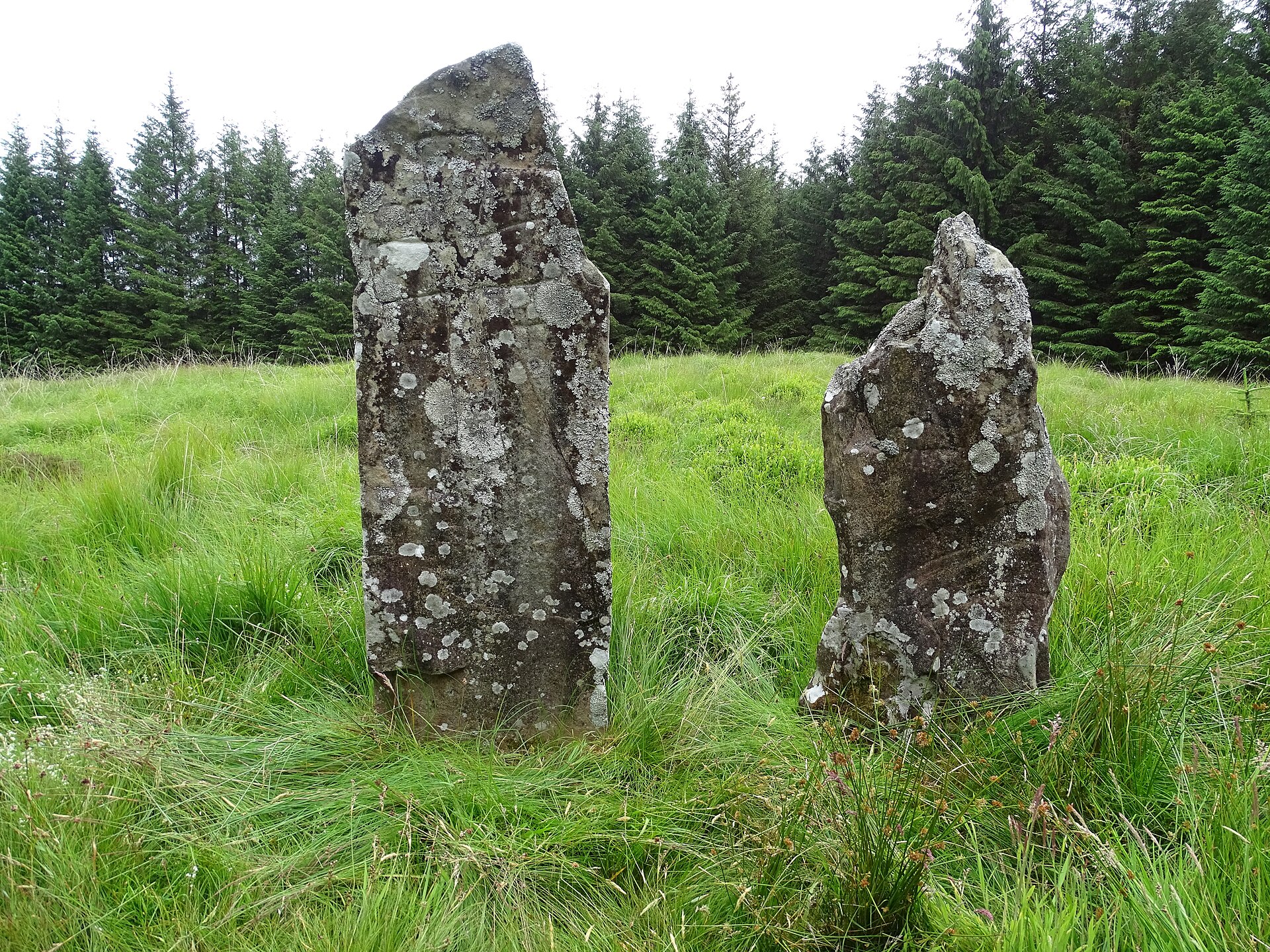
Laggangairn Standing Stones
Dumfries and Galloway
The two surviving stones were likely erected about 2000 BC. Tradition holds they were originally part of a circle of up to 14 stones; seven still r…
- Near New Luce
- 164 min walk from car park
- Easy path
The Ancient Codex, in your pocket
Get the Pocket Codex app
Carry the directory with you — Glenluce Abbey and thousands of ancient places across Britain and Ireland, offline, wherever you roam.