
Cairn Holy is the site of two Neolithic chambered tombs of the Clyde type, raised on a hillside overlooking Wigtown Bay near Cairnholy Farm. The two tombs lie within 150 metres of each other and both…
Cairn Holy Chambered Cairns is a tomb or burial place near Carsluith, Dumfries and Galloway, Scotland.
What follows is drawn from published sources, with each claim labelled by how firmly it is established.
The name
The name Cairnholy represents Gaelic 'Càrn na h-ulaidhe', meaning 'cairn of the stone tomb'.
History
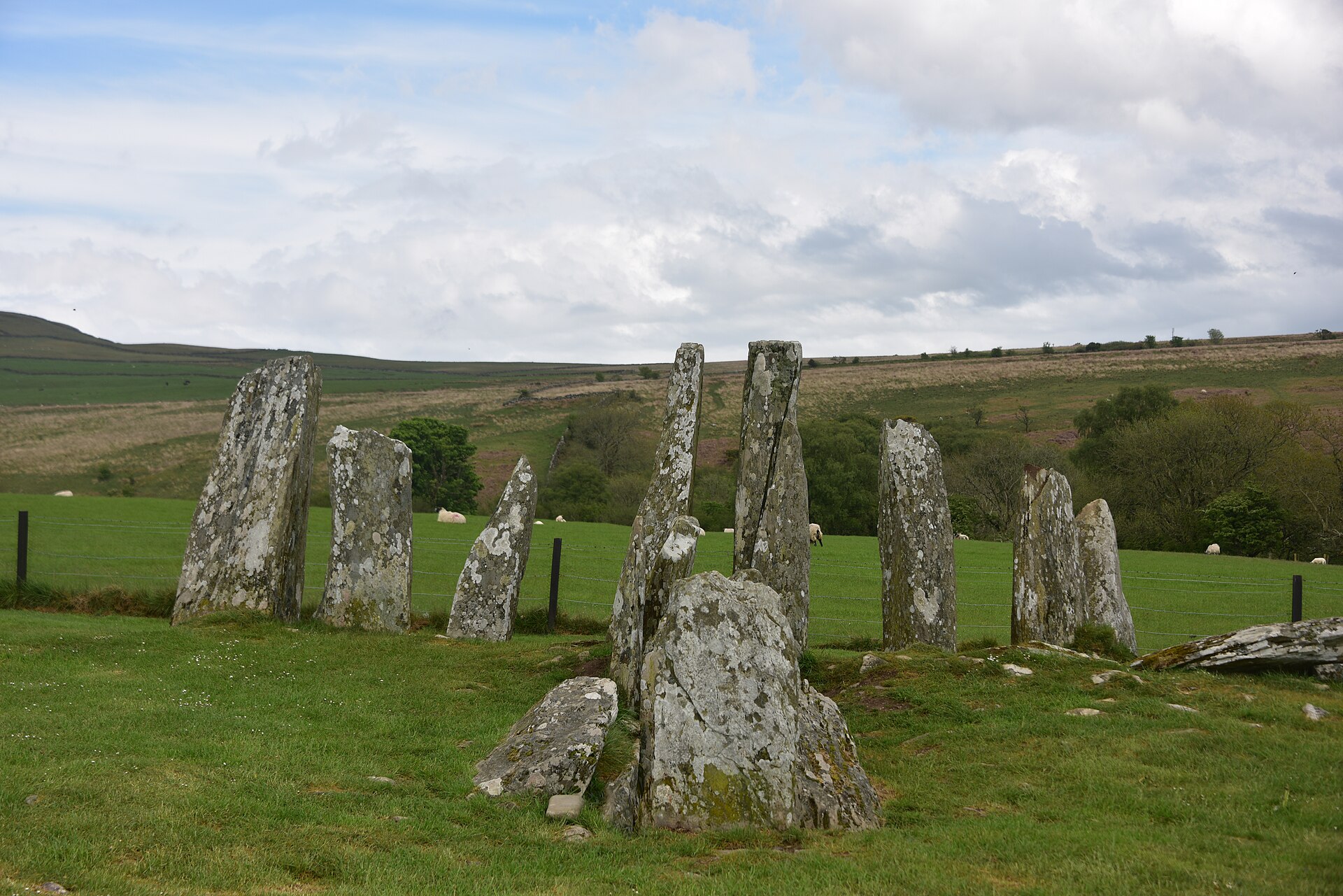
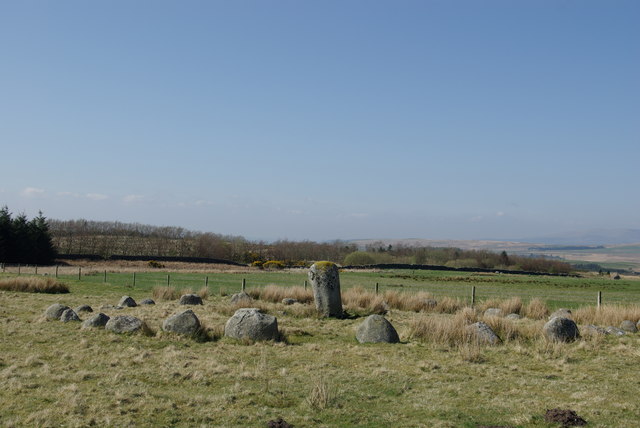
Cairn Holy is the site of two Neolithic chambered tombs of the Clyde type, raised on a hillside overlooking Wigtown Bay near Cairnholy Farm. The two tombs lie within 150 metres of each other and both now lie open to the sky, most of their original covering stones having been taken in the past to build field walls.
Both tombs were partially excavated in 1949 by Stuart Piggott and Terence Powell; finds from the excavations are now in the National Museum of Scotland.
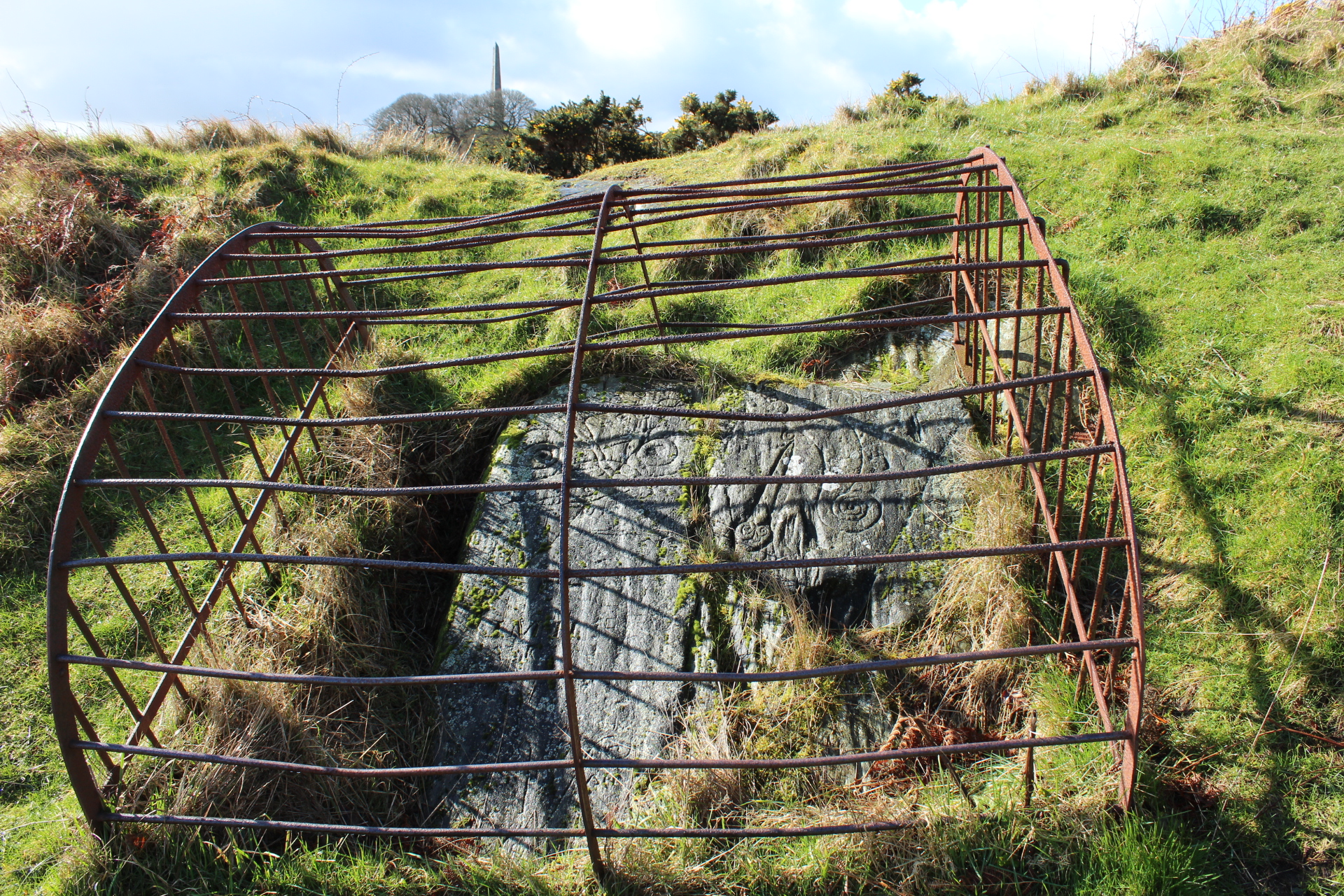
Cairnholy I is the more elaborate tomb, measuring 50 by 15 metres with a monumental curving facade fronting a forecourt; excavation showed several fires had been lit in the forecourt. Its outer chamber yielded a fragment of a jadeite ceremonial axe alongside Neolithic pottery and a leaf-shaped arrowhead, with later Peterborough-ware and Beaker-ware sherds and a flint knife; the sealed inner chamber held a secondary cist with food-vessel sherds and a cup-and-ring carved stone.
People
-
Stuart Piggott
Archaeologist who partially excavated both tombs in 1949
-
Terence Powell
Archaeologist who co-directed the 1949 excavation
Cultural influences
-
The tombs belong to the Clyde type of Neolithic chambered cairn, a regional tradition of south-west Scotland.
-
Finds span successive prehistoric traditions — a jadeite ceremonial axe and Neolithic pottery in the primary use, followed by later Peterborough-ware, Beaker-ware and food-vessel material indicating continued or renewed use into the Bronze Age.
Connections
-
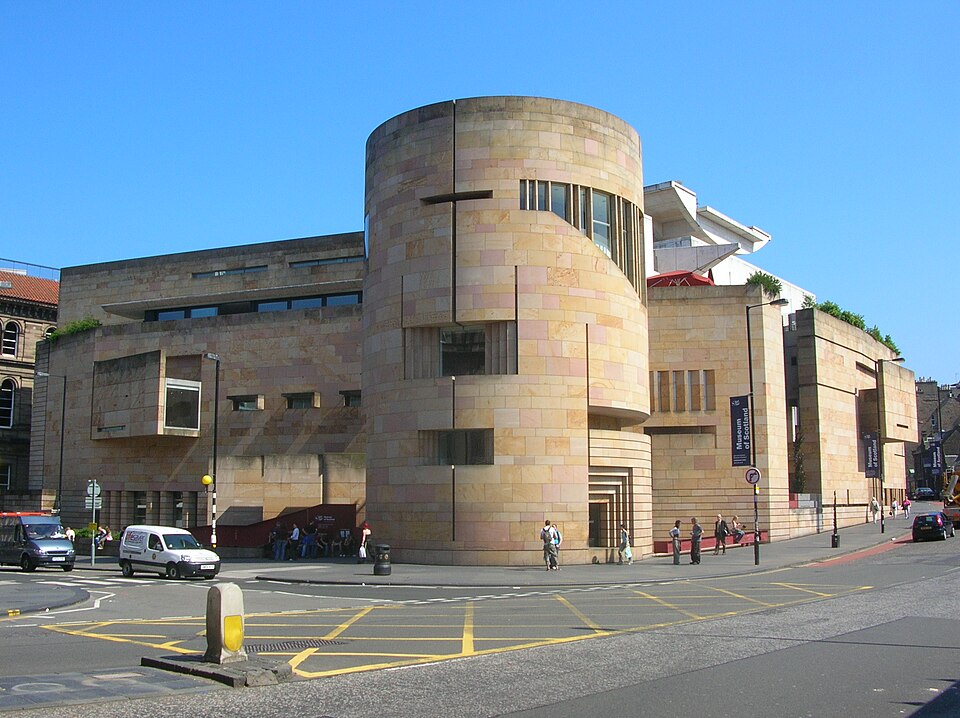
Photo: No machine-readable author provided. Maccoinnich~commonswiki assumed ( / Wikimedia Commons / CC BY-SA 3.0 National Museum of Scotland
Holds the finds from the 1949 excavations
-
Kirkdale Church
Ruined church (dedicated to St Michael) about 700 metres to the west; once a separate parish belonging to Whithorn Priory, united with Kirkmabreck in 1618
-
Cairnholy Farm
Adjacent farm that takes its name from Cairnholy II
Discovery & excavation
Both tombs were partially excavated in 1949 by Stuart Piggott and Terence Powell. Cairnholy I produced a fragment of a jadeite ceremonial axe, Neolithic pottery sherds and a leaf-shaped arrowhead from its outer chamber, with later Peterborough-ware and Beaker-ware sherds and a flint knife, while the inner chamber held a secondary cist with food-vessel sherds and a cup-and-ring carved stone. Cairnholy II, much robbed of stones, yielded an arrowhead, a flint knife and secondary Beaker pottery sherds. Finds are in the National Museum of Scotland.
Finds now held at: National Museum of Scotland.
What to look for
-
Cairnholy I: the more elaborate tomb (50 by 15 metres) with a monumental curving facade fronting a forecourt, and two chambers — an outer chamber entered through the facade and a closed inner 'box' chamber once roofed by a great stone slab.
-
Cairnholy II: to the north, lower and much robbed of stones (less than 60 cm high), still retaining two portal stones in front of the chambered tomb and a shallow v-shaped forecourt.
-
The surrounding rocks bear cup-and-ring marks, and around 160 metres east of Cairnholy farm is the remains of a low circular cairn found to contain human bones when robbed of stone before 1849.
What is said
Folklore and tradition, recorded as what is said — not as established fact.
-
Local tradition maintains that Cairnholy II was the tomb of Galdus, a mythical Scottish king. (local tradition / legend)
Plan your visit
- Location
- General area near Carsluith, Dumfries and Galloway
- Nearest settlement
- Carsluith
- Access
- Open access
- Terrain
- Easy going
- Best time
- Open year-round.
- Start point
- Cairn Holy car park — Car park beside the minor road; short walk up the farm track to the two cairns. HES confirms parking is available on site.
Opening & admission
Free entry
- Open year-round.
This is a sensitive site, so we show its general area only. Please use the official access information here rather than seeking out an independent route.
Nearby places
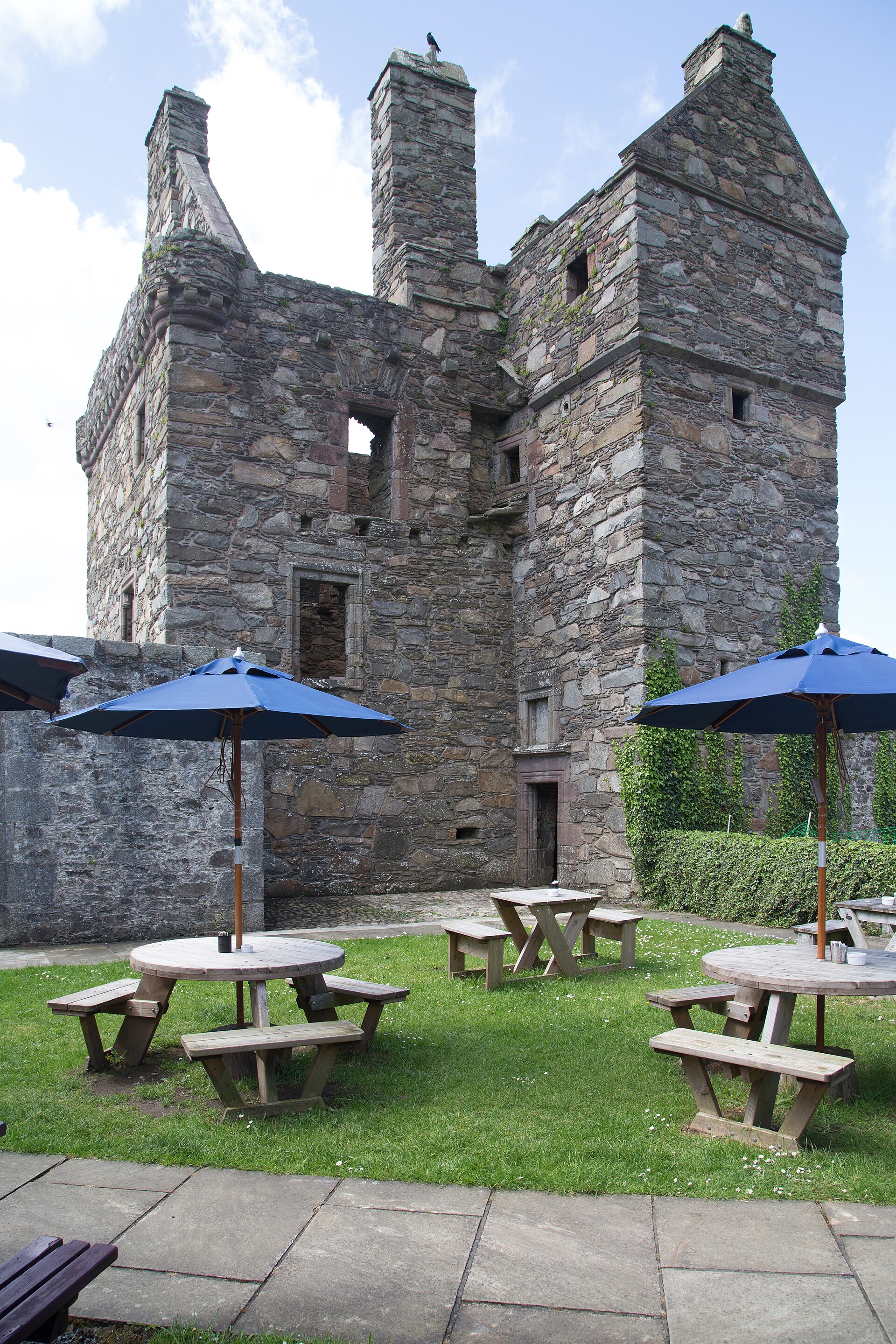
Fortified place · Medieval
Carsluith Castle
Dumfries and Galloway
Its owners' stubborn Catholic loyalty, embodied by Gilbert Brown, the last abbot of Sweetheart Abbey, makes this Galloway tower house a window onto…
Sources
- Canmore site record 63705;63716 (accessed 2026-06-13)
- Trove (HES) record (accessed 2026-06-13)
- Wikipedia: Cairnholy (accessed 2026-06-13)
- Wikidata Q1025952 (accessed 2026-06-13)
Explore more: Tomb or burial places · Prehistoric · Dumfries and Galloway
The Ancient Codex, in your pocket
Get the Pocket Codex app
Carry the directory with you — Cairn Holy Chambered Cairns and thousands of ancient places across Britain and Ireland, offline, wherever you roam.